


1 min walk · Stari Grad
Inner Stambol Gate
- High
- Historic monument
Language · 1 published
Nature site · Градска општина Стари град, Belgrade
Калемегдан
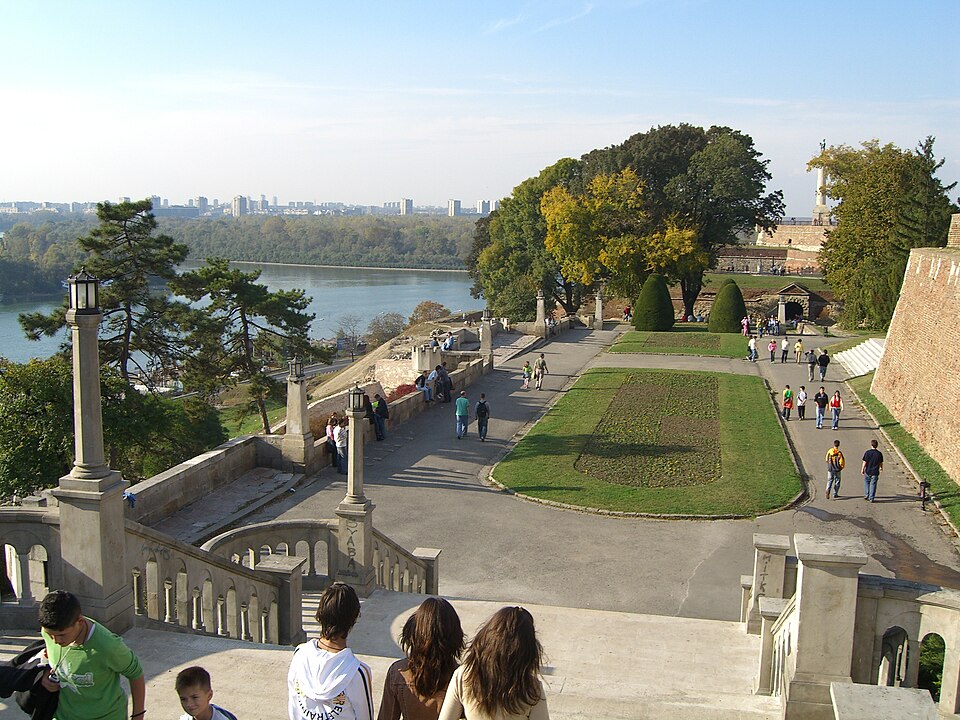
Kalemegdan Park is the 53-hectare public park that wraps around Belgrade Fortress on a 125-metre-high cliff at the junction of the Sava and Danube rivers. Landscaping of the former military exercise field began in 1869, guided first by the urbanist Emilijan Josimović, who proposed turning the fortress surroundings into a public park rather than leaving them as drilling ground.
The park is split into Great Kalemegdan, around the fortress's Upper Town, and Little Kalemegdan, closer to the city and home to the zoo. It functions as Belgrade's principal green space and its most visited open-air site, combining the fortress's defensive architecture with tree-lined promenades, monuments and a museum quarter.
Checked 2026-08-23 · Source
As of a 2013 count, the park held 3,424 individual trees across 80 species, most of them 20 to 60 years old; six Chinese windmill palms were added on 23 September 2020. Within the grounds stand the Military Museum, the Museum of Forestry and Hunting, the Cvijeta Zuzorić Art Pavilion built in 1928, and the Monument of Gratitude to France in the park's southern corner.
Other fixed features include the sculpture-fountain Fisherman by Simeon Roksandić, the Small Staircase built in 1903 by the architect Jelisaveta Načić, and the Big Staircase completed in 1928 to a design by Aleksandar Krstić. Belgrade Zoo opened in the northern section of Little Kalemegdan in 1936. An amusement park opened in 1958, and a Ferris wheel known as Panorama was installed in 1964.
Checked 2026-08-23 · Source
A walk covering the main promenades, the Fisherman fountain, the Art Pavilion and the two staircases takes about 45 minutes to an hour at an unhurried pace. Adding the fortress ramparts, the Military Museum and the zoo turns Kalemegdan into a half-day outing rather than a short stop.
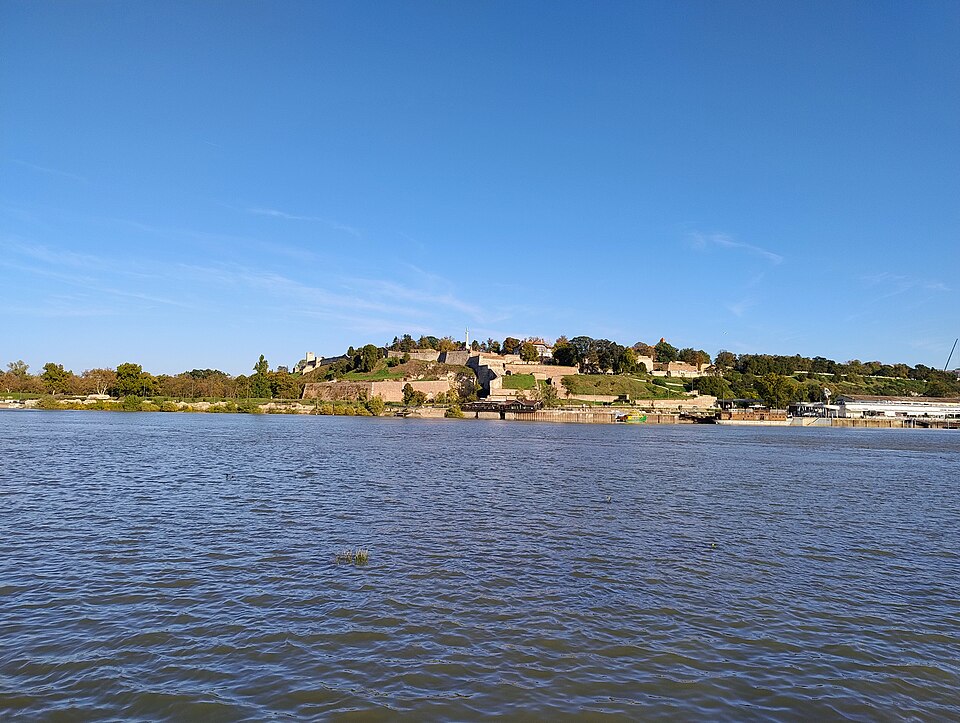
Visitors short on time should prioritise the Sava-side promenade and the Upper Town ramparts, since these give the clearest sense of the park's setting above the river confluence; the zoo and museum each add roughly an hour on their own.
Checked 2026-08-23
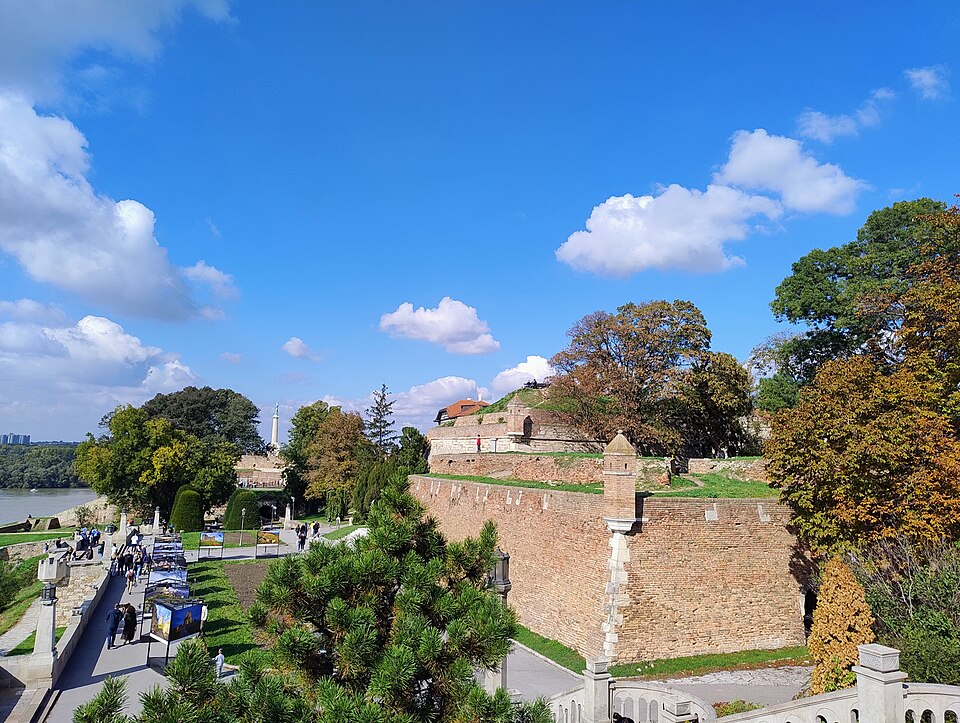
The park is open-air and unticketed, so timing depends on light, temperature and crowd levels rather than an opening schedule. Spring and autumn mornings are the most comfortable for the uphill paths, while summer afternoons on the exposed ramparts can be hot with little shade along the stone paths.
Weekend afternoons draw the largest local crowds, since Kalemegdan doubles as Belgrade's default outdoor gathering spot; a weekday visit or an early start gives a quieter walk through the same paths.
Checked 2026-08-23
Entry to Kalemegdan Park itself carries no admission charge, since it is public parkland rather than a ticketed attraction. Individual sites inside the park boundary — the zoo, the Military Museum, the amusement park — charge their own separate fees, but current rates for those are not published on the sources this page uses and are not reproduced here.
No booking is required to walk the park's paths and promenades.
Checked 2026-08-23
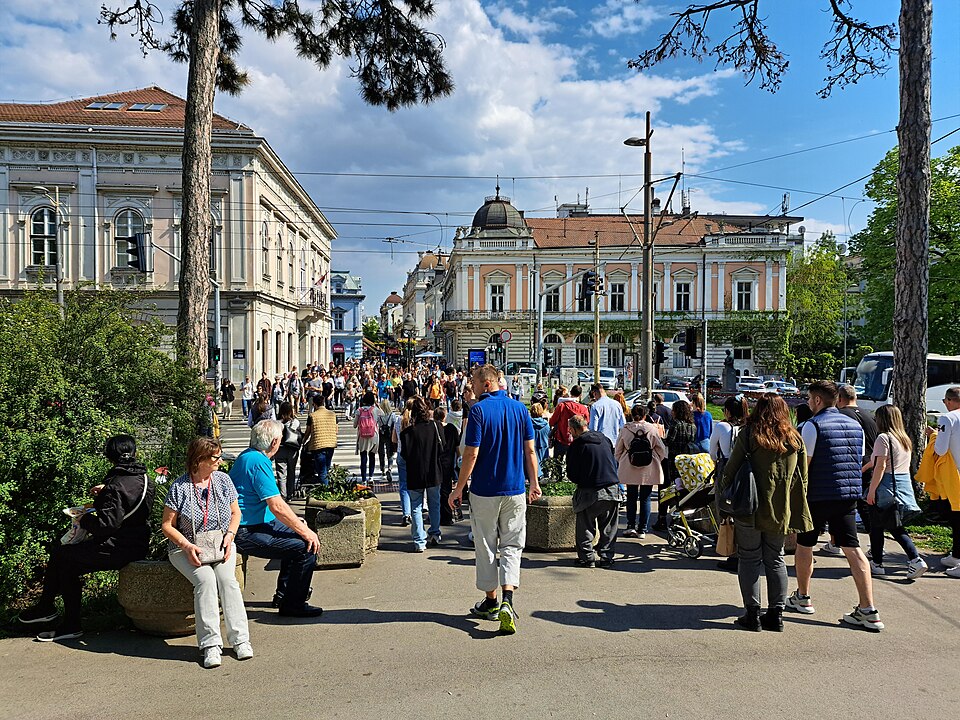
Belgrade has no metro, so Kalemegdan is reached on foot, by tram or by trolleybus. The park sits directly at the end of Knez Mihailova, the pedestrian street running from Republic Square, making the walk from the city centre roughly 15 to 20 minutes.
Tram and trolleybus lines serving the old town stop within a short walk of the park's several entrances, so a visitor without a car can rely entirely on the walkable centre and the surface public transport network to reach any of the park's gates.
Checked 2026-08-23

The park's terrain is not flat: the paths climb from the lower Sava promenade up to the Upper Town ramparts by way of the Small and Big Staircases, which is worth knowing for visitors with limited mobility or with a stroller. Cobbled and stone-paved sections become slippery in wet weather.
Because the park is Belgrade's busiest open public space, it draws the usual precautions of any crowded urban park: keep bags close on the busy promenades and around the amusement park area. There are no dress or conduct restrictions specific to the park grounds, since Kalemegdan is secular open-air parkland rather than a religious site; restrictions only apply inside individual paid attractions such as the museums, which set their own rules.
Checked 2026-08-23

Photography throughout the park's open grounds, promenades and staircases is unrestricted, and the ramparts above the Sava and Danube confluence are the park's most photographed vantage point. The Big Staircase and the Fisherman fountain are also common framing subjects for visitors moving between the lower and upper sections of the park.
Late afternoon light works best for the river-facing ramparts, since the sun sits behind the photographer rather than behind the view; the wooded paths of Little Kalemegdan, by contrast, are shaded through most of the day and photograph more evenly at midday than the exposed upper terraces.
Checked 2026-08-23
The park covers 53 hectares, as of a 2013 measurement, on a ridge 125 metres above the Sava and Danube confluence.
Landscaping of the former military field began in 1869, following a proposal by the urbanist Emilijan Josimović; the main forestation phase was completed in 1875.
The Military Museum, the Museum of Forestry and Hunting, the 1928 Cvijeta Zuzorić Art Pavilion, the Monument of Gratitude to France, the Fisherman fountain, Belgrade Zoo and an amusement park with a Ferris wheel.
Belgrade Zoo opened in the northern section of Little Kalemegdan in 1936.
A 2013 count recorded 3,424 individual trees across 80 species, most between 20 and 60 years old.
No. The park itself is free to enter; only individual attractions inside it, such as the zoo and the museums, charge separately.
Loading the interactive map…
The interactive map could not be loaded.
Last updated:
Source: OpenStreetMap contributors, Wikidata ·