


1 min walk · Stari Grad
Karađorđe's Gate
- High
- Historic monument
Language · 1 published
Museum · Градска општина Стари град, Belgrade
Војни музеј
Read from the OpenStreetMap access tags; anything not listed has no tag recorded.
Set the group type to family in the planner and the day window contracts to about three quarters of a solo day.
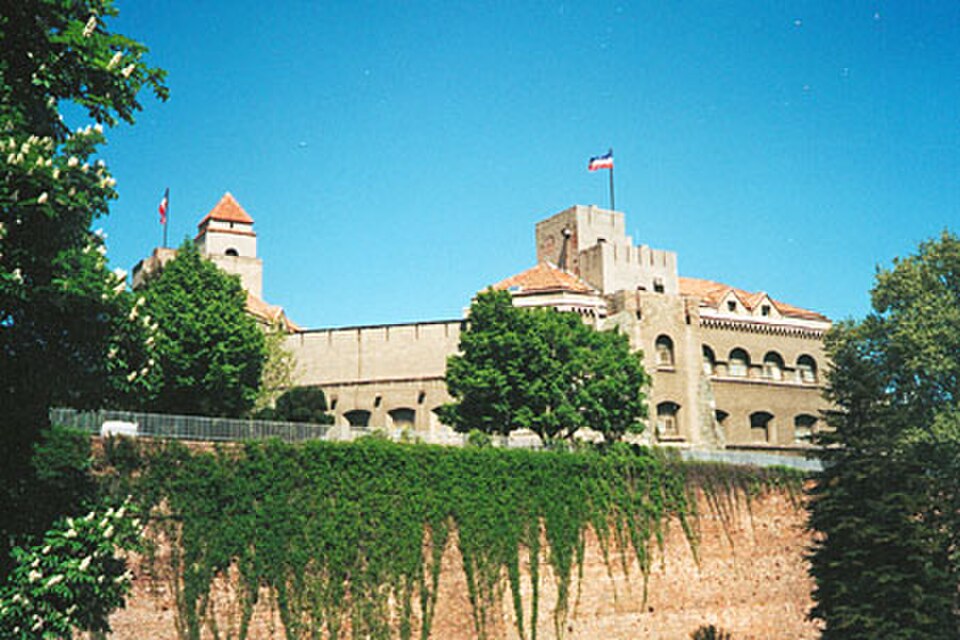
The Military Museum traces back to 1878, when the Serbian army founded a collection of captured Ottoman weapons in Kragujevac; it moved to Belgrade and, since 1924, has occupied a purpose-built structure on the upper terrace of Kalemegdan, designed by the architect Momir Korunović in a style drawing on medieval Serbian church architecture rather than a conventional barracks or gallery form.
The building's silhouette, with its stepped brick gables, was deliberately built to read as Serbian rather than as a generic European museum block, at a time when the young kingdom was asserting a distinct national architectural language. The collection now runs from Roman-era arms and armour recovered locally through both World Wars, the Yugoslav wars of the 1990s and the 1999 NATO bombing of Belgrade.
Checked 2026-08-24 · Source
Indoors, chronological galleries move from Roman and medieval weapons through Ottoman-era arms, nineteenth-century Serbian uprising relics, and the two World Wars, with captured Austro-Hungarian and German equipment alongside Serbian and Yugoslav material.
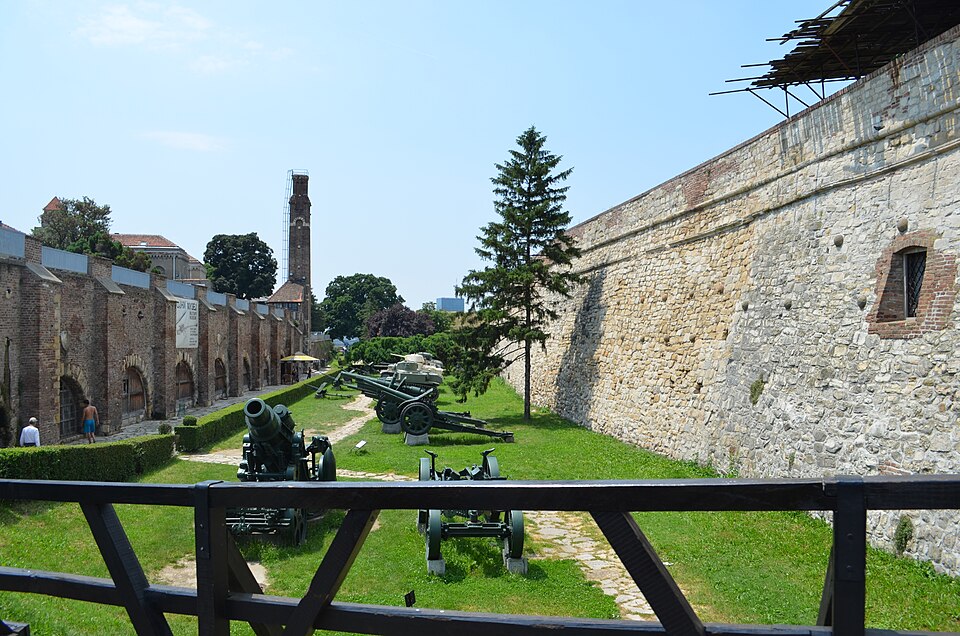
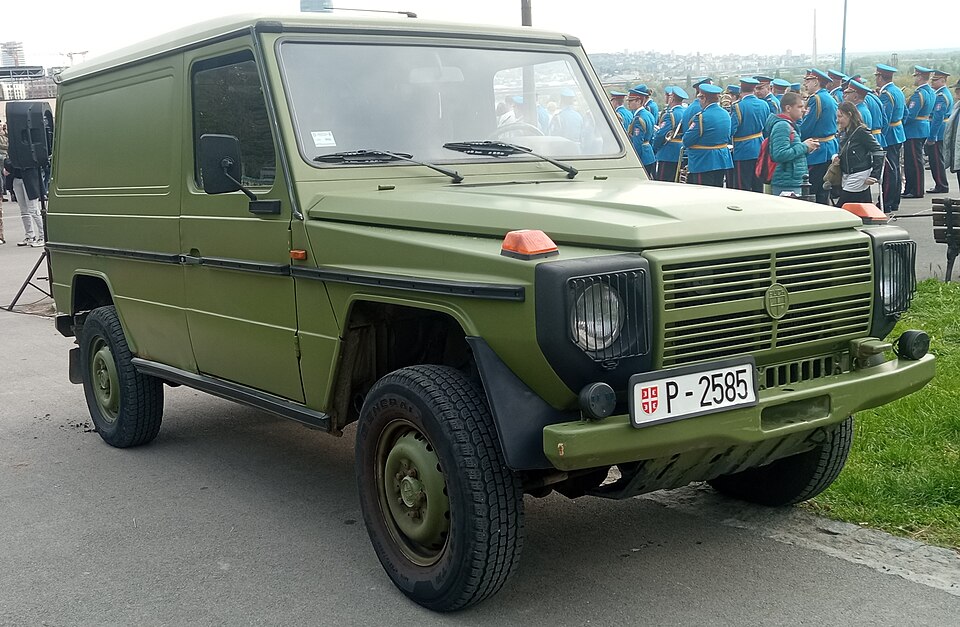
A section addresses the 1999 NATO air campaign directly, including wreckage recovered from aircraft shot down over Serbia during it. A room dedicated to medals, orders and uniforms of the Serbian royal army sits apart from the weapons galleries, and is often the quietest room in the building even when the rest of the museum is busy. Outside, an open-air park on the fortress ramparts displays tanks, artillery pieces, aircraft and naval guns spanning from the First World War to the Cold War, set against the fortress walls rather than on a conventional parade ground.
Checked 2026-08-24 · Source
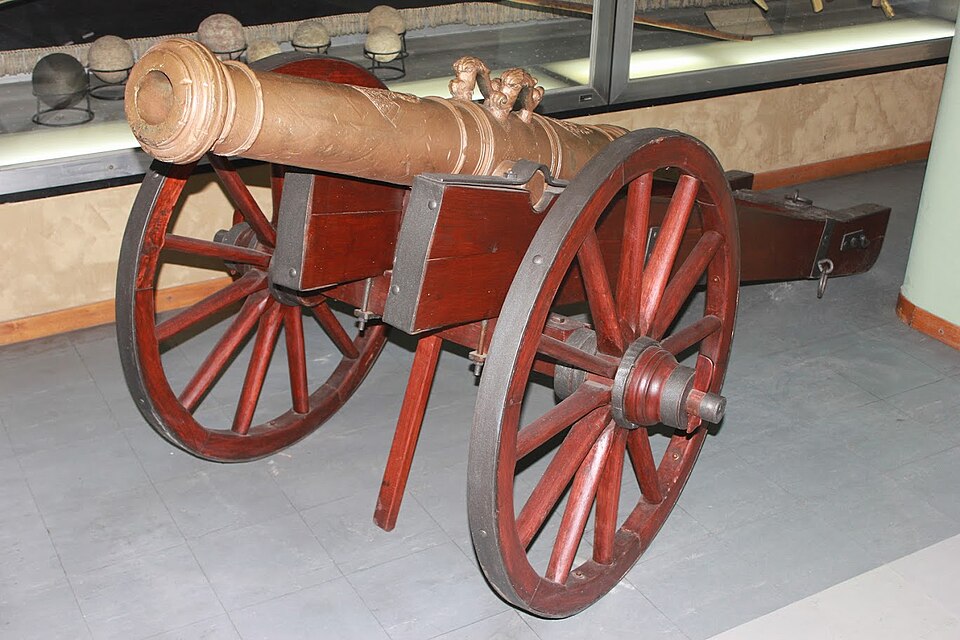
An hour covers the indoor galleries at a steady pace; add another thirty minutes for the open-air weapons park along the ramparts, which is walked rather than toured and has no separate entrance.
Visitors with a specific interest in the NATO-era material should allow extra time, since that section is denser with explanatory text than the earlier chronological galleries. Because the museum sits inside the fortress grounds already being explored for Kalemegdan Park and the Upper Town, most visitors treat it as one stop within a longer fortress visit rather than a separate outing.
Checked 2026-08-24

The open-air park is an outdoor visit regardless of the indoor galleries' hours, so dry weather matters for it in a way it does not for the museum proper.
It closes one day a week, in line with most Belgrade state museums, and is best checked before combining it with the rest of a fortress visit on the same day.
Checked 2026-08-24
The museum charges a separate admission from general entry to Kalemegdan Park and the fortress itself, which remain free; current rates are not published on the sources this page uses and are not reproduced here.
The open-air weapons park is generally viewable without a separate ticket since it sits along the public ramparts. The museum's opening days can differ from the fortress park's own hours, so checking both before setting out avoids arriving to a closed building inside an open park.
Checked 2026-08-24 · Source
Inside the Belgrade Fortress grounds, on the upper terrace reached from the main Kalemegdan gate at the north-western end of Knez Mihailova.
The walk from Republic Square takes about fifteen minutes including the climb through the park to the museum building. There is no metro in Belgrade; trams and buses reach the park's edge.
Checked 2026-08-24 · Source

The open-air weapons park is exactly that — armoured vehicles and artillery left in the open on a fortress rampart, with no barriers around some pieces, so children should be supervised closely.
The building itself has stairs between levels and no lift confirmed on the sources this page uses. Some Cold War and NATO-era exhibits address recent, still politically sensitive history, and captions reflect the museum's own institutional perspective on the 1999 bombing rather than a neutral academic one.
Checked 2026-08-24
The open-air weapons park photographs best in the low sun of early morning or late afternoon, when the tanks and guns throw long shadows across the ramparts and the fortress walls sit behind them in the frame.
Indoors, low gallery lighting protects older uniforms and paper material, and photography without flash is the safer assumption pending the posted rule on the day. The medal and uniform room's glass cases reflect badly under overhead light, and a low angle avoids most of the glare.
Checked 2026-08-24
In 1878, when the Serbian army founded a collection of captured Ottoman weapons in Kragujevac; it has occupied its current Kalemegdan building since 1924.
Yes — a dedicated section addresses the 1999 NATO air campaign, including wreckage recovered from aircraft shot down over Serbia.
It sits along the public ramparts and is generally viewable without the separate ticket the indoor galleries require.
About an hour for the indoor galleries, plus another thirty minutes for the open-air weapons park along the ramparts.
On the upper terrace of the fortress, reached from the main gate at the north-western end of Knez Mihailova.
It is a separate, separately ticketed museum that sits inside the free Kalemegdan Park and fortress grounds, usually visited as one stop within a longer fortress visit.
Loading the interactive map…
The interactive map could not be loaded.
Last updated:
Source: OpenStreetMap contributors, Wikidata ·