

.jpg)


1 min walk · Stari Grad
Despot's Gate
- High
- Historic monument
Language · 1 published
Place of worship · Градска општина Стари град, Belgrade
Црква Ружица
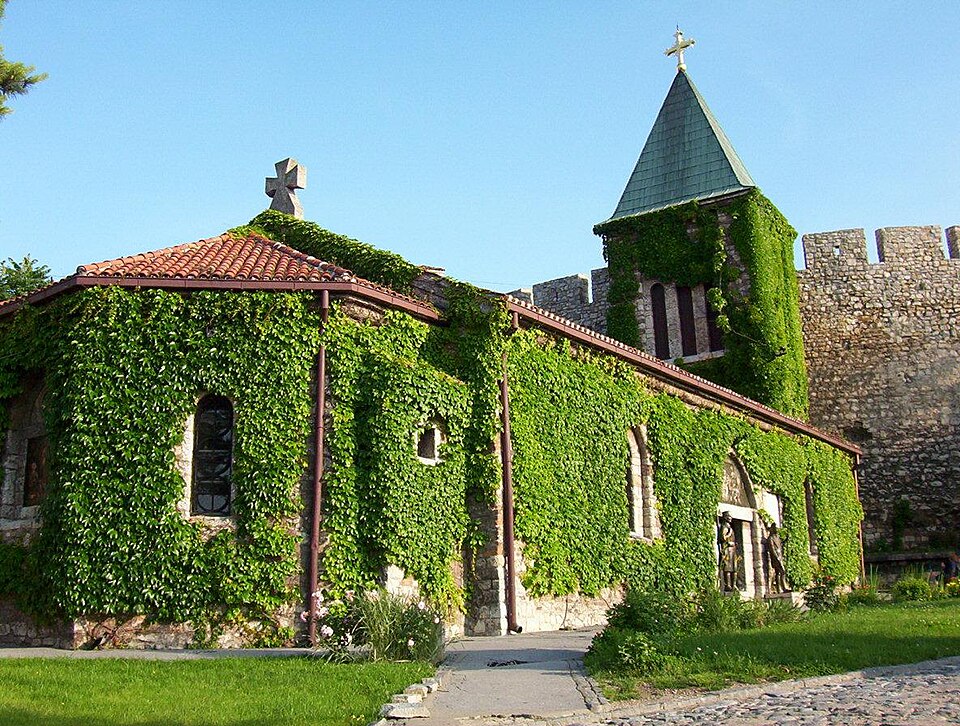
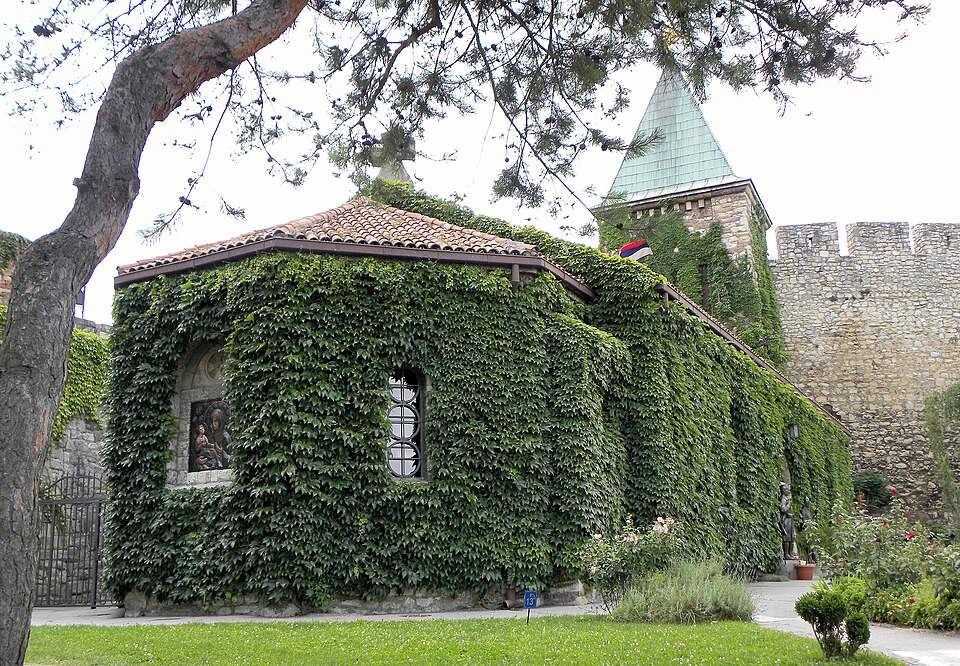
Ružica Church is a small Serbian Orthodox church inside Belgrade Fortress, on the path down from the Upper Town to the Lower Town.
A church on the site is recorded from the reign of Despot Stefan Lazarević, 1402 to 1427, though its exact origins are unclear — one popular myth has three sisters, Ružica, Cveta and Marica, each founding a church in the fortress and giving it her name. That building was demolished by the Ottomans in the late seventeenth century, and the Austrians then built a gunpowder magazine on the spot during their 1723–1739 reconstruction of the fortress; the Ottomans, retaking Belgrade in 1739, kept using it for the same purpose. Only after the Ottoman garrison finally left the fortress in April 1867 did Belgrade's Metropolitan ask for the building back; it was converted into a church within nine months and consecrated on 3 January 1868 as the fortress's garrison church.
Austro-Hungarian bombardment from across the Sava all but destroyed it again in 1915. The building standing today is a 1921–1925 reconstruction by the Russian émigré architect Nikolay Krasnov, consecrated on 11 October 1925. Its largest bell was cast from the bronze of a monument to Emperor Franz Joseph I that Serbian forces captured at sea in 1918, after the Austrians had melted an earlier monument to the Serbian leader Karađorđe to cast it in the first place.
Checked 2026-08-24 · Source
A single small nave holding the church's most valued relic — two fingers of Saint Petka, whose remains passed through the fortress in 1403 on their way from Bulgaria before being moved on to Iași when the Ottomans took Belgrade in 1521.
Its furnishings are unlike any other church in Belgrade: the two large polyeleos chandeliers, three candelabra and the metal relief icons were all cast by the Military Technical Institute in Kragujevac from melted rifle and pistol bullets, artillery shell casings and sabres left over from the First World War. Two statues flank the main entrance — a medieval lancer and a Balkan Wars infantryman — also cast from war materials; the iconostasis was carved by Kosta Todorović and its icons painted by Rafailo Momčilović, with wall paintings added by another Russian émigré, Andrej Bicenko, finished in 1938.
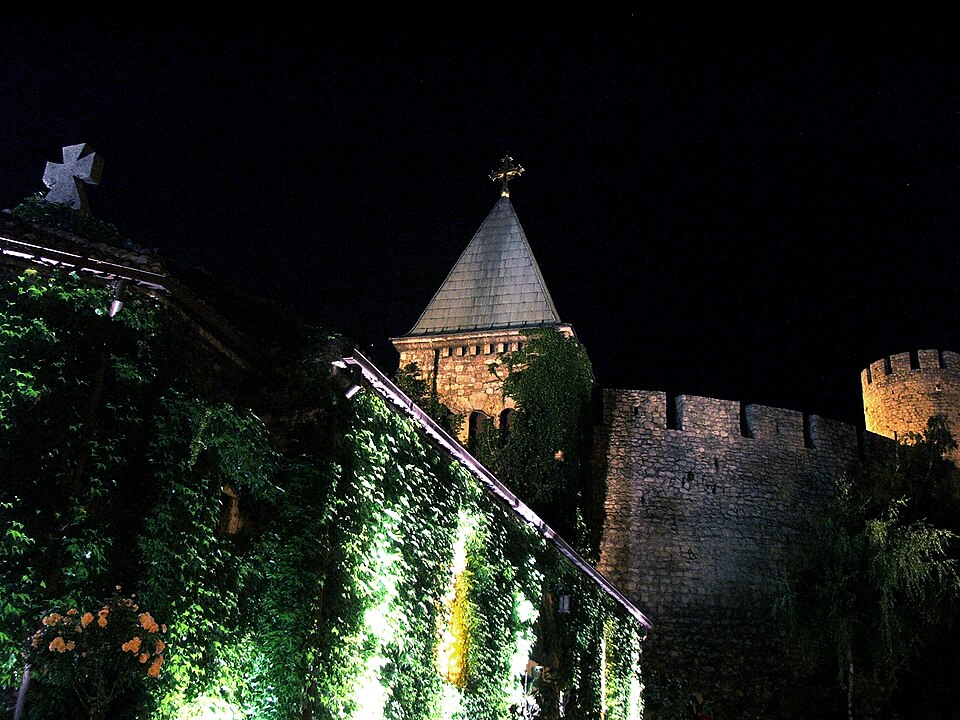
The church stands over the spring associated with the Saint Petka story, once visited by pilgrims of several faiths for its supposed healing power, and sits between the Zindan Gate tower and the Jakšić Tower on the path that also passes the Belgrade Planetarium on the way to the Nebojša Tower.
Checked 2026-08-24 · Source
Ten to fifteen minutes for the church itself — it is a small building, seen quickly once the war-relic chandeliers and the two entrance statues are picked out, and most visits fold it into a longer walk through the fortress's Lower Town toward the Nebojša Tower and the river.
Checked 2026-08-24 · Source
Saint Petka's feast day in October draws the largest crowds, tied to the relic kept inside; outside that, the church sits on the quieter Lower Town side of the fortress that most visitors skip in favour of the Upper Town and the point above the confluence.
Exact opening hours are not published on the sources this page uses.
Checked 2026-08-24
Free. The church stands on the open grounds of Belgrade Fortress and Kalemegdan Park, which carry no admission charge, unlike the fortress's separately ticketed sites such as the Military Museum or the Roman Well.
No entry fee or donation arrangement specific to the church is published on the sources this page uses.
Checked 2026-08-24 · Source
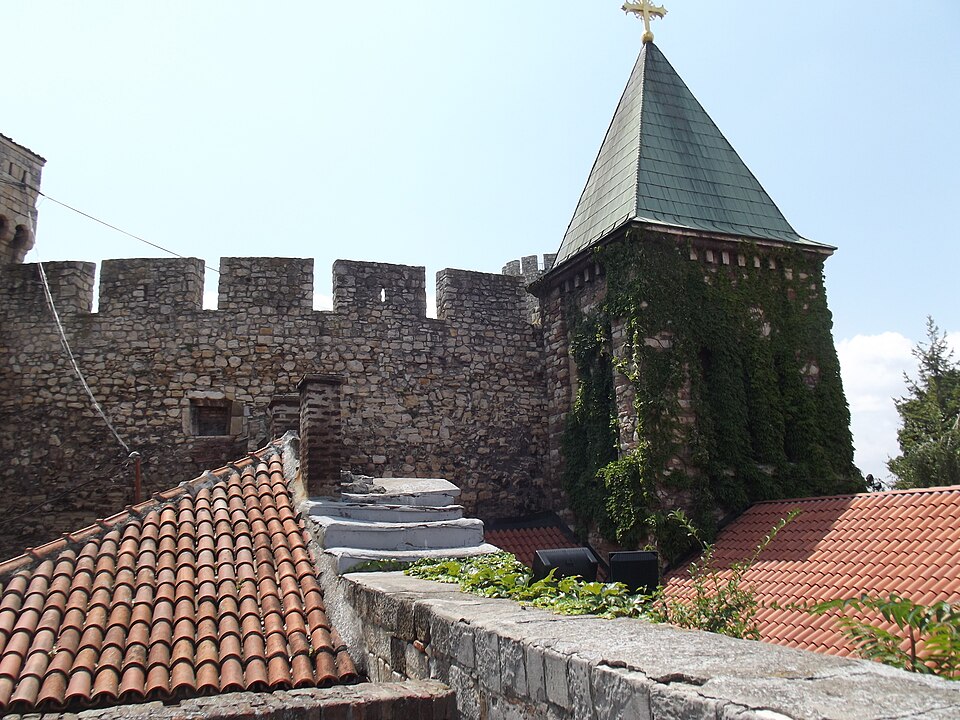
Inside Belgrade Fortress, on the descending path from the Upper Town toward the Sava, near the Zindan Gate and the Nebojša Tower. The walk down from the fortress's main Kalemegdan entrance, at the northwestern end of the pedestrian street Knez Mihailova, takes fifteen to twenty minutes and passes the Victor monument and the Belgrade Planetarium on the way.
Belgrade has no metro; trams and buses reach the fortress's Kalemegdan side from Republic Square and the surrounding old town, but the last stretch to Ružica Church is on foot regardless of how a visitor arrives at the park.
Checked 2026-08-24 · Source
It is an active place of worship — modest dress and quiet are expected, more so during services.
The descending path from the Upper Town is uneven stone and can be slippery after rain.
The church is small and its First World War chandeliers and metalwork are original fittings from the 1920s reconstruction, not replicas — treat the interior with the same care as any historic furnished church, and expect it to fill quickly on the feast day in October.
Checked 2026-08-24 · Source
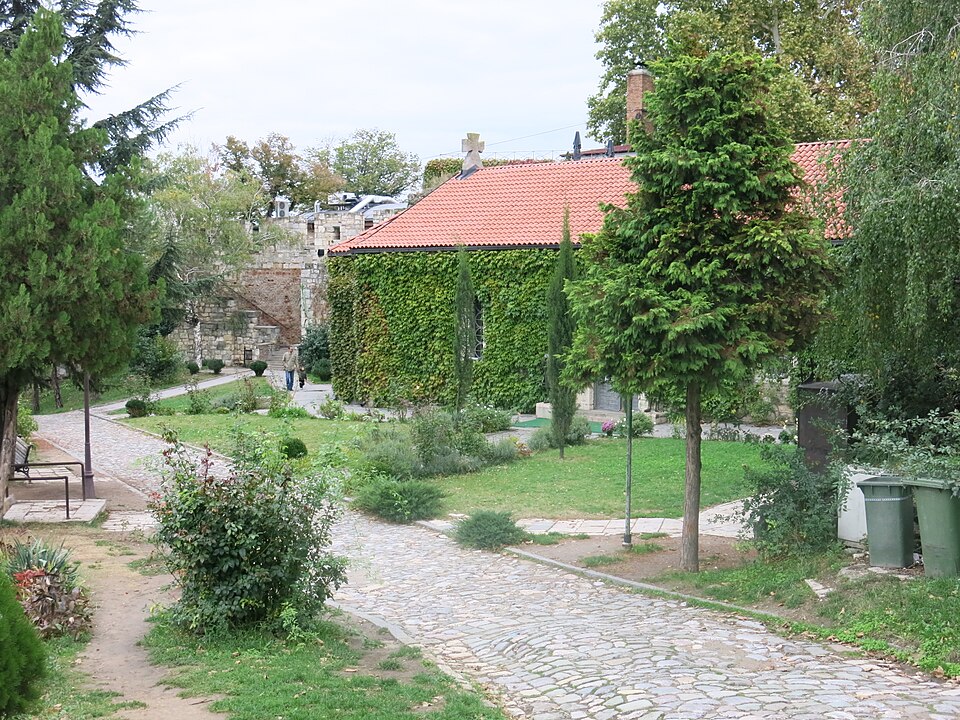
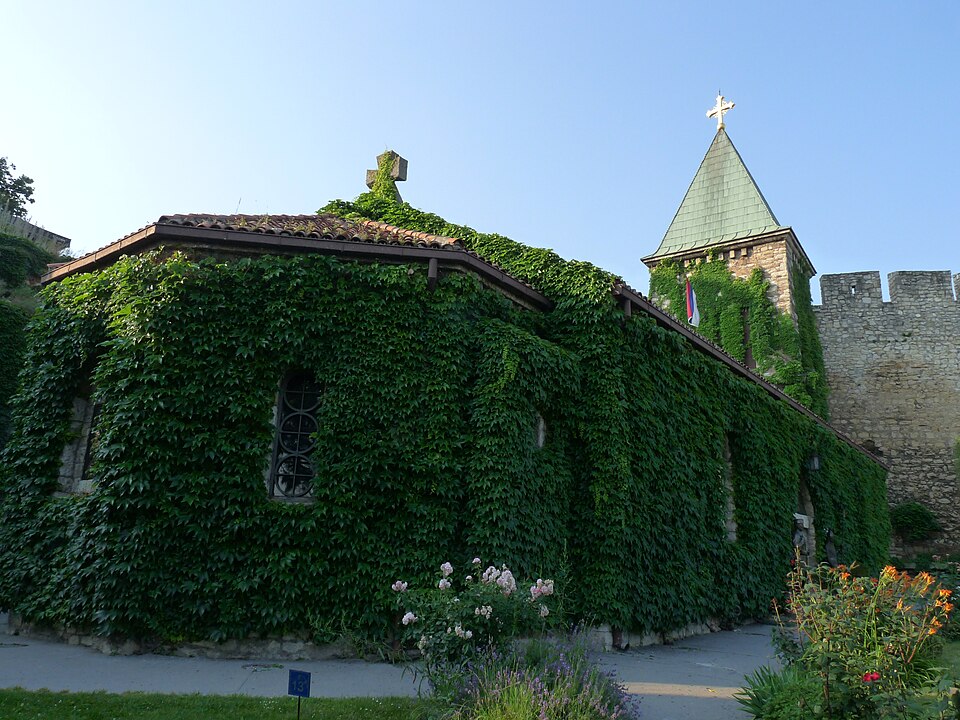
The exterior — bare stone against the fortress ramparts, left unplastered on purpose in the 1920s reconstruction so it would blend into the fortress around it — is the shot most visitors take. The two war-relic statues flanking the entrance are a specific, little-photographed subject.
Interior photography during services is not appropriate at any Orthodox church and no exception is published for this one.
Checked 2026-08-24 · Source
A church on the site is recorded from Despot Stefan Lazarević's reign, 1402–1427, but the building standing today was reconstructed by architect Nikolay Krasnov in 1921–1925 after near-total destruction in the First World War.
Two fingers of Saint Petka, whose remains passed through the fortress in 1403 before being moved to Iași when the Ottomans took Belgrade in 1521.
They were cast by the Military Technical Institute in Kragujevac from melted rifle and pistol bullets, shell casings and sabres left over from the First World War, along with two entrance statues made the same way.
Yes — it stands on the open grounds of Belgrade Fortress, which carries no admission charge.
The Austrians built one on the site during their 1723–1739 occupation of the fortress; the Ottomans kept using it after retaking Belgrade in 1739, until the building was returned to the church in 1867.
In the fortress's Lower Town, on the path down from the Upper Town near the Zindan Gate, close to the Nebojša Tower.
Saint Petka's feast day in October, tied to the relic kept in the church.
Loading the interactive map…
The interactive map could not be loaded.
Last updated:
Source: OpenStreetMap contributors, Wikidata ·