
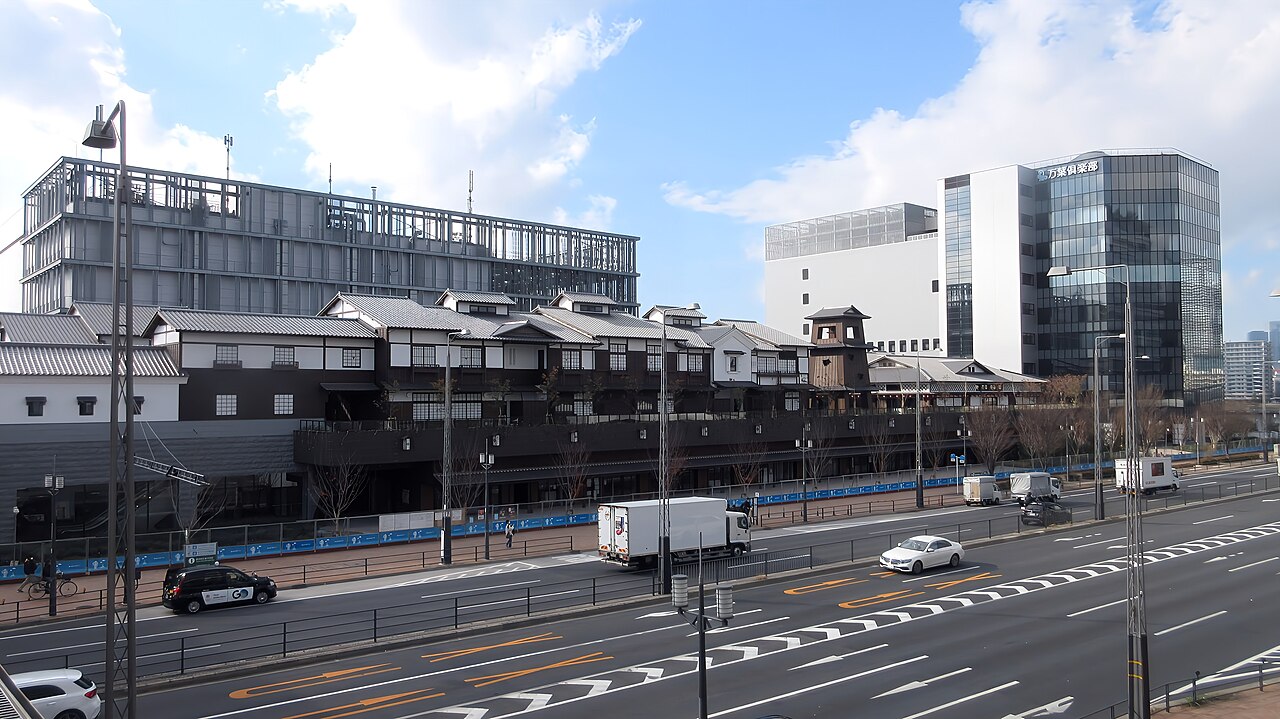
2 min walk
Toyosu Senkyaku Banrai
- High
- Market
Language · 11 published
Market · Tokyo
豊洲市場

Toyosu Market is Tokyo's principal wholesale fish and seafood market, successor to the historic Tsukiji Market. The facility relocated to the artificial island of Toyosu in October 2018. It serves as Japan's largest fish market and a major global seafood distribution hub. The market complex includes auction halls, wholesale vendor areas, and administrative facilities. Unlike its predecessor, public visitor access is restricted to designated observation areas. The site represents a significant evolution in Tokyo's food infrastructure, balancing commercial functionality with controlled tourism interest.
Checked 2026-08-26
The market contains tuna auction observation windows on the second floor of the wholesale fish market building, allowing visitors to view proceedings from behind glass. The Fruit and Vegetable Market building operates separately. Numerous restaurants occupy the market's exterior commercial zone, including relocated establishments from Tsukiji's outer market. A dedicated visitors corridor connects observation areas. The facility lacks the open vendor alleyways characteristic of Tsukiji's former outer market, which continues operating at its original location. Administrative offices and cold storage warehouses constitute non-public areas.
Checked 2026-08-26
Visitor duration depends entirely on individual interest. The tuna auction observation requires early arrival and brief viewing through fixed windows. Restaurant dining constitutes the primary extended activity, with queues forming at popular establishments, particularly sushi venues. The observation corridor permits self-paced circulation. Most visitors combining auction viewing with breakfast or lunch should anticipate a morning commitment. Those solely touring observation areas without dining complete visits relatively quickly. The compact designated visitor zones preclude lengthy unstructured exploration. Toyosu Market also earns time in a tokyo itinerary because WIKIDATA_EDITORIAL reconciliation for the ranked entry; identity and coordinates were verified without a nearby fallback. Its value becomes clearer when the stop is compared with the surrounding streets and the other ranked places nearby.
Checked 2026-08-26
The tuna auction traditionally occurs in early morning predawn hours, requiring arrival well before sunrise for limited observation slots. Restaurant operations generally follow standard commercial hours, though individual establishments vary. The market functions as a working commercial facility rather than conventional attraction, with peak activity concentrated in morning hours. Visitors should consult official sources for current access schedules. Seasonal variations in seafood availability may influence market atmosphere, though observation access remains constant year-round. Check the operator's own site for the travel date before relying on a schedule or fare.
Checked 2026-08-26
The observation areas historically required free advance reservation for tuna auction viewing, with capacity limitations and lottery systems during peak demand. General corridor observation may operate without reservation requirement. Restaurant pricing varies by establishment and is set independently by vendors. No standard admission fee applies to the market complex itself. Visitors should verify current reservation protocols and any applicable charges through official Tokyo Metropolitan Government channels prior to planning visits. A flexible visit lets travellers connect Toyosu Market with the rest of the day without treating one room, viewpoint or photograph as the whole experience. The useful pace depends on personal interest and conditions on arrival. Check the operator's own site for the travel date before relying on a schedule or fare.
Checked 2026-08-26
Toyosu Market occupies reclaimed land in Tokyo Bay, accessible via Tokyo Metro Yurakucho Line to Toyosu Station, followed by pedestrian connection or shuttle bus. The Yurikamome automated guideway transit also serves the area. Road access exists for authorized vehicles. The location is distant from central Tokyo hotel concentrations, necessitating early morning transit planning for auction observation. Signage directs visitors from station exits to market entrances. The artificial island setting provides no surrounding neighborhood for incidental exploration, requiring purposeful visitation.
Checked 2026-08-26
Visitor access is strictly segregated from wholesale operations; unauthorized entry to working areas is prohibited. Observation windows offer limited viewing angles. Early morning auction viewing demands advance planning and acceptance of uncertain success given capacity constraints. Popular restaurants maintain substantial queues. The facility's commercial purpose supersedes tourism infrastructure, resulting in minimal visitor amenities. Weather exposure affects transit between station and market. The relocation from Tsukiji disappointed visitors seeking atmospheric market immersion. Photography restrictions may apply in certain areas beyond general observation zones.
Checked 2026-08-26
Photography is permitted from designated observation windows and visitor corridors, though glass barriers and distance from auction floors limit image quality. Flash photography is typically prohibited to avoid disturbing operations. Tripods and professional equipment may face restrictions. The controlled environment lacks the photogenic density and proximity of Tsukiji's former open market. Best results require high ISO capability for dim auction hall lighting. Visitors should respect all posted restrictions and staff instructions, as working areas remain strictly off-limits for any image capture.
Checked 2026-08-26
No. Public access is restricted to observation windows. Only licensed market professionals may participate in auctions.
Yes. The Tsukiji Outer Market continues at its original location near Tsukiji Station, separate from the wholesale market relocation to Toyosu.
Not recorded. Access to working wholesale floors is prohibited for general visitors. Only designated observation areas are accessible.
Multiple restaurants operate in the commercial zone, including sushi establishments relocated from Tsukiji. Specific operating status of individual venues is not recorded.
Not recorded pending review. Historical practice required reservation for auction observation, but current protocols should be verified officially.
Toyosu offers more controlled, limited access through observation infrastructure. Tsukiji's outer market retains atmospheric street-level food commerce. The experiences differ substantially.
Loading the interactive map…
The interactive map could not be loaded.

Last updated:
Source: OpenStreetMap contributors, Wikidata ·