Via Dolorosa
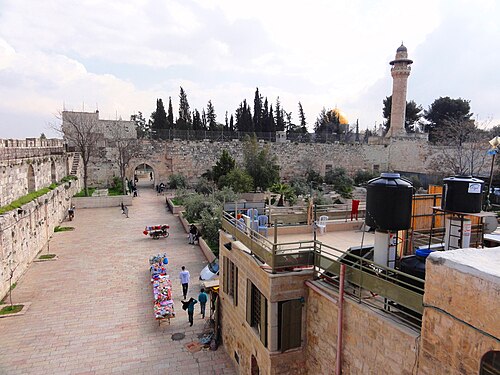
The Via Dolorosa is a processional route in the Old City of Jerusalem, traditionally held to be the path Jesus walked carrying his cross to crucifixion.
- Must see
- Activity
Language · 11 published
City guide · Israel
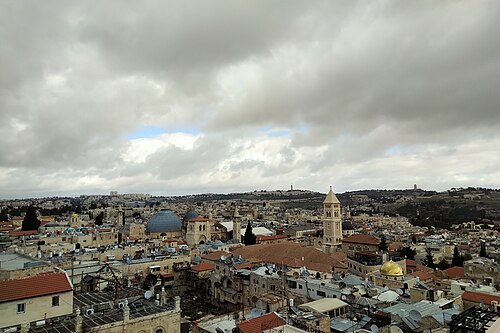
Jerusalem’s visitor geography centres on the Old City, but major museums, markets and neighbourhoods extend far beyond its walls. The Old City is a dense walking zone divided into distinct quarters, while the modern centre follows Jaffa Road toward Mahane Yehuda. Yad Vashem, the Israel Museum, Mount Herzl and Ein Karem require separate journeys, so avoid treating every landmark as one continuous walk.
Set your days, your pace and the hours you actually want to be out. The planner works around closing days and travel time, and leaves room to eat.
Ranked by importance — sitelinks, pageviews and heritage status, not editor preference.
50 places match
Category
Typical visit duration
Interests
The Via Dolorosa is a processional route in the Old City of Jerusalem, traditionally held to be the path Jesus walked carrying his cross to crucifixion.
יד ושם
Yad Vashem is Israel's official memorial to the victims of the Holocaust. Located on the western slope of Mount Herzl in Jerusalem, it serves as a centre for documentation, research, education and commemoration.
מוזיאון ישראל
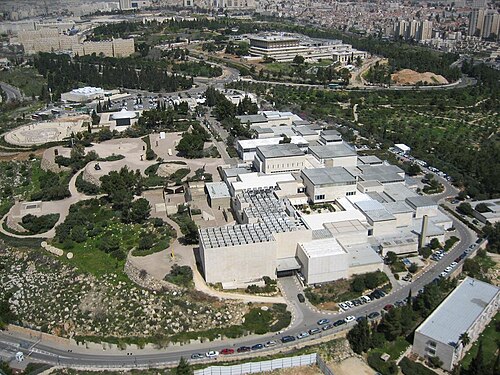
The Israel Museum is Jerusalem's preeminent cultural institution and one of the world's leading encyclopaedic museums. Established in 1965, it houses extensive collections spanning archaeology, fine art, Jewish ethnography, and material culture.
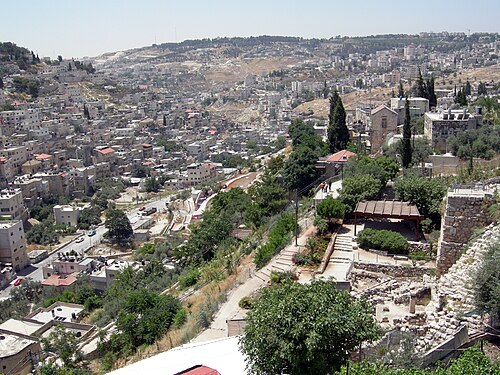
The City of David Archaeological Park is an independent ticketed archaeological park situated south of Jerusalem's Old City walls. It encompasses excavated remains associated with the ancient core of Jerusalem, identified with the biblical City of David.
Kidron Valley is a deep ravine on the eastern side of the Old City of Jerusalem, running between the Temple Mount and the Mount of Olives.
The Jewish Quarter is one of four traditional quarters in the walled Old City of Jerusalem. It occupies the southeastern sector of the historic enclosure, with boundaries roughly corresponding to ancient divisions.
הרובע ההרודיאני
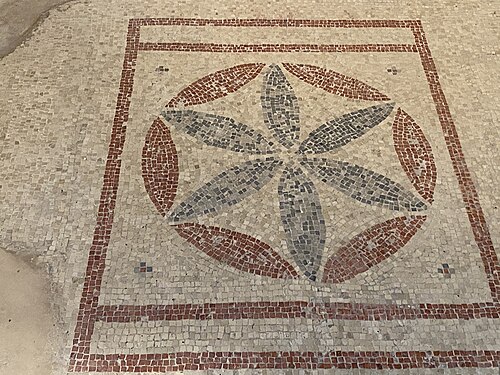
The Herodian Quarter is an archaeological site in Jerusalem's Old City revealing remains of wealthy residential structures from the late Second Temple period. Excavations uncovered substantial dwellings with mosaic floors, ritual baths, and domestic furnishings suggesting affluent inhabitants.
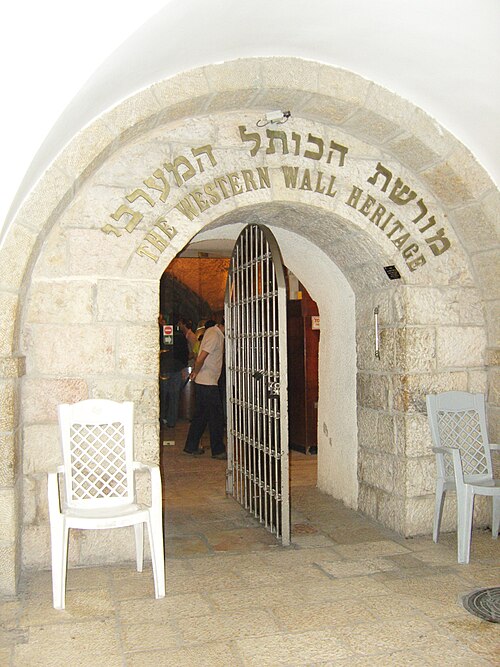
The Western Wall Tunnels constitute an underground archaeological complex running along the northern extension of the Western Wall, the retaining wall of the Temple Mount platform in Jerusalem's Old City.
The Muslim Quarter is one of the four traditional quarters of the Old City of Jerusalem. It occupies the northeastern portion of the walled city and is the largest and most populous of the four quarters.
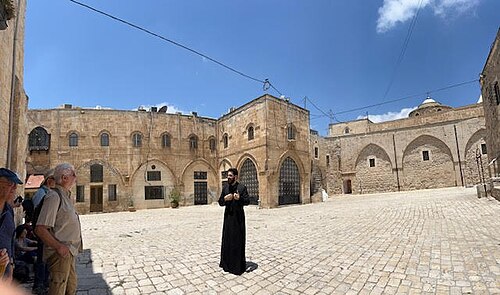
The Christian Quarter is one of the four traditional quarters of the Old City of Jerusalem. It occupies the northwestern quadrant of the walled city and contains numerous sites of profound significance to Christianity.
The Armenian Quarter is one of the four traditional quarters of the Old City of Jerusalem. It occupies the southwestern corner of the walled city and represents the smallest of the four quarters by population.
מוזיאון רוקפלר
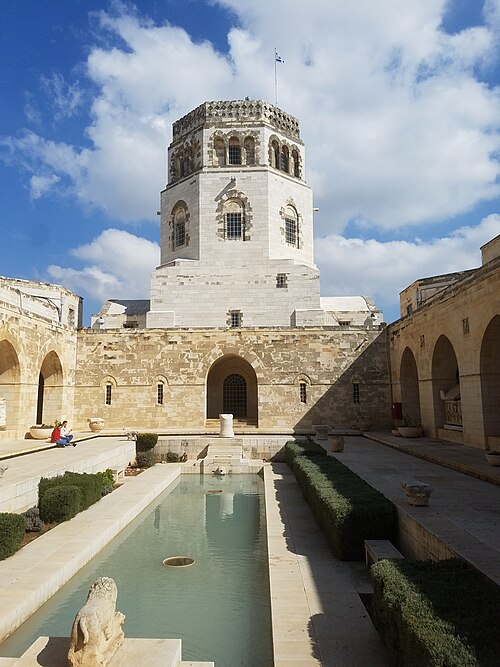
The Rockefeller Archaeological Museum is an archaeological museum in Jerusalem. It houses a significant collection of artifacts recovered from excavations conducted in the region during the British Mandate period and earlier.
מוזיאון המדע ע"ש ברנרד בלומפילד
The Bloomfield Science Museum is a science museum located in Jerusalem. It serves as an educational institution dedicated to making science accessible to the general public through interactive exhibits and hands-on learning experiences.
The Herzl Museum is a Jerusalem visitor landmark dedicated to Theodor Herzl, the founder of modern political Zionism.
ארצות המקרא
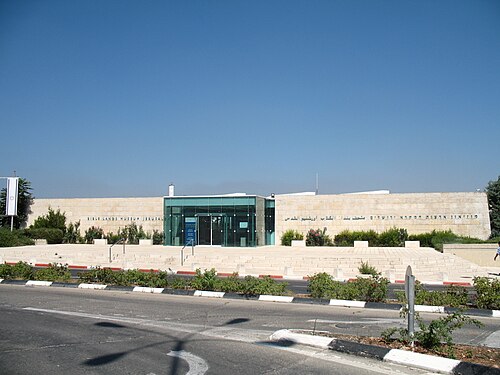
The Bible Lands Museum is a cultural institution in Jerusalem dedicated to the history and archaeology of biblical lands. Its Hebrew name, ארצות המקרא, reflects its focus on regions and peoples mentioned in biblical texts.
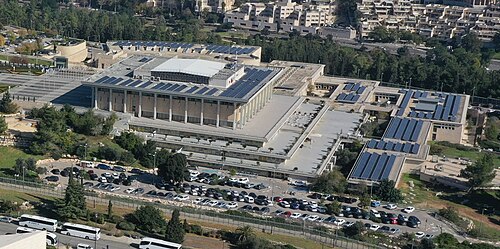
The Knesset is the unicameral national legislature of Israel, located in Jerusalem's Givat Ram neighborhood. Established in 1949 following Israel's independence, it serves as the seat of parliamentary democracy for the state.
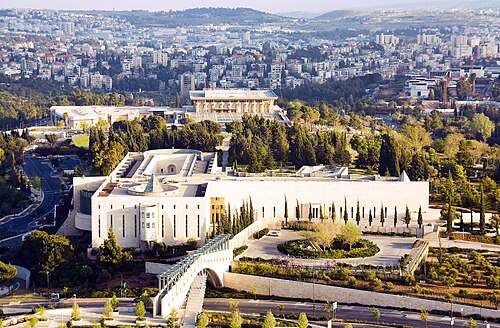
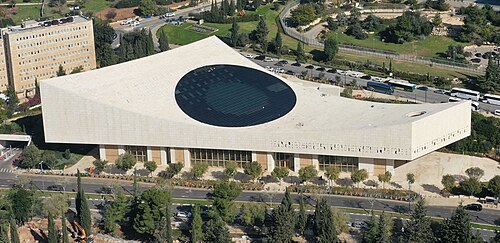
The Supreme Court of Israel is the highest judicial authority in the State of Israel, located in Jerusalem. It serves as both the final court of appeals and the High Court of Justice for administrative matters.
The National Library of Israel serves as the country's central research library and pre-eminent cultural institution dedicated to preserving the intellectual heritage of Israel and the Jewish people.
הר הרצל
בית הנסן
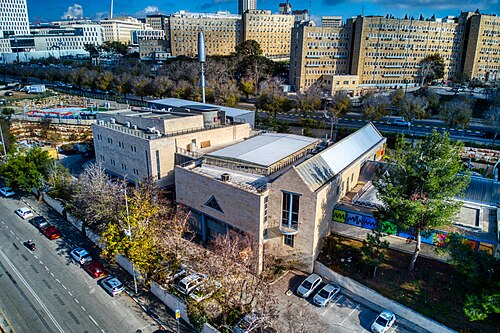
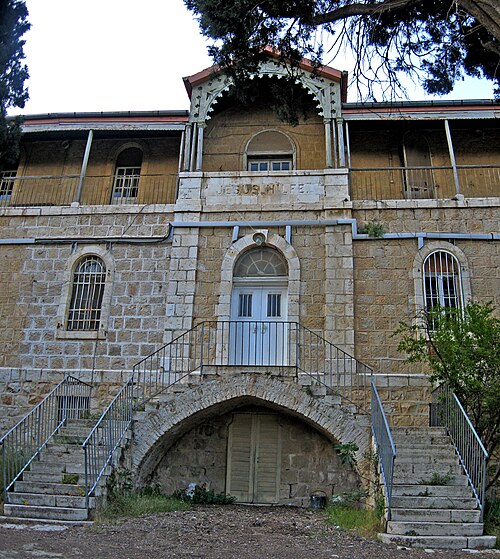
Hansen House is a historic compound in Jerusalem, originally established as a leper hospital in the late nineteenth century during Ottoman rule. The complex comprises stone buildings set within walled grounds, reflecting European medical institutional architecture adapted to local conditions.
היכל הספר
מוזיאון לאומנות האיסלאם
בית טיכו
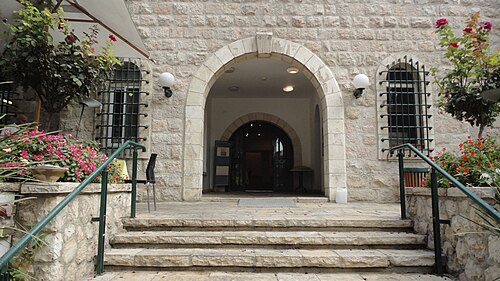
Ticho House is a historic residence and cultural venue in Jerusalem, situated in the downtown area near Zion Square. The property belonged to Anna Ticho, a celebrated artist, and her husband Dr.
מערת צדקיהו
מוזיאון הבית השרוף
מוזיאון לאומנות האיסלם
מוזיאון הטבע
էդուարդ և Հելեն Մարտիկյան թանգարան
מוזיאון גוש קטיף
מוזיאון אסירי המחתרות
متحف فلسطين للتاريخ الطبيعي
המכון האפיפיורי למקרא
Artist's House
מרכז בגין
ידידי ישראל
מוזיאון הסובלנות
בית עגנון
בית פרומין
גן החיות התנכי
מוזיאון על התפר
המרכז העולמי למורשת יהודי צפון אפריקה
מוזיאון יהדות איטליה
סינמטק
הגן התנכי
متحف فلسطين للتاريخ الطبيعي
מוזיאון ההיסטוריה של השואה
אקווריום ישראל
גלריית ברבור
Source: OpenStreetMap contributors, Wikidata ·
The walled Old City forms the historic core, with Jaffa Gate linking it to Mamilla and the modern centre. Jaffa Road runs northwest through the city centre and Mahane Yehuda toward the main transport corridor. The Israel Museum and government precinct lie to the west, while Mount Herzl and Yad Vashem are farther out. Mount Zion and the Mount of Olives should be planned as separate elevated clusters.
Checked 2026-08-26
Walk inside the Old City and between nearby central districts, allowing extra time for stone surfaces, slopes and security checks. Use light rail and buses for the modern centre and outer museums. The government tourist office provides maps and current public-transport guidance; consult it or the relevant operator before travel because services and access arrangements can change.
Checked 2026-08-26
A fixed official stay length is not recorded. Build the visit around the Old City first, then add the modern centre, major museums and separate hilltop clusters according to time.
Yes, and walking is the practical way to explore its lanes. Expect slopes, worn stone surfaces, stairs and busy access points.
Yad Vashem, Mount Herzl, the Israel Museum and some outer neighbourhoods sit beyond the compact Old City and central walking area. Use light rail or buses where appropriate.
The Ministry of Tourism’s Jerusalem office provides maps, brochures and guidance on sites, tours and public transportation.
Treat it as a separate elevated cluster. Although visually close to the Old City, the terrain and approach make a dedicated route more practical.