Narikala Fortress
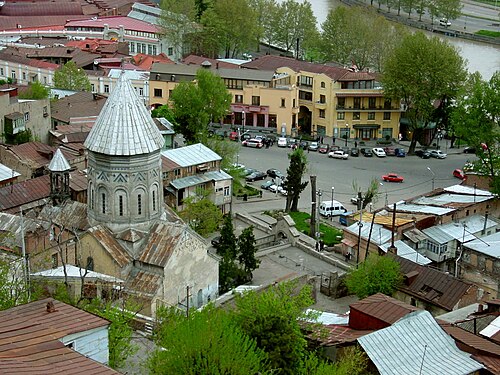
Narikala Fortress is an ancient citadel overlooking Tbilisi's old town from a steep ridge. Its origins trace to Persian and Arab periods, with substantial later Georgian and Russian modifications.
- Must see
- Historic monument
- Tbilisi
Language · 11 published
Country guide
Georgia holds 3.9 million people and more than a third of them live in Tbilisi, so most visits begin in the capital and radiate out. The country sits on the east coast of the Black Sea, with Russia along the north, Turkey and Armenia to the south and Azerbaijan to the southeast, and the ground rises from beach to mountain village inside a single drive. Two things meet a first-time visitor immediately: Georgian, a Kartvelian language with no relation to any other language family in the world and its own alphabet to match, and wine, since the earliest known winemaking sites anywhere are here. Christianity arrived in the early fourth century, and the churches are correspondingly old.
Every city catalogued in this country so far, ranked by how much there is to see.
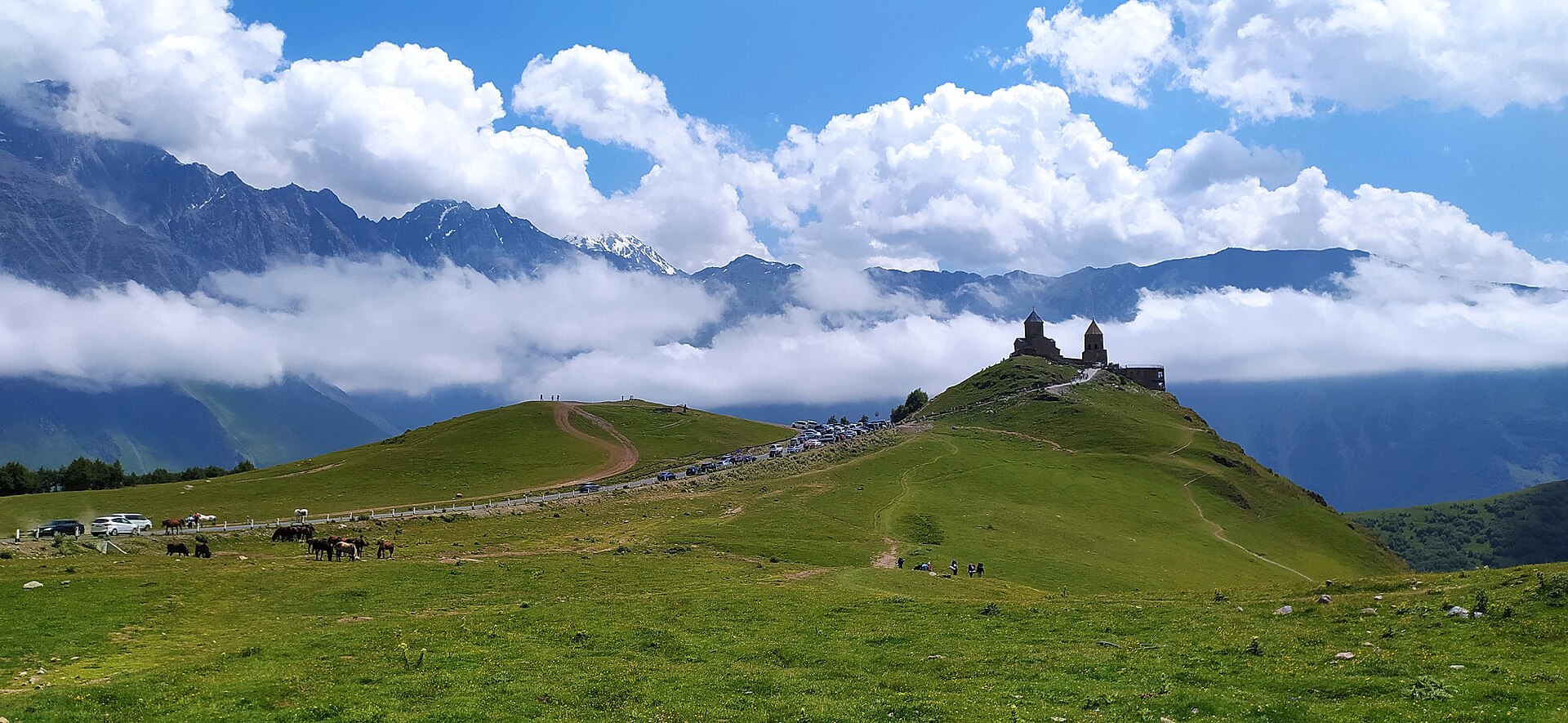
Photograph · Alexey Komarov · CC BY-SA 4.0
Ranked by importance — sitelinks, pageviews and heritage status, not editor preference.
100 places match
Category
Typical visit duration
Narikala Fortress is an ancient citadel overlooking Tbilisi's old town from a steep ridge. Its origins trace to Persian and Arab periods, with substantial later Georgian and Russian modifications.
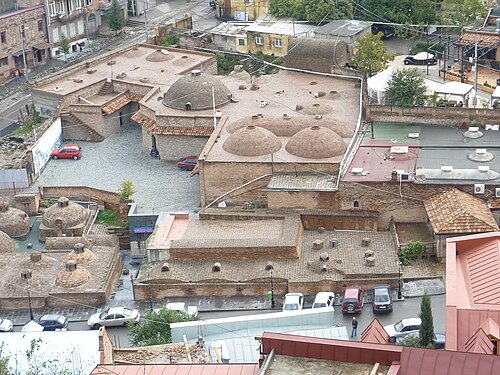
Abanotubani is the historic sulfur-bath district in Old Tbilisi, Georgia. Its distinctive brick domes rise from the banks of the Mtkvari River, marking the natural hot springs that have defined this location for centuries.
The Holy Trinity Cathedral of Tbilisi, known locally as Sameba, stands as the principal modern Orthodox cathedral of Georgia's capital. Its golden dome dominates the Tbilisi skyline, visible from numerous vantage points across the city.
Mother of Georgia, known locally as Kartlis Deda, is a monumental aluminium statue standing on Sololaki Hill overlooking Tbilisi.
The National Botanical Garden of Georgia occupies a deep gorge behind Narikala Fortress in central Tbilisi.
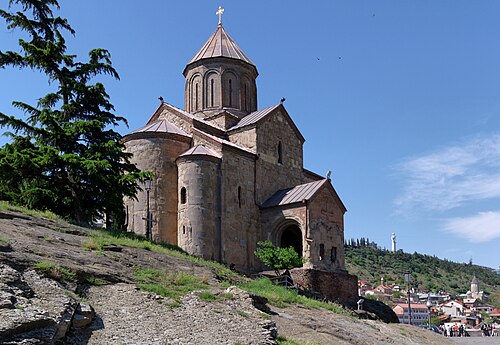
Metekhi Church is a historic Georgian Orthodox church perched on a rocky cliff overlooking the Mtkvari River in central Tbilisi. Its dramatic position makes it one of the city's most visually striking landmarks.
Sioni Cathedral is the historic cathedral of Tbilisi, dedicated to the Dormition of the Mother of God. Its local name, სიონის ღვთისმშობლის მიძინების საკათედრო ტაძარი, reflects its deep roots in Georgian Orthodox tradition.
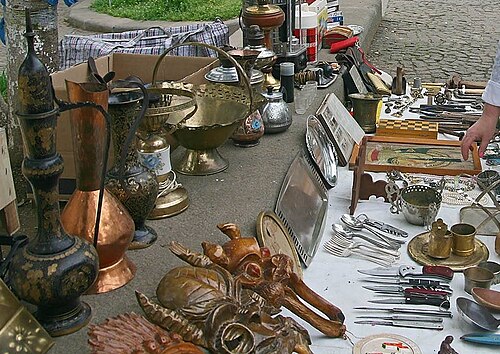
The Dry Bridge Market is Tbilisi's principal open-air antiques and flea market, known locally as მშრალი ხიდის ბაზრობა.
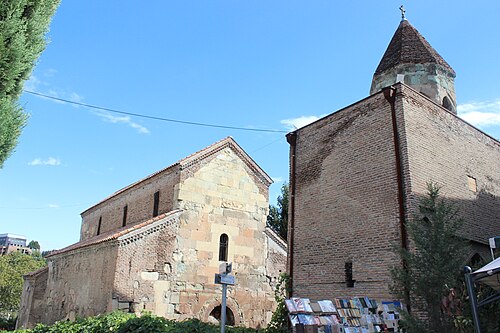
Anchiskhati Basilica is a sixth-century church in Tbilisi's Old Town, widely identified as the city's oldest surviving church. Its Georgian name, ანჩისხატის ბაზილიკა, reflects deep local significance.
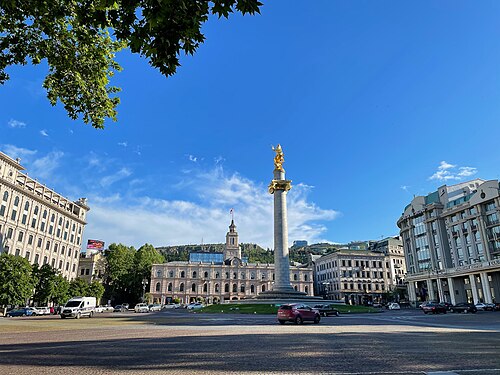
Freedom Square, known locally as Tavisuplebis Moedani, serves as Tbilisi's principal civic square and a major urban junction.
The Rezo Gabriadze Marionette Theater and Clock Tower is a cultural landmark in Tbilisi's Old Town, created by Georgian artist, writer, and director Rezo Gabriadze.
The Chronicle of Georgia is a monumental sculptural ensemble designed by Zurab Tsereteli, situated on an elevated hillside overlooking the Tbilisi Sea reservoir.
Rike Park is a central riverfront public space in Tbilisi, Georgia, known locally as რიყის პარკი. The park occupies a significant position along the Mtkvari River, serving as a contemporary urban gathering place.
Leghvtakhevi Gorge and Waterfall is a natural landmark in Tbilisi's historic Abanotubani district. The name derives from Georgian words for fig and gorge, referencing the vegetation once found here.
Gorgasali Square, locally known as Vakhtang Gorgasali Square, is a historic public space in Tbilisi's old town. Also referred to as Meidan, it functions as the central crossroads connecting four significant districts: Kala, Abanotubani, Metekhi Bridge, and Shardeni.
Orbeliani Square, locally known as ორბელიანის მოედანი, is a rehabilitated public square in Tbilisi. It forms part of the flower-market quarter and connects nineteenth-century facades with pedestrian lanes at the northern edge of the historic centre.
Queen Darejan Palace is a surviving royal residence situated on an elevated position above the Avlabari district of Tbilisi. The structure is historically significant as one of the remaining palaces associated with Georgian royalty.
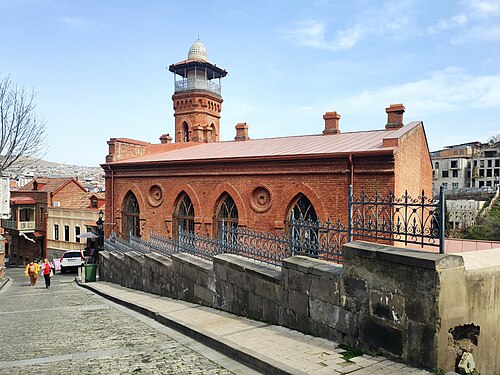
Juma Mosque is Tbilisi's sole surviving mosque, standing as a significant expression of the old town's religious diversity. Located beside the bath district and botanical-garden gorge, it represents the historical coexistence of faiths in Georgia's capital.
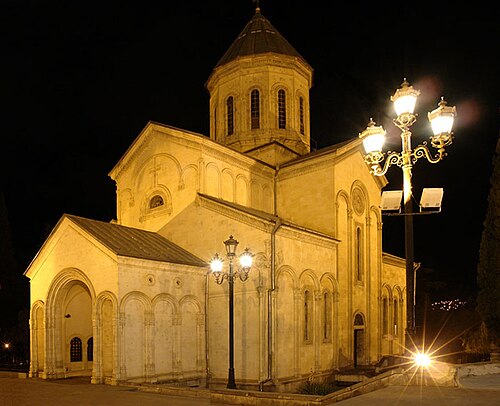
Kashveti Church is a stone church dedicated to Saint George, located on Rustaveli Avenue in Tbilisi, directly opposite the Parliament of Georgia building. Its local name is ქაშვეთის წმინდა გიორგის ეკლესია.
Turtle Lake, known locally as Kus Tba, is a recreational lake situated on a wooded hillside above the Vake district of Tbilisi, Georgia. The area serves as one of the city's most accessible and popular outdoor recreation destinations.
Lisi Lake is a recreational lake on the western edge of Tbilisi, Georgia. Its local name is ლისის ტბა. The lake and surrounding area form a significant leisure destination for residents and visitors seeking outdoor activity.
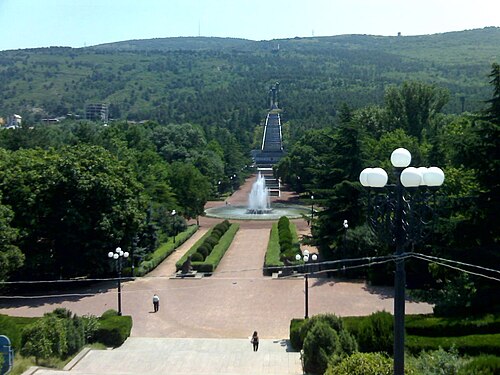
Vake Park is a monumental terraced park serving as a principal green space in western Tbilisi. Known locally as ვაკის პარკი, it occupies a significant hillside position and functions as one of the city's most important recreational areas.
Armaztsikhe is an archaeological site near Tbilisi, Georgia, associated with the ancient kingdom of Iberia. The local name არმაზციხე-ბაგინეთი არქეოლოგიური ძეგლი identifies it as the Armaztsikhe-Bagineti archaeological monument.
Mziuri Park is a restored public park in the Vere valley of Tbilisi, Georgia. Known locally as მზიურის პარკი, it functions as one of the capital's most significant family-oriented public landscapes.
Dedaena Park is a public riverside green space in Tbilisi, Georgia. Its Georgian name, დედაენის ბაღი, translates to Mother Tongue Park, referencing the prominent Georgian-language memorial located within its grounds.
Mtatsminda Pantheon is a burial ground and memorial complex on Mtatsminda hill in Tbilisi, Georgia. The local name is მთაწმინდის პანთეონი. It serves as a national pantheon where notable Georgian cultural and public figures are interred.
Vera Park is a neighbourhood park in Tbilisi's central Vera district, known locally as ვერეს ბაღი. The park functions as a lived-in green space serving the surrounding residential area.
Tbilisi National Park is Georgia's first national park, established to protect forested ridges immediately north of the capital city. The park encompasses substantial mountainous terrain that serves as a critical green belt for Tbilisi.
The Bank of Georgia Headquarters is a landmark of late-Soviet modernist architecture in Tbilisi.
Tbilisi Circus is a circular hilltop building overlooking Heroes Square in Tbilisi, Georgia. The structure serves as a prominent Soviet-era entertainment and architectural landmark. Its distinctive circular form and elevated position make it visually notable in the cityscape.
The Cathedral of the Assumption of the Virgin is the Catholic cathedral of Tbilisi, standing within the historic centre of Georgia's capital. Its local name is ღვთისმშობლის ამაღლების კათოლიკური კათედრალი.
Svetitskhoveli Cathedral is a Georgian Orthodox cathedral located in Mtskheta, the ancient capital near Tbilisi. Its local name is სვეტიცხოვლის საკათედრო ტაძარი.
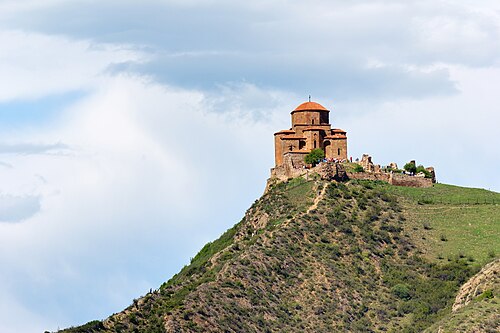
Jvari Monastery is a sixth-century hilltop church overlooking the confluence of the Mtkvari and Aragvi rivers above Mtskheta. The local name is ჯვრის მონასტერი.
Source: OpenStreetMap contributors, Wikidata ·
Seven to ten days supports Tbilisi plus Kakheti, Kazbegi or a western city without racing across the country. Combining Svaneti, the Black Sea and the capital needs additional nights because mountain and cross-country transfers consume substantial portions of a day.
Georgia’s official eVisa service explains whether advance permission applies to a particular passport. Confirm the permitted stay, entry route and documentation there, and consult current government guidance before any overland crossing rather than assuming every neighbouring border operates normally.
Tbilisi and Kutaisi are useful air gateways; trains serve a limited set of major corridors, and marshrutkas or hired vehicles reach many regional towns. Mountain itineraries need weather and road checks, while Tbilisi’s metro and buses handle most urban movements.
May to June and September to October are versatile for cities, wine regions and lower mountain routes. High passes may open later or close earlier, and Batumi has a wetter pattern, so one national forecast cannot settle dates for a multi-region journey.
Georgia uses the lari. Cards are common in Tbilisi, yet guesthouses, markets and mountain transport can still depend on cash; withdraw or exchange through recognised providers and confirm whether an quoted tour price includes regional transfers.
The emergency number is 112, with Type C and F sockets at 220 V. Tap-water guidance is Not recorded in this dataset; seek local confirmation, and keep official road or emergency alerts available when travelling into mountain districts.