
15 min walk
Beijing Ancient Observatory
- Must see · Heritage site
- Historic monument
Language · 11 published
Nature site · Beijing
日坛公园
| Monday | 06:00 – 22:00 |
|---|---|
| Tuesday | 06:00 – 22:00 |
| Wednesday | 06:00 – 22:00 |
| Thursday | 06:00 – 22:00 |
| Friday | 06:00 – 22:00 |
| Saturday | 06:00 – 22:00 |
| Sunday | 06:00 – 22:00 |
Checked 2026-08-31 · Source
Read from the OpenStreetMap access tags; anything not listed has no tag recorded.
Set the group type to family in the planner and the day window contracts to about three quarters of a solo day.
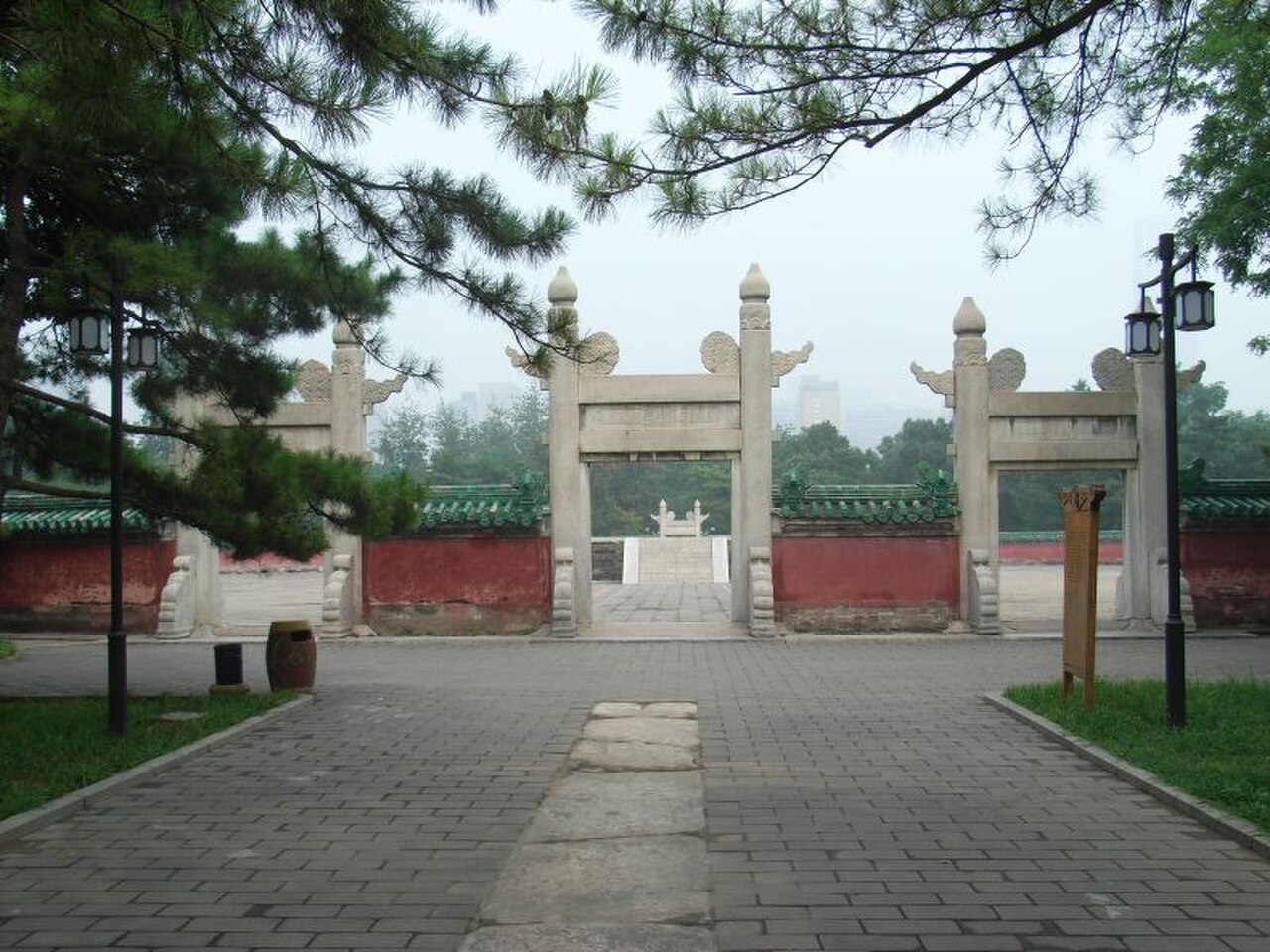
Ritan Park, known locally as 日坛公园, is a historic park located in Beijing's Chaoyang District. It occupies the site of the Altar of the Sun, one of the five imperial altars constructed during the Ming Dynasty for ritual sacrifices to celestial bodies. The park represents an important layer of Beijing's imperial religious heritage, complementing the better-known Temple of Heaven and Temple of Earth complexes. Today it functions as a public urban park, offering green space within one of China's most densely populated capital districts.
Checked 2026-08-26
The park contains remnants and reconstructions related to its original function as a state religious site. Visitors will find landscaped gardens, tree cover, and open spaces typical of Chinese municipal parks. The altar platform itself, where emperors once performed ceremonies facing east toward the rising sun, remains a central feature. Walking paths permeate the grounds. Recreational facilities for residents, including exercise equipment and spaces for tai chi and other activities, reflect its contemporary dual role as both heritage site and neighborhood amenity. The southwest water garden holds summer lotus, while the northwest corner contains Ma Jun's tomb and memorial room. The central altar normally remains closed outside selected cultural ceremonies.
Checked 2026-08-26
A thorough visit to Ritan Park requires approximately one to two hours for visitors interested in examining the historical altar structures and circulating through the landscaped grounds. Those combining the park with adjacent attractions in the Chaoyang area may allocate less time. Local residents frequently use the space for morning exercise routines, suggesting that brief visits of thirty minutes suffice for atmospheric exposure. The compact footprint relative to Beijing's larger imperial sites supports efficient visitation without extensive walking demands.
Checked 2026-08-26
Ritan Park opens daily at 06:00 and closes at 22:00 in summer or 21:00 in winter. Morning is best for cooler paths and observing local exercise; later afternoon brings softer light to the altar walls and landscaped southwest garden. Lotus flowers are a summer feature around the park's water garden. The central Sun Altar is not ordinarily open for casual entry: it is associated with selected cultural ceremonies, especially around the spring equinox. Event days can bring temporary barriers and crowds even while the rest of the free public park remains open.
Checked 2026-08-31 · Source
Admission to Ritan Park is free and no general reservation is required. Restaurants by the east and south gates, the independently operated outdoor climbing facility and any special activities charge separately. Free park entry does not authorise access inside the normally closed Sun Altar or into an event-controlled area. The climbing wall has its own operator, safety rules and ticket and should not be treated as a park amenity included with admission. Visitors can therefore walk the gardens and view the historic ensemble without payment while choosing commercial services individually.
Checked 2026-08-31 · Source
Ritan Park occupies a central Chaoyang District location accessible via Beijing's extensive public transportation network. The nearest subway stations serve multiple lines connecting to broader city destinations. Bus routes traverse surrounding roadways. Taxis and ride-hailing services operate throughout the district. Cycling represents a viable option given Beijing's expanding bike-sharing infrastructure. The park's address places it within reasonable proximity to the Central Business District and diplomatic quarter, facilitating combination itineraries. Visitors should consult current transit applications for routing.
Checked 2026-08-26
Standard urban park precautions apply: secure personal belongings against opportunistic theft, remain aware of bicycle and electric vehicle traffic on adjacent roadways, and exercise caution on potentially uneven walking surfaces. Beijing's air quality varies significantly; sensitive individuals should monitor daily readings. Summer heat necessitates hydration and sun protection. Winter visits require appropriate cold-weather clothing. The park's mixed use by exercising residents and tourists demands mutual courtesy regarding shared spaces and photography of individuals without consent. A flexible visit lets travellers connect Ritan Park with the rest of the day without treating one room, viewpoint or photograph as the whole experience. The useful pace depends on personal interest and conditions on arrival.
Checked 2026-08-26
Ritan's west-facing altar walls, old cypresses, lotus pond and curved southwest garden provide distinct subjects. Morning works for quiet documentary images of local park life; late afternoon gives warmer light across the red walls and glazed roofs. The main paths allow handheld personal photography, but the altar's closed boundary must be respected. Ask permission before photographing worship-like ceremonies, organised activities or identifiable individuals at close range. Tripods must not block exercise routes, and drones require aviation and site permission. The commercial climbing area and restaurants may apply their own photography rules.
Checked 2026-08-31 · Source
Summer hours are 06:00-22:00; winter closes at 21:00.
Yes. The park is free; commercial activities charge separately.
Partially. Main routes are accessible, while rockeries, altar steps and some garden paths are not.
Yong'an Li Station on Line 1.
Ming and Qing emperors held state ceremonies here to worship the sun deity.
No. The central altar is normally closed and opens for selected ceremonial cultural events, including around the spring equinox.
Loading the interactive map…
The interactive map could not be loaded.


Last updated:
Source: OpenStreetMap contributors, Wikidata ·