.jpg)
.jpg)
_View_of_Jingshan_(Coal_Hill)_(9869223496).jpg)
_View_of_Jingshan_(Coal_Hill)_(9869321533).jpg)


12 min walk
Forbidden City
- Must see · Heritage site
- Historic monument
Language · 11 published
Nature site · Beijing
景山公园
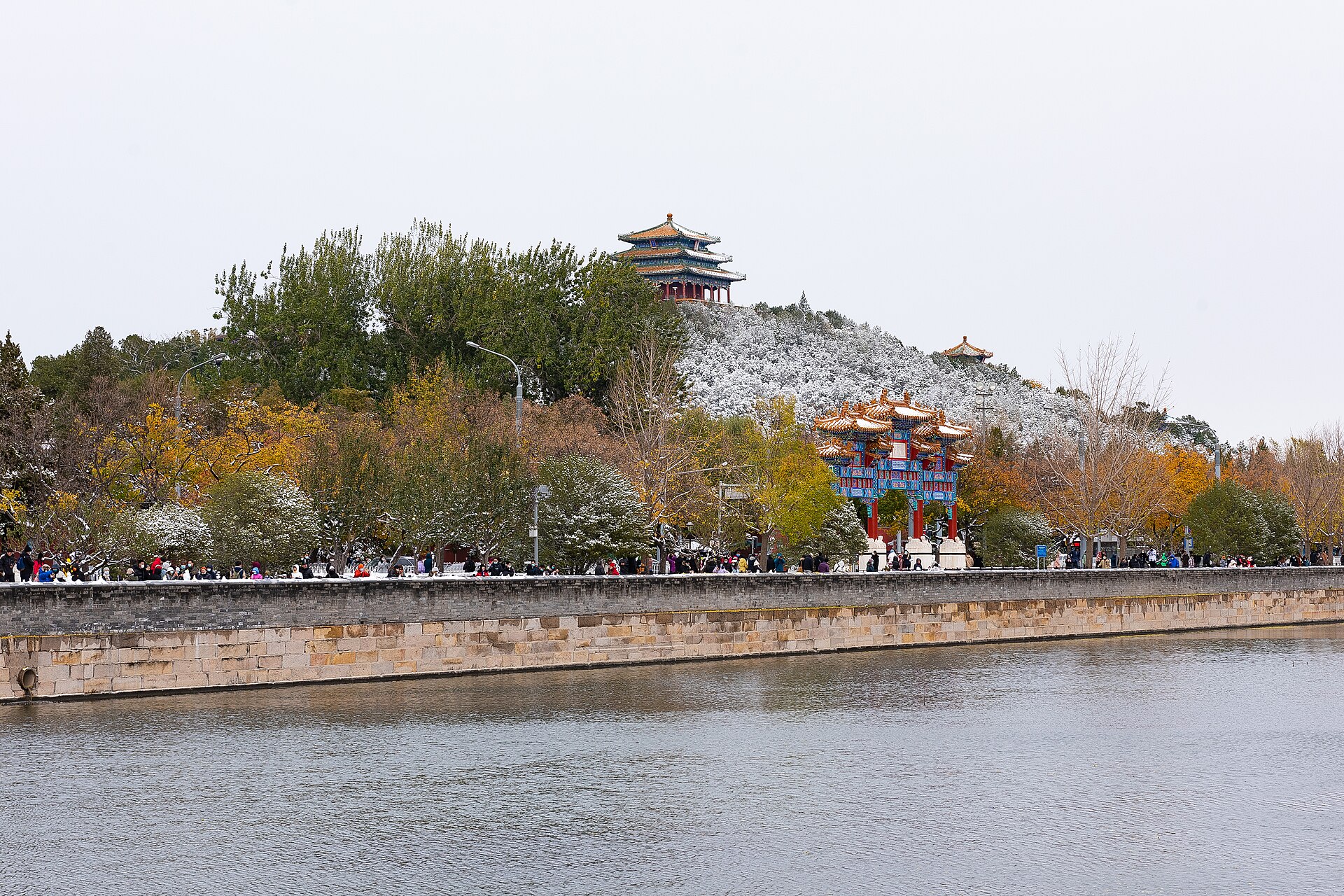
Jingshan Park is a historic imperial garden located immediately north of the Forbidden City in central Beijing. The park centers on Jingshan Hill, an artificial mound created from earth excavated during the construction of the Forbidden City's moat. The site served as a private imperial garden during the Yuan, Ming, and Qing dynasties before opening to the public in the 20th century. It remains one of Beijing's most culturally significant green spaces, offering visitors a direct connection to China's imperial past through its landscape design and architectural elements.
Checked 2026-08-26
The park contains the central Jingshan Hill with five individual peaks, each topped by a pavilion. The Wanchun Pavilion stands at the summit, offering panoramic views across Beijing's historic core. Pathways wind through cultivated gardens featuring mature trees, including specimens of Chinese scholar trees and pines. Stone staircases connect the various levels. Traditional architectural elements include glazed tile roofs and painted decorations. The park also contains historical commemorative sites and landscaped areas that reflect traditional Chinese garden aesthetics and feng shui principles in their arrangement.
Checked 2026-08-26

Visitors typically allocate between one and two hours for a complete exploration of Jingshan Park. The ascent to the summit pavilion takes approximately fifteen to twenty minutes at a moderate pace along stone staircases. Additional time allows for circumnavigation of the hill's base, examination of individual pavilions, and contemplation of garden areas. Photographers and those seeking extended views over the Forbidden City may wish to extend their stay. The compact footprint permits efficient visiting, though morning or evening light conditions may encourage longer stays for optimal visibility and atmosphere.
Checked 2026-08-26

Jingshan Park offers distinct experiences across seasons, with spring blossoms and autumn foliage providing notable visual interest. Early morning and late afternoon hours generally yield softer light for viewing and photography, with reduced crowding at opening times. Sunrise visits attract photographers seeking dawn illumination of the Forbidden City. Operator-confirmed hours are Not recorded pending review. Visitors should verify current opening times through official channels before planning. Weather conditions in Beijing's continental climate vary substantially; summer brings heat and humidity, while winter can be bitterly cold with occasional snow transforming the hill's appearance.
Checked 2026-08-26
Jingshan Park operates as a ticketed public attraction. Operator-confirmed prices are Not recorded pending review. Visitors should consult official Beijing municipal tourism resources or on-site signage for current admission fees. The park historically maintained separate pricing structures for peak and off-peak periods, though this practice may have changed. Reduced rates may apply for designated categories of visitors according to standard Chinese cultural site policies. Payment methods should be verified in advance, as cashless systems increasingly predominate. Annual passes or combination tickets with adjacent attractions may be available through official channels.
Checked 2026-08-26

Jingshan Park occupies a highly accessible central Beijing location with multiple transport options. The site lies directly north of the Forbidden City's Shenwu Gate. Subway access is available via nearby stations on Beijing's metro network, with walking connections required. Multiple bus routes serve stops in the surrounding area. Taxis and ride-hailing services can access adjacent roads, though traffic congestion is common in this historic district. Cycling presents viable options for local visitors. Pedestrian approaches from the Forbidden City, Beihai Park, or the surrounding hutong neighborhoods allow integrated exploration of the central heritage zone.
Checked 2026-08-26

The stone staircases ascending Jingshan Hill become slippery during precipitation and require appropriate footwear. Summer heat demands hydration and sun protection given limited shade on exposed summit areas. Crowding peaks during domestic holiday periods, substantially affecting movement and viewpoints. Physical exertion on steep sections may challenge visitors with mobility limitations. The summit's open railings require caution with children. Air quality fluctuations in Beijing may obscure distant views unpredictably. Visitors should remain aware of personal belongings in congested areas. Respectful behavior is expected at sites of historical significance within the park grounds.
Checked 2026-08-26

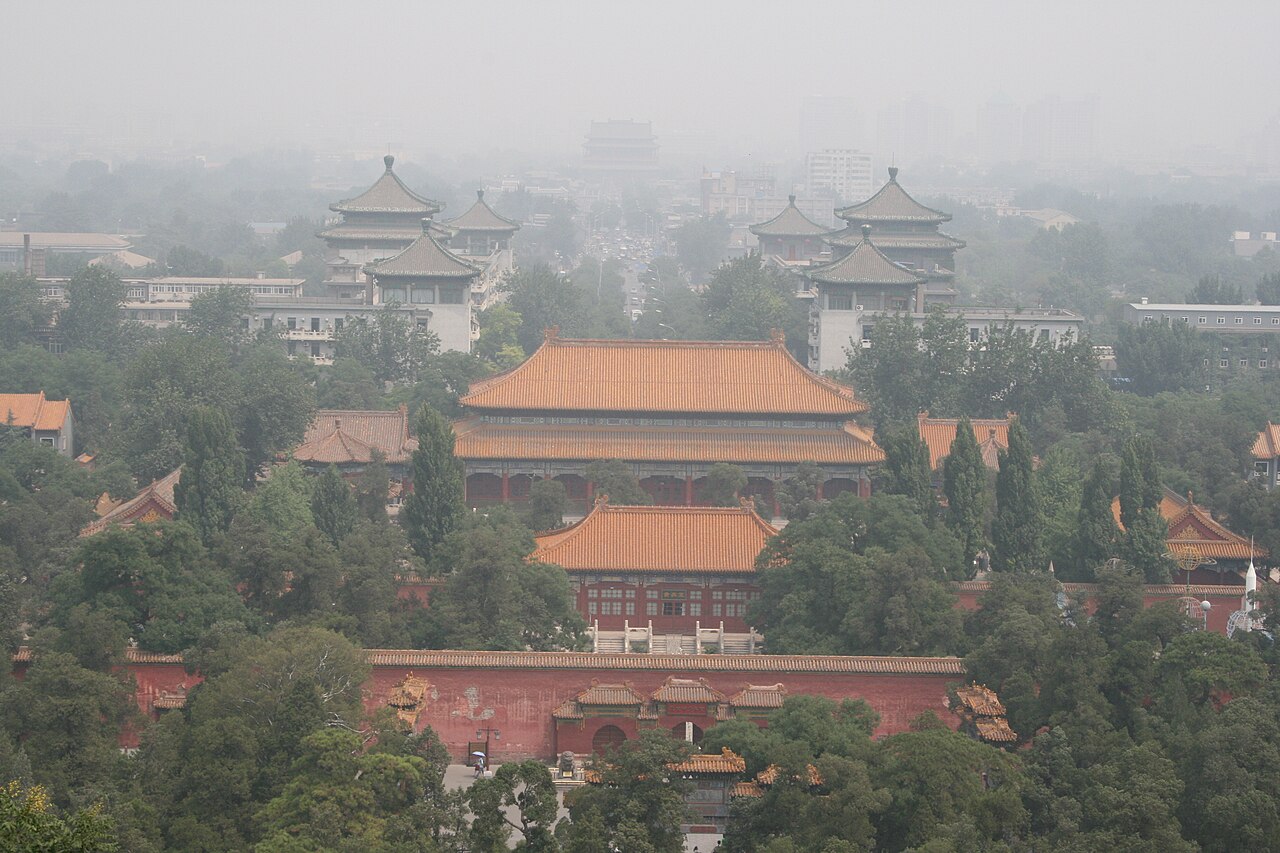
The summit Wanchun Pavilion offers the premier photographic vantage over the Forbidden City's golden rooftops, best captured with standard to moderate telephoto lenses. Morning light illuminates the palace complex from the east; afternoon backlights the scene. Wide-angle lenses accommodate the expansive rooftop panorama. Garden details and architectural elements reward closer examination throughout the park. Tripod use may face restrictions during peak periods. The hill's elevation provides rare elevated perspectives within flat central Beijing. Seasonal variations dramatically alter visual character, from bare winter branches to dense summer foliage framing compositions. Early arrival secures unobstructed viewpoints at popular observation positions.
Checked 2026-08-26
No. Jingshan Park is a separate public park located immediately north of the Forbidden City. While historically connected as an imperial garden, it operates independently and requires separate admission.
The summit offers extensive views across the Forbidden City's rooftop complex, though complete ground-level visibility of all courtyards is not possible from this external vantage point.
The ascent involves stone staircases of moderate steepness. Most visitors of average fitness manage without difficulty, though those with mobility limitations or cardiovascular conditions should proceed cautiously.
Public facilities exist within the park grounds, though their current condition and exact locations should be verified on-site.
Yes. The sites are adjacent, permitting sequential visiting. The substantial time requirements of the Forbidden City should be factored into combined itineraries.
Night access policies are not recorded. Visitors should verify current operating hours through official channels, as most municipal parks in Beijing maintain defined closing times.
Loading the interactive map…
The interactive map could not be loaded.
Last updated:
Source: OpenStreetMap contributors, Wikidata ·