

1 min walk
Notre-Dame Basilica-Cathedral
- Must see · Heritage site
- Place of worship
Language · 11 published
Museum · Quebec City
Read from the OpenStreetMap access tags; anything not listed has no tag recorded.
Set the group type to family in the planner and the day window contracts to about three quarters of a solo day.
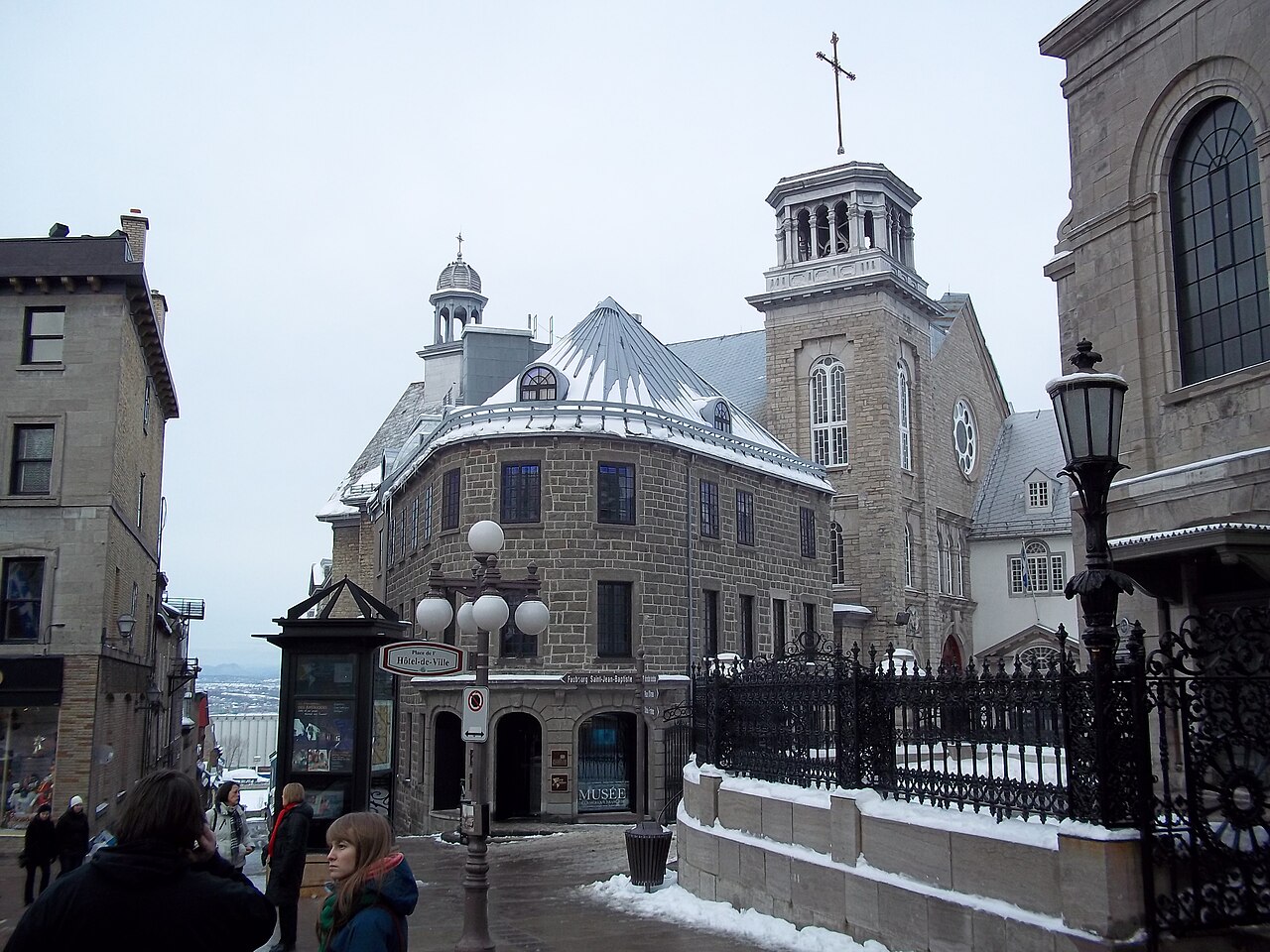
The Musée de l’Amérique francophone is a history museum in the Séminaire de Québec complex in Québec City. It explores French-speaking communities across North America, linking regional history with wider stories of settlement, migration, religion, education, and cultural continuity. The historic seminary setting gives the museum a strong sense of place. Visitors interested in Francophone identity will find a more focused experience here than in a general city museum, with Québec’s institutional and religious past close at hand. The Musée de l'Amérique francophone is a history museum located within the Séminaire de Québec complex in Quebec City. It interprets the history of French-speaking populations across North America. The institution is part of the Musées de la civilisation network. Its setting in a historic seminary building contributes to its significance as a cultural landmark. The museum addresses themes of colonization, migration, religious history, and the development of Francophone communities from early settlement through contemporary periods. Historic building features may limit accessibility. Visitors should contact the museum directly to confirm current accommodations and alternative access routes.
Checked 2026-08-26 · Source
Exhibitions use artifacts, documents, religious art, historical objects, and multimedia interpretation to explain French-speaking North American history. Displays connect the Séminaire de Québec’s heritage with broader Francophone experiences and cultural transmission. The chapel and historic interiors add architectural context to the collections. Exhibition details can change, so give priority to the themes and objects that are present during your visit. Read slowly where personal stories, migration, and religious history meet, since the museum’s strength lies in connected interpretation.
Checked 2026-08-26 · Source
Most visitors should allow about ninety minutes to two hours. That is enough for the principal displays, historic setting, religious art, and interpretive panels without rushing. Travelers with a strong interest in Francophone history, seminary education, or colonial and religious institutions may want longer. The museum’s relatively compact footprint also makes it easy to place between other Upper Town sights. Add time for nearby streets and historic buildings if you want the museum to anchor a broader walking circuit.
Checked 2026-08-26 · Source
The museum is a useful indoor stop in rain, snow, or cold weather. Summer brings more travelers to Québec City, while school groups and organized visits can affect the atmosphere during the academic year. A quieter pace suits visitors who want to read the displays closely and consider the museum’s treatment of religion, settlement, and cultural identity. Place it between outdoor walks through the historic core so the day alternates between concentrated interpretation and open-air exploration.
Checked 2026-08-26 · Source
Plan the museum as a conventional cultural attraction within the Musées de la civilisation network. Combined admission may be useful for travelers visiting more than one participating museum, while children, students, seniors, families, and members may have different arrangements. Keep any museum admission separate from the free experience of walking through Québec’s historic streets. If your day includes several indoor attractions, compare the time each offers before choosing a pass or combination, since this museum’s appeal is focused rather than sprawling.
Checked 2026-08-26 · Source
The museum occupies a central Upper Town position within the historic district, close to the Séminaire de Québec and other major institutions. Walking from the Château Frontenac area is practical for many visitors, although Québec City’s slopes and stone streets require comfortable footwear. The funicular provides a connection between Lower Town and the upper levels of the city. Bus routes serve the surrounding streets, while driving in the historic core is less convenient because parking is limited.
Checked 2026-08-26 · Source
The seminary’s historic architecture may include stairs, uneven surfaces, and circulation that differs from a modern museum. Exhibition language may be predominantly French, so travelers should allow extra time for interpretation if reading every panel. Galleries can vary in temperature, and photography rules may differ between rooms. Colonial history, religious institutions, and cultural change are central subjects, making the visit more reflective than entertainment-oriented. Travel light through the galleries and give other visitors room around objects and displays.
Checked 2026-08-26 · Source
The seminary setting, chapel, historic interiors, religious art, documents, and selected objects offer varied photographic subjects. Follow gallery signs and keep flash, tripods, and selfie sticks away from displays unless clearly permitted. Some loaned or copyrighted works may have stricter rules than the surrounding rooms. Photographing the architecture can help preserve the connection between the museum’s collections and Québec City’s institutional history. Keep the camera low and unobtrusive in narrow spaces, and never let a photograph interrupt another visitor’s reading or reflection.
Checked 2026-08-26 · Source
It explores French-speaking North American history, including settlement, migration, religion, education, cultural transmission, and the heritage of the Séminaire de Québec.
Allow about ninety minutes to two hours for the principal displays, historic interiors, religious art, and interpretive material.
It is in the Séminaire de Québec complex in Québec City’s central Upper Town, close to the historic core and other major institutions.
Expect artifacts, documents, religious art, historical objects, multimedia interpretation, and historic seminary or chapel spaces connected with Francophone North American history.
Yes. Its Upper Town location works well with the Séminaire de Québec, Château Frontenac area, nearby historic streets, and other museums in the Musées de la civilisation network.
Its focus is specifically French-speaking North American history, presented within a historic seminary setting that connects the exhibitions directly with Québec’s religious and institutional past.
Loading the interactive map…
The interactive map could not be loaded.


Last updated:
Source: OpenStreetMap contributors, Wikidata ·