

2 min walk
fontaine de Tourny
- Must see
- Historic monument
Language · 11 published
Historic monument · Quebec City
fortifications de Québec
Read from the OpenStreetMap access tags; anything not listed has no tag recorded.
Set the group type to family in the planner and the day window contracts to about three quarters of a solo day.
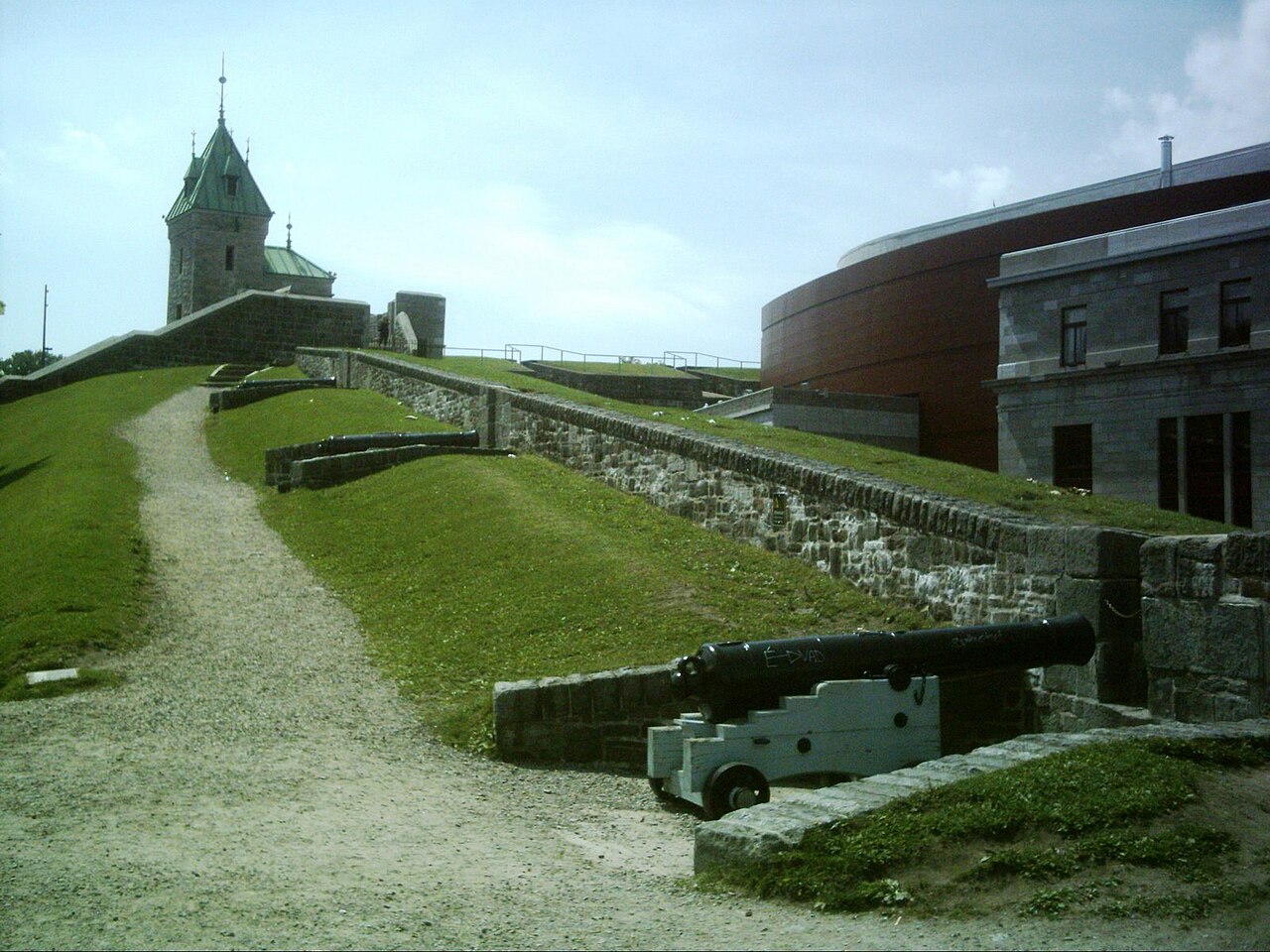
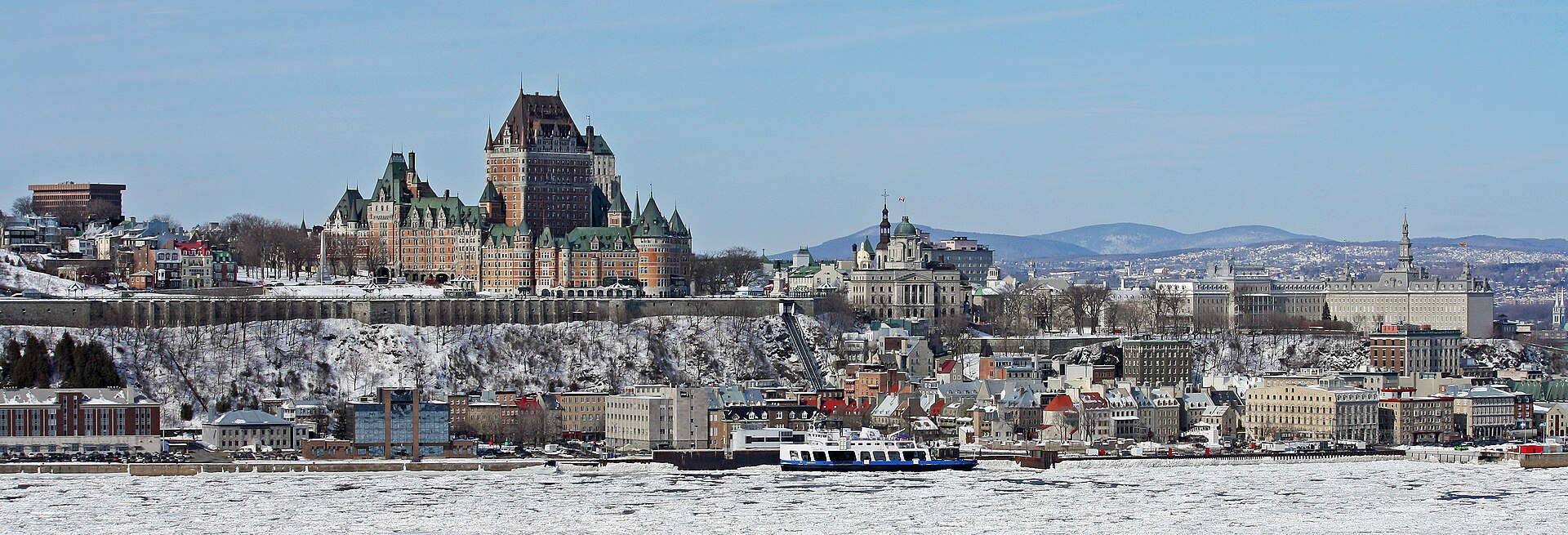
The Fortifications of Quebec are the defensive walls, gates, and ramparts that encircle Old Quebec, forming the only remaining fortified city walls in North America north of Mexico. Constructed under French and British colonial regimes between the 17th and 19th centuries, these structures were designated a UNESCO World Heritage Site in 1985 as part of the Historic District of Old Québec. The fortifications represent successive military engineering traditions adapted to the strategic cliff-top position overlooking the St. Lawrence River.
Checked 2026-08-26
The surviving fortifications include ramparts, four remaining gates, defensive towers, and the Citadelle of Quebec. Visitors can walk along sections of the wall promenade, passing through structures such as St. Louis Gate and Kent Gate. The walls connect various bastions and offer elevated perspectives across the Upper Town. Interpretive panels appear at intervals. The Citadelle remains an active military installation with its own visiting arrangements. Underground casemates and powder magazines exist in some sections, though accessibility varies. Fortifications of Quebec also earns time in a quebec city itinerary because WIKIDATA_EDITORIAL reconciliation for the ranked entry; identity and coordinates were verified without a nearby fallback. Its value becomes clearer when the stop is compared with the surrounding streets and the other ranked places nearby.
Checked 2026-08-26
A complete circuit following accessible wall sections requires approximately two to three hours at a moderate pace with stops for reading interpretive material. Shorter segments suit visitors with limited time; the Promenade des Gouverneurs and sections near Dufferin Terrace offer brief accessible walks. Those intending to include the Citadelle should add additional time separately, as it operates independently. Weather conditions affect walking speed on exposed ramparts, particularly during winter months when ice and snow accumulation may slow progress.
Checked 2026-08-26
The walls are publicly accessible outdoor structures, though specific seasonal access restrictions to certain gates or staircases may apply. Winter visits offer distinctive atmosphere with snow-covered ramparts, though footing requires caution. Summer brings fuller foliage and longer daylight. Spring and autumn provide moderate temperatures. The elevated position exposes walkers to wind from the river regardless of season. Early morning and evening hours offer reduced pedestrian traffic along popular central sections. A flexible visit lets travellers connect Fortifications of Quebec with the rest of the day without treating one room, viewpoint or photograph as the whole experience. The useful pace depends on personal interest and conditions on arrival. Check the operator's own site for the travel date before relying on a schedule or fare.
Checked 2026-08-26
No general admission fee applies to walking the publicly accessible sections of the fortifications themselves. The Citadelle of Quebec, which adjoins the wall system, charges separate admission for its guided tours and museum facilities. Some specialized tours incorporating fortification history may carry fees through third-party operators. Visitors should verify current arrangements independently, as municipal or Parks Canada management structures may affect specific access policies for particular gates or seasonal programming. Check the operator's own site for the travel date before relying on a schedule or fare.
Checked 2026-08-26
The fortifications encircle Old Quebec's Upper Town, accessible from multiple points within the pedestrian-friendly historic district. St. Louis Gate opens near the intersection of Rue Saint-Louis and Côte de la Citadelle. Kent Gate faces west toward the Plains of Abraham. Other access points include staircases and ramps connecting Upper and Lower Towns. The funicular from Lower Town to Dufferin Terrace reaches wall-proximate areas. Walking remains the primary means of exploring the ramparts themselves, as the structure follows a pedestrian route.
Checked 2026-08-26
The ramparts include uneven stone surfaces, stairs without consistent handrails, and narrow passages unsuitable for all mobility levels. Winter ice creates significant slip hazards on exposed stone. Some sections lack protective barriers at edges. The walls follow an irregular route with multiple dead-ends where reconstruction or modern construction interrupts continuity. Visitors should remain aware of closing mechanisms at gates, which may restrict passage at certain hours. Weather changes occur rapidly on the elevated position; wind and precipitation affect comfort and safety.
Checked 2026-08-26
The ramparts provide elevated vantage points over the St. Lawrence River, Lower Town rooftops, and surrounding architectural landmarks. Morning light illuminates the river-facing east side; afternoon suits westward views toward the Plains of Abraham. Gate interiors offer framed compositions of street perspectives. The stone textures and geometric angles of bastions suit detail photography. Tripod use may obstruct narrow walkways and should respect pedestrian traffic. Night photography of illuminated gates is possible, though artificial lighting varies by location and seasonal programming.
Checked 2026-08-26
No. The surviving fortifications represent substantial but incomplete portions of the historical defensive system. Modern development, demolition, and modifications have interrupted continuity. Visitors can walk connected sections with occasional descents to street level.
Accessibility varies significantly. Stone surfaces, stairs, and narrow passages present barriers. Some sections may be unsuitable. Visitors requiring accessible routes should research specific segments independently or seek current municipal guidance.
The Citadelle adjoins the wall system but operates separately with its own access policies, hours, and admission. It is an active military installation, not a continuous part of the public rampart walkway.
Various guided walking tours incorporating fortification history operate in Quebec City through independent operators. Parks Canada or municipal heritage programming may offer seasonal tours. Current availability should be verified independently.
Construction occurred across multiple phases from the 17th century under French rule through 19th-century British modifications. Different sections reflect different periods and engineering approaches.
Some gates may have restricted hours or closing mechanisms. Specific current arrangements are Not recorded pending review. Visitors should not assume 24-hour access to all passage points.
Loading the interactive map…
The interactive map could not be loaded.

Last updated:
Source: OpenStreetMap contributors, Wikidata ·