
19 min walk
College Jesus-Marie of Sillery
- Notable
- Place of worship
Language · 11 published
Nature site · Quebec City
Parc du Bois-de-Coulonge
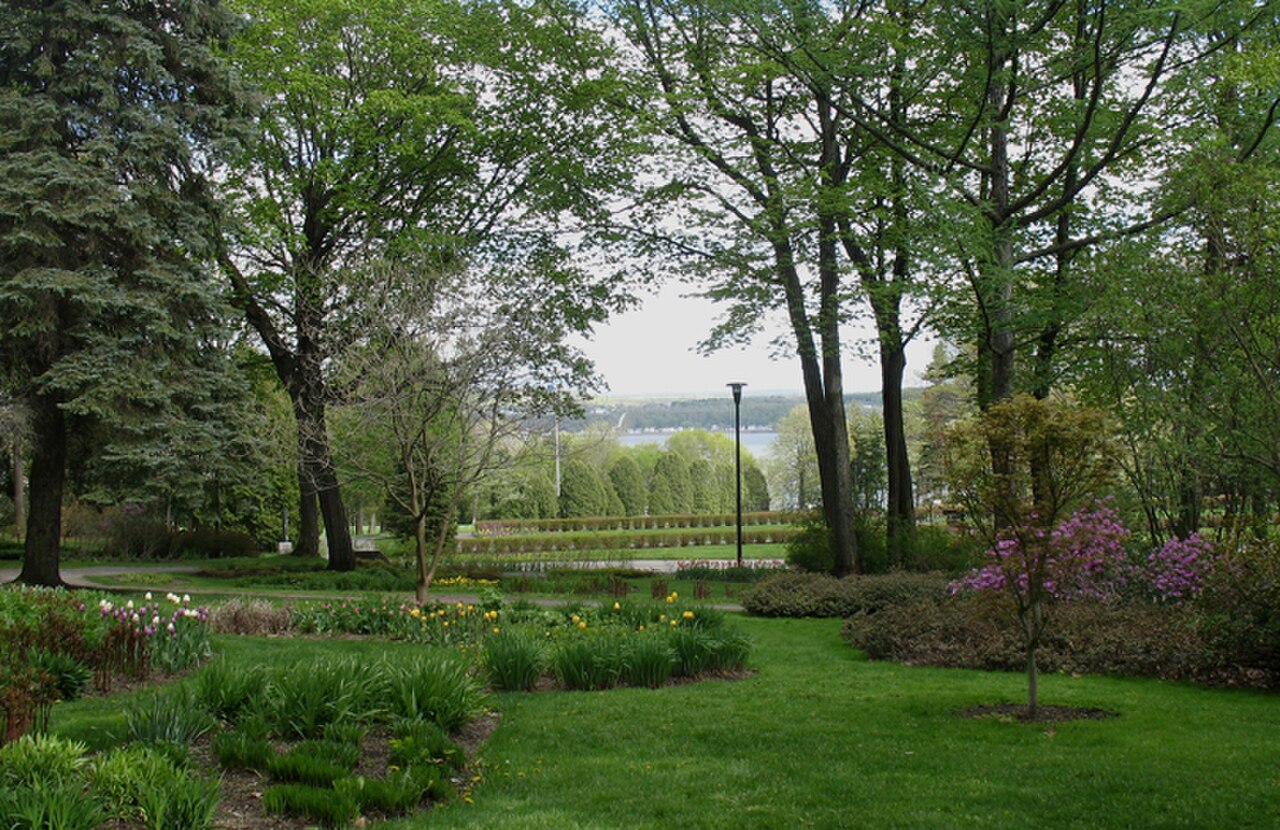
Bois-de-Coulonge Park, known locally as parc du Bois-de-Coulonge, comprises landscaped former vice-regal grounds situated along a riverside in Québec City. The property served as the residence of Quebec lieutenant-governors, reflecting its historical significance in provincial governance. Today it functions as a public garden and walking destination maintained for visitor enjoyment. The site represents an important heritage landscape, preserving formal garden design traditions from its vice-regal era while accommodating contemporary recreational use. Its riverside location contributes distinctive scenic qualities to the visitor experience.
Checked 2026-08-26
The park contains substantial gardens developed during its vice-regal period, featuring landscaped grounds that visitors may explore on foot. As a riverside garden destination, the property offers walking opportunities through maintained horticultural spaces. The formal garden character suggests structured plantings and designed vistas typical of nineteenth and early twentieth-century estate landscapes. Visitors should expect outdoor garden environments rather than enclosed buildings or amusement facilities. The National Capital Commission manages the property, indicating federal stewardship of this heritage landscape. Specific garden features, plant collections, and structural elements require direct observation or operator confirmation.
Checked 2026-08-26
Visitor duration depends on individual walking pace and garden exploration preferences. A comprehensive stroll through substantial landscaped grounds typically requires between one and two hours for attentive visitors. Those seeking brief riverside respite may complete a shorter circuit in approximately thirty to forty-five minutes. Photography enthusiasts and garden observers often extend their stay to capture seasonal variations in plantings and light conditions. The park's scale as a substantial garden destination supports flexible visit lengths. Visitors should allocate sufficient time for unhurried appreciation of the heritage landscape character without predetermined scheduling constraints.
Checked 2026-08-26
Seasonal conditions significantly affect garden visitation experiences. Spring through autumn generally provides optimal conditions for appreciating landscaped grounds and walking comfortably outdoors. Winter presents snow-covered conditions that alter accessibility and visual character. Weather-dependent clothing and footwear adaptations prove essential given Québec City's continental climate with cold winters and variable precipitation. Daylight hours vary substantially across seasons, influencing practical visiting windows for outdoor garden exploration. Check the operator's own site for the travel date before relying on a schedule or fare.
Checked 2026-08-26
Admission arrangements for federal heritage properties vary by site and management policy. Some National Capital Commission properties operate without entry fees while others may implement cost recovery mechanisms. Potential costs could include parking fees, special event admissions, or guided tour charges if offered. Visitors carrying federal or provincial park passes should inquire about reciprocal arrangements. Budget-conscious travelers should prepare for either free access or modest fees depending on operational determinations beyond available documentation. Check the operator's own site for the travel date before relying on a schedule or fare.
Checked 2026-08-26
The park occupies a riverside location within Québec City, suggesting proximity to the Saint Lawrence River waterfront. Visitors typically access such properties via personal vehicle, public transit, walking, or cycling depending on origin point and infrastructure. Québec City's transit system serves numerous attractions though specific route connections require verification. Parking availability near heritage properties fluctuates with demand and seasonal visitation patterns. Cyclists should investigate dedicated path connections along riverside corridors. Pedestrian access from adjacent neighborhoods or nearby attractions may prove feasible for visitors staying in central locations. Pre-trip route planning remains advisable.
Checked 2026-08-26
Outdoor garden environments present inherent variables requiring visitor awareness. Weather conditions change rapidly; adequate clothing layers protect against wind, precipitation, and temperature shifts near riverside locations. Path surfaces may become slippery when wet or icy. Natural hazards including uneven terrain, exposed roots, or wildlife encounters warrant attention. Sun exposure accumulates during extended walking; protective measures benefit visitors. Heritage landscapes may contain protected plantings or restricted areas; visitors should observe signage and remain on designated paths. Seasonal maintenance activities could affect access to certain garden sections. Personal belongings security requires vigilance in public spaces.
Checked 2026-08-26
The landscaped grounds and riverside setting offer substantial photographic interest for visitors. Formal garden compositions, heritage architectural elements, and water vistas provide varied subjects. Lighting conditions shift dramatically across seasons and times of day, affecting image qualities. Morning and evening hours typically yield favorable natural illumination for garden photography. Tripod use may require permission in managed properties; visitors should inquire about specific policies. Commercial or posed photography involving equipment beyond handheld cameras might necessitate advance arrangement. Respect for other visitors and protection of plantings should guide positioning and movement decisions throughout the grounds.
Checked 2026-08-26
Seasonal accessibility varies for outdoor heritage properties. Visitors should consult current National Capital Commission information for operational status across seasons.
Tour programming for heritage properties changes periodically. Current offerings require direct verification with the National Capital Commission or on-site visitor services.
Picnic policies vary across managed properties. Visitors should observe posted regulations and consult staff regarding permitted activities in specific garden areas.
Heritage landscapes present variable terrain challenges. Path surfaces and gradients differ throughout grounds; specific accessibility conditions require direct observation or operator inquiry.
Pet policies for National Capital Commission properties differ by site. Visitors should verify current regulations regarding leashed or restricted animal access before visiting.
Heritage properties frequently accommodate private functions with advance arrangements. Event scheduling and rental procedures require direct coordination with National Capital Commission administration.
Loading the interactive map…
The interactive map could not be loaded.
Last updated:
Source: OpenStreetMap contributors, Wikidata ·