


31 min walk
Morro do Anhanguera
- Notable
- Viewpoint
Language · 1 published
Museum · Rio de Janeiro

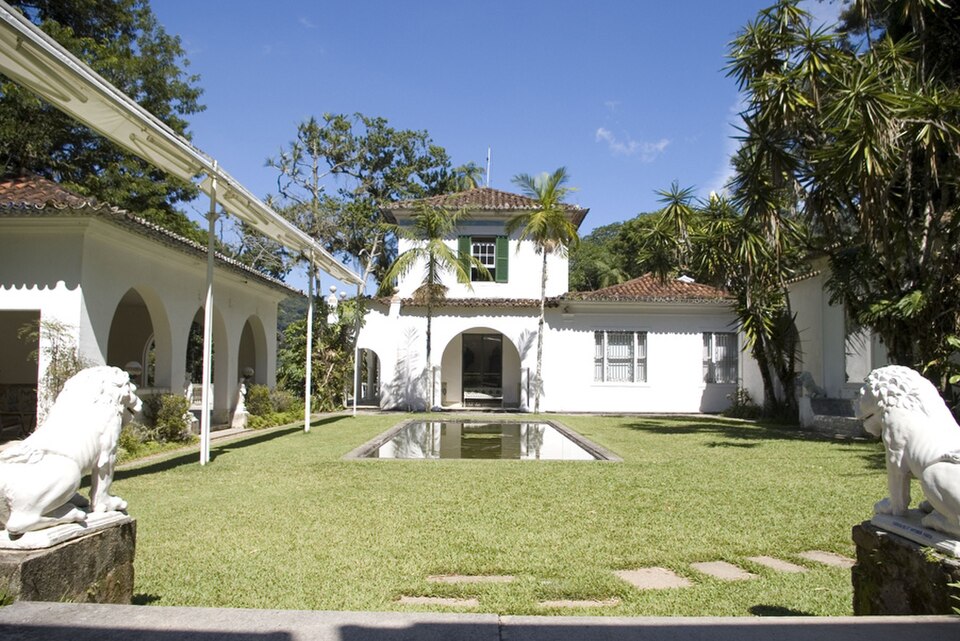
The Museum of Açude is a cultural institution within Rio de Janeiro's Tijuca Forest. It forms part of the Castro Maya Museums network, administered under Brazilian federal museum governance. The museum occupies a historic property that belonged to art collector and patron Raymundo Ottoni de Castro Maya. Its setting combines preserved Atlantic Forest environment with curated cultural spaces. The site functions as both museum and landscaped heritage property, integrating indoor exhibition areas with extensive gardens. Visitors encounter a destination where art collection, architectural heritage, and natural surroundings converge in a single managed cultural complex.
Checked 2026-08-26
The museum houses Castro Maya's personal collections, displayed across interior galleries. These holdings include Portuguese tile panels, Asian decorative arts, and European paintings. Beyond indoor exhibitions, the property features designed gardens with native and exotic vegetation. A significant contemporary art component exists outdoors, with sculptures and installations positioned throughout the landscaped grounds. The combination creates dialogue between historical collections and modern artistic interventions. The Tijuca Forest setting provides additional environmental context, with mature trees and forested areas surrounding the developed museum spaces. Visitors experience curated culture within a semi-wild Atlantic Forest remnant.
Checked 2026-08-26

Visitor duration depends on individual engagement with both indoor collections and outdoor grounds. The museum complex spans interior galleries and extensive garden areas with dispersed art installations. A thorough visit requires time for walking the landscaped terrain, which includes slopes and uneven pathways typical of hillside Tijuca Forest terrain. Those focusing primarily on indoor exhibitions may complete their visit more quickly. Visitors interested in photography, garden contemplation, or detailed examination of outdoor contemporary works should allocate additional time. Weather conditions may affect comfortable exploration of the outdoor components, particularly during Rio de Janeiro's hotter or rainier periods.
Checked 2026-08-26

Operator-confirmed hours are Not recorded pending review. The museum's location within Tijuca Forest suggests visitors should consider daylight availability for safe garden exploration, as outdoor art installations require natural light for optimal viewing. Morning visits may offer cooler temperatures for walking the hillside grounds. Rio de Janeiro's summer brings intense heat and afternoon rainfall, potentially making outdoor circuit completion uncomfortable. Winter months typically provide milder conditions for extended garden visitation. Weekday visits likely reduce visitor density compared to weekends. Checking current operational status before travel is essential, as Brazilian federal museums may experience funding-related service alterations.
Checked 2026-08-26
Operator-confirmed prices are Not recorded pending review. As a federal museum under Brazilian government administration, admission policies may include free entry periods or category-based exemptions common to national cultural institutions. Visitors should verify current fee structures through official channels before arrival. Potential discounts may apply for students, seniors, teachers, or other designated groups under Brazilian museum policy. Payment methods accepted on-site remain unconfirmed. Advance reservation requirements, if any, should be established directly with museum administration. The official Castro Maya Museums website provides the authoritative source for current ticketing information and any special access conditions.
Checked 2026-08-26
The museum sits within Tijuca Forest, Rio de Janeiro's expansive urban forest reserve. Access requires navigating hillside terrain from surrounding neighborhoods. Public transportation options include buses serving the Alto da Boa Vista area, with walking required from stops to the museum entrance. Private vehicle access involves forest roads with limited parking availability. Taxi or rideshare services can approach closer but may face restricted entry during peak visitation or environmental management periods. The forest location means final approach typically involves walking on inclined paths. Visitors with mobility limitations should investigate current accessibility provisions directly with museum staff before planning arrival.
Checked 2026-08-26

The Tijuca Forest environment presents natural hazards including uneven terrain, steep inclines, and potentially slippery surfaces after rainfall. Wildlife encounters, while generally harmless, require appropriate caution and distance maintenance. Mosquito presence demands protective measures. The forest setting means limited immediate services; visitors should carry water and basic supplies. Weather changes occur rapidly in mountain forest environments. Pathway lighting for evening departure may be inadequate. Cell phone coverage can be inconsistent in forested areas. Visitors should remain on marked paths to prevent disorientation. Informing others of visit timing represents prudent practice given the semi-isolated location within extensive forest reserve.
Checked 2026-08-26

Photography policies for indoor collections and outdoor installations remain unconfirmed and should be verified with museum staff upon arrival. Contemporary outdoor artworks may have specific reproduction restrictions determined by artists or lending institutions. Flash photography typically damages light-sensitive historical materials and is likely prohibited in interior galleries. Tripod use usually requires advance permission in museum environments. The garden setting offers natural photography opportunities subject to general visitor conduct rules. Drone operation would require explicit authorization given the protected forest status and proximity to other visitors. Respect for fellow visitors and artwork preservation should guide all image capture behavior.
Checked 2026-08-26
The Museum of Açude operates as one component of the Castro Maya Museums network, which manages multiple properties from Raymundo Ottoni de Castro Maya's cultural legacy.
Yes, the museum integrates both elements, though adequate time and appropriate footwear for hillside terrain walking are recommended.
Specific installation durations are not recorded; visitors should verify current outdoor exhibition status through official museum channels.
Buses serve the general Alto da Boa Vista area, but expect walking on inclined forest paths to reach the museum entrance itself.
Rain creates slippery conditions on garden paths and reduces outdoor art visibility; drier periods likely provide more comfortable exploration.
The official source at https://museuscastromaya.museus.gov.br/ provides authoritative current operational details for the Castro Maya Museums network.
Loading the interactive map…
The interactive map could not be loaded.
Last updated:
Source: OpenStreetMap contributors, Wikidata ·