
.jpg)
.jpg)


4 min walk
Praça Mauá
- Must see
- Nature site
Language · 1 published
Museum · Rio de Janeiro
Museu do Amanhã
| Monday | 10:00 – 18:00 |
|---|---|
| Tuesday | 10:00 – 18:00 |
| Wednesday | Closed |
| Thursday | 10:00 – 18:00 |
| Friday | 10:00 – 18:00 |
| Saturday | 10:00 – 18:00 |
| Sunday | 10:00 – 18:00 |
Parsed from OpenStreetMap opening hours on 2026-08-26.
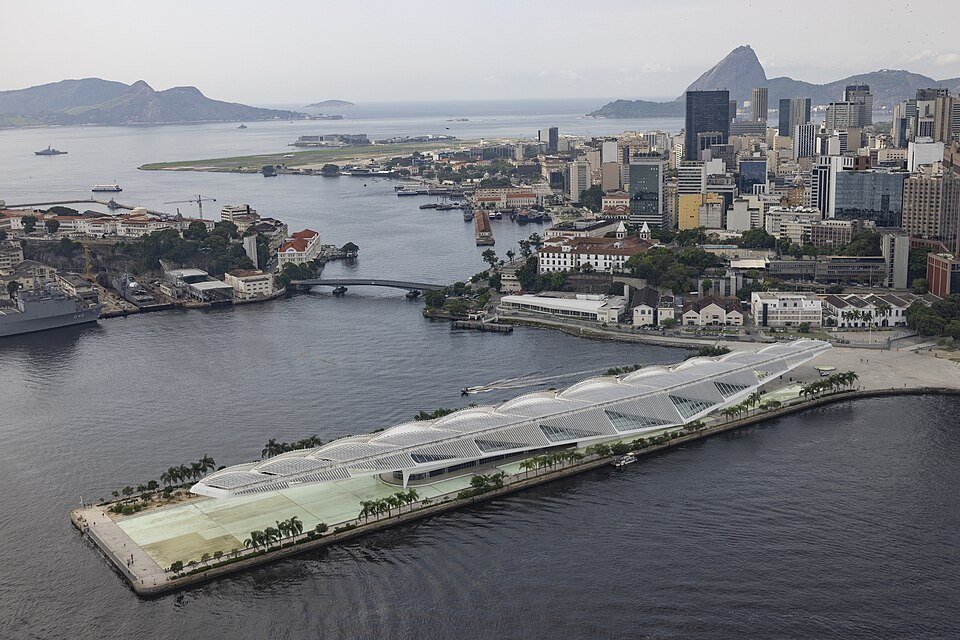
The Museum of Tomorrow, known locally as Museu do Amanhã, is a science museum situated on the Mauá waterfront in Rio de Janeiro's Porto Maravilha district. Designed by Spanish architect Santiago Calatrava, the building opened in December 2015. Its striking neo-futurist structure features skeletal white ribs, large cantilevered roofs, and sustainable design elements including solar panels and a water cooling system. The museum serves as the architectural anchor of the renewed waterfront area, representing a significant urban regeneration project for the city.
Checked 2026-08-26
The museum explores possibilities for building the future through science. Its main exhibition addresses themes including population growth, climate change, genetic research, and technological advancement. Interactive displays and immersive installations encourage visitors to consider humanity's impact on the planet and potential paths forward. The content emphasizes sustainability, social responsibility, and scientific innovation. The building itself demonstrates environmental consciousness through its adaptive systems. Visitors encounter data visualizations, participatory exhibits, and reflective spaces designed to provoke thought about tomorrow's challenges rather than simply displaying artifacts from the past.
Checked 2026-08-26

Most visitors spend approximately two to three hours exploring the Museum of Tomorrow's exhibitions and architectural features. The main exhibition follows a structured narrative path that guides visitors through interconnected thematic zones. Additional time should be allocated for appreciating the building's exterior design, waterfront location, and surrounding Praça Mauá. The museum's integration with the revitalized port area invites extended wandering. Visitors interested in thoroughly engaging with interactive elements and reading all display content may require longer. The contemplative nature of certain installations encourages unhurried pacing rather than rushed observation.
Checked 2026-08-26

Operator-confirmed hours are Not recorded pending review. Visitors should consult the official website at museudoamanha.org.br for current opening schedules before planning their visit. The museum's popularity means peak periods likely occur during weekends, Brazilian school holidays, and international tourist seasons. Morning arrivals typically offer calmer conditions for experiencing interactive exhibits. The waterfront location provides atmospheric lighting conditions throughout the day, with the building's white structure particularly striking against changing skies. Evening visits may offer distinctive architectural illumination, though this depends on confirmed operating hours. Weather considerations should include Rio's tropical climate and occasional intense rainfall.
Checked 2026-08-26
Operator-confirmed prices are Not recorded pending review. The museum's official website should be consulted for current admission fees, available discounts, and any free-entry policies. Brazilian public institutions sometimes offer reduced rates for students, seniors, teachers, and residents. Free admission days may occur periodically. Online advance booking is advisable given the museum's popularity. Payment methods and currency should be verified beforehand. Combination tickets with other Porto Maravilha attractions may exist. Visitors should confirm whether temporary exhibitions require separate admission. Documentation for discount eligibility should be carried. The museum's educational mission suggests accessibility considerations, though specific programs are Not recorded.
Checked 2026-08-26

The Museum of Tomorrow occupies a prominent position on Praça Mauá in Rio's central port zone. The location is accessible via the VLT light rail system, with stops serving the revitalized waterfront district. Bus routes connect the area to various city neighborhoods. The museum sits relatively near the Centro historic district, making combined visits feasible. Taxis and ride-sharing services serve the location, though traffic conditions in central Rio vary considerably. Walking from nearby accommodations in Centro or Gamboa is possible for suitably located visitors. The port area's regeneration has improved accessibility, though visitors should exercise standard urban awareness, particularly during evening hours.
Checked 2026-08-26

The surrounding port district has undergone substantial regeneration, yet visitors should maintain awareness of their environment, particularly when traveling to and from the museum. The waterfront location means sun exposure can be intense; appropriate protection is advisable. Interactive exhibits may involve physical engagement or technology use requiring patience during busy periods. The museum's popularity generates queues at peak times; advance planning mitigates this. Some content addresses challenging future scenarios including environmental degradation, which may disturb sensitive visitors. The building's dramatic architecture includes open spaces and reflective surfaces that create thermal and lighting conditions visitors should anticipate. Comfortable footwear supports the standing and walking required.
Checked 2026-08-26

The Museum of Tomorrow's extraordinary architecture presents exceptional photographic opportunities both internally and externally. The skeletal white structure against sky and water creates striking compositions. Interior spaces offer dramatic perspectives of the cantilevered roof and calibrated natural lighting. Visitors should observe any posted restrictions on photography within exhibition areas, as interactive displays and copyrighted content may have limitations. The surrounding Praça Mauá and waterfront promenade permit unrestricted exterior photography. The building's illumination after dark, if accessible during evening hours, offers alternative visual possibilities. Tripod use should be confirmed against museum policies. Respect for other visitors' experience should guide photographic behavior in crowded conditions.
Checked 2026-08-26
The museum's interactive and visually engaging approach appears generally suitable for children, though some conceptual content addressing complex global challenges may resonate more with older visitors. Parental guidance is advisable for young children encountering potentially unsettling future scenarios.
Guided tour availability is Not recorded. Visitors should consult the official website or contact the museum directly to inquire about scheduled tours, educational programs, or audio guide options that may enhance the exhibition experience.
The modern building design suggests accessibility considerations, though specific facilities including wheelchair availability, elevator locations, and accessible restroom provisions are Not recorded. Direct confirmation with the museum is recommended before visiting.
The museum's architectural prominence and waterfront setting make the exterior and surrounding plaza visually rewarding without ticketed entry. Whether interior public spaces exist outside the paid exhibition area is Not recorded.
On-site dining facilities are Not recorded. The surrounding regenerated port district likely contains food and beverage establishments, though specific recommendations cannot be made. Visitors may wish to research options in the broader Centro area.
Bag storage or locker availability is Not recorded. Visitors carrying large items should verify provisions for secure storage before arrival, as museums frequently restrict entry with bulky bags for exhibit protection reasons.
Loading the interactive map…
The interactive map could not be loaded.
Last updated:
Source: OpenStreetMap contributors, Wikidata ·