San Francisco Museum of Modern Art
The San Francisco Museum of Modern Art is a major museum of modern and contemporary art in the South of Market district.
- Must see
- Museum
Language · 1 published
City guide · United States
San Francisco is geographically compact but physically demanding, with steep hills separating waterfront, downtown and residential neighbourhoods. Union Square, Chinatown, North Beach, the Embarcadero and Fisherman’s Wharf can be linked carefully, while Golden Gate Park and the western districts need separate transit. Muni buses, light rail, streetcars and cable cars cover the city; BART mainly handles regional connections. Build routes around elevation as well as distance.
Ranked by importance — sitelinks, pageviews and heritage status, not editor preference.
50 places match
Category
Typical visit duration
Interests
The San Francisco Museum of Modern Art is a major museum of modern and contemporary art in the South of Market district.
The California Academy of Sciences is a science institution in Golden Gate Park that brings an aquarium, planetarium, rainforest environment and natural-history museum into one building.
The Exploratorium is a museum of science, art and human perception at Pier 15 on the Embarcadero. Its galleries are built around experiments that visitors operate, compare and discuss rather than objects viewed from a distance.
The de Young Museum is the leading fine-arts museum located in San Francisco's Golden Gate Park.
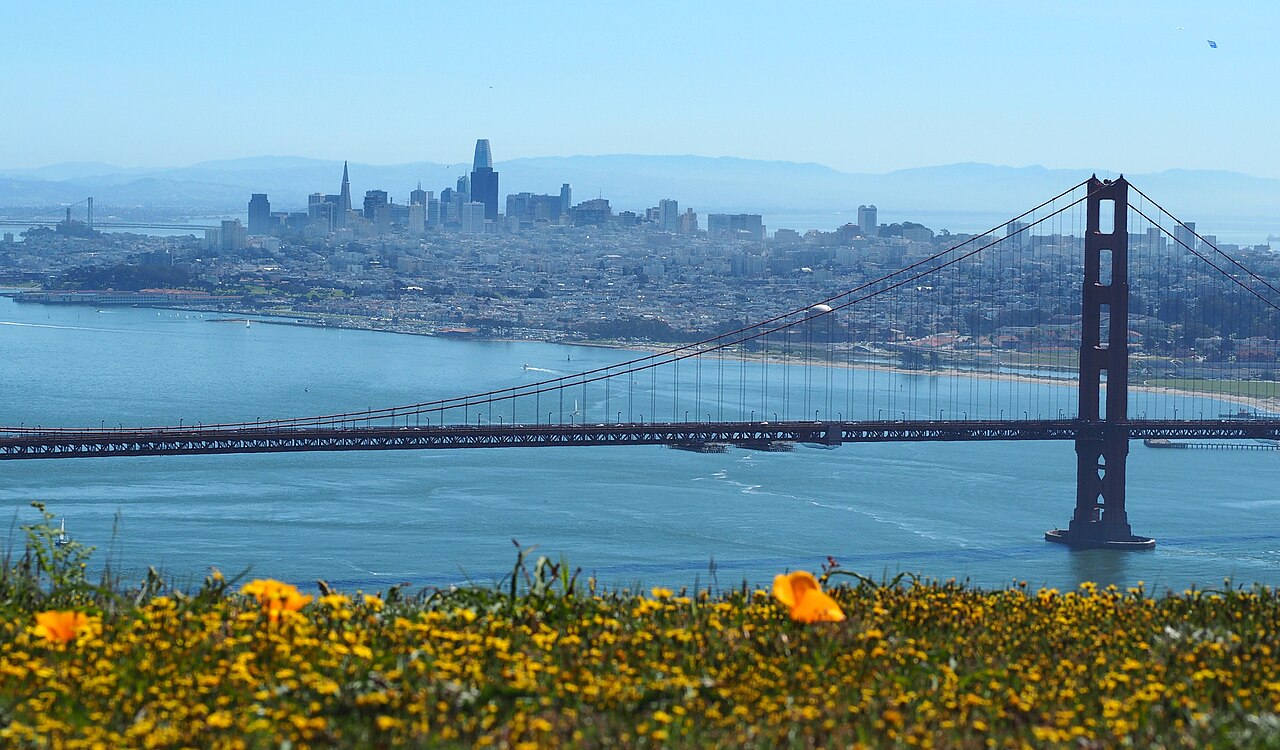
The Legion of Honor is a major European-art museum located in Lincoln Park, San Francisco. It occupies a dramatic coastal setting overlooking the Pacific Ocean and the Golden Gate Bridge.
USS Pampanito is a World War II-era Gato-class submarine preserved as a museum ship at San Francisco's Hyde Street Pier. Commissioned in 1943, she completed six war patrols in the Pacific Theater.
The Asian Art Museum of San Francisco is a major art institution located in the Civic Center area. It houses one of the country's principal collections of Asian art, spanning diverse cultures and historical periods.
The GLBT Historical Society Museum is a public history institution in San Francisco's Castro district dedicated to LGBTQ+ history. Operated by the GLBT Historical Society, it serves as a focused museum preserving and presenting queer heritage.
The San Francisco Cable Car Museum is a free museum located inside an active cable car powerhouse. It explains the mechanical system that powers the city's historic cable cars.
The Museum of the African Diaspora is a contemporary-art and history museum situated in San Francisco's Yerba Buena cultural district. It examines the history, art, and cultural richness resulting from the dispersal of African peoples throughout the world.
Children's Creativity Museum is a hands-on media and making museum located in downtown San Francisco. It focuses on creative expression through technology, art, and digital media production.
The Cartoon Art Museum is a specialist institution dedicated to comics, animation, and cartoon art. Located near San Francisco's waterfront, it preserves and exhibits original artwork from comic strips, comic books, graphic novels, editorial cartoons, and animated films.
The Beat Museum is a small museum in San Francisco's North Beach neighbourhood dedicated to the Beat Generation, the literary and cultural movement that emerged in the 1950s.
The San Francisco Zoo is the city's principal zoological garden and a major family attraction.
The Walt Disney Family Museum is a substantial museum in San Francisco's Presidio dedicated to the life and creative work of Walt Disney. It explores his personal history and professional achievements through exhibitions and artifacts.
The Museum of Craft and Design is a focused contemporary craft and design institution located in San Francisco's Dogpatch neighborhood.
The Roxie Cinema is a long-running independent cinema in San Francisco's Mission District. It serves as a central venue for repertory film culture in the neighborhood.
Source: OpenStreetMap contributors, Wikidata ·
Downtown and Union Square sit east of the central hills. Chinatown and North Beach lie north, leading toward Fisherman’s Wharf and the Marina; the Embarcadero follows the eastern waterfront. The Mission and Castro extend southwest of downtown, while Haight-Ashbury and Golden Gate Park lead toward the Pacific. Presidio and Lands End occupy the northwestern edge. Neighbourhood boundaries matter because two nearby points can be separated by a steep climb or a slow cross-city connection.
Checked 2026-08-26
Use Muni buses and light rail for most city journeys, with historic streetcars and cable cars serving selected corridors. BART connects downtown with the airport and East Bay but is not the main network for neighbourhood sightseeing. Walking works within districts, provided the route accounts for hills. The SFMTA journey tools cover transit, walking and cycling; check them before crossing between the waterfront, western parks and southern neighbourhoods.
Checked 2026-08-26
Three to four days suit a first visit. Three cover the central neighbourhoods, waterfront and Golden Gate Park; a fourth makes room for Presidio, Lands End or a regional side trip.
September and October are often practical for outdoor sightseeing, with milder conditions and less persistent summer fog. Local weather varies sharply by neighbourhood, so carry an extra layer in every season.
Individual neighbourhoods are walkable, but hills can make a short map distance strenuous. Plan routes around elevation and use Muni when moving between the waterfront, central hills and western districts.
Muni is the principal city network of buses, light rail, streetcars and cable cars. BART is most useful for airport and regional travel, with fewer stops for neighbourhood sightseeing inside San Francisco.
They sit in different visitor corridors and are better planned separately. Combine Golden Gate Park with western neighbourhoods, and pair Fisherman’s Wharf with North Beach or the Embarcadero.
Set your days, your pace and the hours you actually want to be out. The planner works around closing days and travel time, and leaves room to eat.