.jpg)
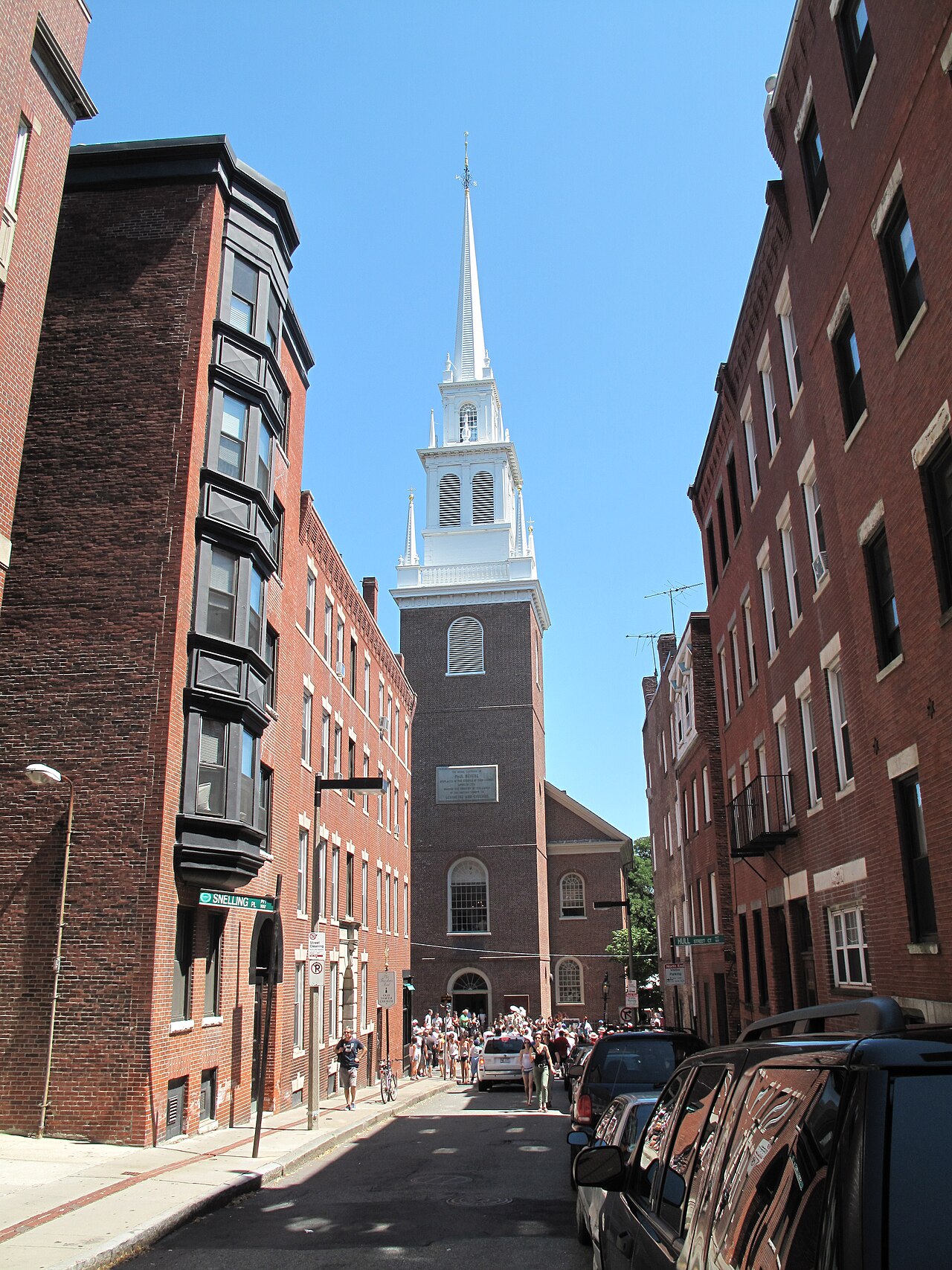
4 min walk
Old North Church
- Must see · Heritage site
- Historic monument
Language · 11 published
Museum · Boston
Reviewed by Elena Voss · SSMTour Travel Editor

| Monday | 10:00 – 17:15 |
|---|---|
| Tuesday | 10:00 – 17:15 |
| Wednesday | 10:00 – 17:15 |
| Thursday | 10:00 – 17:15 |
| Friday | 10:00 – 17:15 |
| Saturday | 10:00 – 17:15 |
| Sunday | 10:00 – 17:15 |
Checked 2026-08-31 · Source
Read from the OpenStreetMap access tags; anything not listed has no tag recorded.
Set the group type to family in the planner and the day window contracts to about three quarters of a solo day.
The Paul Revere House is Boston's best-preserved Revolutionary-era house museum. Built around 1680, this wooden structure in the North End is the oldest surviving building in downtown Boston. It served as the home of patriot Paul Revere from 1770 to 1800. The house is significant as the departure point of Revere's famous midnight ride on April 18, 1775, to warn of approaching British forces. The building represents 17th-century colonial architecture and stands as a rare surviving example of its period in an urban setting.
Checked 2026-08-31 · Source
The interior contains period furnishings and artifacts reflecting the Revere family's occupancy. Visitors can view rooms restored to approximate their late-18th-century appearance. The collection includes Revere family possessions and items representative of the colonial era. The house contains the original structure with its distinctive architectural features including heavy timber framing. The museum presents interpretive displays about Revere's life as a silversmith, his military service, and his role in the American Revolution. The small rooms and narrow staircase preserve the scale of colonial domestic life.
Checked 2026-08-31 · Source
Most visitors spend approximately thirty to forty-five minutes exploring the house. The compact size of the building limits the duration of interior visits. Additional time may be spent in any adjacent exhibition spaces or courtyard areas. Visitors interested in detailed examination of furnishings and reading interpretive materials may require longer. The experience is self-paced within the constraints of the building's layout. Crowding during peak periods may affect individual pacing. Planning for approximately one hour total allows comfortable viewing without rushing through the historic rooms.
Checked 2026-08-31 · Source
April 15–October 31: daily 10:00 AM–5:15 PM. November 1–April 14: 10:00 AM–4:15 PM; closed Mondays in January, February, and March. Open year-round except Thanksgiving, Christmas Eve, Christmas Day, and New Year’s Day. On 2026-08-31, the daily 10:00 AM–5:15 PM schedule applies. The house museum operates seasonally with reduced winter schedules typical of historic house museums in Boston. Summer and fall generally offer the most reliable access. Weekday mornings typically experience lower visitor volumes than afternoons and weekends. The North End neighborhood draws substantial tourist traffic year-round, particularly during summer months and around Patriot's Day in mid-April when commemorative events occur. Weather considerations are minimal as the primary experience is indoors.
Checked 2026-08-31 · Source
General adult admission is USD 6.00. Special events may have separate pricing. Admission fees apply for entry to the house museum. Historic house museums in Boston typically charge moderate entry fees, with common reductions for seniors, students, and children. Combination tickets with other Freedom Trail sites may be available seasonally. Visitors should verify current rates through official channels before arrival. Cash and card acceptance policies are not confirmed. Membership or reciprocal programs with other historical organizations may provide entry benefits. Group rates require advance inquiry directly with site administration.
Checked 2026-08-31 · Source
The museum is at 19 North Square on the Freedom Trail, about a 10-minute walk from Faneuil Hall/Quincy Market. Use Haymarket station for the Green or Orange Line, Government Center for the Green or Blue Line, or Aquarium for the Blue Line. North Station is a 10–15-minute walk; street parking is very limited. The Paul Revere House stands in Boston's North End near the Freedom Trail. Accessible via public transit through nearby stations serving the MBTA subway system. Walking from downtown Boston or the waterfront follows established pedestrian routes. The narrow colonial streets surrounding the site limit vehicle access and parking availability. Visitors arriving by car should expect to use distant parking facilities or garages. The neighborhood's dense urban character makes walking the most practical approach. Signage along the Freedom Trail guides pedestrians to the location from multiple directions.
Checked 2026-08-31 · Source
The Paul Revere House has a level ground-floor entrance. The second floor is reachable without stairs using the Visitor Center elevator. Narrow doorways and uneven floors may be difficult, and some motorized wheelchairs or scooters may not fit through every doorway. Accessible family restrooms with changing tables are available on both floors of the Visitor Center. Service animals are welcome; large-print brochures and tactile replicas are available. The historic building presents accessibility constraints due to its original 17th-century construction. Steep narrow staircases connect floors without alternative routes. Doorways and passages maintain period dimensions that may challenge mobility. The interior space is confined with limited room for maneuvering. Visitors with mobility limitations should inquire about access options before visiting. Low ceilings and uneven floors require attention to footing. Climate control is limited compared to modern buildings. The surrounding North End streets are active with vehicle and pedestrian traffic requiring street-crossing awareness. Crowding occurs predictably during peak tourism periods.
Checked 2026-08-31 · Source
Photography policies inside the house are not confirmed and should be verified with staff upon arrival. Historic house museums commonly restrict flash photography to protect light-sensitive artifacts and furnishings. Tripods and professional equipment typically require special permission. The compact interior spaces limit practical photography opportunities. Exterior photography of the building facade is generally unrestricted from public areas. The courtyard and street-facing views offer documentation possibilities. Visitors should respect any posted restrictions and staff instructions. Commercial or publication use of images requires separate authorization from the operating organization.
Checked 2026-08-31 · Source
General adult admission is USD 6.00; special events may use separate pricing.
No. Visitors who are not part of a group can buy tickets at the admissions booth on arrival; groups of 10 or more require advance reservations.
Yes. The ground-floor entrance is level, and the Visitor Center elevator provides step-free access to the second floor, though narrow doorways and uneven floors can present difficulties.
No. Personal photography is allowed only in the outdoor courtyard, not inside the historic buildings.
No. Exhibit spaces cannot accommodate strollers, but stroller parking is available in the courtyard.
Yes. Accessible family restrooms are available on each floor of the Visitor Center, and every restroom has a changing table.
Loading the interactive map…
The interactive map could not be loaded.

Last updated:
Source: OpenStreetMap contributors, Wikidata ·