19 min walk · Nevşehir Merkez
Balon Kalkış Alanı
- Must see
- Historic monument
Language · 11 published
Historic monument · Avanos, Nevşehir
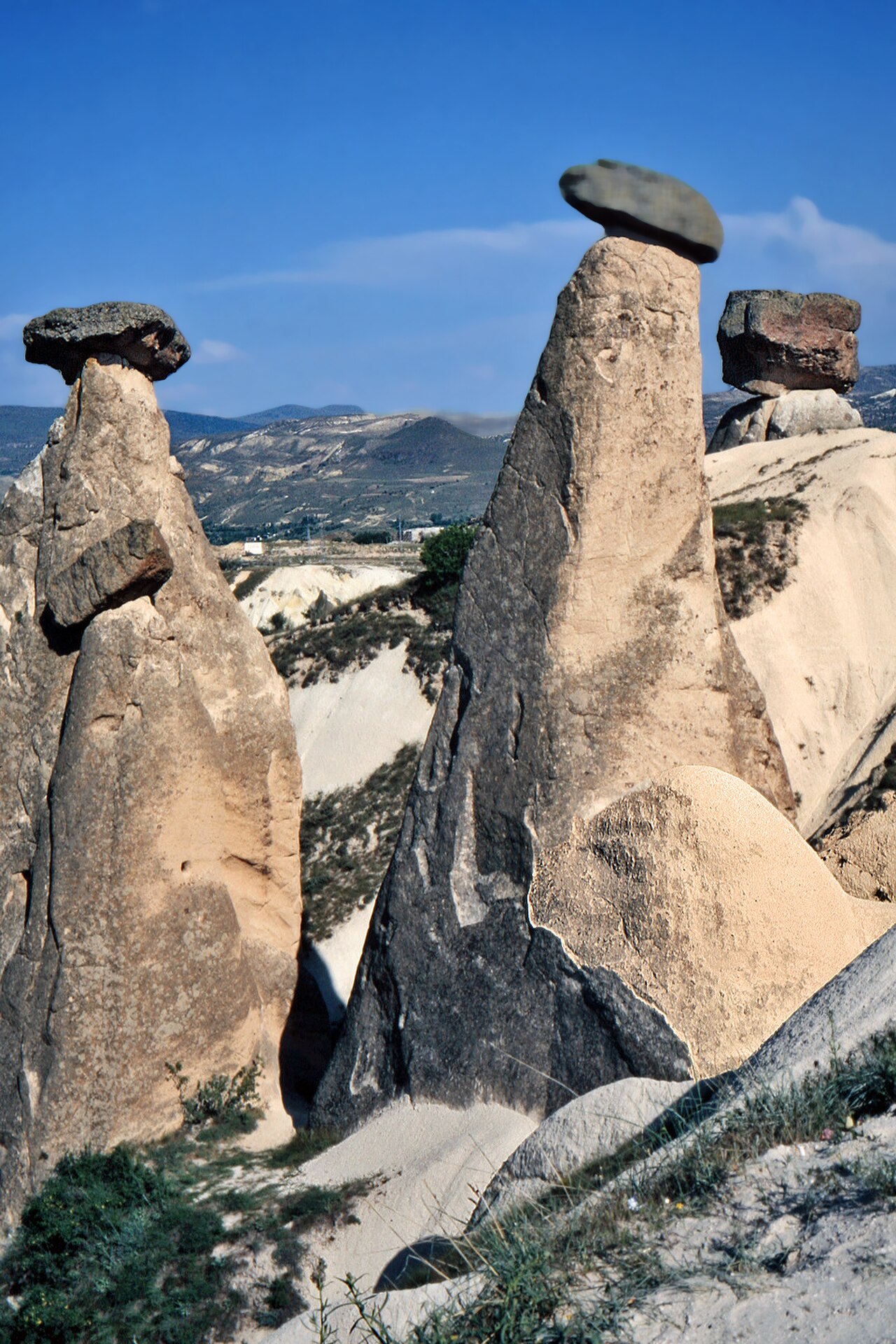
Great Caves is a distinctive open-air rock settlement on the Çavuşin slope, where carved spaces and weathered volcanic surfaces meet the edge of a living Cappadocian village. Its interest comes from seeing the rock formations as a connected inhabited landscape: openings, ledges and irregular façades are read together with the contours of the hillside. This is an outdoor place rather than a conventional museum arranged around galleries, labels and a single interior route. The setting makes Great Caves especially useful for understanding how Çavuşin’s natural rock environment shaped movement, shelter and village form.
Checked 2026-09-02 · Source
The experience centres on excavated spaces, natural cavities, worked rock faces and changing levels along the slope. From the lower approach, look for openings set into the stone and for the way the settlement seems to continue through adjoining formations rather than ending at one monument. As you rise, the view changes: rough weathered surfaces sit beside smoother carved areas, while stairs and ledges reveal how much the site depends on the shape of the hillside. Great Caves is also part of a wider Çavuşin heritage walk, with the castle and historic churches providing separate points of comparison nearby.
Checked 2026-09-02 · Source
Plan about 45 to 75 minutes for Great Caves itself. The shorter visit allows time to reach the principal exterior formations, examine the first cavities and understand the settlement from the lower approach. Use the longer allowance if you want to continue along the slope, compare several carved surfaces, pause at changing viewpoints and take photographs without hurrying. The amount of elevation you tackle will affect both timing and effort. A complete Çavuşin heritage walk, including the castle or churches, needs extra time beyond this focused stop. Visitors who prefer a slower pace should keep the upper sections flexible rather than forcing the whole route into a fixed schedule.
Checked 2026-09-02 · Source
Visit in good daylight, when relief on the rock faces, dark cavities and changes in elevation are easier to distinguish. Light moving across the Çavuşin slope can make carved details stand out, while clear visibility helps you judge the route between lower ground and higher sections. Surface conditions matter as well: wet weather can make sloping paths and stairs more awkward underfoot. Morning or late-afternoon light often gives the village and formations more shape in photographs. Treat Great Caves as a daytime stop within a flexible walk through Çavuşin. Daylight also helps visitors distinguish the outdoor formations from nearby buildings and choose safer places to pause.
Checked 2026-09-02 · Source
No admission price or ticket arrangement is recorded for Great Caves, so this guide does not describe the site as either ticketed or free. That uncertainty applies specifically to this outdoor rock settlement. Nearby places in Çavuşin, including churches or castle areas, are separate landmarks and should not be treated as having the same access arrangements. Keep Great Caves distinct from any enclosed interior you visit elsewhere in the village, because a nearby heritage site’s entrance policy cannot be transferred to this POI. A walk through the surrounding village should therefore be planned as a group of separate sights rather than one combined ticketed attraction.
Checked 2026-09-02 · Source
Great Caves is in Çavuşin village, in Avanos district of Nevşehir, beside the Göreme–Avanos road corridor. By road, use the Avanos–Çavuşin–Göreme connection and continue into Çavuşin. The final approach is on foot from the village centre towards the rock formations, so expect the visit to shift from streets to sloping paths and exposed stone. The official regional description identifies air and road travel as the main ways of reaching the area; locally, the practical sequence is the road connection followed by the walk through Çavuşin to the rock settlement. The village-centre starting point matters because the final approach is not a level, self-contained visitor complex with an indoor entrance hall.
Checked 2026-09-02 · Source
Great Caves is an uneven rock environment, not a fully level visitor complex. Sloping paths, rocky ground and stairs make higher parts more demanding, particularly after rain. Wear shoes with dependable grip, keep children close where the elevation changes and allow time for careful movement. Avoid unstable-looking surfaces and openings that appear restricted, and do not turn a photograph into an improvised climb. The site is best approached as a partial exploration of a fragile historic landscape, with attention to footing, weather and the distinction between the outdoor settlement and nearby church interiors. Visitors should also expect uneven effort between the lower village approach and the higher formations.
Checked 2026-09-02 · Source
Give your photographs enough surrounding space to show Great Caves as part of the Çavuşin slope, not merely as a close-up of one cavity. Wide frames can include the village edge, changing elevation and the contrast between worked openings and weathered volcanic stone. Closer images are effective for textures, recesses and irregular façades. A person standing at a safe distance can provide scale without encouraging a climb. Keep both feet secure while composing near stairs or sloping paths, and identify the castle or churches separately if they appear in the same walking route. Images made from lower ground can capture the relationship between the rock settlement and the village particularly clearly.
Checked 2026-09-02 · Source
Great Caves is in Çavuşin village, in Avanos district of Nevşehir, near the Göreme–Avanos road corridor.
No admission price or ticket arrangement is recorded for this exact outdoor rock settlement.
Good daylight makes the carved surfaces, cavities, stairs and changing elevations easier to see and judge.
Follow the Avanos–Çavuşin–Göreme road connection, then continue on foot from Çavuşin centre towards the rock area.
Expect rocky ground, sloping paths and stairs, especially when walking towards higher parts of the rock settlement.
Çavuşin Castle, Çavuşin Church and the Church of Saint John the Baptist are nearby landmarks in the wider village heritage setting.
Loading the interactive map…
The interactive map could not be loaded.
Last updated:
Source: OpenStreetMap contributors ·