
17 min walk
Pasşabağ Vadisi
- Must see
- Historic monument
Language · 11 published
Historic monument · Nevşehir
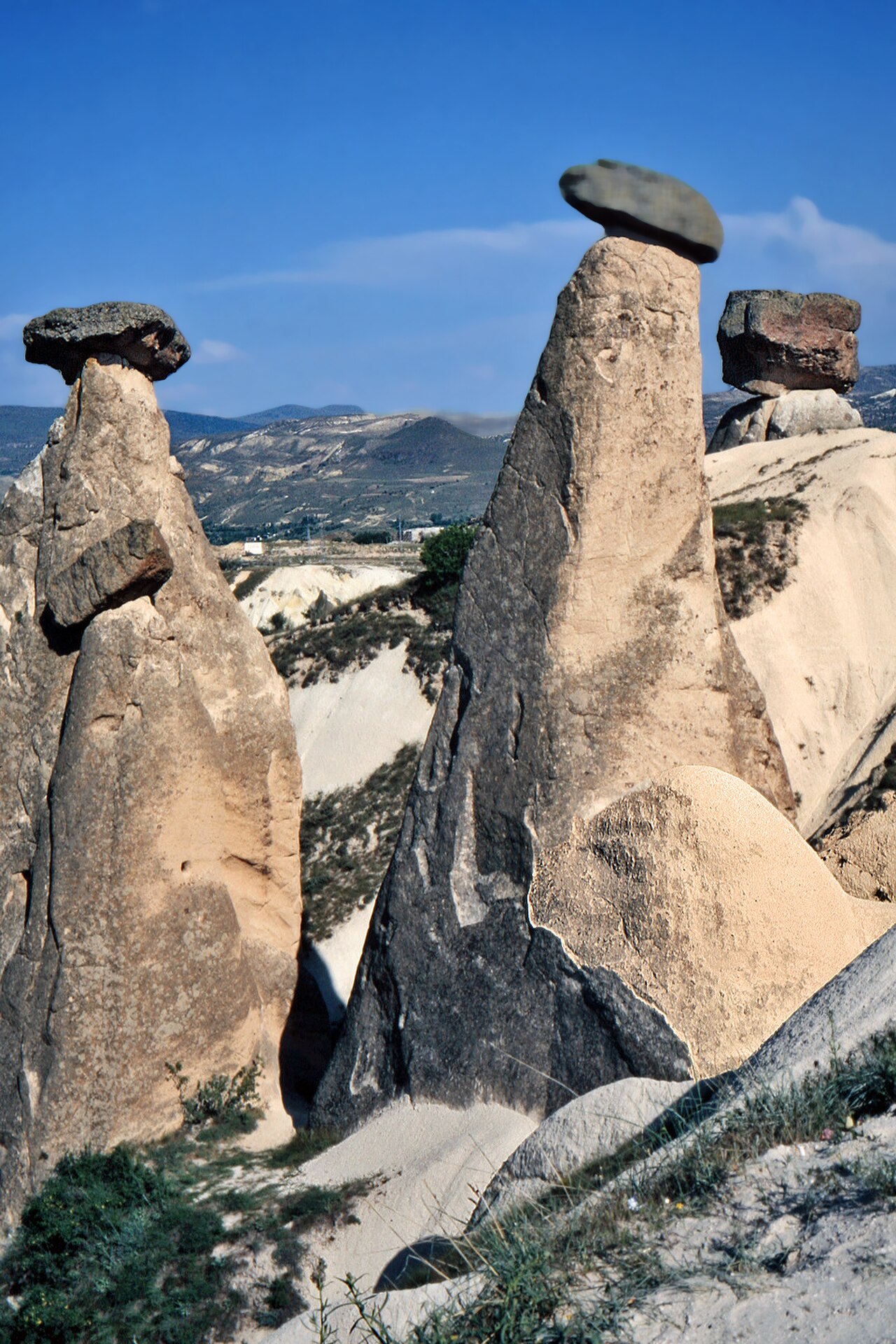
Fairy chimneys at Paşabağları are a specific cluster of volcanic-tuff pillars in Cappadocia, not a single freestanding monument. Harder cap rocks protected softer material below, while erosion shaped the grouped cones and columns. The setting is distinctive because geological processes and religious history occupy the same formations: people carved devotional and practical spaces into some multi-stemmed rocks. Paşabağları is also identified in official tourism material as the Valley of the Monks and belongs to the wider Göreme National Park and the Rock Sites of Cappadocia UNESCO property, inscribed in 1985. Paşabağları, tarihî kaynaklarda ve resmî tanıtımda Rahipler Vadisi olarak da anılır. Kapadokya'nın volkanik tüfleri rüzgâr ve sel sularının aşındırmasıyla konik kaya sütunlarına dönüştü. Paşabağları is also known in historical sources and official tourism material as the Valley of the Monks.
Checked 2026-09-02 · Source
The principal sights are the clustered, multi-stemmed and multi-headed fairy chimneys and the spaces cut into selected formations. Wind and runoff exposed the softer volcanic tuff beneath more resistant caps, producing the mushroom-like profiles associated with Paşabağları. Some formations contain chapels and sitting spaces, showing that the valley was used as more than a natural viewpoint. The most specific historic feature is a chapel and hermit cell dedicated to Saint Simeon inside one of the three-headed fairy chimneys. These carved interiors are part of the site’s heritage, so barriers and permitted viewing points matter.
Checked 2026-09-02 · Source
A focused visit to Fairy chimneys can occupy roughly an hour to an hour and a half, allowing time to walk between the principal formations, examine permitted views into carved spaces and take photographs. The estimate covers the Paşabağları formations themselves; it does not represent an official timed itinerary or the full Zelve–Paşabağlar Archaeological Site. Add time if including the nearby Zelve Open Air Museum or pausing to observe the Saint Simeon chapel and hermit cell. Uneven ground, heat, wind and visitor density can all slow the route.
Checked 2026-09-02 · Source
Fairy chimneys are easiest to appreciate when the exposed valley has softer light. Early morning can give quieter paths and gentler shadows, while later afternoon can warm the colour of the volcanic tuff and bring out the relief of the caps. Summer conditions may be hot and bright, so water, sun protection and a pace suited to rocky ground are sensible. Cloudy periods can reveal surface texture more clearly than harsh midday sun, especially in close views of the eroded pillars and carved entrances.
Checked 2026-09-02 · Source
Fairy chimneys are the geological and historic formations at Paşabağları within the wider Zelve–Paşabağlar archaeological landscape. A visit centres on viewing the clustered pillars, carved chapels, sitting spaces and the Saint Simeon feature, rather than on a single enclosed monument. Keep the mapped feature in context when planning a route: Paşabağları is one part of a larger heritage area, and the formations themselves are the reason to allow time for walking between viewpoints and examining the valley’s carved details.
Checked 2026-09-02 · Source
Fairy chimneys at Paşabağları are reached by turning towards Paşabağları from the Göreme–Avanos road; the area is approximately 1 kilometre from the main road. The official address places it at Paşabağları, Çavuşin Village, Avanos, Nevşehir. Its position between Göreme and Avanos makes it straightforward to combine with other Cappadocia stops, and Zelve Open Air Museum is described as about 1 kilometre away. The short approach from the road does not remove the need to expect uneven, rocky surfaces within the archaeological landscape.
Checked 2026-09-02 · Source
The Fairy chimneys area is an exposed rocky landscape with uneven surfaces and changes in level. Visitors should expect that some views may be easier to reach than others and that carved spaces may not be accessible to everyone. Wear shoes with dependable grip, keep children close around edges and narrow passages, and do not climb or touch fragile rock. Water, a hat and protection from sun, wind and dust are useful.
Checked 2026-09-02 · Source
The strongest photographs of Fairy chimneys show the formations as a group, preserving the relationship between multiple stems, cap rocks and the surrounding Paşabağları valley. Wider viewpoints establish the landscape; closer frames reveal the rough textures and eroded layers of the tuff. Softer morning or afternoon light can lengthen shadows and add warmth, while cloud can make surface detail easier to see. Include the Saint Simeon chapel and hermit cell as historic features rather than treating them as scenery alone. Remain on permitted paths, respect barriers and visitors, and avoid climbing for a higher angle.
Checked 2026-09-02 · Source
Paşabağları is also known in historical sources and official tourism material as the Valley of the Monks.
Cappadocia’s volcanic tuff was eroded by wind and runoff, leaving cone-shaped pillars and rock columns beneath harder cap rocks.
Some multi-stemmed and multi-headed formations contain chapels and spaces used for sitting, making them historic features as well as geological forms.
A three-headed fairy chimney contains a chapel and hermit cell dedicated to Saint Simeon.
The area is within Göreme National Park and the Rock Sites of Cappadocia, inscribed on the UNESCO World Heritage List in 1985.
Paşabağları lies between Avanos and Göreme, at the Paşabağları, Çavuşin Village, Avanos, Nevşehir address, and about 1 kilometre from Zelve Open Air Museum.
Loading the interactive map…
The interactive map could not be loaded.

Last updated:
Source: OpenStreetMap contributors ·