
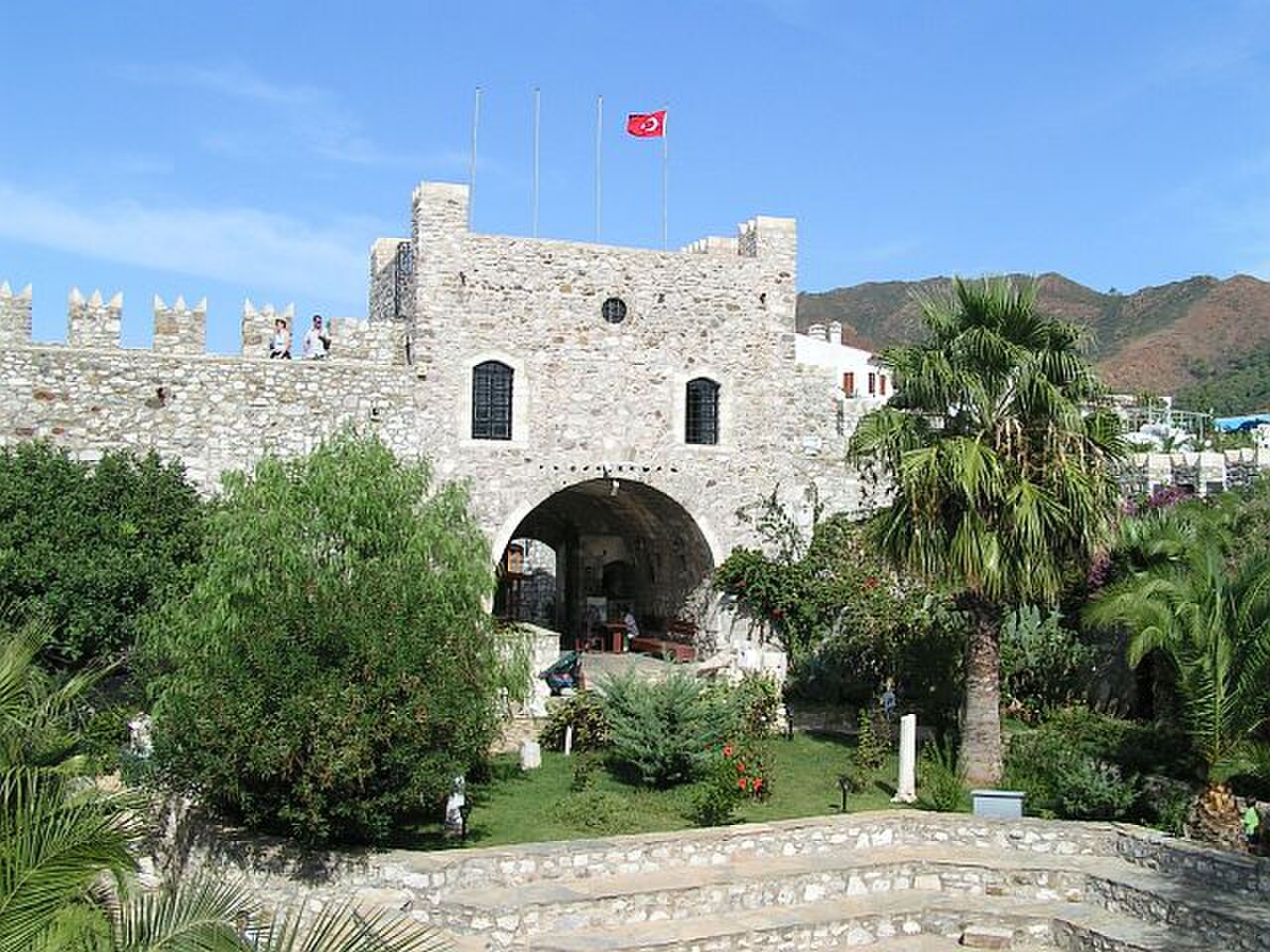
59 min walk · Marmaris
Marmaris Castle
- Must see
- Historic monument
Language · 11 published
Nature site · Marmaris, Muğla
Nimara Magarasi

Read from the OpenStreetMap access tags; anything not listed has no tag recorded.
Set the group type to family in the planner and the day window contracts to about three quarters of a solo day.
Nimara Cave is an open-air archaeological attraction on the north-western slope of Cennet Island, also called Nimara Peninsula, in Marmaris, Muğla. At about 350 metres above sea level, it sits within a rural island landscape rather than a conventional museum setting. Archaeological remains found here extend Marmaris’s known history back approximately 12,000 years. Evidence indicates that the cave was used as a worship or temple area, giving the visit a distinct cultural and historical focus. The elevated setting and approach are part of the experience, with the route combining archaeology, terrain and Mediterranean scenery.
Checked 2026-09-02 · Source
The main attraction is the cave and the archaeological evidence connected with its former religious use. Nimara Cave is presented as an open-air archaeological site reached through Cennet Island’s landscape, not as a large staffed museum with galleries or indoor visitor facilities. Excavation and rescue work began in 2007 under the lead of Marmaris Municipality. The discoveries are significant because they push the area’s known human history back approximately 12,000 years. The surrounding habitat adds another layer of interest: municipal tourism material identifies the rare tiger butterfly, Euplagia quadripunctaria, as a habitat and breeding-site species associated with the cave area. The outing therefore combines archaeology, landscape and wildlife interest.
Checked 2026-09-02 · Source
Allow time for the journey and approach, not only the cave itself. Yalancı Boğaz is about 8 kilometres from Marmaris city centre, while the onward route to Cennet Island includes a path and an unpaved uphill track several kilometres long. The final approach can be continued on foot or by mountain bike, and stairs lead to the cave entrance. A practical visit deserves a substantial half day once transport, walking, pauses and the archaeological stop are combined. Add time if you want to explore at an easy pace or observe the landscape and wildlife. The climb and return journey are the main time commitment, so avoid treating Nimara Cave as a brief roadside stop.
Checked 2026-09-02 · Source
The official municipal listing publishes no fixed daily opening hours or closure days for Nimara Cave. Plan around daylight and the condition of the rural approach, because the route is open-air, uphill and uneven. June and September are especially relevant for visitors interested in the rare tiger butterfly, Euplagia quadripunctaria: municipal tourism material identifies these months as breeding-season visiting periods. That timing does not guarantee a sighting. For a more comfortable walk, choose a cooler part of the day, carry water and allow flexibility for the exposed approach and stairs. Daylight also matters for returning safely along the rural track.
Checked 2026-09-02 · Source
Admission to Nimara Cave is free according to the responsible municipality’s official listing, which shows no ticket price or admission charge. There is no published paid-entry procedure in the supplied operator research. The practical expense is the journey to Cennet Island and the time required for the rural approach rather than an entrance fee. Since this is an open-air archaeological attraction, bring the essentials for a walk before leaving Marmaris. The official amenity research does not identify drinking-water provision at the attraction, so carry your own water. No separate cave ticket is recorded in the municipal listing.
Checked 2026-09-02 · Source
By car, drive from Marmaris toward Yalancı Boğaz and continue onto Cennet Island before following the approach to Nimara Cave. The official regional tourism guide places Yalancı Boğaz approximately 8 kilometres from Marmaris city centre and describes the onward connection as a path route. The municipality’s cycling brochure specifies a several-kilometre unpaved uphill track, which can be continued on foot or by mountain bike. A municipal district guide says minibuses from central Marmaris run every 30 minutes to Yalancı Boğaz; from there, continue on foot. The last section is therefore a walking approach rather than a vehicle drop-off at the entrance.
Checked 2026-09-02 · Source
Treat Nimara Cave as a rugged archaeological walk. The approach includes an unpaved uphill section several kilometres long, and stairs lead to the entrance, so the route is not step-free. The supplied official research does not identify accessible toilets, toilets, pushchair access, drinking water or baby-changing facilities. Wear secure footwear, carry water and do not rely on a pushchair for the final section. Protect the archaeological setting by leaving remains and ground undisturbed. If looking for the tiger butterfly, observe quietly and avoid entering sensitive habitat or handling wildlife. The terrain requires preparation beyond an ordinary town attraction.
Checked 2026-09-02 · Source
Photography works best as a combination of landscape and archaeological documentation. The elevated position, cave entrance, path through Cennet Island and surrounding Mediterranean terrain provide several subjects beyond a single interior view. Visit in daylight because the official listing gives no fixed daily schedule and the route is open-air, with an uphill unpaved section and stairs. Wear sturdy footwear and keep clear of fragile archaeological areas while framing photographs. The rare tiger butterfly, Euplagia quadripunctaria, is associated with the site during June and September breeding-season periods; photograph it without handling, chasing or disturbing its habitat. The changing elevation can also provide wider views across the island setting.
Checked 2026-09-02 · Source
Nimara Cave is on the north-western slope of Cennet Island, also called Nimara Peninsula, in Marmaris, Muğla.
Nimara Cave is at an elevation of about 350 metres above sea level.
The remains extend Marmaris’s known history back approximately 12,000 years.
Excavation and rescue work began in 2007 under the lead of Marmaris Municipality.
Archaeological evidence indicates that Nimara Cave was used as a worship or temple area.
The rare tiger butterfly, Euplagia quadripunctaria, uses the cave area as a habitat and breeding site; municipal tourism material identifies June and September as breeding-season visiting periods.
Loading the interactive map…
The interactive map could not be loaded.


Last updated:
Source: OpenStreetMap contributors, Wikidata ·