.jpg)

2 min walk · Selçuk
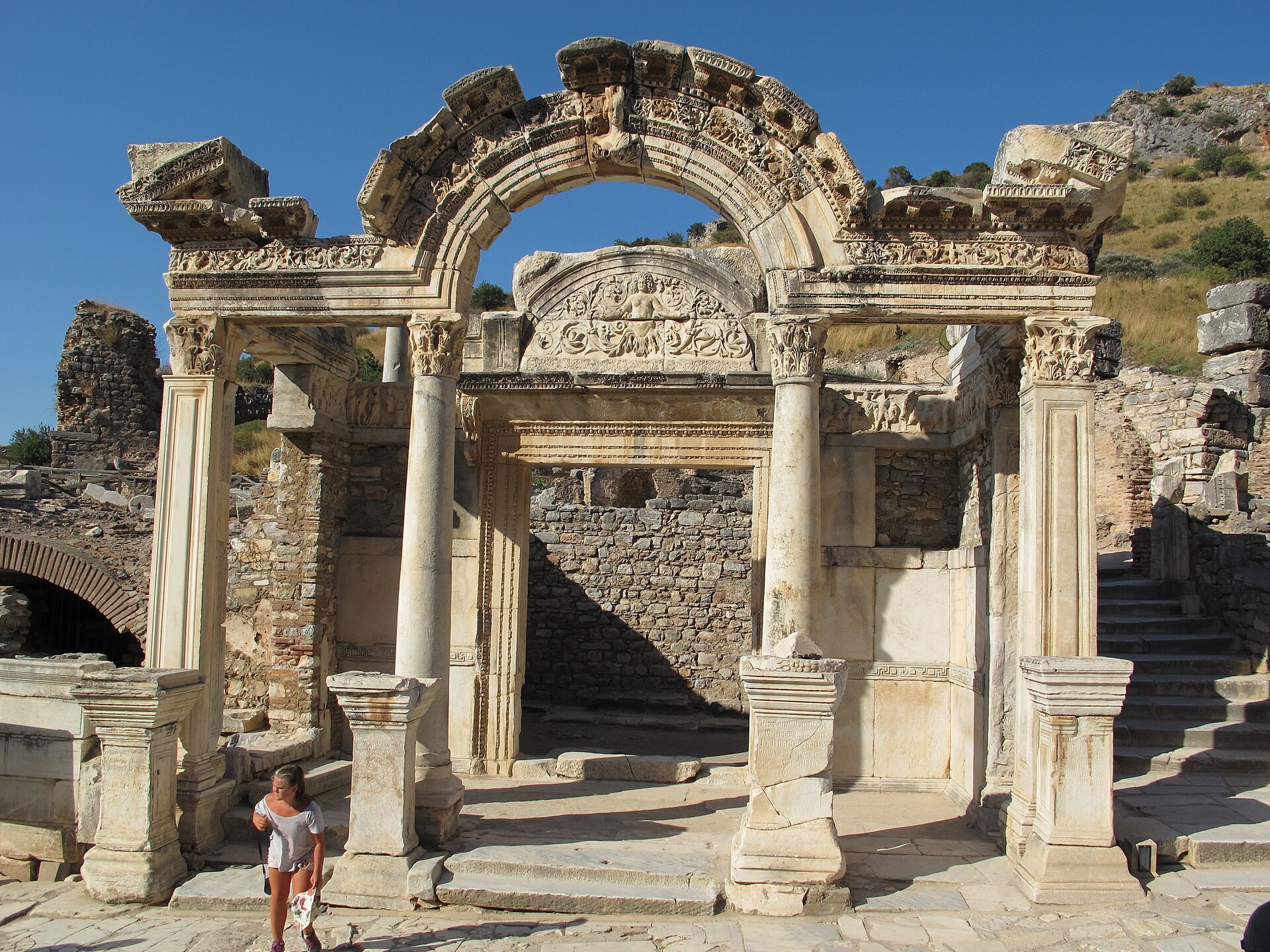
Temple of Hadrian
- Must see
- Historic monument
Language · 11 published
Historic monument · Selçuk, İzmir
Celsus Kütüphanesi
Reviewed by Elena Voss · SSMTour Travel Editor

| Monday | 08:00 – 18:45 |
|---|---|
| Tuesday | 08:00 – 18:45 |
| Wednesday | 08:00 – 18:45 |
| Thursday | 08:00 – 18:45 |
| Friday | 08:00 – 18:45 |
| Saturday | 08:00 – 18:45 |
| Sunday | 08:00 – 18:45 |
Checked 2026-09-02 · Source
Read from the OpenStreetMap access tags; anything not listed has no tag recorded.
Set the group type to family in the planner and the day window contracts to about three quarters of a solo day.
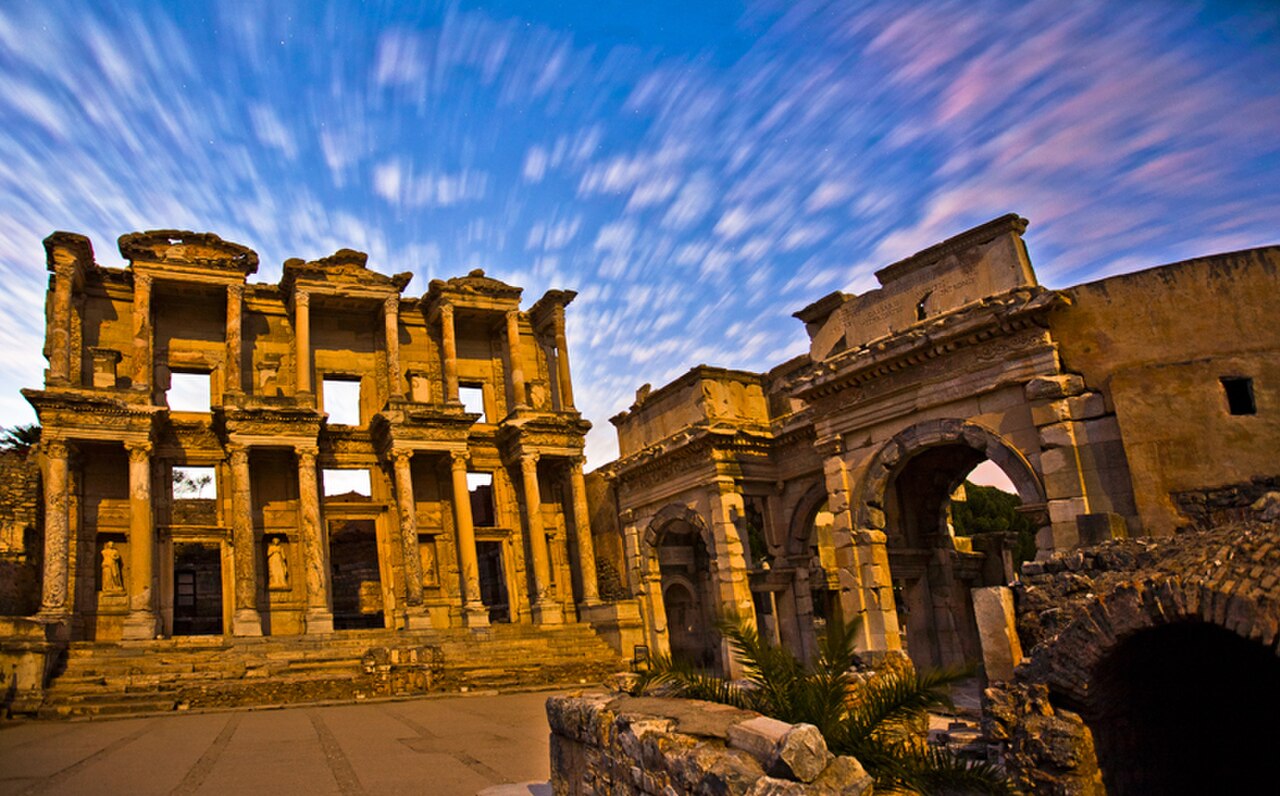
The Library of Celsus is a defining monument of Ephesus, near modern Selçuk in İzmir Province. Its restored two-storey façade stands at the junction of Curetes Street and Marble Street, where it formed part of the public centre of Roman Ephesus. Gaius Julius Aquila commissioned the building in honour of his father, Tiberius Julius Celsus Polemaeanus. The Turkish Ministry of Culture dates construction to AD 110–135. Celsus had been Roman consul in AD 92 and proconsul of the province of Asia from AD 105 to 107. The façade is now the monument’s visual signature, but its street setting explains its civic and memorial role. Ephesus was inscribed on the UNESCO World Heritage List in 2015.
Checked 2026-09-02 · Source
The Library of Celsus is an open-air archaeological monument, not an intact interior library with its ancient collection preserved for visitors. The experience focuses on the reconstructed façade, columns, niches and sculptural decoration along the ancient route. Its position at the junction of Curetes Street and Marble Street shows how the building belonged to Ephesus’s ceremonial streetscape. Study the symmetrical two-storey elevation from the approach, then move closer for architectural details before stepping back to see it above the ancient paving. Base admission includes the Ephesus Archaeological Site and Digital Museum. The Terrace Houses require a separate ticket.
Checked 2026-09-02 · Source
Allow around 20–30 minutes for the Library of Celsus itself. This is enough time to study the façade, understand its position at the Curetes Street and Marble Street junction, and take photographs from several distances. A complete Ephesus visit requires considerably longer because admission covers the Digital Museum and a broad archaeological route. The Great Theatre, Terrace Houses, Hadrian’s Temple, ancient harbour and Temple of Artemis remains all add walking and viewing time. Uneven paving, exposed heat and pauses at neighbouring ruins can make the wider visit tiring. Reserve several hours overall so the Library does not crowd out the rest of Ephesus.
Checked 2026-09-02 · Source
Regular Ephesus opening is every day from 08:00 to 18:45, with ticket sales ending at 18:45. The Ministry of Culture also lists night museum opening from Wednesday through Saturday, 19:00–23:00, with ticket sales ending at 22:00. Early daytime visits usually offer cooler conditions and a clearer view at the Curetes Street junction before visitor flows build. The evening session gives the façade a different atmosphere under illumination. Night access is an event-style scheduled session rather than an additional daily hours row. Strong sunlight emphasizes pale stone and relief depth, while evening light makes the reconstructed elevation feel more theatrical.
Checked 2026-09-02 · Source
The Library of Celsus is inside that site and has no separate price in the supplied tariff. Turkish citizens enter with MüzeKart. Terrace Houses are excluded from base admission and require a separate ticket. Regular ticket sales end at 18:45; during the Wednesday–Saturday night session, sales end at 22:00. The €40 charge covers the wider site visit, not every separately ticketed area.
Checked 2026-09-02 · Source
The Library of Celsus is within Ephesus, about 3 km from Selçuk. Regular minibuses connect Selçuk with Ephesus, making Selçuk a practical base without a car. From İzmir, Selçuk is connected by bus and train. The Ephesus entrance road branches from the Selçuk–Kuşadası highway. Once inside, follow the visitor route towards the Curetes Street and Marble Street junction. The approach crosses uneven historic surfaces rather than smooth urban pavement. UNESCO describes some internal roads as narrow and of limited quality, so allow extra time for walking and for slower movement where the ancient route becomes difficult.
Checked 2026-09-02 · Source
Treat the Library of Celsus as a protected archaeological monument in an ancient street landscape, not as an indoor library. Wear shoes with good grip because historic surfaces are uneven, and expect narrow routes or limited road quality in places. Step-free access is limited, and pushchair movement may be difficult. Crowds can restrict the best view of the façade. Terrace Houses need a separate ticket, and daytime and night sessions have different ticket deadlines. Summer heat can make the exposed route tiring; carry water, follow marked paths, and never climb on remains or cross barriers.
Checked 2026-09-02 · Source
Photograph the Library of Celsus from the approach along the ancient streets, keeping the façade connected to Ephesus rather than presenting it as an isolated elevation. Start with a wider composition including the Curetes Street and Marble Street junction, then move closer for columns, niches and sculptural details. Early light can reveal depth before heat and crowds intensify. The Wednesday–Saturday night opening offers a different atmosphere after dark, with illumination changing the façade’s presence. A viewpoint farther along the approach can show how the two-storey reconstruction rises above ancient paving. Keep the route clear, wait for an unobstructed moment, and do not climb or enter restricted areas.
Checked 2026-09-02 · Source
It stands in the ancient city of Ephesus, near modern Selçuk in İzmir Province, at the junction of Curetes Street and Marble Street.
The Turkish Ministry of Culture dates its construction to AD 110–135.
Gaius Julius Aquila commissioned it in honour of his father, Tiberius Julius Celsus Polemaeanus.
He was Roman consul in AD 92 and proconsul of the province of Asia from AD 105 to 107.
Yes. Ephesus was inscribed on the UNESCO World Heritage List in 2015.
The archaeological site also includes the Great Theatre, Terrace Houses, Hadrian’s Temple, the ancient harbour and the remains of the Temple of Artemis.
Loading the interactive map…
The interactive map could not be loaded.

Last updated:
Source: OpenStreetMap contributors, Wikidata ·