

5 min walk · Selçuk
Basilica of St. John
- Must see
- Historic monument
Language · 11 published
Historic monument · Selçuk, İzmir
Ayasolouk
| Monday | 08:30 – 18:00 |
|---|---|
| Tuesday | 08:30 – 18:00 |
| Wednesday | 08:30 – 18:00 |
| Thursday | 08:30 – 18:00 |
| Friday | 08:30 – 18:00 |
| Saturday | 08:30 – 18:00 |
| Sunday | 08:30 – 18:00 |
Checked 2026-09-02 · Source
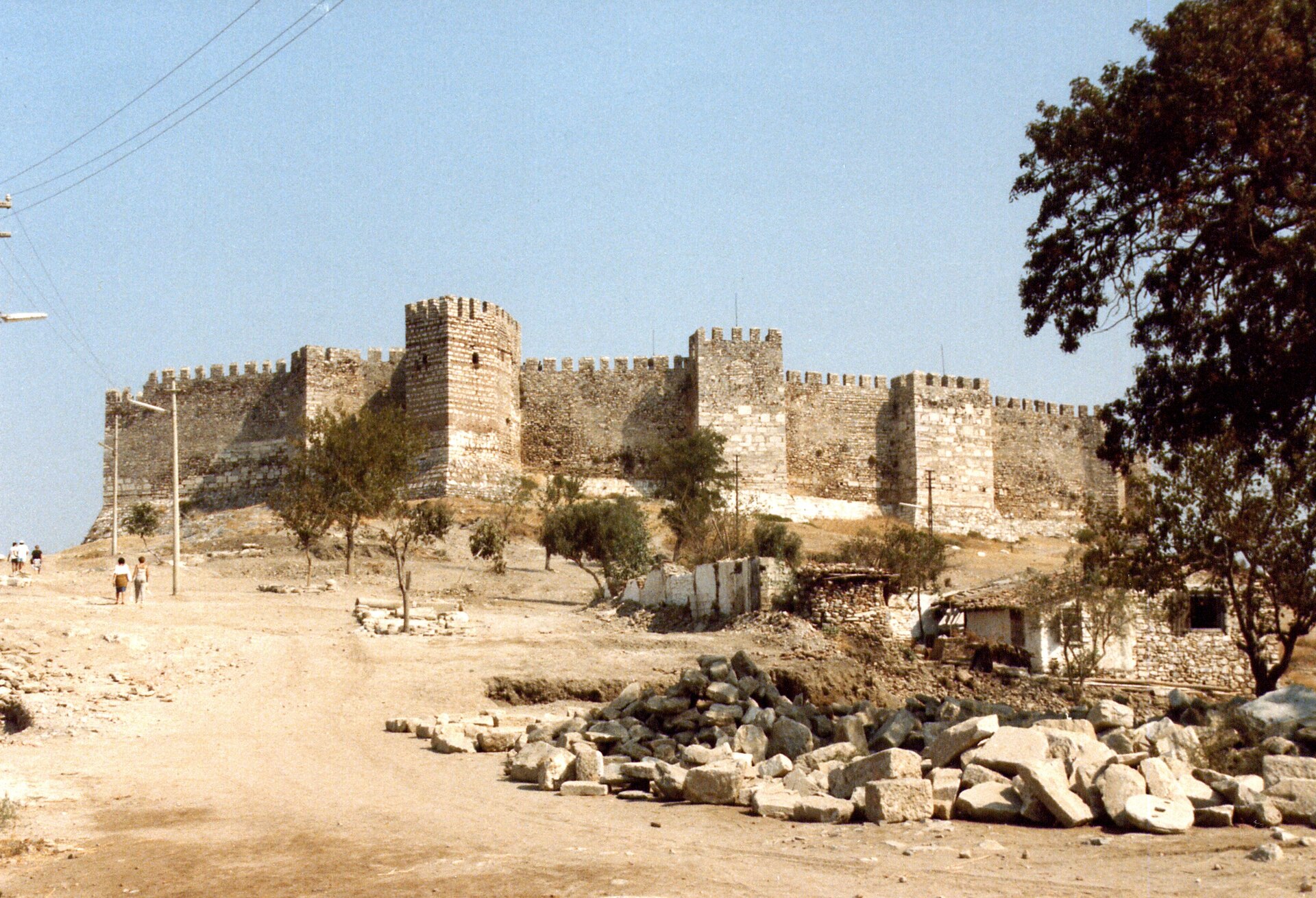
Ayasuluk Citadel occupies the summit of Ayasuluk Hill in Selçuk, where the town’s central heritage landscape rises into a defended archaeological enclosure. Its surviving walls belong to a layered setting associated with Byzantine, Aydınoğlu and Ottoman periods. The citadel is not simply a perimeter of masonry: its elevated position, internal routes and water storage reveal how defence, movement and settlement worked together. Looking down towards Selçuk, visitors can connect the fortress’s commanding height with its strategic role. The remains reward attention to how a hilltop space was organised over time, rather than a hurried circuit around a single monument.
Checked 2026-09-02 · Source
Inside the enclosure, stone-paved streets lead between defensive and practical features. Fifteen towers reinforce the walls, while two entrances to the inner castle sit on the east and west sides. Five cisterns are located near the gates and another stands in the upper part of the citadel, making water management visible within the fortified landscape. Other identifiable remains include the Kale Mosque, Bey Mansion, a bath and a church. Read the site from lower circulation routes towards the higher sections: the combination of paving, water installations, religious buildings and defensive edges gives Ayasuluk its distinctive archaeological character.
Checked 2026-09-02 · Source
Plan approximately 60 to 90 minutes for a focused visit. That range allows time to follow the stone-paved streets, locate the cisterns and pause at the Kale Mosque, Bey Mansion, bath remains and church remains. The longer end is more realistic if you want to examine the 15 towers, compare the east and west entrances or spend time looking across Selçuk from the hill. This is an outdoor archaeological route with changes in level, narrow stairs and uneven historic paving, so walking pace matters. Treat the ascent and upper sections as part of the visit, not as a quick transition between exhibits.
Checked 2026-09-02 · Source
The operator listing records Ayasuluk Citadel as open every day from 08:30 to 18:00, with the ticket office closing at 17:00. The same research also gives a visitor note of 09:00–16:00, which is narrower than the general operating span. For a practical visit, the 09:00–16:00 note is the safer planning window, particularly when the uphill approach and the upper fortress sections are important to your route. An earlier arrival leaves time for the paved streets, cisterns and surviving buildings, with pauses rather than a compressed final climb near the end of the day.
Checked 2026-09-02 · Source
It also records the ticket office closing at 17:00 within an overall operating span of 08:30–18:00. Allow 130 TRY for each general-admission visitor and place the citadel early enough in your Selçuk plan to reach the ticket office before that cutoff. The narrower 09:00–16:00 visitor note is useful when estimating time on site, especially if you want to climb through the internal streets and upper defensive areas.
Checked 2026-09-02 · Source
Ayasuluk Citadel stands on Ayasuluk Hill in Selçuk’s central area. The municipality’s city guide identifies bus, train and metro connections from İzmir to Selçuk, and shows the town’s railway station and bus terminal. From either arrival point, the citadel involves a town approach followed by an uphill route towards the hilltop, not a remote excursion beyond the settlement. Build walking time into a day that combines Selçuk’s heritage sites, and keep energy for the stone paving, level changes and stairs inside the enclosure. The hilltop setting is both the destination and the physical feature that shapes arrival.
Checked 2026-09-02 · Source
The site itself includes stone-paved streets, changing levels and narrow stairs towards the battlements and loopholes, making the upper route physically demanding. Wear shoes with reliable grip and watch the ground near walls and steps. Allow companions and slower walkers extra time on the ascent. Because the enclosure is an open archaeological setting rather than a level indoor museum, visitors should judge the lower and upper sections separately and avoid rushing while moving or taking photographs.
Checked 2026-09-02 · Source
Begin with close details in the stone-paved streets, then step back to frame the walls and their 15 supporting towers. The east and west entrances create a useful visual pair, while the five cisterns near the gates and the additional upper cistern show how water infrastructure is distributed through the enclosure. The Kale Mosque, Bey Mansion, bath remains and church remains provide contrasting subjects within the same hilltop setting. From a higher viewpoint, include Selçuk below to explain the citadel’s commanding position. Move carefully before raising the camera: uneven paving, narrow stairs and the route towards battlements require attention.
Checked 2026-09-02 · Source
Ayasuluk Citadel is at the highest point of Ayasuluk Hill in Selçuk.
The citadel walls are supported by 15 towers.
Two entrances lead to the inner castle: one on the east and one on the west.
Visitors can see stone-paved streets, cisterns, the Kale Mosque, Bey Mansion, bath remains and church remains.
Five cisterns are near the gates, and one more cistern is in the upper part of the citadel.
The surviving walls are associated with the Byzantine, Aydınoğlu and Ottoman periods.
Loading the interactive map…
The interactive map could not be loaded.


Last updated:
Source: OpenStreetMap contributors, Wikidata ·