City guide
Things to Do in Istanbul: 12 Essential Experiences


Choose Istanbul’s essential palaces, mosques, markets, Byzantine art, underground architecture and Bosphorus views, with clear priorities for first visits.
This guide is part of our Istanbul destination coverage. Istanbul
1. Hagia Sophia
The best things to do in Istanbul begin with the monuments of Sultanahmet, but the city makes more sense when an initial stay also includes an Ottoman palace, a working neighbourhood, a market and time on the Bosphorus. Use the Istanbul destination page to see how the historic peninsula, Beyoğlu and the Asian shore relate before turning these twelve choices into days. The list favours encounters that reveal a different layer of the city instead of collecting similar viewpoints or shopping streets.
For a short stay, prioritise Hagia Sophia, Topkapı Palace, the Basilica Cistern and a Bosphorus ferry, then select between the Blue Mosque and Süleymaniye for a second great mosque. Add the Archaeological Museums for objects and chronology, or Chora for concentrated Byzantine art. Markets are most rewarding when treated as living commercial districts instead of compulsory souvenir stops.
Hagia Sophia is the essential spatial benchmark because its vast sixth-century church, Ottoman mosque fabric and present prayer function occupy the same structure. Emperor Justinian commissioned the structure completed in 537; its dome and cascading half-domes created an interior scale that later imperial mosques answered across the skyline. Look for surviving Byzantine mosaics, marble revetment, calligraphic roundels and the relationship between nave and prayer area instead of expecting one unchanged historical period.
Visit Hagia Sophia with the understanding that it is an active mosque as well as a heritage monument. Tourist circulation, worship access and the visibility of individual artworks can change, so follow the signed circuit and the operator’s live guidance. Pair it with the Blue Mosque across Sultanahmet Square for the clearest comparison between Byzantine spatial engineering and Ottoman imperial mosque design, but give each structure enough time to be more than an exterior photograph.
Checked 2026-09-05 · Official site · ayasofyacamii.gov.tr
Checked 2026-09-05 · Official site · whc.unesco.org
2. Topkapı Palace
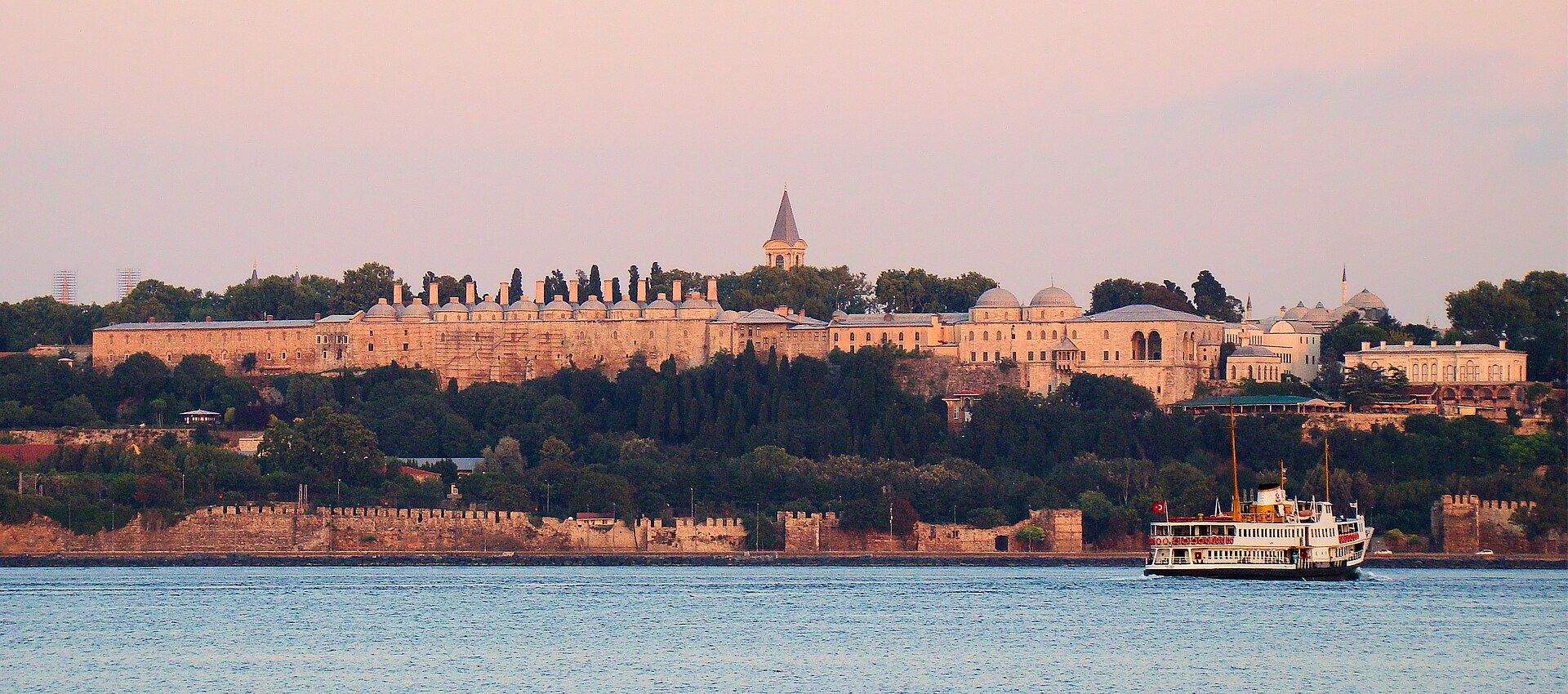

Topkapı Palace explains Ottoman government through thresholds. The Imperial Gate admits the outer precinct; the Gate of Salutation leads towards kitchens and the domed Divan chamber; the Gate of Felicity marks entry to the sultan's inner court. Beyond stand the Audience Chamber, library, treasury rooms and elevated kiosks. This decreasing permeability matters more than any single jewel because rank, ceremony and proximity to the ruler were written into the ground plan.
Protect half a day for the compound. Decide beforehand whether the Harem's apartments, baths and tiled corridors justify a longer circuit, then follow the operator's live admission information. In the Fourth Court, Baghdad Pavilion, Mecidiye Pavilion and terrace prospects turn attention from protocol towards privacy and the Bosphorus. A compressed exploration should retain the courtyard progression, Divan and waterside edge; racing after every labelled chamber destroys the spatial hierarchy that makes Topkapı intelligible.
Checked 2026-09-05 · Official site · millisaraylar.gov.tr
3. Sultan Ahmed Mosque


Sultan Ahmed Mosque sets Sedefkâr Mehmed Ağa's six minarets and descending domes opposite Hagia Sophia. Diyanet dates Ahmed I's foundation to 1609–1617 and identifies its blue tiles as the source of the English nickname Blue Mosque. The same account places the mosque within a larger complex that included a madrasa, Qur'an school, primary school, tomb, arasta, shops, bath, hospital, soup kitchen and fountains.
Approach from the former Hippodrome to read the courtyard, prayer hall and six-minaret silhouette as one composition, then regain distance in Sultanahmet Square. Hagia Sophia provides the unavoidable comparison across the open ground, but the mosque belongs to a seventeenth-century Ottoman charitable and commercial foundation rather than a detached reply to an earlier monument. Concentrate on tiled surfaces, calligraphy, carved timber doors and the relationship between the central dome and supporting half-domes instead of reducing the interior to its colour nickname.
Checked 2026-09-05 · Official site · www.diyanet.gov.tr
4. Basilica Cistern
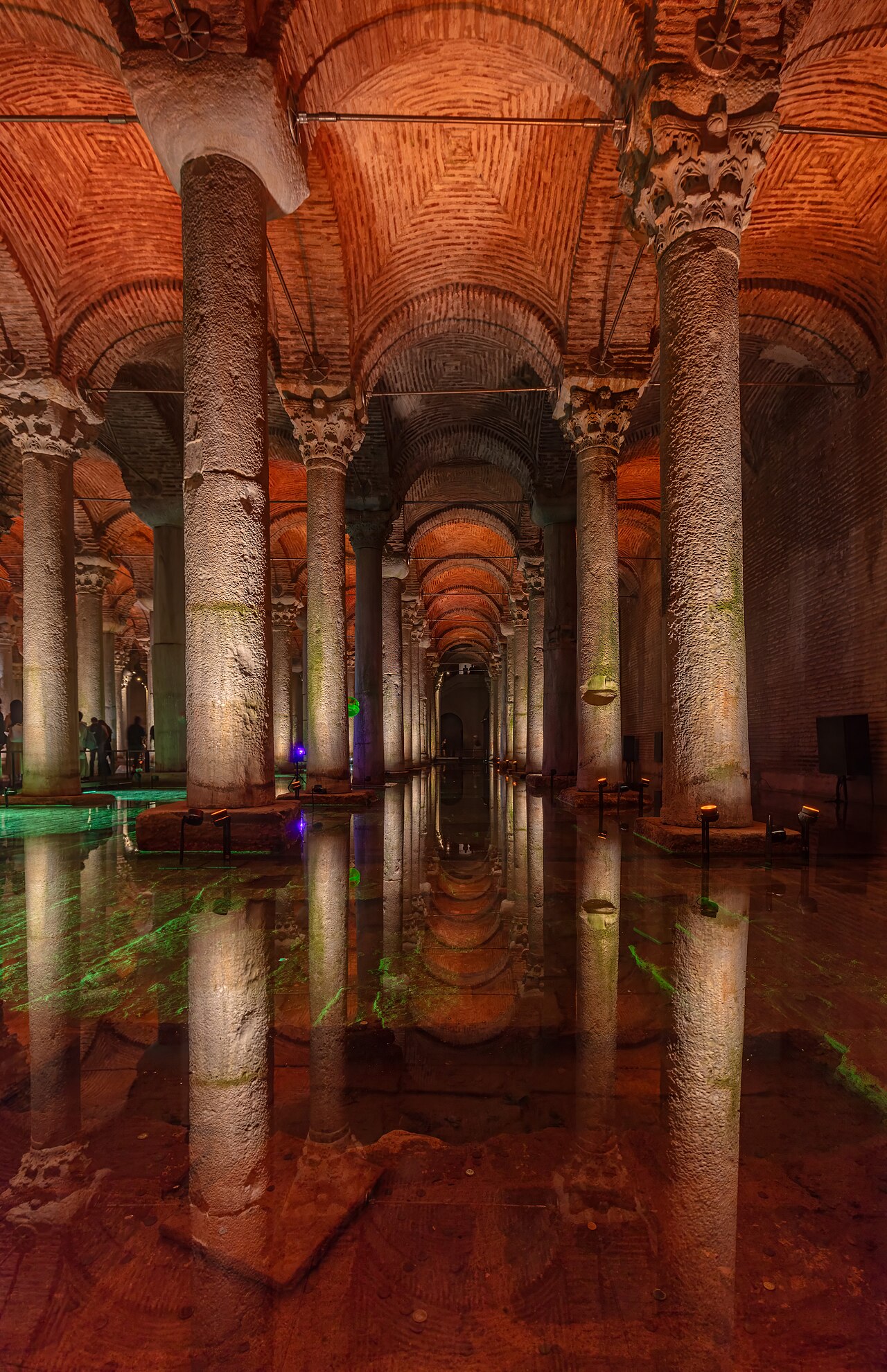

Basilica Cistern turns Byzantine water storage into a columned subterranean landscape. İBB's Kültür İstanbul account attributes the reservoir to Justinian and records a footprint about 140 metres long by 70 metres wide. Its 336 marble columns form twelve rows of twenty-eight, with Corinthian and plain capitals among the reused elements. At the northwest corner, two Medusa-carved blocks sit beneath columns, one inverted and one horizontal; their original setting remains unknown.
The raised platform threads through shallow water, brick vaulting, columns and reflected light, producing a compact counterpoint to Sultanahmet's open courtyards. Give the Medusa blocks close attention, but also compare mismatched shafts and capitals because reuse is visible throughout the chamber. İBB completed a major structural restoration before reopening the museum in 2022, and Kültür AŞ now uses the setting for temporary exhibitions and performances as well as the permanent historical fabric.
Checked 2026-09-05 · Official site · kultur.istanbul
5. Istanbul Archaeological Museums

.jpg)
The Main Building of the Istanbul Archaeological Museums places monumental sculpture and sarcophagi at the centre of an institution shaped by late Ottoman archaeology. Its holdings reach beyond Constantinople because excavations and collecting once followed the empire's wider geography. Stone figures, inscriptions and funerary monuments let materials, workshop styles and political imagery carry the chronology that neighbouring palaces and mosques express through space.
Arrive with one line of inquiry. Classical sculpture rewards attention to carving and restoration; ancient Near Eastern material opens a different historical geography; the sarcophagus galleries demand slow close reading. The Gülhane-side location pairs neatly with Topkapı, but intellectual fatigue makes consecutive marathon interiors a poor bargain. Check the official listing for open galleries, then postpone the collection rather than sprint through it after the palace. This is an archaeology stop, not shelter inserted because the weather changed.
Checked 2026-09-05 · Official site · muze.gov.tr
6. Grand Bazaar
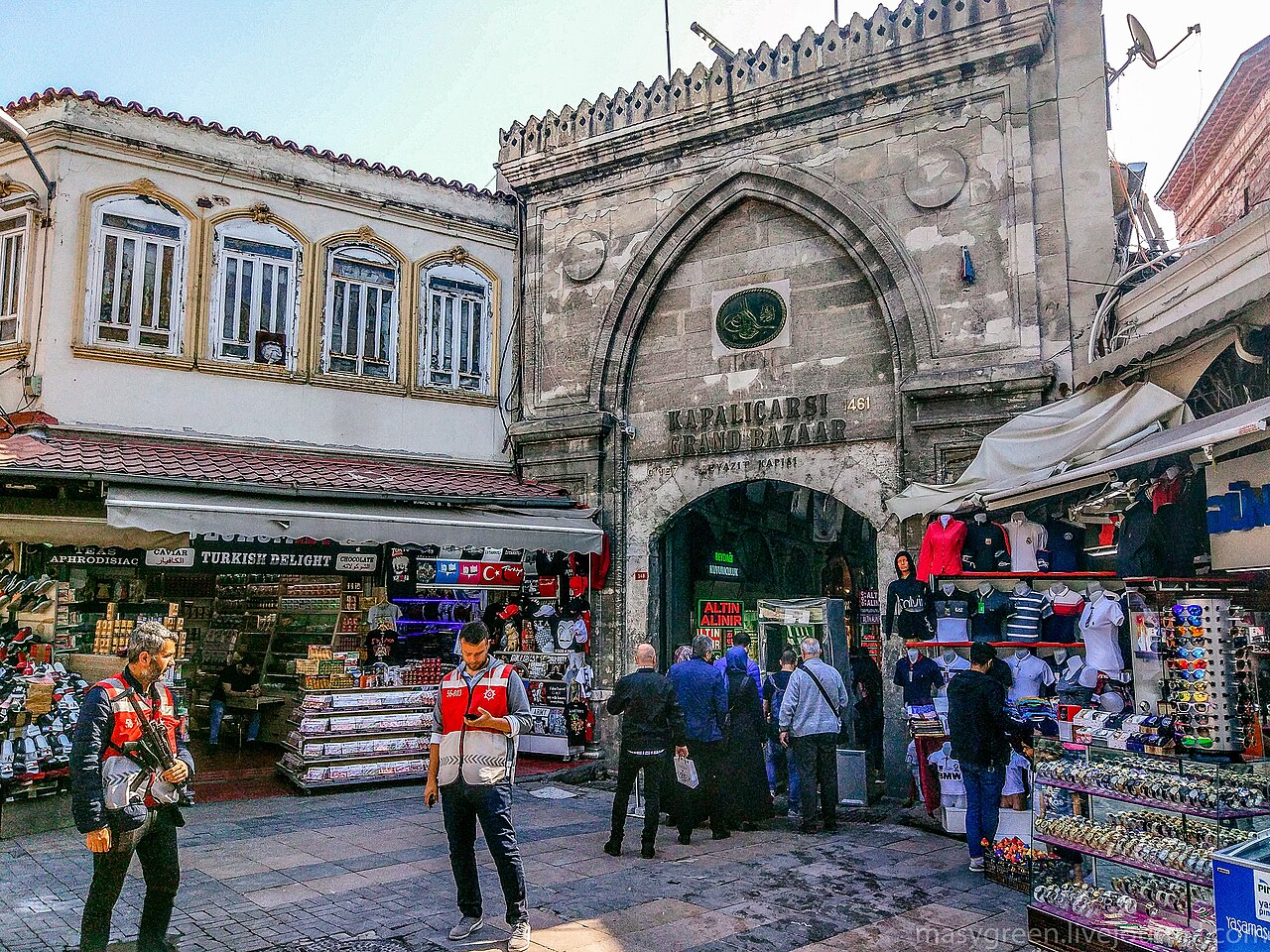

Grand Bazaar is worth entering for its urban structure even if shopping is not a priority. The covered market developed around the Ottoman commercial structures established after the conquest and expanded into a network of lanes, gates, hans and specialised trades. Read the roofed streets as a district instead of one hall: orientation changes at junctions, quieter workshops sit beyond the busiest axes and the surrounding commercial quarter continues outside the formal gates.
Give yourself a purpose before browsing. Jewellery, carpets, leather and ceramics involve very different knowledge, while casual souvenirs need no elaborate sales ritual. Compare quality and terms calmly, and leave any transaction you do not understand. The market is most enjoyable early in a day or as a circuit between Beyazıt and the Spice Bazaar, not as an obligation to bargain. Individual businesses keep their own patterns, so verify a specific shop directly if it is the reason for going.
Checked 2026-09-05 · Official site · kulturportali.gov.tr
7. Spice Bazaar
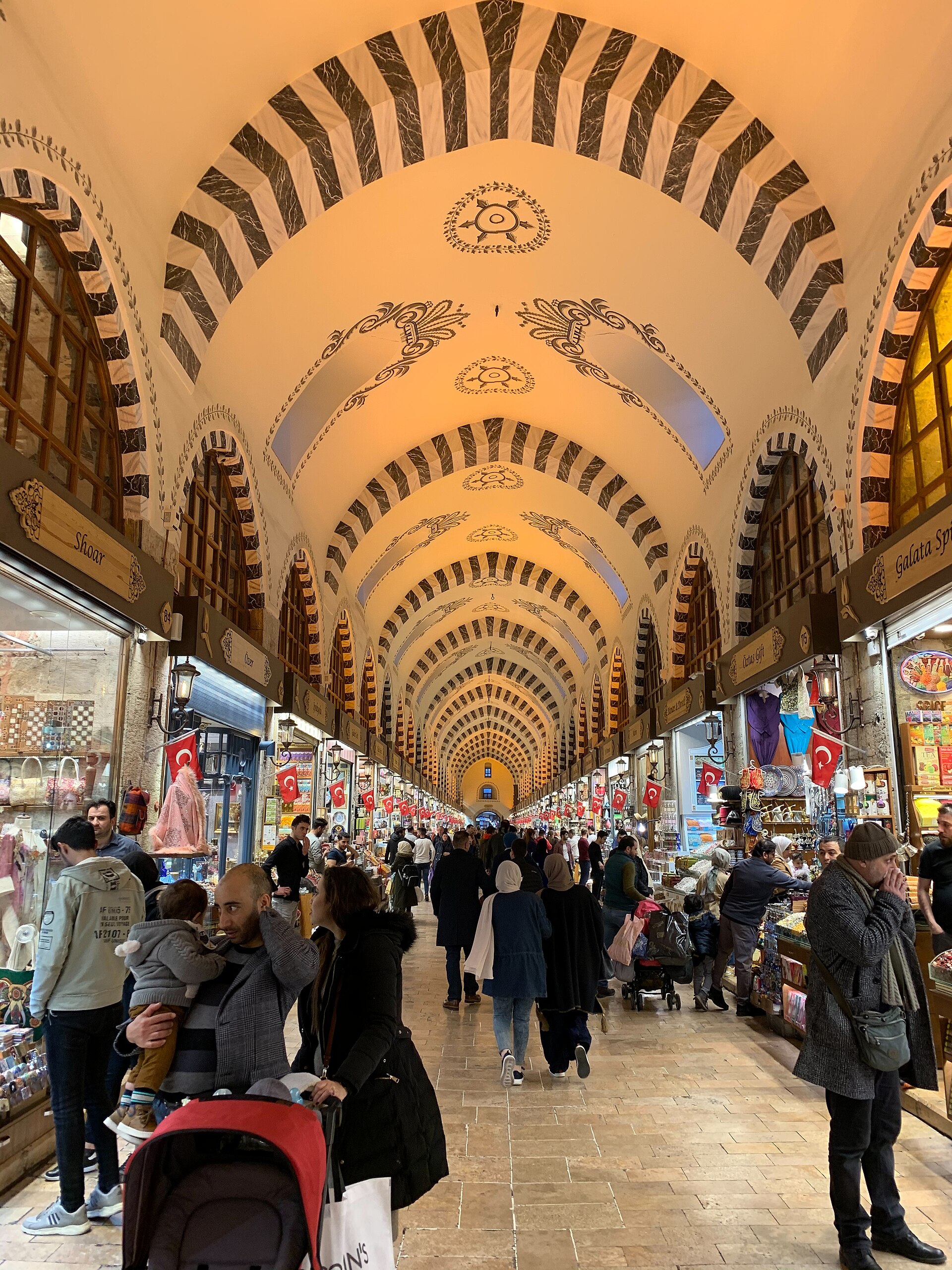

Spice Bazaar is the better market choice for a shorter, more legible exploration. Its L-shaped covered arcade sits beside the New Mosque and opens into Eminönü's much larger food-trading streets. Spices, sweets, dried fruit and household ingredients create the visual appeal, but the useful context lies outside too: ferries, worship, wholesale trade and everyday shopping meet within a few crowded blocks.
Walk the main arcade once, then continue into the surrounding lanes instead of buying at the first display. Packaged products should have clear contents and prices; taste only when invited and confirm what is being weighed before agreeing to a purchase. The bazaar combines naturally with the Galata Bridge waterfront or a Bosphorus departure from Eminönü. Select it over the Grand Bazaar when you have limited time, but do not count both as fundamentally different half-day attractions.
Checked 2026-09-05 · Official site · istanbulseninhaber.ibb.istanbul
8. Galata Tower
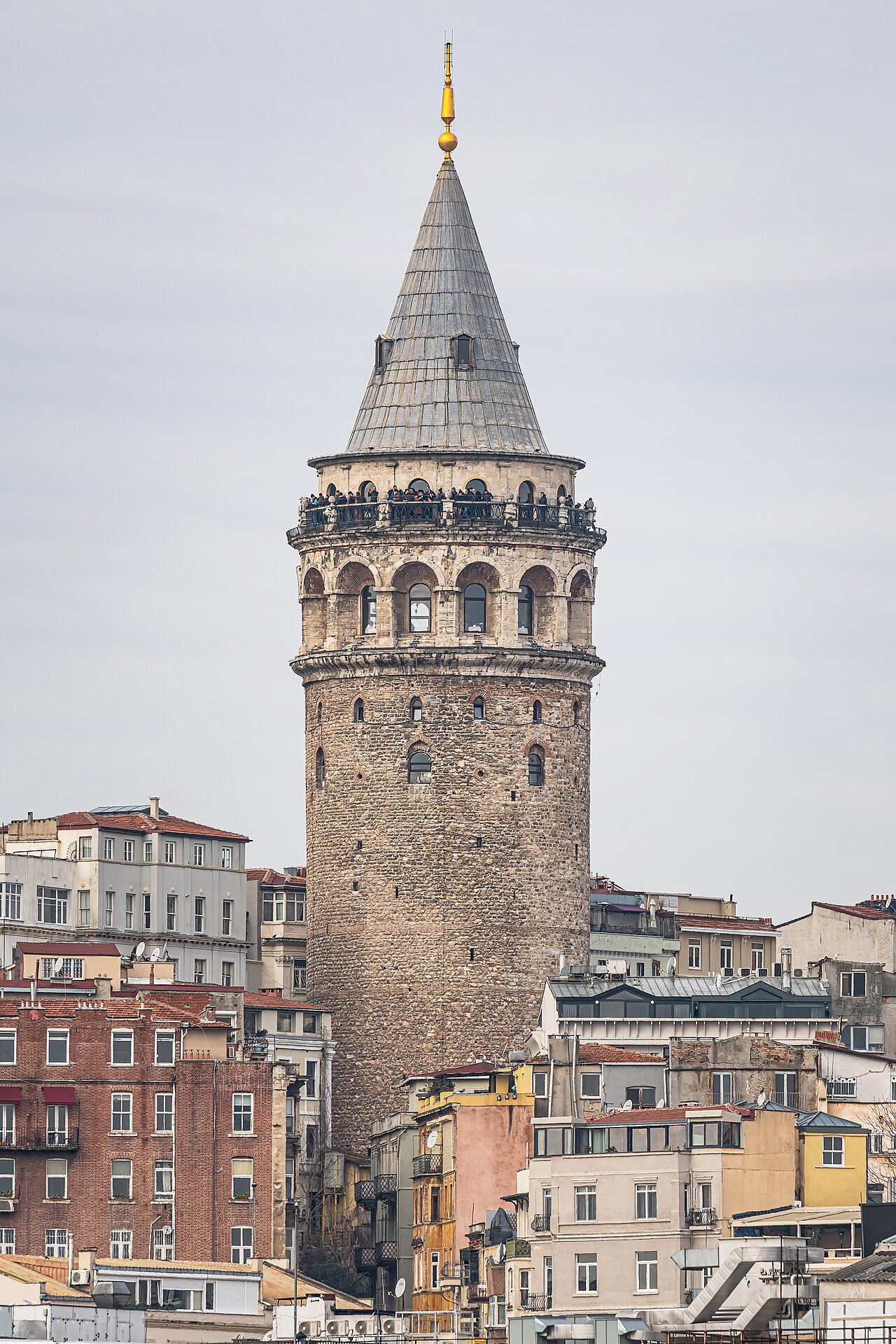

Galata Tower marks the former Genoese quarter above Karaköy with a cylindrical masonry shaft and conical roof. Its elevated ring makes the medieval division between Galata and Constantinople legible: the Golden Horn lies below, Süleymaniye crowns the opposite ridge, the old peninsula tapers towards Seraglio Point, and the Bosphorus opens beyond. Looking down also explains why Galata's stairways and lanes descend so abruptly towards the waterfront.
Treat the ascent as optional orientation. A narrow landmark with a celebrated panorama inevitably concentrates people, and managed circulation differs from wandering the surrounding quarter. Check the official museum listing before making a dedicated crossing. When waiting would swallow the useful part of an afternoon, descend through Galip Dede Caddesi, examine the tower from Büyük Hendek Caddesi, and regain the skyline from Karaköy or a ferry. Bereketzade, Şişhane, Bankalar Caddesi and Perşembe Pazarı offer distinct downhill exits, making the tower a useful wayfinding hinge even without reaching the upper ring.
Checked 2026-09-05 · Official site · muze.gov.tr
9. Dolmabahçe Palace


Dolmabahçe Palace shows the nineteenth-century Ottoman court turning towards European ceremonial design without abandoning the functional division of an imperial household. Built on the Bosphorus during Abdülmecid's reign, the palace separates administrative, ceremonial and private sections behind a long waterfront façade. Its interiors combine Ottoman spatial habits with Baroque, Rococo and neoclassical decoration, crystal, porcelain and large state rooms.
Visit Dolmabahçe when you want a deliberate contrast with Topkapı, not because every palace belongs on one itinerary. Topkapı is a compound of courts and pavilions; Dolmabahçe is a late imperial statement organised within a monumental structure. The National Palaces operator lists the active public circuit, closure day and ticket options, which should be checked directly before travel. Allow the managed interior sequence to set the pace, then use the waterfront setting to understand why the court shifted here.
Checked 2026-09-05 · Official site · www.millisaraylar.gov.tr
10. Bosphorus cruise from Eminönü


A Bosphorus cruise from Eminönü converts Istanbul from scattered districts into a strait settlement. Şehir Hatları boats pass Dolmabahçe's quay, Ortaköy, the paired fortresses of Rumelihisarı and Anadoluhisarı, wooden yalıs, wooded Asian slopes and successive suspension bridges. Seraglio Point recedes behind the wake while northern villages replace the dense central waterfront. No stationary panorama communicates that elongated geography as clearly.
Select the municipal product by sailing length. Şehir Hatları publishes distinct long, short and sunset programmes on dated timetables; consult the active schedule at the Eminönü pier. Wind, fog and maritime controls can alter operations and deck comfort. When a dedicated tour consumes too many hours, ride a normal service between the European and Asian shores. That substitution preserves gulls, currents, ferry traffic and the changing waterfront angle without purchasing an anonymous package from a street seller.
Checked 2026-09-05 · Official site · sehirhatlari.istanbul
11. Süleymaniye Mosque

.jpg)
Süleymaniye Mosque joins Sinan's imperial design to an entire Ottoman service complex above the Golden Horn. UNESCO dates Sinan's work to 1550–1557 and identifies the surrounding caravanserai, madrasa, medical school, library, bath, hospice and imperial tombs as an outstanding religious ensemble. The Fatih Müftülüğü's mosque album likewise attributes the commission to Süleyman the Magnificent and records the foundation ceremony in 1550.
Read the prayer hall as the külliye's centre, not its whole meaning. Outer courts, education and welfare buildings, tombs and commercial edges distributed worship, learning, care and revenue across the hilltop. The elevated placement also makes the complex a durable part of Istanbul's skyline, visible across the Golden Horn. Compared with Sultan Ahmed Mosque, Süleymaniye offers a wider institutional landscape and a closer connection to surrounding streets; select it when Sinan's planning and the social reach of an imperial foundation matter most.
Checked 2026-09-05 · Official site · webdosyasp.diyanet.gov.tr
Checked 2026-09-05 · Official site · whc.unesco.org
12. Chora Church
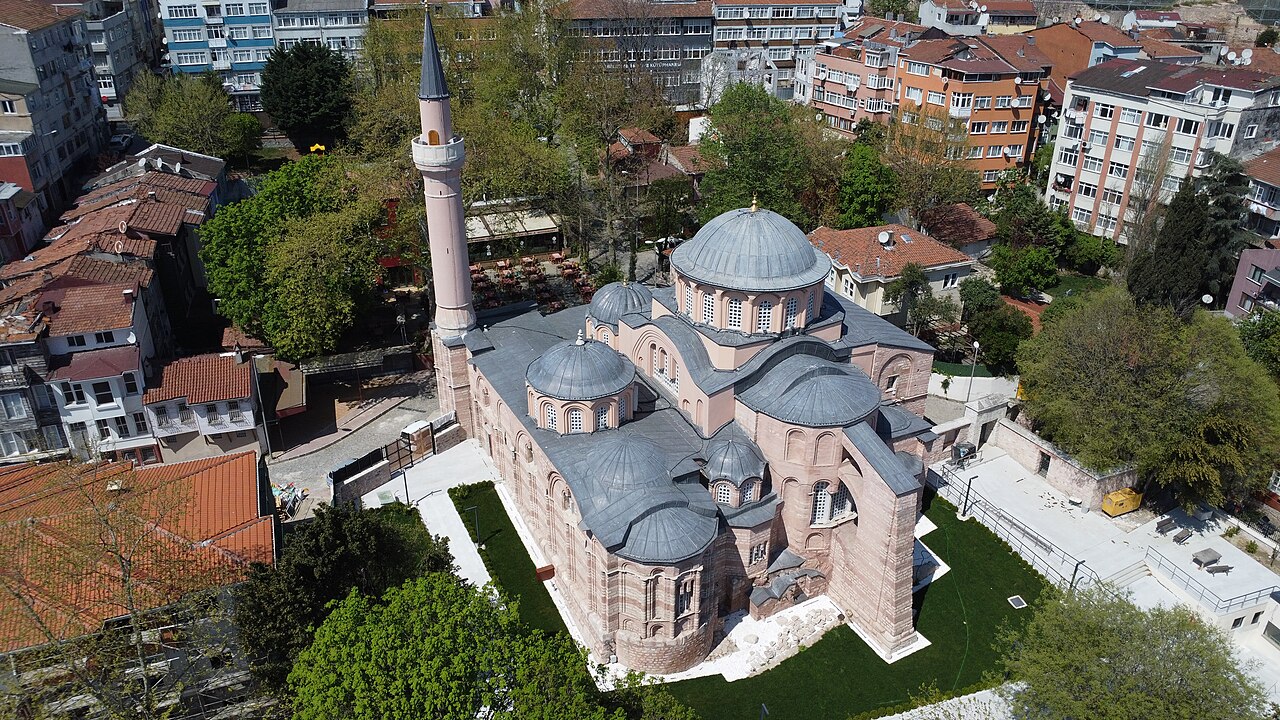

Chora Church, now Kariye Mosque, preserves one of the major pictorial ensembles within UNESCO's Historic Areas of Istanbul. UNESCO identifies its mosaics and paintings as works of the fourteenth and fifteenth centuries, while its advisory documentation divides the interior into narthex, naos and adjoining parekklesion. Read the imagery across those connected spaces instead of treating a single gold-ground panel as the whole reason to go.
Kariye stands by Edirnekapı near the Theodosian land-wall zone, well west of Sultanahmet. Vakıflar Genel Müdürlüğü records that Kariye Camii was included in its May 2024 reopening programme after restoration, establishing the building's present mosque identity and responsible institution. The compact plan still rewards sustained attention to tesserae, inscriptions, vaults and painted surfaces. Travellers indifferent to Byzantine imagery can omit the detour; those seeking excavated objects rather than site-bound art should favour Istanbul Archaeological Museums.
Checked 2026-09-05 · Official site · www.vgm.gov.tr
Checked 2026-09-05 · Official site · whc.unesco.org
Checked 2026-09-05 · Official site · whc.unesco.org
Select Istanbul sights by interest and season
A Byzantine emphasis forms a westward chain. Hagia Sophia supplies the sixth-century structural breakthrough, the Basilica Cistern exposes imperial water engineering, and Chora preserves fourteenth-century narrative art. Istanbul Archaeological Museums adds portable objects and chronology. With one Sultanahmet day, keep Hagia Sophia and the cistern together; save Edirnekapı for a later circuit.
An Ottoman lens starts inside Topkapı's courts, crosses Sultanahmet Square to Ahmed I's foundation, and climbs towards Sinan's Süleymaniye. Dolmabahçe shows how the dynasty recast ceremony on the nineteenth-century Bosphorus waterfront. Architecture enthusiasts can justify both mosques because their settings differ. Everybody else gains range by selecting Sultan Ahmed for proximity or Süleymaniye for its külliye and Golden Horn prospect.
December changes the order, not the essential list. MGM's Istanbul observations give December a 9.0°C mean, average high of 11.8°C, average low of 6.5°C, about 15.5 rainy days and 1.3 hours of average daily sunshine. Put the Bosphorus, Galata viewpoints and palace grounds into the clearest daylight window; keep the Basilica Cistern, Archaeological Museums and covered bazaars as alternatives when rain reduces an outdoor block's value. Check the short-range MGM forecast rather than treating averages as a promise.
A ferry remains the strongest panorama when conditions cooperate. Use Şehir Hatları' current timetable, and check its notices on the morning of travel: the operator says weather can delay or cancel sailings. A cross-strait service is easier to reposition than a long cruise if the forecast is uncertain. Carry waterproof and warm layers for exposed decks, but do not replace every outdoor stop pre-emptively; GoTürkiye presents the Historic Peninsula and Bosphorus as winter experiences.
Spatial logic settles close calls. Sultanahmet gathers Hagia Sophia, Topkapı, the cistern, Blue Mosque and Archaeological Museums. Eminönü binds the Spice Bazaar, Şehir Hatları piers and Süleymaniye's uphill approach. Galata Tower belongs to Beyoğlu and Karaköy; Dolmabahçe continues towards Beşiktaş, while Chora stands by Edirnekapı. In December, schedule one outdoor cluster before dusk and one nearby indoor fallback instead of crossing the city when weather changes. Fewer repeated crossings keep the Bosphorus passage a highlight, not compensation for zigzagging.
- Hagia Sophia
- Topkapı Palace
- Sultan Ahmed Mosque
- Basilica Cistern
- Main Building of the Istanbul Archaeological Museums
- Grand Bazaar
- Spice Bazaar
- Galata Tower
- Dolmabahçe Palace
- Bosphorus cruise from Eminönü
- Süleymaniye Mosque
- Chora Church
Checked 2026-09-06 · Official site · www.mgm.gov.tr
Checked 2026-09-06 · Official site · sehirhatlari.istanbul
Checked 2026-09-06 · Official site · sehirhatlari.istanbul
Checked 2026-09-06 · Official site · goturkiye.com
What to skip when time is short
Compression works best by removing duplicates. A short stay seldom needs both Topkapı and Dolmabahçe: retain the classical court compound or the nineteenth-century waterfront residence according to your historical interest. One covered market is enough without a buying purpose. One imperial mosque is enough without a design focus. Those subtractions preserve room for underground infrastructure, archaeological objects and the strait instead of producing an itinerary dominated by decorated interiors.
Galata Tower becomes expendable when waiting there would erase a Bosphorus crossing or a patient descent through Galata. Chora becomes expendable when Byzantine painting holds little appeal or Edirnekapı cannot receive a coherent block. A lengthy sightseeing cruise is optional, but water is not: an ordinary municipal crossing still reveals the two shores. Taksim Square and İstiklal Avenue work naturally as evening connectors through modern Beyoğlu; neither must displace an imperial monument, museum or maritime passage.
For a compact first encounter, group Hagia Sophia, Sultan Ahmed Mosque and Basilica Cistern around the ancient Hippodrome, while protecting a separate block for Topkapı. At Eminönü, select either a market exploration or a Şehir Hatları departure, then reach Süleymaniye during movement across the peninsula. Galata Tower fits the far side of the Golden Horn. Open the Istanbul-prefilled trip planner to test this geography against real dates and pace. Its result remains a proposal; confirm live admission arrangements with each responsible venue before setting out.
- Hagia Sophia
- Topkapı Palace
- Sultan Ahmed Mosque
- Basilica Cistern
- Grand Bazaar
- Spice Bazaar
- Galata Tower
- Dolmabahçe Palace
- Bosphorus cruise from Eminönü
- Süleymaniye Mosque
- Chora Church
Checked 2026-09-05 · Official site · whc.unesco.org
Checked 2026-09-05 · Official site · www.millisaraylar.gov.tr
Checked 2026-09-05 · Official site · sehirhatlari.istanbul
Turn this list into a plan
Set your days, your pace and the hours you actually want to be out. The planner works around closing days and travel time, and leaves room to eat.