
_%E0%B8%A7%E0%B8%B1%E0%B8%94%E0%B8%AD%E0%B8%B4%E0%B8%99%E0%B8%97%E0%B8%A3%E0%B8%A7%E0%B8%B4%E0%B8%AB%E0%B8%B2%E0%B8%A3_%E0%B9%80%E0%B8%82%E0%B8%95%E0%B8%9E%E0%B8%A3%E0%B8%B0%E0%B8%99%E0%B8%84%E0%B8%A3_%E0%B8%81%E0%B8%A3%E0%B8%B8%E0%B8%87%E0%B9%80%E0%B8%97%E0%B8%9E%E0%B8%A1%E0%B8%AB%E0%B8%B2%E0%B8%99%E0%B8%84%E0%B8%A3_Wat_Intharawiharn,Bangkok_(1).jpg)
_%E0%B8%A7%E0%B8%B1%E0%B8%94%E0%B8%AD%E0%B8%B4%E0%B8%99%E0%B8%97%E0%B8%A3%E0%B8%A7%E0%B8%B4%E0%B8%AB%E0%B8%B2%E0%B8%A3_%E0%B9%80%E0%B8%82%E0%B8%95%E0%B8%9E%E0%B8%A3%E0%B8%B0%E0%B8%99%E0%B8%84%E0%B8%A3_%E0%B8%81%E0%B8%A3%E0%B8%B8%E0%B8%87%E0%B9%80%E0%B8%97%E0%B8%9E%E0%B8%A1%E0%B8%AB%E0%B8%B2%E0%B8%99%E0%B8%84%E0%B8%A3_Wat_Intharawiharn,Bangkok_(10).jpg)
_%E0%B8%A7%E0%B8%B1%E0%B8%94%E0%B8%AD%E0%B8%B4%E0%B8%99%E0%B8%97%E0%B8%A3%E0%B8%A7%E0%B8%B4%E0%B8%AB%E0%B8%B2%E0%B8%A3_%E0%B9%80%E0%B8%82%E0%B8%95%E0%B8%9E%E0%B8%A3%E0%B8%B0%E0%B8%99%E0%B8%84%E0%B8%A3_%E0%B8%81%E0%B8%A3%E0%B8%B8%E0%B8%87%E0%B9%80%E0%B8%97%E0%B8%9E%E0%B8%A1%E0%B8%AB%E0%B8%B2%E0%B8%99%E0%B8%84%E0%B8%A3_Wat_Intharawiharn,Bangkok_(11).jpg)
_%E0%B8%A7%E0%B8%B1%E0%B8%94%E0%B8%AD%E0%B8%B4%E0%B8%99%E0%B8%97%E0%B8%A3%E0%B8%A7%E0%B8%B4%E0%B8%AB%E0%B8%B2%E0%B8%A3_%E0%B9%80%E0%B8%82%E0%B8%95%E0%B8%9E%E0%B8%A3%E0%B8%B0%E0%B8%99%E0%B8%84%E0%B8%A3_%E0%B8%81%E0%B8%A3%E0%B8%B8%E0%B8%87%E0%B9%80%E0%B8%97%E0%B8%9E%E0%B8%A1%E0%B8%AB%E0%B8%B2%E0%B8%99%E0%B8%84%E0%B8%A3_Wat_Intharawiharn,Bangkok_(12).jpg)
_%E0%B8%A7%E0%B8%B1%E0%B8%94%E0%B8%AD%E0%B8%B4%E0%B8%99%E0%B8%97%E0%B8%A3%E0%B8%A7%E0%B8%B4%E0%B8%AB%E0%B8%B2%E0%B8%A3_%E0%B9%80%E0%B8%82%E0%B8%95%E0%B8%9E%E0%B8%A3%E0%B8%B0%E0%B8%99%E0%B8%84%E0%B8%A3_%E0%B8%81%E0%B8%A3%E0%B8%B8%E0%B8%87%E0%B9%80%E0%B8%97%E0%B8%9E%E0%B8%A1%E0%B8%AB%E0%B8%B2%E0%B8%99%E0%B8%84%E0%B8%A3_Wat_Intharawiharn,Bangkok_(13).jpg)
6 min walk · เขตพระนคร
Bank of Thailand Museum
- High
- Museum
Language · 1 published
Place of worship · เขตพระนคร, Bangkok
วัดอินทรวิหาร
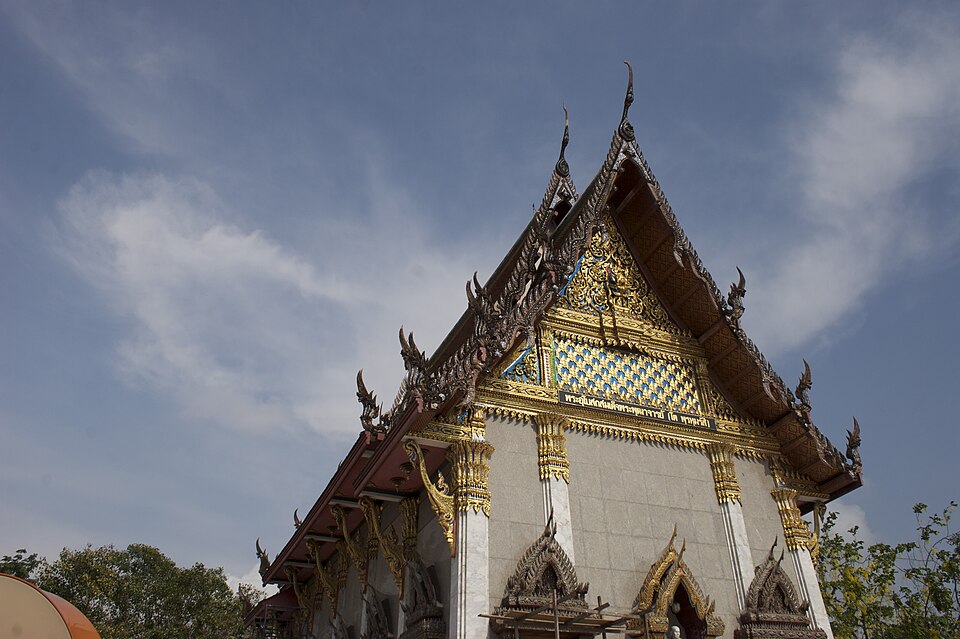
Wat Intharawihan in the Bang Khun Phrom quarter of Phra Nakhon is the temple of Luang Pho To, a standing Buddha in the posture of receiving alms that rises 32 metres and is the second tallest Buddha image in Bangkok. The image was begun in 1867 by Somdet Phra Phutthachan To Phrommarangsi, the most celebrated monk of nineteenth-century Siam, who died at its base in 1871 with the work barely started; it was finished six decades later, in 1924 by the Thai account and in 1927 by the English one, both placing the completion in the reign of King Vajiravudh. The temple itself is older than the statue and older than Bangkok, dating from before the Rattanakosin period under the name Wat Bang Khun Phrom Nok. It stands at 144 Wisut Kasat Road and is a royal temple of the Mahanikaya order.
Checked 2026-08-25 · Source
Luang Pho To is brick and stucco, 32 metres tall and about 10 metres across, and was refurbished for Bangkok's bicentennial in 1982 with Italian golden mosaic tiles and 24-carat gilding, which is why an image begun in 1867 glitters like new work. Its ushnisha, the topknot, holds a relic of the Gautama Buddha presented by the government of Sri Lanka, enshrined in 1978 according to the English account and in 1980 according to the Thai one. The ubosot is Ayutthaya in manner and was refurbished in the same 1982 campaign with Italian marble and murals of everyday life rather than the usual jataka cycles. A separate chamber holds a wax image of a former abbot set over a water spring, with waters gathered from the regions of Thailand displayed nearby, and there is a shrine to Guanyin. At the entrance stands a gilded bust of Somdet To. The temple's name comes from Chao In, a Lao resident who rebuilt it in the reign of Rama I; King Mongkut fixed the present name.
Checked 2026-08-25 · Source

Thirty minutes is enough for Wat Intharawihan. The statue is the visit: it is seen from the forecourt, walked around at the base, and photographed, and none of that takes long, though the scale takes a few minutes to register properly. Add ten minutes for the ubosot murals and the wax-image chamber if they are open and the Guanyin shrine on the way out. Visitors who buy an offering set and take part in the alms ritual at the feet should allow a little longer, but this is a stop rather than an afternoon, and it sits naturally with Bang Khun Phrom Palace a few hundred metres away on Samsen Road.
Checked 2026-08-25

Early morning suits Wat Intharawihan better than any other hour, because the statue faces into the compound and the forecourt is open, unshaded and merciless by mid-afternoon; there is very little to stand under while looking up 32 metres. The temple holds annual celebrations from 1 to 10 March, when the compound is full and the ritual life is at its densest, which is either the reason to come or the reason to avoid the dates depending on what is wanted. No opening hours are published by the temple, so daylight is the working assumption and dusk is not the time to arrive expecting halls to be unlocked.
Checked 2026-08-25
No admission is recorded for Wat Intharawihan, because the temple publishes no fee. What was checked: the Thai and English encyclopaedia entries, a search for a temple-run website, which returned only third-party portal listings rather than anything the temple operates, and the OpenStreetMap record, which carries no fee tag. Nothing has been assumed from what other Bangkok temples charge. Money is spent here on the offerings rather than at a gate: mackerel, boiled eggs and flower garlands are traditionally laid at the Buddha's feet and are sold in the compound, so small notes are useful.
Checked 2026-08-25

Wat Intharawihan is at 144 Wisut Kasat Road in Phra Nakhon, in the Bang Khun Phrom area just north of Banglamphu, and is normally approached along Samsen Road or by boat on the Chao Phraya arriving near Wisut Kasat Road. There is no rail station at the door, which is what keeps the temple quieter than its size suggests. The Bank of Thailand Learning Center a short distance south on Samsen Road lists Tha Thewet pier and several Samsen Road bus routes as its own access, and the same services serve this stretch, so a river arrival at Thewet followed by a short walk is a practical way in from the Grand Palace end of the city.
Checked 2026-08-25 · Source

The forecourt in front of Luang Pho To has almost no shade and the statue is best appreciated by standing still and looking up, which is a poor combination in the middle of a Bangkok afternoon; water and a hat matter more here than at a temple with cloisters. Ordinary temple conduct applies: shoulders and knees covered, shoes off inside the halls, feet never pointed towards an image, no walking through anyone's offering. Sellers around the entrance offer garland and offering sets and, at temples with a famous image, the routine hazard is the stranger who explains that the temple is closed today and proposes an alternative destination; the temple publishes no closing days and no such claim should be taken at face value. No photography restriction is published, but a service in progress is a reason to stop.
Checked 2026-08-25

Thirty-two metres of standing Buddha defeats the obvious frame. Backing off far enough to fit the whole image in flattens it and fills the picture with wires, roofs and the backs of other buildings; the better photographs are taken close and looking up, letting the alms bowl and the hands read against the sky, or from an angle that puts the gilded surface at a low sun. Morning light comes across the gold mosaic and gives it texture instead of glare, which a midday sun turns into a white blank. The gilded bust of Somdet To at the entrance is a strong close subject in shade. Inside the ubosot the 1982 murals of everyday life are unusual and worth a careful hand-held frame with the flash off.
Checked 2026-08-25
Luang Pho To stands 32 metres tall and about 10 metres wide, and the Thai encyclopaedia entry describes it as the second tallest Buddha image in Bangkok. It is built of brick and stucco and shows the Buddha in the posture of receiving alms.
Work began in 1867 under Somdet Phra Phutthachan To Phrommarangsi, who died at the base of the unfinished image in 1871. Completion is given as 1924 by the Thai account and 1927 by the English one, both in the reign of King Vajiravudh; the two dates are printed here as the sources give them.
A relic of the Gautama Buddha presented by the government of Sri Lanka is enshrined in the ushnisha. The English account dates the enshrinement to 1978, performed by Prince Vajiralongkorn, while the Thai account gives 1980.
No admission fee is recorded, because the temple publishes none and no operator-run website was found. Offerings are the usual expense: mackerel, boiled eggs and flower garlands are traditionally laid at the Buddha's feet and are sold in the compound.
Wat Intharawihan holds its annual celebrations from 1 to 10 March. The compound is at its busiest and most ceremonial during those ten days, which is worth planning towards or around depending on whether crowds are wanted.
The name comes from Chao In, a resident of Lao origin who rebuilt the temple during the reign of Rama I; King Mongkut later fixed the present name. Before that it was known as Wat Bang Khun Phrom Nok, and it dates from before the Rattanakosin period.
Loading the interactive map…
The interactive map could not be loaded.
Last updated:
Source: OpenStreetMap contributors, Wikidata ·