
_-_Flickr_-_Abhisit_Vejjajiva_(101).jpg)


1 min walk · เขตดุสิต
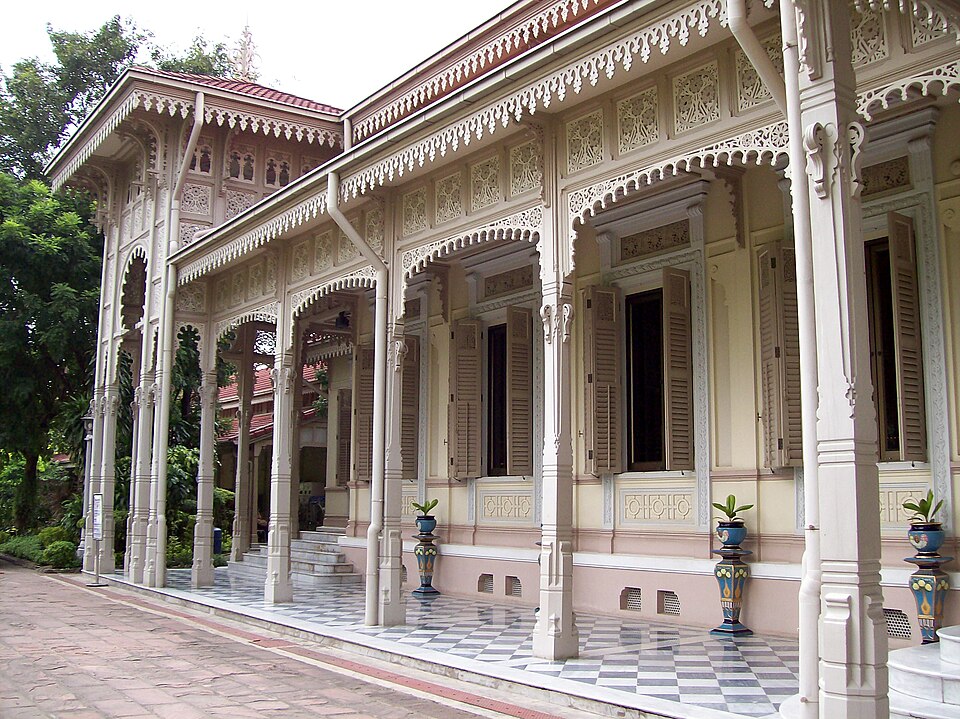
Amphorn Sathan Residential Hall
- Must see
- Historic monument
Language · 1 published
Historic monument · เขตดุสิต, Bangkok
พระราชวังดุสิต
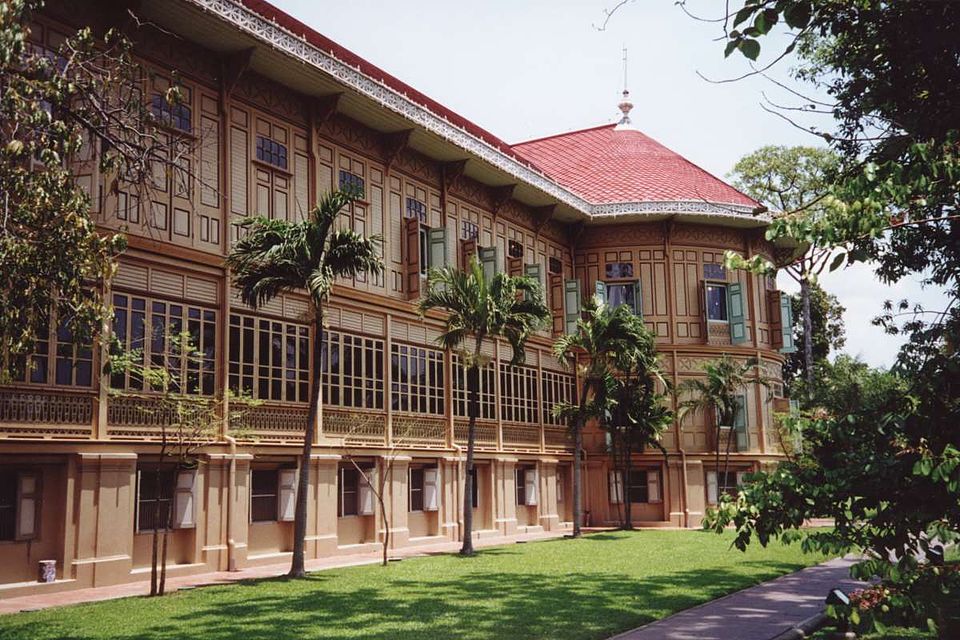
Dusit Palace is not a palace to tour but a royal quarter of Bangkok, roughly 64,749 square metres bounded by Ratchwithi Road to the north, Si Ayutthaya Road to the south, Ratchasima Road to the west and U-Thong Nai Road to the east, and most of it is closed to the public. King Chulalongkorn built it between 1897 and 1901 after his first European tour, where he saw European monarchs keeping spacious garden residences outside their capitals, and he wanted an escape from the Grand Palace, which had become overcrowded, stiflingly hot in summer and unhealthy. He bought farmland and orchards between the Padung Krung Kasem and Samsen canals with Privy Purse money and called the ground Suan Dusit, celestial garden. Prince Narisara Nuvadtivongs and the German architect C. Sandreczki supervised a mostly European team. The result differs from the Grand Palace in a way a visitor can see from the street: instead of walls dividing the outer, middle and inner courts, Dusit uses canals and gardens, and the whole district reads as parkland with buildings set inside it rather than as a fortified compound.
Checked 2026-08-25 · Source
Dusit Palace holds thirteen residential units and several throne halls, and their dates map the reigns that built them. Vimanmek Mansion, built entirely of teak, was moved here from Ko Sichang between 1900 and 1901 and completed in 1903 as the oldest residence on the site. The Abhisek Dusit Throne Hall followed in 1904 as a banqueting and festival space. Amphorn Sathan Residential Hall was built in 1906 and is the current residence of King Vajiralongkorn. The Ananta Samakhom Throne Hall, whose foundation stone was laid on 11 November 1908 and which was completed in 1915, is the building most visitors picture: Italian Renaissance and neoclassical in style, designed by Mario Tamagno and Annibale Rigotti with engineering by Carlo Allegri and G.E. Gollo, built of Carrara marble at a cost of fifteen million Siamese baht, its central dome standing 49.5 metres high among six smaller ones. King Vajiravudh added Suan Chitralada and the Chitralada Royal Villa in 1913. Part of the grounds became Dusit Zoo in 1938. The gates carry names taken from Chinese blue and white porcelain motifs chosen by King Chulalongkorn, and the paths carry floral names.
Checked 2026-08-25 · Source
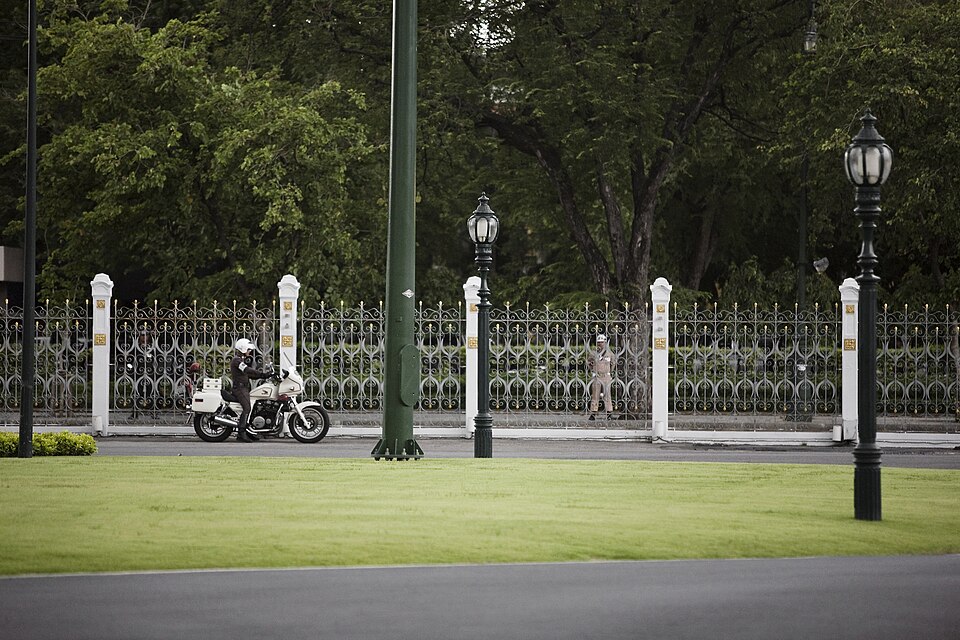
Allow forty-five minutes at Dusit Palace, and understand what those forty-five minutes buy. They are a walk around the Royal Plaza in front of the Ananta Samakhom Throne Hall, a look at the equestrian statue of King Chulalongkorn that faces it, and the exterior architecture of the throne hall itself seen from the public side of the fence. They do not include an interior. A visitor who expects to spend a morning inside Dusit Palace the way a morning goes inside the Grand Palace will be finished in a quarter of an hour and confused. Forty-five minutes is the right allowance for the exteriors and the plaza taken seriously, on foot, with time to read the district as the piece of European-influenced urban planning that it is.
Checked 2026-08-25
Dusit is the coolest-feeling royal district in Bangkok because it was designed to be, with canals and gardens instead of walls, and that makes an early morning or a late afternoon walk genuinely pleasant where the same walk at midday is not. The Royal Plaza is a wide, open, treeless expanse in front of the Ananta Samakhom Throne Hall and it takes the full sun. Late afternoon lights the throne hall's marble and its dome from the west and is the better hour for anyone coming for the architecture. The more important timing question at Dusit is not the hour but the day: this is a working royal precinct that hosts state ceremonial occasions and the annual parliamentary opening address, and roads and approaches around it can be closed for those without much public notice. A visitor with a fixed plan should be ready to be turned back on the day.
Checked 2026-08-25 · Source
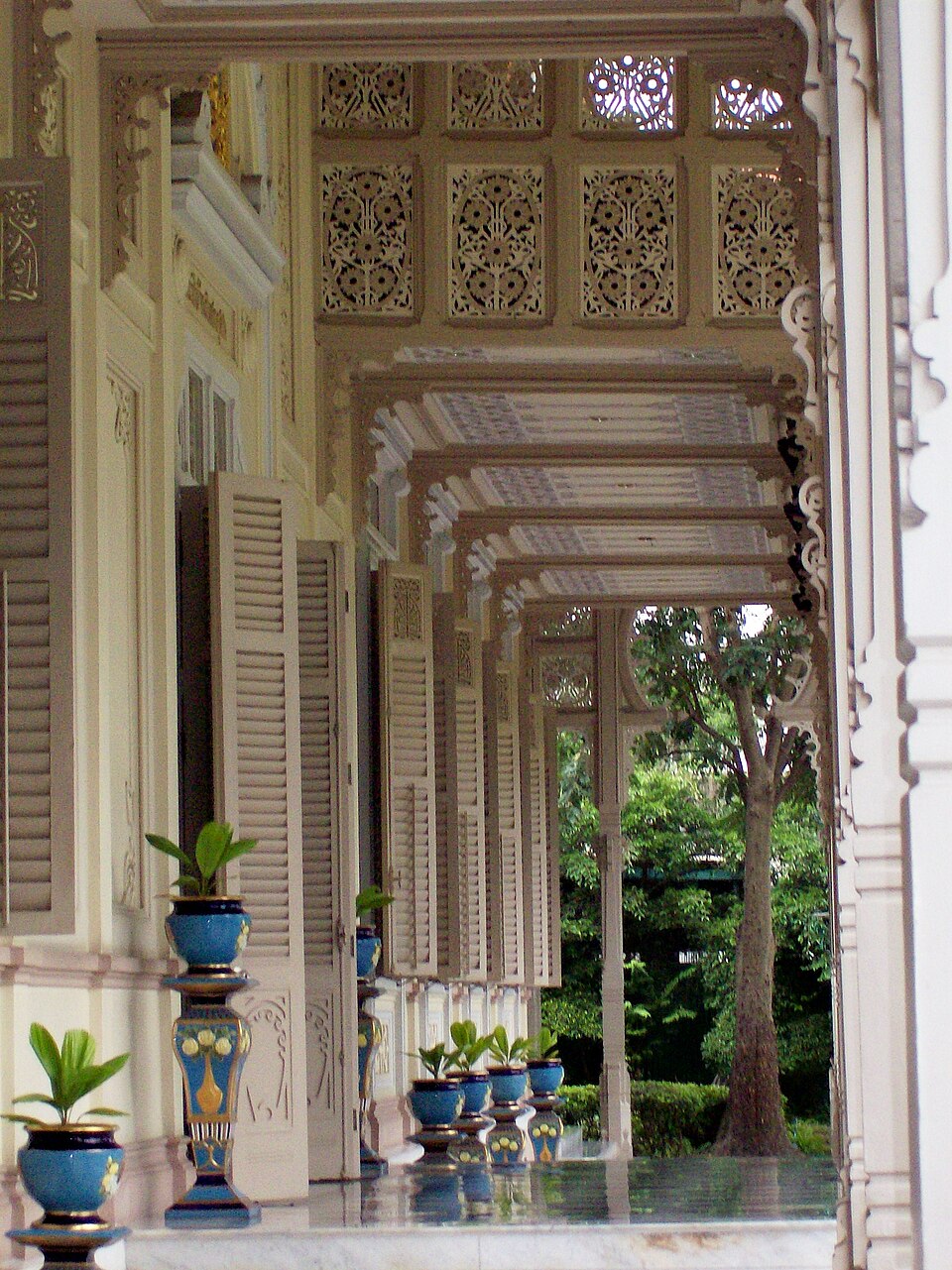
No admission price and no opening hours are recorded for Dusit Palace on this page, because no operator-published page for the precinct carries either. That absence is not an oversight but a description of the place. The Ananta Samakhom Throne Hall has been closed to visitors indefinitely since 1 October 2017, when the Arts of the Kingdom exhibition it housed shut with plans to move to Ayutthaya Province; the hall is now used for state ceremonial occasions and the annual parliamentary opening address. Vimanmek Mansion has been closed for restoration. Amphorn Sathan is an occupied royal residence. What was checked on 25 August 2026: the Bureau of the Royal Household's published material, the SUPPORT Foundation museum at the Abhisek Dusit Throne Hall, and the Wikipedia records for Dusit Palace and the Ananta Samakhom Throne Hall. None publishes current visiting hours or a price. Treat Dusit Palace as an exterior visit and verify any interior separately before making the journey for it.
Checked 2026-08-25 · Source
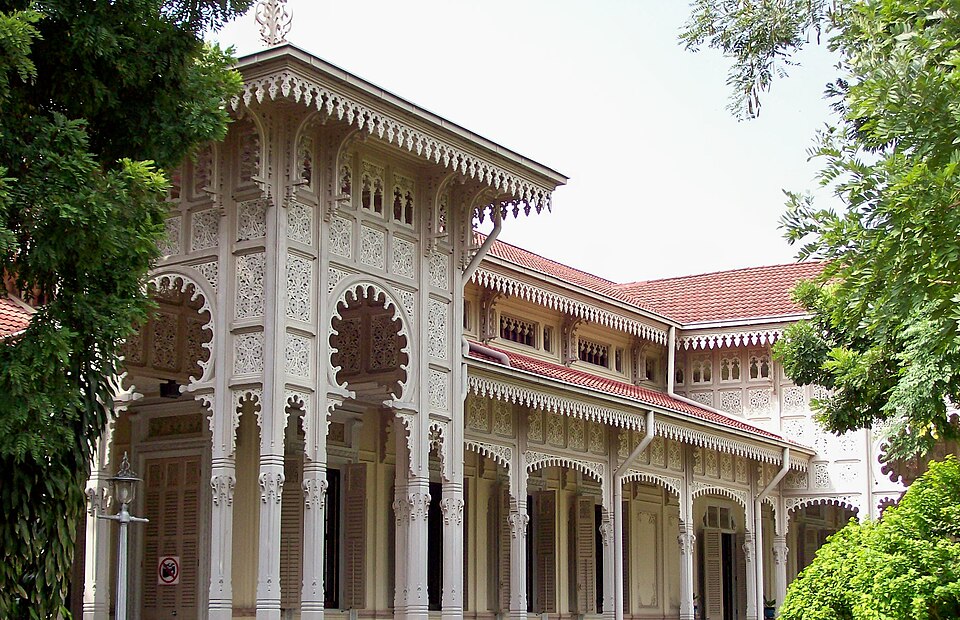
Dusit Palace is the one major royal site in Bangkok with no rail station at its gate, which is why it stays quiet. The precinct is bounded by Ratchwithi Road to the north, Si Ayutthaya Road to the south, Ratchasima Road to the west and U-Thong Nai Road to the east, and arrival is by taxi, by city bus or on foot from the river. Coming from the Chao Phraya, a visitor lands at a pier in the Thewet area and walks east, which has the advantage of approaching the Royal Plaza along the axis it was designed to be seen from. Coming by taxi, name a boundary road rather than the palace, since the precinct has no single visitor entrance to be dropped at. Allow more time than the map distance suggests: the block is large, the pavements are long and there is no short cut through the middle, because the middle is closed.
Checked 2026-08-25 · Source
Dusit Palace is an inhabited royal residence, and that single fact governs everything about a visit. Amphorn Sathan Residential Hall is the current residence of King Vajiralongkorn, so parts of the precinct are guarded, gates are not entrances, and instructions from personnel are followed without argument. Thailand enforces lèse-majesté law, under which insulting the monarchy is a criminal offence carrying substantial prison sentences, and a foreign visitor is not exempt; disrespectful behaviour, gestures or remarks near a royal residence are a legal matter and not a cultural faux pas. Dress conservatively, keep off the roadway, and do not photograph guards, gates or security arrangements. The second trap is expectation: visitors arrive at Dusit believing they have booked a palace tour and find a closed precinct, because the Ananta Samakhom Throne Hall has been shut to visitors since 1 October 2017 and Vimanmek Mansion is under restoration. Third, ceremonial events close roads here at short notice. Plan Dusit as a walk you can abandon.
Checked 2026-08-25 · Source
The photograph at Dusit is the Ananta Samakhom Throne Hall seen across the Royal Plaza, with the equestrian statue of King Chulalongkorn in the foreground, and it is a wide shot rather than a detail one. The 49.5-metre central dome and the six smaller domes need distance to sit in the frame, and the plaza gives more of it than any other royal site in Bangkok. Late afternoon light from the west across the Carrara marble is worth waiting for. What must not be photographed is as important as what should. This is a working royal residence: guards, gates, checkpoints and security arrangements are off limits, and a camera pointed at them will be challenged. There are no interiors to photograph, since the throne hall has been closed to visitors since 1 October 2017. Drones are not a realistic option over a royal precinct. Keep to the public pavement, shoot the architecture, and put the camera down when anyone in uniform indicates it.
Checked 2026-08-25 · Source
Largely no. The Ananta Samakhom Throne Hall has been closed to visitors indefinitely since 1 October 2017, Vimanmek Mansion is closed for restoration, and Amphorn Sathan Residential Hall is the current residence of King Vajiralongkorn. Dusit Palace is realistically an exterior visit around the Royal Plaza.
No admission price and no opening hours are recorded here, because no operator-published page for the precinct carries either. The Bureau of the Royal Household material, the SUPPORT Foundation museum at the Abhisek Dusit Throne Hall and the Wikipedia records were all checked on 25 August 2026 without finding current hours or a price.
He conceived it after his 1897 European tour, where he saw European monarchs keeping spacious garden residences outside their capitals, and he wanted an escape from the Grand Palace, which had become overcrowded, stiflingly hot in summer and unhealthy. He bought farmland between the Padung Krung Kasem and Samsen canals with Privy Purse funds and named it Suan Dusit.
The Ananta Samakhom Throne Hall, whose foundation stone was laid on 11 November 1908 and which was completed in 1915. It was designed by the Italian architects Mario Tamagno and Annibale Rigotti, built of Carrara marble at a cost of fifteen million Siamese baht, and its central dome stands 49.5 metres high among six smaller ones.
The layout. Where the Grand Palace divides its outer, middle and inner courts with walls, Dusit separates them with canals and gardens, so the precinct reads as parkland with buildings set in it. Dusit was also built from 1897 to 1901 in a European idiom, more than a century after the Grand Palace.
It is an inhabited royal residence. Thailand enforces lèse-majesté law, under which insulting the monarchy is a criminal offence carrying substantial prison sentences and from which foreign visitors are not exempt. Dress conservatively, follow instructions from personnel, and do not photograph guards, gates or security arrangements.
Loading the interactive map…
The interactive map could not be loaded.
Last updated:
Source: OpenStreetMap contributors, Wikidata ·