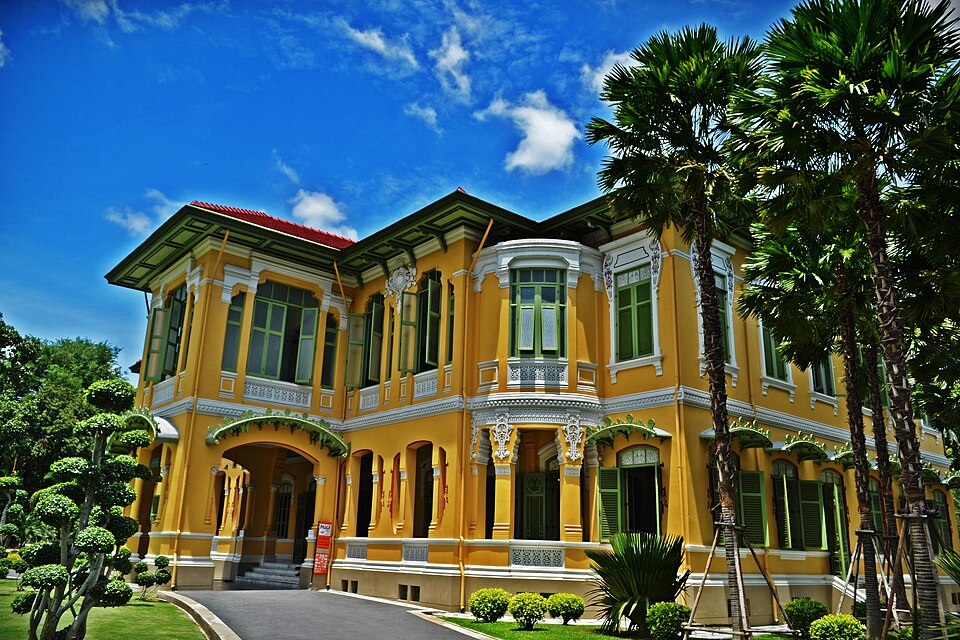
Paruskavan Palace, Wang Parusakawan in Thai, is a cream-brick European villa in Dusit that King Chulalongkorn built for his son Prince Chakrabongse Bhuvanath when the prince came home from his military education in Russia. Work began in 1903 and the building was finished at the end of 1905, with the formal opening on 5 April 1906. Two things make it unusual among Bangkok's royal buildings. It was the home of the most talked-about royal marriage of its generation, between the prince and the Ukrainian nurse Kateryna Desnytska, and after the 1932 change of government it became the seat of the Prime Minister of Siam. It is not a ticketed monument today. The villa named by this entry, Tamnak Parusk, houses the National Intelligence Agency, and the compound also holds police museums in the neighbouring villa. For a visitor this is a building to read about and look at from the street rather than to tour.
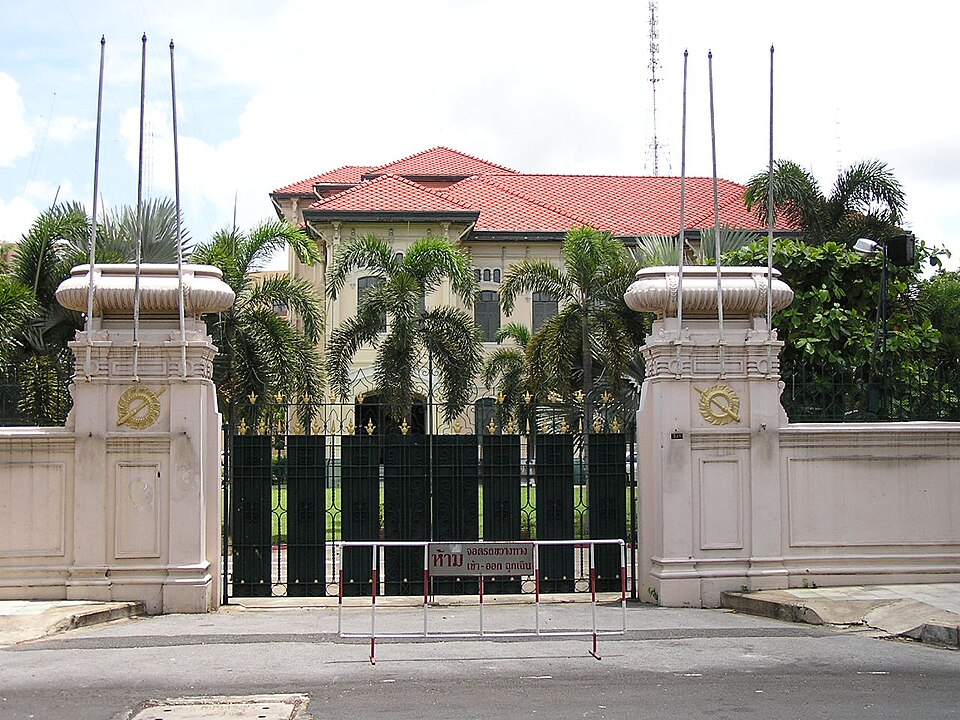
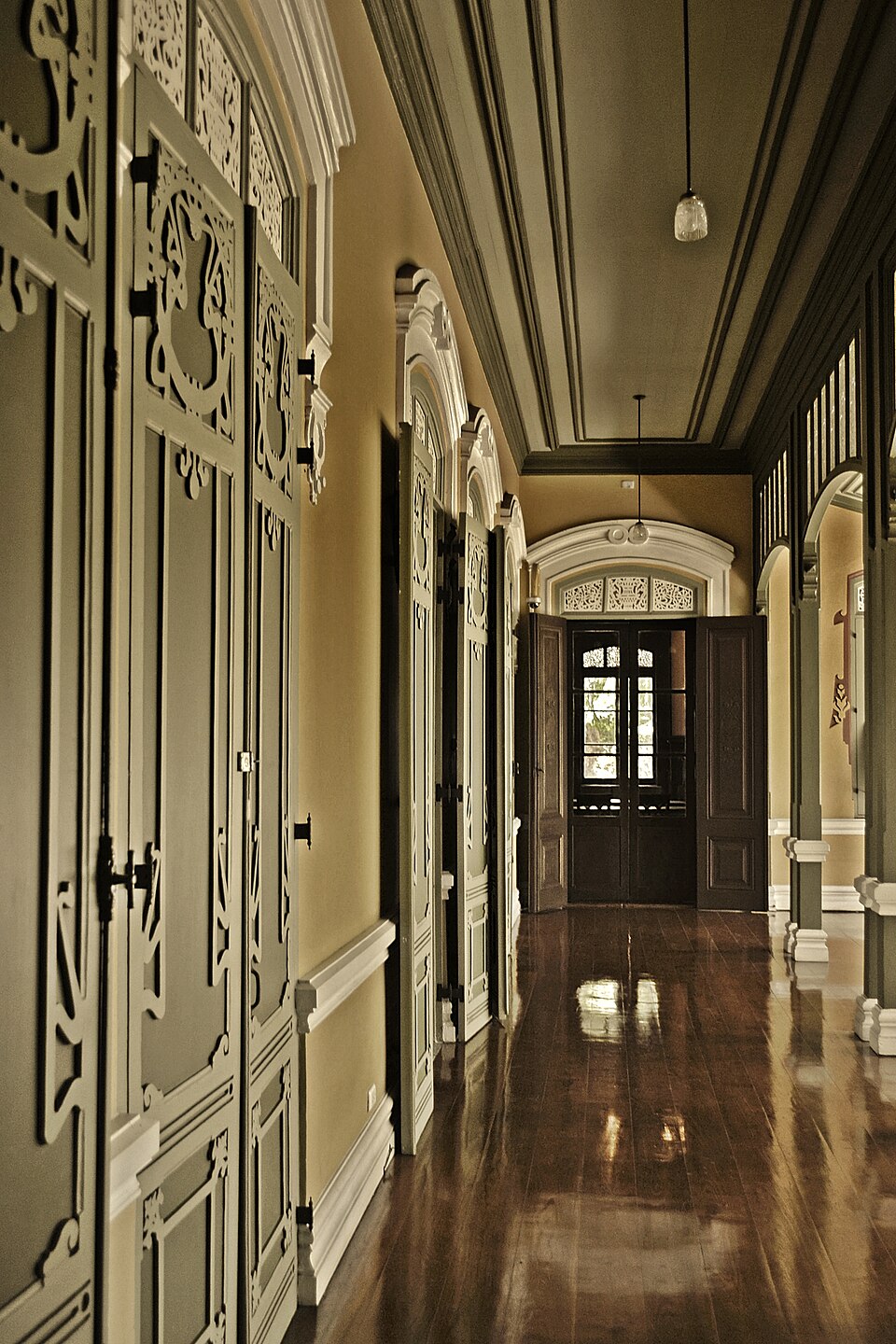
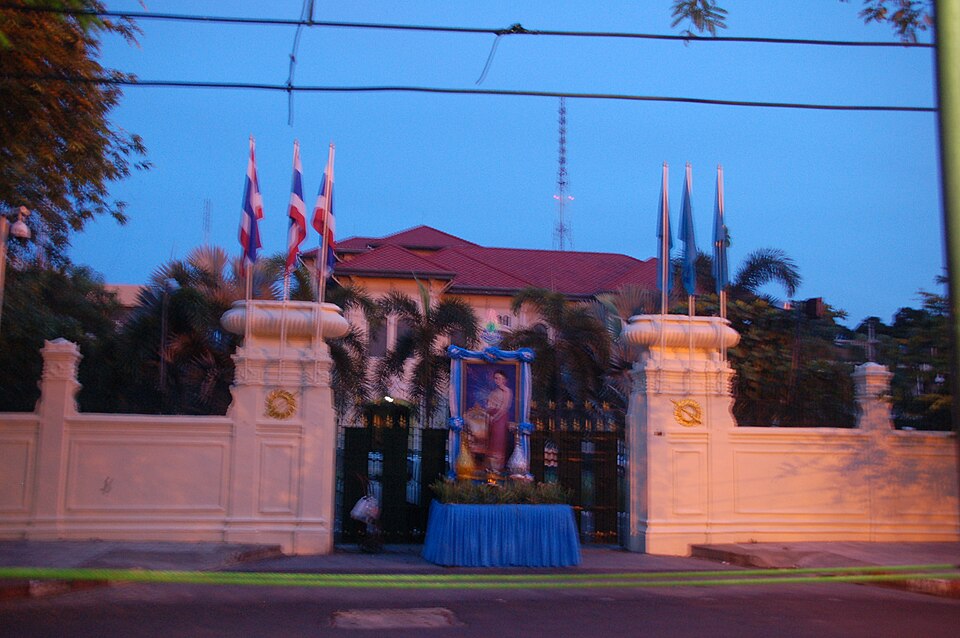
The compound holds two villas, not one. Tamnak Parusk, the two-to-three storey palace on the corner of Phitsanulok and Ratchadamnoen Nok roads, with cream brick walls and a tiled roof, was Prince Chakrabongse's own residence and the building he lived in for the rest of his life. Tamnak Chitralada next door belonged to the crown prince who became King Vajiravudh; when he took the throne the two properties were exchanged and the dividing wall taken down, then rebuilt carrying the prince's emblem of the chakra and the conch. The design came from the architects Mario Tamagno, a Mr Scots and a Mr Beyrolepi, and the project was unlucky in them: Tamagno caught cholera and returned to Europe and Scots died of smallpox, leaving Beyrolepi to finish. Ekaterina Desnitskaya laid out the gardens and refurnished the interiors, mixing Western sofas and armchairs with Eastern materials. Their son Prince Chula Chakrabongse was born here on 28 March 1908. The police museum occupies Chitralada Villa, not Tamnak Parusk.
Allow forty-five minutes, and understand what those forty-five minutes buy: a walk along the compound's street frontage, a look at the villa's roofline and cream brickwork over the wall, and the emblem on the rebuilt dividing wall. This is not a building a visitor works through room by room, because the villa this entry names is a government headquarters. Anyone intending to see the police museum in the neighbouring villa should treat that as a separate visit with its own time and its own uncertainty about opening days. Combined with the Royal Plaza and the Ananta Samakhom Throne Hall a few hundred metres north, the stop fits comfortably into a Dusit morning without needing more than the three quarters of an hour allowed here.
Morning suits Paruskavan Palace best. The villa faces the corner of Ratchadamnoen Nok and Phitsanulok, and early light rakes across the cream brick before the avenue's traffic and heat build; by midday the frontage is flat and the pavement offers little shade. Dusit is a district of ministries and offices rather than nightlife, so it empties in the evening and there is nothing to gain from arriving late. The sensible way to use the stop is as one point on a Dusit walk that also takes in the Royal Plaza and the Ananta Samakhom Throne Hall to the north. Avoid the days around state ceremonies, when Ratchadamnoen Nok is used as a processional route: the police presence is heavy, the pavements are fenced and a casual walk past a government compound becomes an awkward one.
No admission and no opening hours are recorded for Paruskavan Palace, and none are stated here. The villa named by this entry is the headquarters of the National Intelligence Agency, so it is not a place that sells tickets at all; assume it is closed to visitors. The police museum in the neighbouring Chitralada Villa is a different matter, and it is the one part of the compound that has been open to the public, but no operator-published page giving its days, its hours or its admission could be found when this was checked on 25 August 2026. Independently published listings contradict one another about which days of the week it opens, which is exactly why nothing is recorded here rather than a guess. Anyone set on seeing the museum should confirm with the Royal Thai Police directly before making the trip.
The palace stands on the corner of Ratchadamnoen Nok and Phitsanulok roads in Dusit, a few hundred metres south of the Royal Plaza and the Ananta Samakhom Throne Hall. Dusit has no metro or skytrain station within easy walking distance, which is the main reason visitors skip it, so the practical options are a taxi or ride-hailing car, one of the many buses that run along Ratchadamnoen Nok, or a Chao Phraya express boat to Thewet followed by a walk of roughly a kilometre east. Coming from the old city, the direct approach is up Ratchadamnoen Avenue from Democracy Monument, which is a pleasant walk in the cool of the morning and a punishing one at midday. The pavements around the compound are wide and continuous, so the frontage can be walked without crossing the avenue.
This is the single most important thing to understand about Paruskavan Palace: it is a working security compound, not a heritage site with a gift shop. The National Intelligence Agency sits inside the villa this entry names, and police offices occupy the rest. Do not attempt to walk through the gate, do not photograph gates, guard posts, barriers or personnel, and do not point a long lens over the wall; a tourist photographing a historic roofline and a tourist photographing an intelligence headquarters look identical to the officer on duty. Keep to the public pavement, keep the camera aimed at the architecture, and stop if asked. Second, do not travel out here specifically for the police museum without confirming its opening days first, because the published information is contradictory. Third, Ratchadamnoen Nok is a ceremonial avenue and can be closed or fenced for state events, so a planned route can disappear at short notice. Dress conservatively, as anywhere near government buildings in Bangkok.
Photography here is a street exercise done with restraint. The subject is the cream-brick villa's upper storeys and tiled roof rising above the compound wall, seen from the pavement on the corner of Ratchadamnoen Nok and Phitsanulok, and the emblem of the chakra and the conch set into the rebuilt wall between the two villas. Morning light comes across the frontage and gives the brick some texture; later in the day the wall throws the lower façade into shadow while the roof burns out. A moderate telephoto compresses the roofline nicely, but consider how the same lens reads to the guards, and put it away as soon as the frame is taken. Nothing on the security side of the wall should be photographed at all: no gates, no barriers, no uniforms, no vehicles entering. If a visit to the museum in the neighbouring villa does come off, ask about photography inside before raising a camera rather than after.
Checked 2026-08-25
Common questions
Can Paruskavan Palace be visited inside?
No. Tamnak Parusk, the villa this page describes, houses the National Intelligence Agency, and the wider compound holds police offices. Treat it as a building to see from the public pavement. The police museum in the neighbouring Chitralada Villa is the only part of the compound that has opened to the public.
Who built Paruskavan Palace and when?
King Chulalongkorn built it for his son Prince Chakrabongse Bhuvanath on the prince's return from studying in Russia. Construction started in 1903 and was completed at the end of 1905 by the architect Beyrolepi, after Mario Tamagno caught cholera and returned to Europe and Mr Scots died of smallpox. The opening was on 5 April 1906.
What is the connection to Katya Desnitskaya?
Prince Chakrabongse married the Ukrainian Kateryna Desnytska, whom he had met in Russia, and Paruskavan Palace was their home. She designed the palace gardens and redecorated the interiors, combining Western sofas and armchairs with Eastern materials. Their son Prince Chula Chakrabongse was born here on 28 March 1908, and the couple divorced in 1919.
Was the palace ever a seat of government?
Yes. After the 1932 change of government the Prime Minister's Office moved to Paruskavan Palace when General Phraya Phahonphonphayuhasena took office on 21 June 1933. It stayed there until Field Marshal Plaek Phibunsongkhram became Prime Minister on 16 December 1938 and moved the office to Suan Kularb Palace.
Is there an admission charge?
Nothing is recorded. The villa itself is a government headquarters and does not sell tickets. For the police museum in the neighbouring villa, no page published by the Royal Thai Police giving days, hours or admission could be found when this was checked on 25 August 2026, and independent listings contradict one another, so no figure is stated here.
How is Paruskavan Palace reached?
It stands on the corner of Ratchadamnoen Nok and Phitsanulok roads in Dusit, a few hundred metres south of the Royal Plaza and the Ananta Samakhom Throne Hall. There is no skytrain or metro station within easy walking distance, so a taxi, a bus along Ratchadamnoen Nok, or an express boat to Thewet and a walk of about a kilometre are the options.
Nothing non-essential is set before you choose, in regions where consent is required. If you decline, ads still appear but they are non-personalised, and analytics is switched off entirely.