
.jpg)


.jpg)
2 min walk · เขตดุสิต
Vimanmek Mansion
- Must see · Heritage site
- Historic monument
Language · 1 published
Historic monument · เขตดุสิต, Bangkok
พระที่นั่งอภิเศกดุสิต
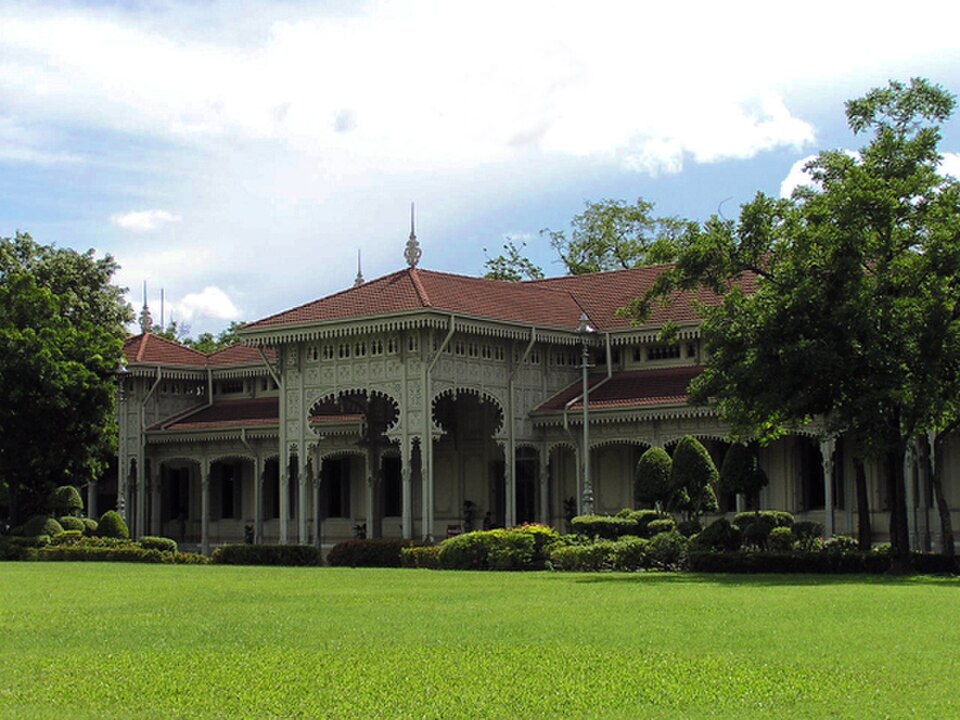
Abhisek Dusit Throne Hall is a single-storey timber throne hall inside the Dusit Palace precinct, built in 1903-1904 by order of King Chulalongkorn after his first tour of Europe and designed by the Italian architect Mario Tamagno. It belongs to the first group of buildings raised at Dusit, and it is the ornamental extreme of the fretwork style of that reign: carved wooden lacework in a pattern known in Thai as lai bunga runs along its eaves and screens, and coloured glass is set through the structure. It was built as a reception and banquet hall for state occasions rather than as a residence. Since 1993 it has served as the display building for handicrafts made by members of the SUPPORT Foundation. It sits east of Vimanmek Mansion, and its accessibility depends entirely on the state of the palace precinct around it.
Checked 2026-08-25 · Source
The hall was converted with royal permission into an exhibition building for the work of the Foundation for the Promotion of Supplementary Occupations and Related Techniques, the body known as the SUPPORT Foundation, and opened to the public in that role on 20 January 1993. The displays mounted there have been the foundation's craft output — mudmee tie-dyed silk and other weaving, wood carving, basketry and ceramics made by members in the provinces — together with pieces belonging to Queen Sirikit. What is worth being clear about is that this page cannot confirm what is currently installed or whether the interior is being shown at all, because no operator publishes a current exhibition list for the hall. Treat the collection described above as what the building has held, not as a promise of what a visitor will see.
Checked 2026-08-25 · Source
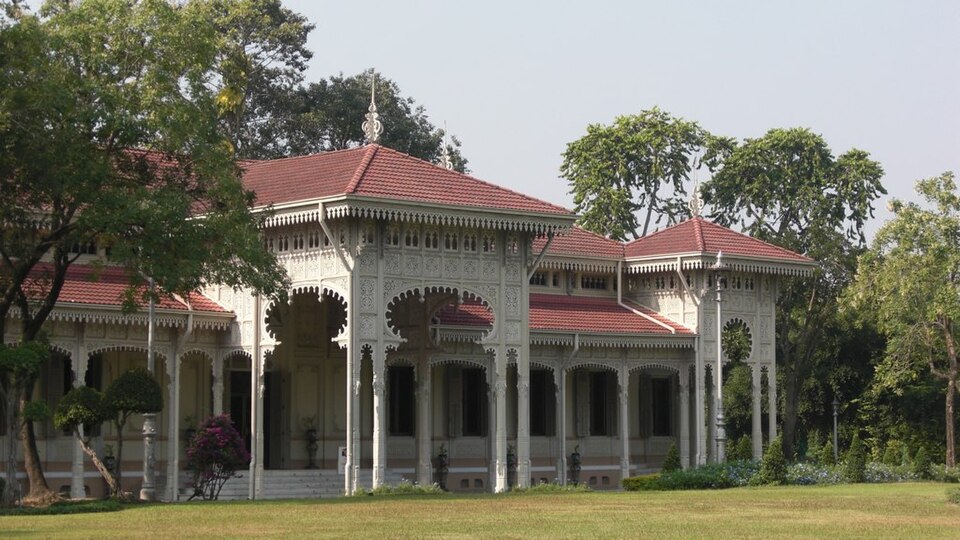
Twenty minutes is the honest figure to plan for, because that is what an exterior look at the hall and its immediate surroundings takes. The interior, when it has been open, is a single large room of craft display that most visitors have walked in three-quarters of an hour, and a reopening would change the number; but planning a longer visit against an access situation that nobody publishes is how an afternoon in Dusit gets wasted. Build the twenty minutes into a walk around the Dusit precinct rather than making the throne hall the reason for the journey.
Checked 2026-08-25
Dusit is a ceremonial quarter rather than a tourist one, and its rhythm is set by state occasions: roads around the precinct close for royal ceremonies, processions and state funerals, sometimes at short notice and sometimes for days. Check for an event before setting out. On climate, the walk between the Dusit buildings is long, open and shadeless, which makes the early morning the only comfortable window from March to May; November to February allows an afternoon. Sunday adds park traffic around the district without adding access to the hall itself.
Checked 2026-08-25
No admission price and no opening hours are recorded for Abhisek Dusit Throne Hall, and none are asserted here. When the hall was open, entry was arranged through the ticket counter at Vimanmek Mansion next door; the Thai Wikipedia article on Vimanmek states that the mansion has not been open to visitors since 2018, when its long-standing structural subsidence forced work on the foundations. No page belonging to the Bureau of the Royal Household or to the Fine Arts Department publishes current hours or a fee for Abhisek Dusit. The pages checked on 25 August 2026 were the Fine Arts Department site at finearts.go.th and the Thai encyclopaedia articles on the throne hall and on Vimanmek. Confirm access before travelling; do not buy a plan around this building.
Checked 2026-08-25 · Source
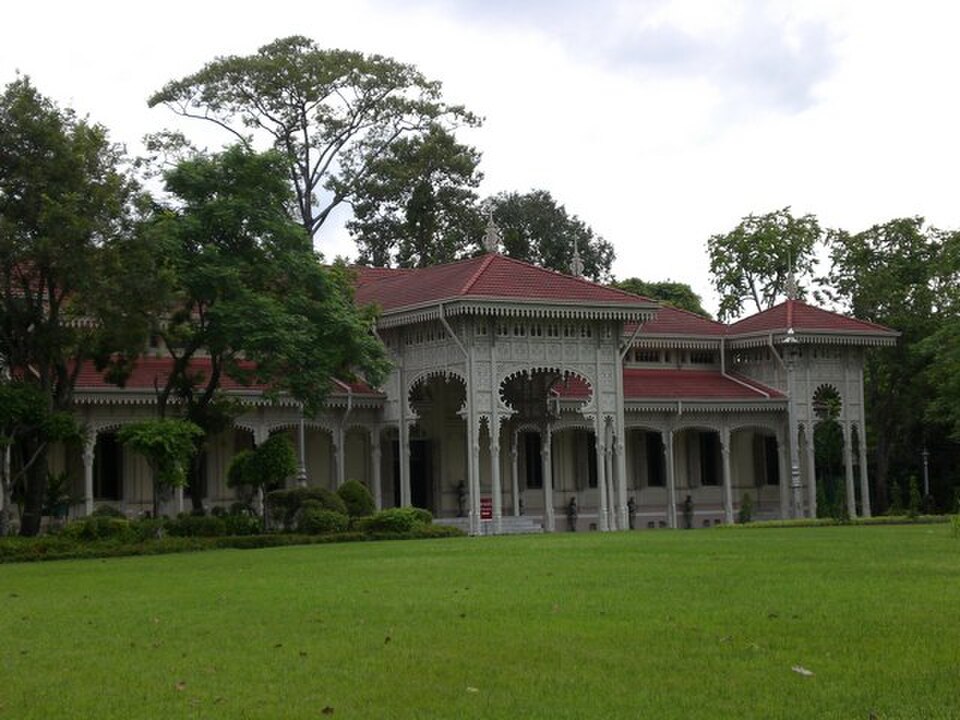
The throne hall stands in the Dusit Palace grounds off Ratchawithi Road, in the block bounded by the old zoo site, the National Assembly area and Ananta Samakhom Throne Hall. No BTS or MRT station serves this part of Dusit, so arrival is by taxi, by bus along Ratchawithi or Si Ayutthaya roads, or by river to Thewet pier and a short ride inland. Taxi drivers know the Dusit Palace gates and Ananta Samakhom far better than they know the name of this particular hall, so give the precinct rather than the building. Allow for the district's one-way system, which makes the return journey longer than the outward one.
Checked 2026-08-25
The first hazard is the trip itself: a visitor who travels to Dusit specifically for this hall may find no gate open and no notice explaining why, because the access situation is not published. The second is conduct. This is a royal precinct with sentries, government buildings and, at times, ceremonies in progress; dress as for a palace — covered shoulders and knees, no sleeveless tops, no shorts — behave quietly, and do not photograph guards, gates, security posts or ceremonial preparations. The third is the distance: the Dusit buildings look close together on a map and are not, and there is very little shade between them. Carry water, and treat any information about opening times that comes from a booking site rather than from an official Thai source as unreliable.
Checked 2026-08-25

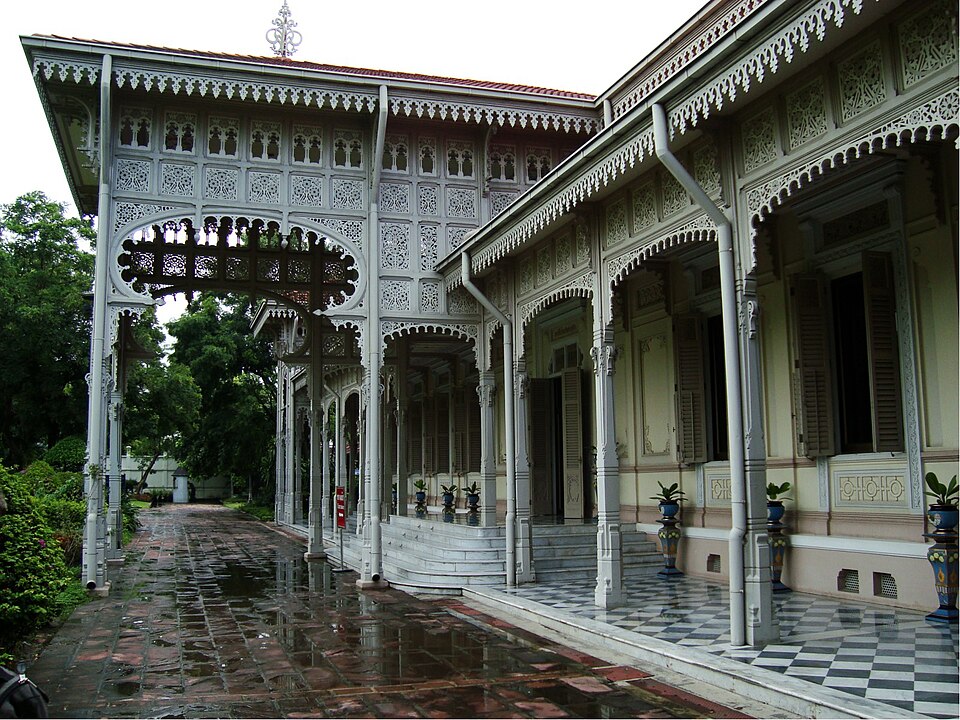
The subject here is carpentry, not scale. What makes Abhisek Dusit worth a frame is the pierced wooden lacework along the eaves and the screens, and that detail only reads when light rakes across it from the side rather than falling flat on it, which means early morning or late afternoon. A long lens that isolates a run of fretwork against shadow will do more for the building than a wide frame of the whole elevation, which flattens into a pale box. Coloured glass set into the structure needs the sun behind it to show at all. Since interior access cannot be assumed, plan the photography as an exterior exercise, and keep the camera down when passing sentries and gates.
Checked 2026-08-25
That cannot be confirmed. Entry was formerly arranged through the ticket counter at Vimanmek Mansion, and the Thai Wikipedia article on Vimanmek states that the mansion has not been open to visitors since 2018 because of structural subsidence. No operator page publishes current hours for Abhisek Dusit, so confirm before travelling rather than building a day around the hall.
It was built in 1903-1904 on the orders of King Chulalongkorn, following his first tour of Europe, to the design of the Italian architect Mario Tamagno. It is one of the earliest structures in the Dusit Palace precinct and was used as a reception and banquet hall for state occasions.
The Foundation for the Promotion of Supplementary Occupations and Related Techniques trains villagers in traditional crafts, and the throne hall was converted with royal permission into a display building for their work, opening in that role on 20 January 1993. The displays have covered weaving including mudmee silk, wood carving, basketry and ceramics, alongside pieces belonging to Queen Sirikit.
Lai bunga is the Thai name for the pierced floral fretwork that decorates the hall, cut in wood and applied along eaves, gables and screens. It is the ornament most associated with the wooden buildings of King Chulalongkorn's reign, and on this hall it is the principal architectural feature rather than a trim.
Vimanmek was a royal residence, a very large golden-teak mansion; Abhisek Dusit is a single-storey ceremonial hall built for receptions and banquets, and it is smaller, lower and far more heavily carved. The two were shown together as one museum complex, which is why their fortunes as visitor attractions have been linked.
No fee is recorded on this page, because no operator publishes one for the hall at present. Fees applied when the Dusit Palace museum complex was operating and were collected at the Vimanmek counter. Any current figure quoted by a booking or listing site has not been verified against an official source and should not be relied on.
Loading the interactive map…
The interactive map could not be loaded.
Last updated:
Source: OpenStreetMap contributors, Wikidata ·