
1 min walk · เขตดุสิต
Dusit Palace
- Must see
- Historic monument
Language · 1 published
Historic monument · เขตดุสิต, Bangkok
พระที่นั่งอัมพรสถาน
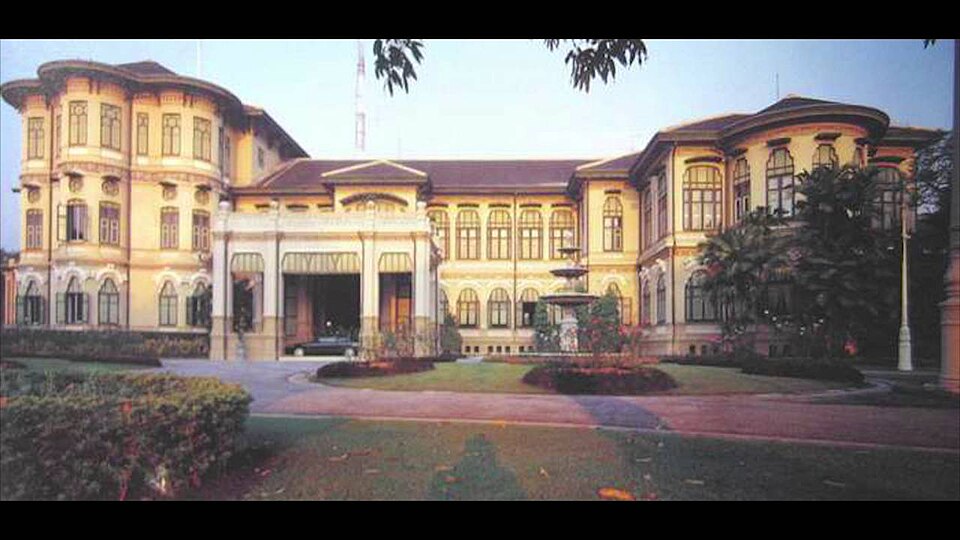
Amphorn Sathan Residential Hall is the main residence of King Maha Vajiralongkorn, Rama X, in Bangkok, and it is closed to the public in every sense: no tours, no ticket, no visiting hours and no admittance to the grounds. It stands inside the Dusit Palace precinct, south of Vimanmek Mansion and north-west of the Ananta Samakhom Throne Hall. King Chulalongkorn ordered it built in 1890, Chaophraya Yommarat as Minister of Public Works directed the work, and its completion was celebrated over 18 to 22 February 1906. Chulalongkorn died there in 1910. King Bhumibol and Queen Sirikit lived in the hall from 1950 to 1957, three of their children were born there, and the present king was born there on 28 July 1952; it has been his official residence since 1972. This entry exists because the building matters to Bangkok's history, not because it can be visited.
Checked 2026-08-25 · Source
What is inside is documented rather than seen, and that distinction should be held firmly before anyone travels to Dusit. The hall is a three-storey European country villa on an H-shaped plan: two parallel rectangular blocks, Amphorn Sathan and Udon-pak, joined by a connecting bridge. The interiors combine Art Nouveau and Second Empire decoration, and the frescoes were painted by the Italian artists Galileo Chini and Annibale Rigotti, the same circle of Italian designers who worked across Rama V's Dusit projects. One further piece of its history is broadcast rather than architectural: King Bhumibol established the A.S. radio station in the residence in 1952 and its weekly jazz programmes went out from the building. None of these rooms appears on any public itinerary.
Checked 2026-08-25 · Source
Fifteen minutes is the figure recorded, and it describes time spent in the Dusit district around the residence rather than time inside it, since no visit inside is possible. That quarter of an hour covers the walk along the public roads that bound the palace precinct and a look at the Ananta Samakhom Throne Hall across the Royal Plaza, which is the landmark most people actually photograph when they think they are photographing the royal residence. Anyone allotting longer should allot it to the Dusit precinct as a whole, not to this building, and should check in advance what in that precinct is currently open.
Checked 2026-08-25
There is no good time to go to Amphorn Sathan itself, because it cannot be entered on any day. The Dusit district around it is best walked early, when the wide ceremonial avenues are empty and cool and the morning light is on the Ananta Samakhom dome. State occasions are the days to avoid rather than seek: royal ceremonies close roads around the precinct at short notice, security is heavier, and pedestrians are moved on. Days of national mourning or royal celebration bring large, formally dressed Thai crowds to the Royal Plaza, and a foreign visitor wandering through with a camera at those moments is intrusive.
Checked 2026-08-25
No ticket exists and no admission is recorded, because Amphorn Sathan Residential Hall is a private royal residence and not a visitor attraction. No opening hours are recorded either. Sources consulted on 25 August 2026 were the encyclopaedia entries for the hall and for Dusit Palace, which describe the building as the residence of King Vajiralongkorn and not open to the public; a Thai government site for the palace precinct at dusitpalace.go.th did not resolve, and royaloffice.th refused the request. Visitors should also know that access to the wider Dusit precinct has narrowed: the Ananta Samakhom Throne Hall is closed to the public and used only for important royal ceremonies, and Vimanmek Mansion has been under renovation. Check the current status of anything in Dusit before travelling for it.
Checked 2026-08-25 · Source
Dusit is one of the few central Bangkok districts with no rail station of its own, so the approach is by bus, taxi or a long walk, typically from the Ratchawithi and U Thong Nai road frontages that bound the palace precinct. The residence sits between the Ang-yok canal and Benjamas road inside the walls, which means the closest a visitor can lawfully get is the public pavement outside. Anyone who intends to see Dusit's open buildings should aim for the Royal Plaza and work outward from there, rather than navigating towards Amphorn Sathan and finding a guarded gate. Do not attempt to enter the precinct through service or staff entrances, and do not linger against the perimeter wall.
Checked 2026-08-25 · Source
The single most important thing to understand is that this is an occupied royal residence with a permanent security presence, and it is treated as such. Do not approach the gates, do not attempt to enter, do not photograph guards, checkpoints or security arrangements, and comply immediately and politely with any instruction from personnel. Thailand's lese-majeste law is enforced, and remarks or gestures about the monarchy that would pass unnoticed elsewhere carry criminal risk here; the pavement outside a royal residence is the worst possible place to test that. Dress conservatively in the Dusit precinct even on the street. Practical points are secondary: there is very little shade on the ceremonial avenues, road closures for ceremonies happen at short notice, and drivers who offer to take visitors to a tour of the palace are selling something that does not exist.
Checked 2026-08-25
Assume the residence is not a photographic subject. It sits behind walls and planting, the security perimeter is not to be photographed at all, and a long lens raised towards a royal residence is exactly the wrong gesture to make in this district. What the surrounding streets do offer is the Dusit set-piece the planners intended: the Ananta Samakhom Throne Hall closing the vista across the Royal Plaza, best in early morning light from the far end of the avenue, with the equestrian monument as foreground. Keep cameras down when passing gates, put the phone away entirely if asked, and never photograph a royal motorcade or the road closure that precedes one.
Checked 2026-08-25
No. It is the main residence of King Maha Vajiralongkorn in Bangkok and is not open to the public. There are no tours, no tickets and no visiting hours, and the grounds are a secured royal precinct.
King Chulalongkorn ordered construction in 1890 and Chaophraya Yommarat, Minister of Public Works, directed the work; the completion was celebrated from 18 to 22 February 1906. Chulalongkorn died there in 1910.
King Chulalongkorn, then King Bhumibol and Queen Sirikit from 1950 to 1957, and King Vajiralongkorn, who was born in the hall on 28 July 1952 and has used it as his official residence since 1972.
It is a three-storey European country villa on an H-shaped plan, with the Amphorn Sathan and Udon-pak blocks joined by a bridge, Art Nouveau and Second Empire interiors, and frescoes by the Italian artists Galileo Chini and Annibale Rigotti. None of it is accessible to visitors.
Access has narrowed. The Ananta Samakhom Throne Hall is closed to the public and used only for important royal ceremonies, and Vimanmek Mansion has been under renovation, so the current status of anything in the precinct should be checked before travelling for it.
Photograph nothing of the residence, its gates, its guards or its security arrangements. The Ananta Samakhom Throne Hall across the Royal Plaza is the legitimate subject in this district, and any instruction from security personnel should be followed at once.
Loading the interactive map…
The interactive map could not be loaded.
Last updated:
Source: OpenStreetMap contributors, Wikidata ·