
_%E0%B8%9E%E0%B8%A3%E0%B8%B0%E0%B8%97%E0%B8%B5%E0%B9%88%E0%B8%99%E0%B8%B1%E0%B9%88%E0%B8%87%E0%B8%AD%E0%B8%99%E0%B8%B1%E0%B8%99%E0%B8%95%E0%B8%AA%E0%B8%A1%E0%B8%B2%E0%B8%84%E0%B8%A1_1.jpg)
_%E0%B8%9E%E0%B8%A3%E0%B8%B0%E0%B8%97%E0%B8%B5%E0%B9%88%E0%B8%99%E0%B8%B1%E0%B9%88%E0%B8%87%E0%B8%AD%E0%B8%99%E0%B8%B1%E0%B8%99%E0%B8%95%E0%B8%AA%E0%B8%A1%E0%B8%B2%E0%B8%84%E0%B8%A1_2.jpg)
_%E0%B8%9E%E0%B8%A3%E0%B8%B0%E0%B8%97%E0%B8%B5%E0%B9%88%E0%B8%99%E0%B8%B1%E0%B9%88%E0%B8%87%E0%B8%AD%E0%B8%99%E0%B8%B1%E0%B8%99%E0%B8%95%E0%B8%AA%E0%B8%A1%E0%B8%B2%E0%B8%84%E0%B8%A1_3.jpg)
_%E0%B8%9E%E0%B8%A3%E0%B8%B0%E0%B8%97%E0%B8%B5%E0%B9%88%E0%B8%99%E0%B8%B1%E0%B9%88%E0%B8%87%E0%B8%AD%E0%B8%99%E0%B8%B1%E0%B8%99%E0%B8%95%E0%B8%AA%E0%B8%A1%E0%B8%B2%E0%B8%84%E0%B8%A1_4.jpg)

3 min walk · เขตดุสิต
Dusit Palace
- Must see
- Historic monument
Language · 1 published
Historic monument · เขตดุสิต, Bangkok
พระที่นั่งอนันตสมาคม
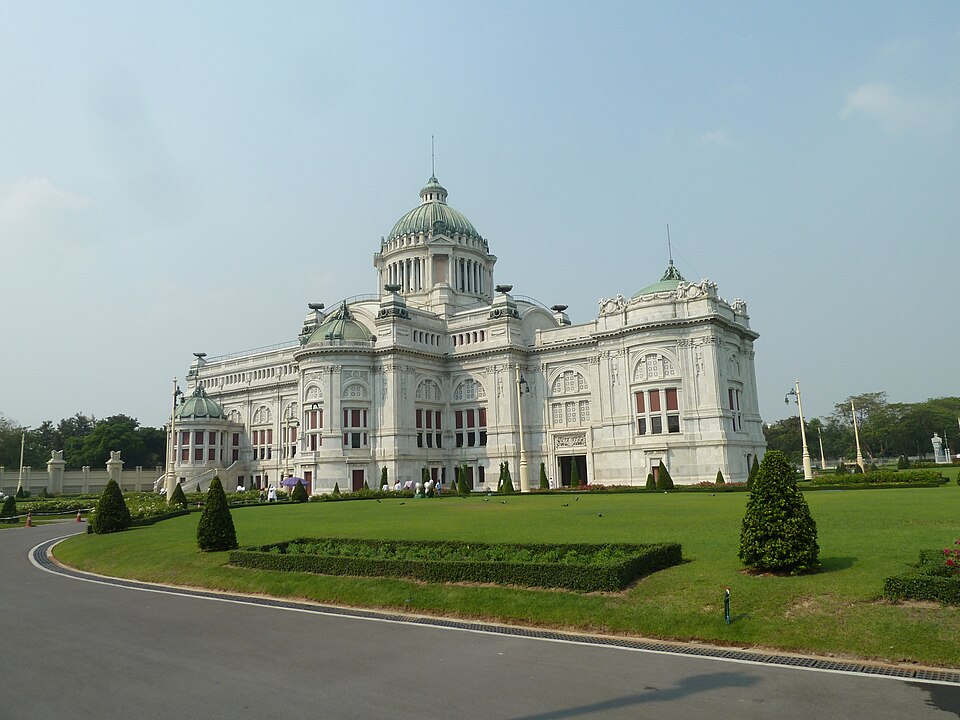
Ananta Samakhom Throne Hall is the domed marble building at the head of the Royal Plaza in Dusit, and it is the one entry on this list that cannot be entered. It was designed by the Italian architects Mario Tamagno and Annibale Rigotti and built in Carrara marble, with a dome rising 49.5 metres and frescoes by Galileo Chini narrating the Chakri dynasty across the interior vaults. Its importance to Thailand is political rather than decorative: this is the building in which the People's Party revolution of 1932 ended the absolute monarchy, and it served as the country's parliament from 1932 until 1974. The interior closed to visitors on 1 October 2017 and no reopening has been announced. The Bureau of the Royal Household's own visiting-information page lists exactly five royal sites open to the public and this hall is not among them. What remains is an exterior visit across the plaza: twenty minutes, no ticket, no queue, and one of the few pieces of European academic architecture in Bangkok that is worth crossing the city for on its facade alone.
Checked 2026-08-25 · Source
Nothing, as far as a visitor is concerned, and that has to be stated plainly rather than implied. The interior — Chini's frescoes, the marble, the dome from beneath — is closed and has been since October 2017. What the visit consists of is the exterior and its setting, which is more than it sounds. The hall terminates the axis of Ratchadamnoen Nok Avenue at the Royal Plaza, so it is approached frontally down a long ceremonial avenue in the manner the architects intended, with the equestrian statue of Rama V standing on the plaza in front of it. The composition is the point: a Renaissance-revival dome and portico in white marble, deliberately unlike anything in the Rattanakosin core two kilometres to the south, set at the end of an avenue built to display it. Walk the plaza's edge for the oblique views as well as the axial one. Anyone who wants to see the frescoes must do so in reproduction; that is the honest state of the site until the Bureau announces otherwise.
Checked 2026-08-25 · Source
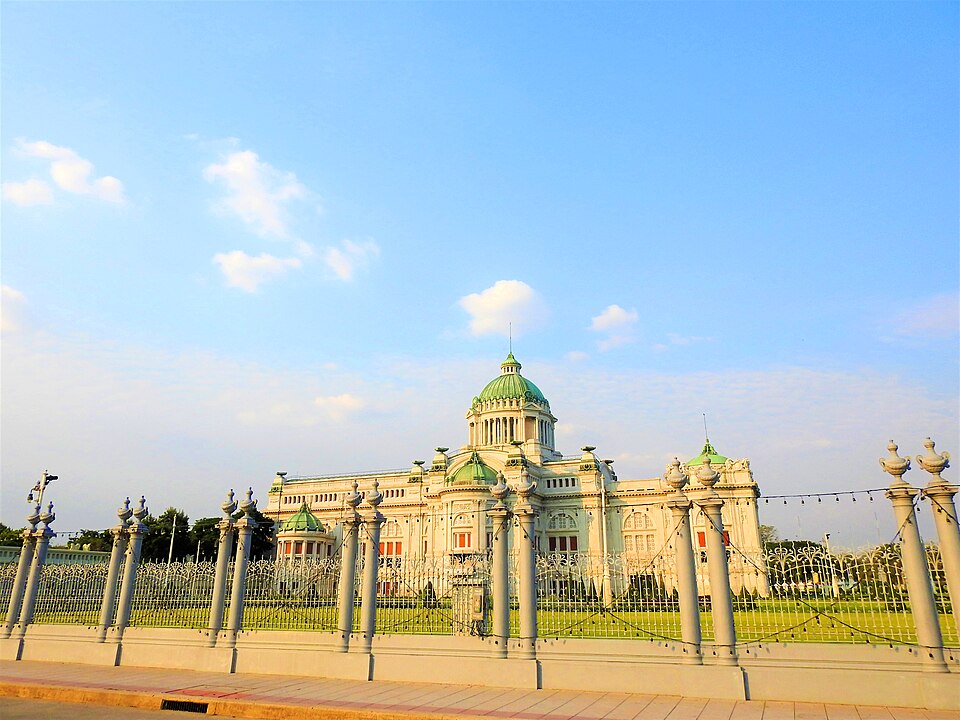
Twenty minutes, and the figure is short because the visit is genuinely exterior-only. That covers the axial approach from Ratchadamnoen Nok, a walk along the plaza to pick up the oblique angles, time at the Rama V statue, and photographs. There is no queue to absorb, no ticket office, no interior circulation and no separately ticketed section, so nothing can inflate it except photography. The Bureau of the Royal Household publishes no suggested duration — it publishes no visitor information for this building at all — so twenty minutes is editorial judgement. Combine it with something else in Dusit rather than making it a destination in its own right.
Checked 2026-08-25
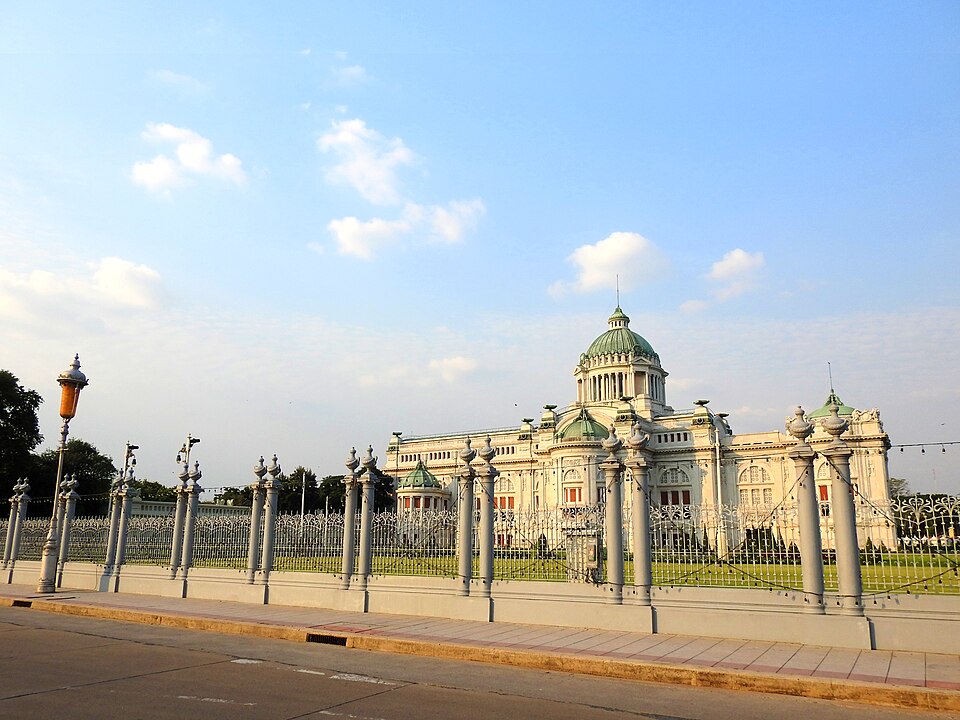
November to February. The whole visit happens outdoors on an open, unshaded plaza with no interior to retreat into, so the weather does not merely affect the visit — it is the visit. In the hot season the plaza is unpleasant by mid-morning, and in the rainy months there is nowhere to shelter. Go between 07:00 and 08:30. The building's principal facade looks down Ratchadamnoen Nok Avenue toward the southeast, so early sun strikes it frontally and the white marble takes that light better than it takes the flat overhead glare of midday, when the same stone goes chalky and featureless. Heat and light are the only two variables here, and both favour the earliest hour. None of this comes from the operator.
Checked 2026-08-25
There is no admission charge, for the direct reason that there is no admission: the interior is not open to visitors and has not been since 1 October 2017. Nothing is charged to stand on the Royal Plaza and look at the building. Any price still circulating for it — the 150 and 500 baht figures are the ones that persist — is the pre-2017 ticket for the Arts of the Kingdom exhibition that formerly occupied the hall, and it is stale; no such figure has been recorded here. The operator is the Bureau of the Royal Household, whose live site sits behind a challenge that could not be fetched, so its visiting-information page was read from an archived copy: it names five royal sites open to visitors, and Ananta Samakhom Throne Hall is not one of them.
Checked 2026-08-25 · Source
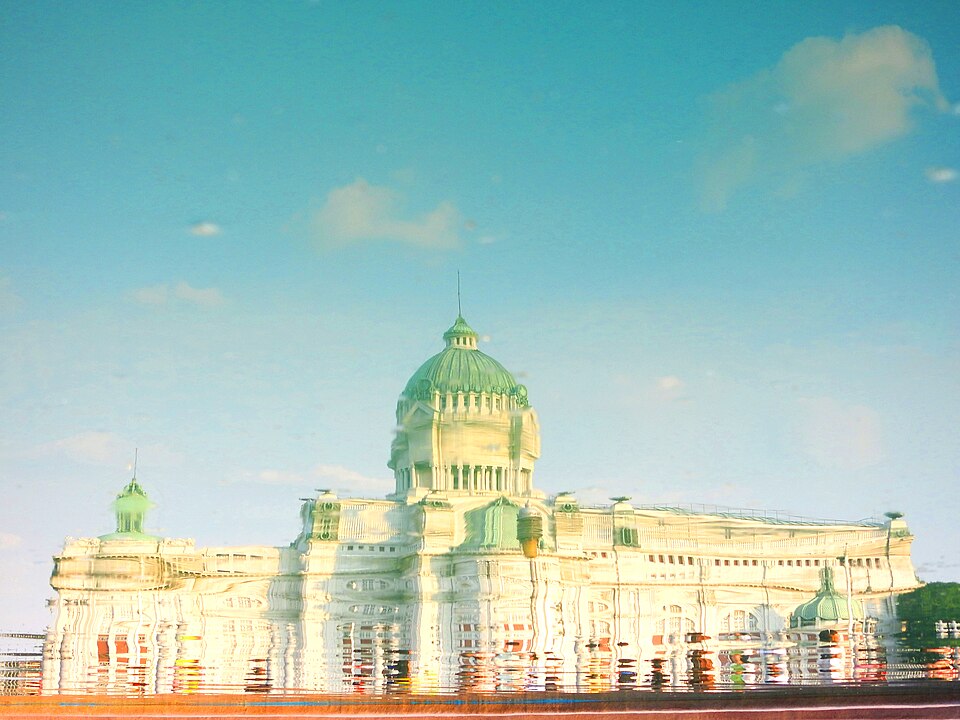
Buses along U Thong Nai Road and Ratchawithi Road pass the plaza, and a taxi from the old town takes fifteen to twenty-five minutes depending on the traffic on Ratchadamnoen. No rail station is close: the nearest BTS stop, Phaya Thai, is roughly 2.5 kilometres away, which is a walk in the wrong season and a short taxi in any season. A private car is not required and parking around a government precinct is not worth the trouble. The best arrival is the one the architecture was designed for — come up Ratchadamnoen Nok Avenue on foot for the last few hundred metres, so the dome grows on the axis instead of appearing sideways from a car window. Coming from Rattanakosin, that also strings together the Democracy Monument and the avenue itself.
Checked 2026-08-25
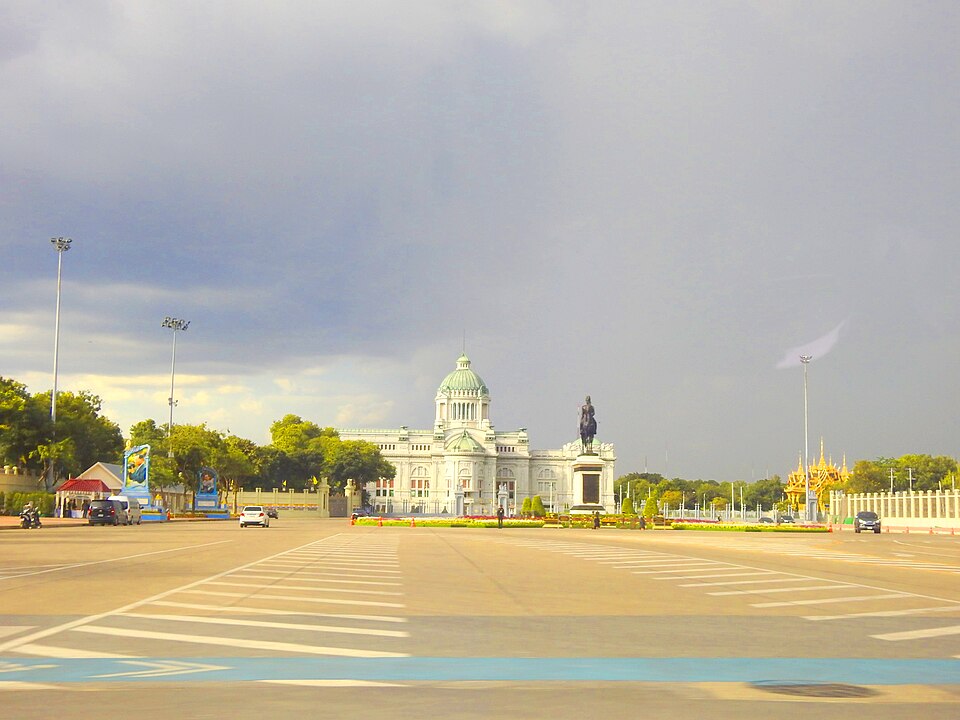
The single largest trap is arriving expecting to go in. Listings, tour itineraries and search results still describe the interior and quote a ticket price, and all of it predates 1 October 2017; the hall has been closed to visitors since then with no reopening announced, and the Bureau of the Royal Household's own visiting page does not list it. Do not buy a ticket for it from anyone. Second, this is a working royal and government precinct rather than an attraction: security is present, the plaza is used for state occasions and can be closed off at short notice, and drones are not to be flown. Third, behave and dress conservatively — the equestrian statue of Rama V is a place of genuine reverence where Thais leave offerings, and it is not a photo prop. Fourth, there is no shade, no ticket hall and no café at the site, so bring water. This is not a temple, so the shoes-and-shoulders rules of the monasteries on this list do not apply, but restraint does.
Checked 2026-08-25 · Source
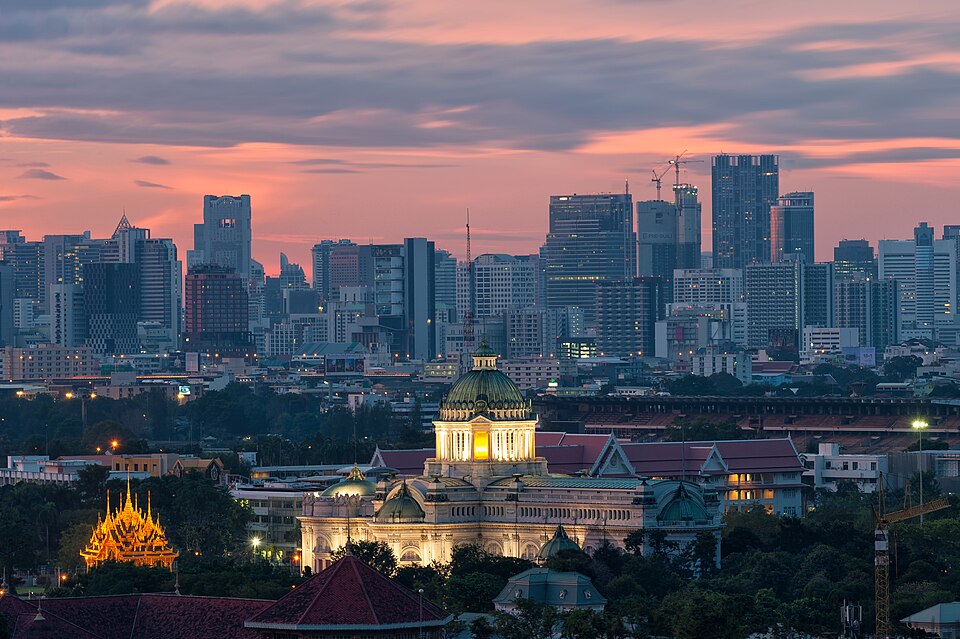
An exterior building shot in white marble, which means the exposure decision is made for the stone and everything else follows. Early sun down Ratchadamnoen Nok lights the facade frontally and holds detail in the marble; by late morning the same surface flares and the dome loses its modelling against a bright sky. The axial view from the avenue is the obvious frame and the correct one, and a moderate telephoto from further down the avenue compresses the dome over the portico better than a wide lens at close range, which will lean the columns. Walk the plaza edge for a three-quarter view that separates the dome from the roofline. Include the Rama V statue for scale, but photograph it respectfully and not while anyone is making an offering. Keep cameras pointed at the building rather than at security personnel or at any state activity on the plaza, and do not fly a drone here.
Checked 2026-08-25
No. The interior closed to visitors on 1 October 2017 and no reopening has been announced, including for 2025 or 2026. The Bureau of the Royal Household's own visiting-information page lists five royal sites open to the public and this hall is not among them. A visit is an exterior one, from the Royal Plaza.
There is no ticket, because there is no admission — the interior is closed. Standing on the Royal Plaza and looking at the building costs nothing, and no one at the site is entitled to sell entry to it.
Because those figures are the pre-2017 ticket prices for the Arts of the Kingdom exhibition that used to occupy the hall. The exhibition and the public access both ended, and the prices were never updated on the pages that repeat them. No admission figure has been recorded on this page for that reason.
For twenty minutes, yes, if Dusit is already on the itinerary. The exterior is an attributed work of European academic architecture in Carrara marble with a 49.5-metre dome, approached down a ceremonial avenue built to display it — a composition unlike anything in the Rattanakosin core. As a standalone destination across the city it is thin; pair it with something else in Dusit.
By bus along U Thong Nai or Ratchawithi Road, or by taxi from the old town. No rail station is close — BTS Phaya Thai is about 2.5 kilometres away. A private car is not needed. The best approach is on foot for the last stretch of Ratchadamnoen Nok Avenue, which is the axis the building was designed to terminate.
The People's Party revolution of 1932 ended Thailand's absolute monarchy, and this building is where that transition was carried through. It then served as the country's parliament from 1932 until 1974. That political record, rather than the marble, is why the hall ranks where it does.
Loading the interactive map…
The interactive map could not be loaded.
Last updated:
Source: OpenStreetMap contributors, Wikidata ·