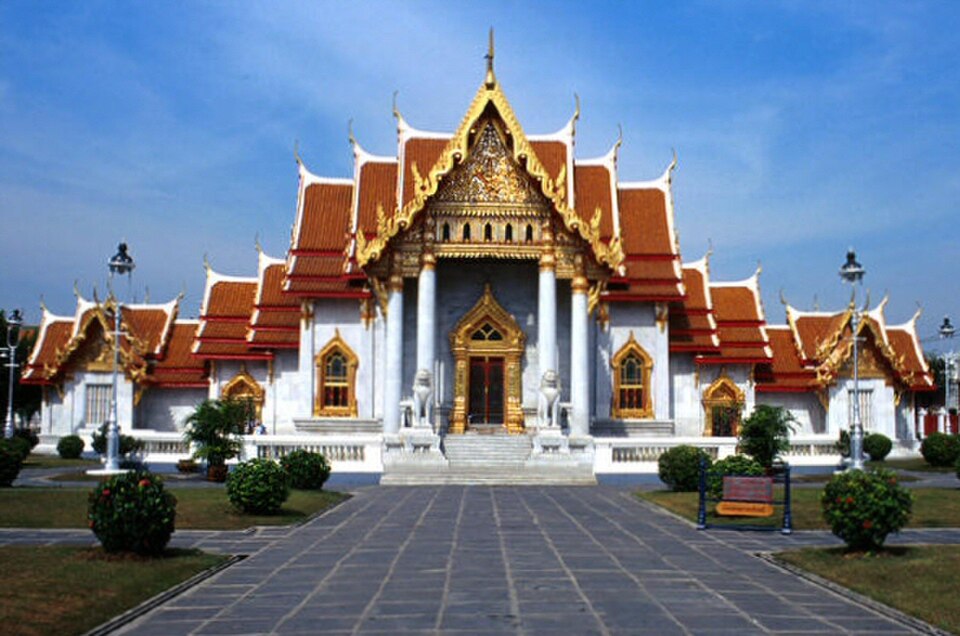
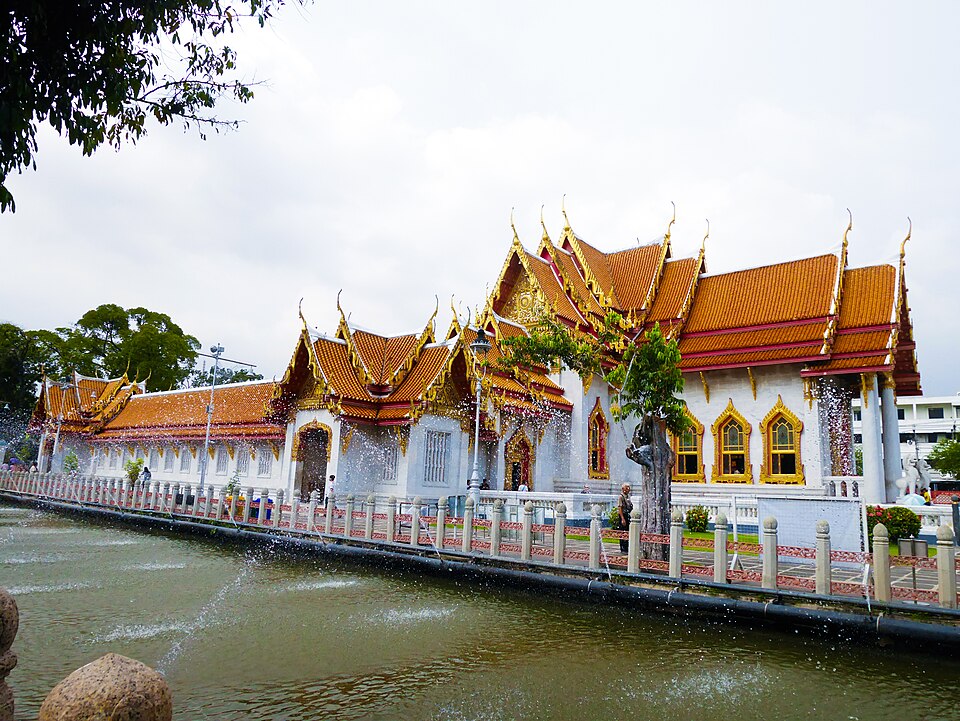
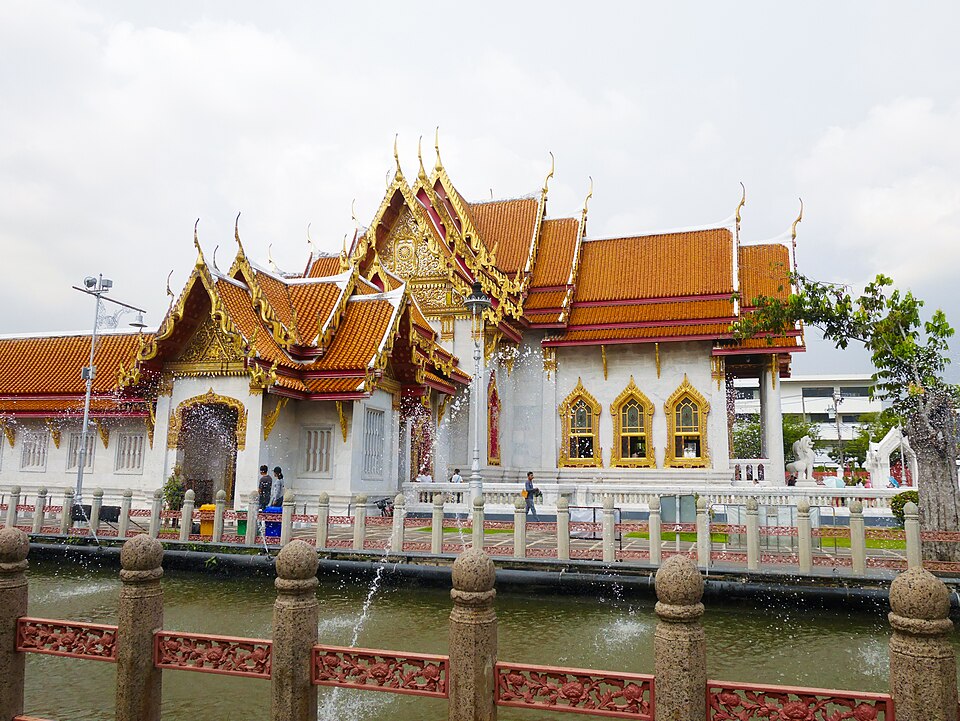
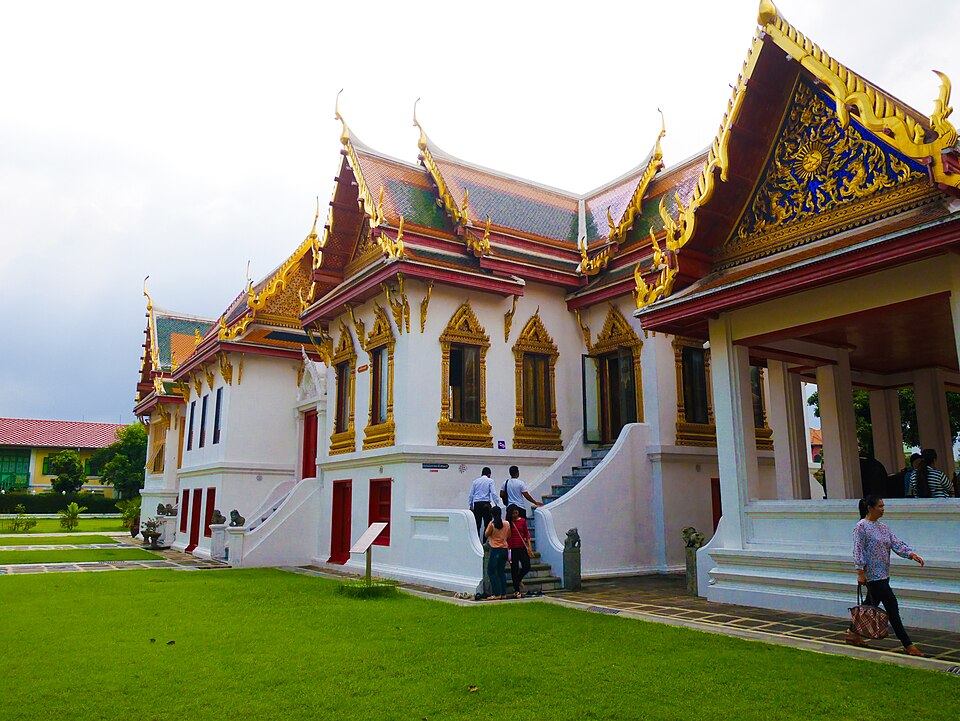
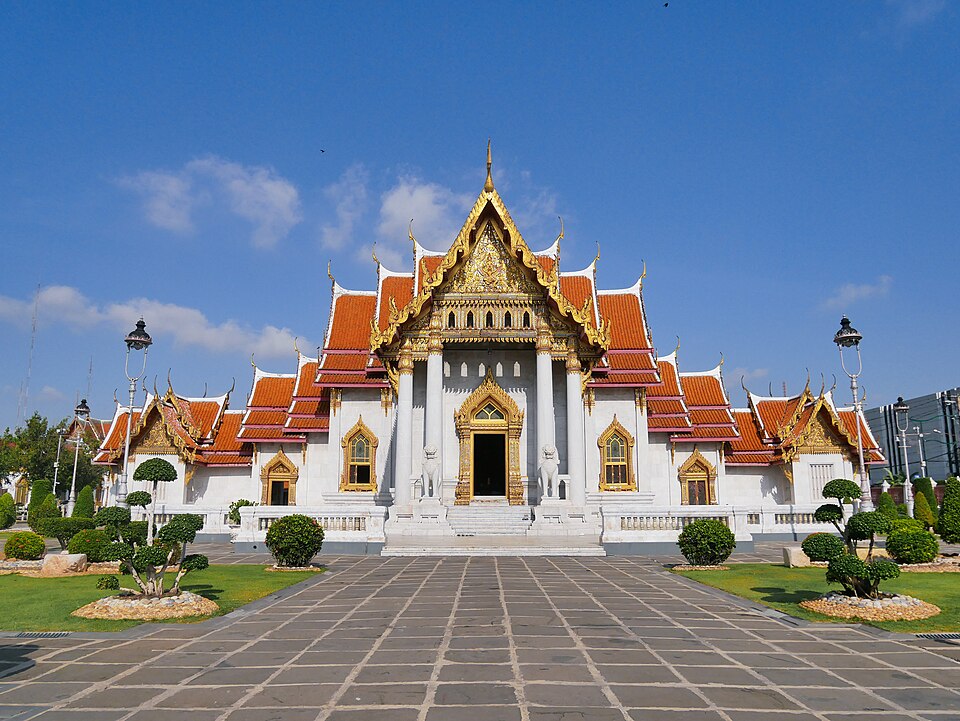
Wat Benchamabophit is Rama V's marble temple, built in 1900 as part of the Dusit district he laid out for himself, and the clearest surviving statement of what the Thai monarchy meant by modernisation. Its ordination hall was designed by Prince Naris on a cruciform plan that fuses Thai and Khmer form, faced in Carrara marble imported from Italy and lit through stained glass — materials no Thai temple had used before. Behind it runs a cloister holding 52 Buddha images, assembled by Prince Damrong Rajanubhab as a comparative survey of mudras and regional styles from across Thailand and beyond: a temple built as a piece of scholarship as much as a place of worship. Rama V's ashes lie beneath the principal image. It is the temple the traveller sees before arriving in Thailand without knowing it, and the one large Bangkok temple that international travel media routinely omits — a real signal about how few visitors reach Dusit, not a judgement on the building.
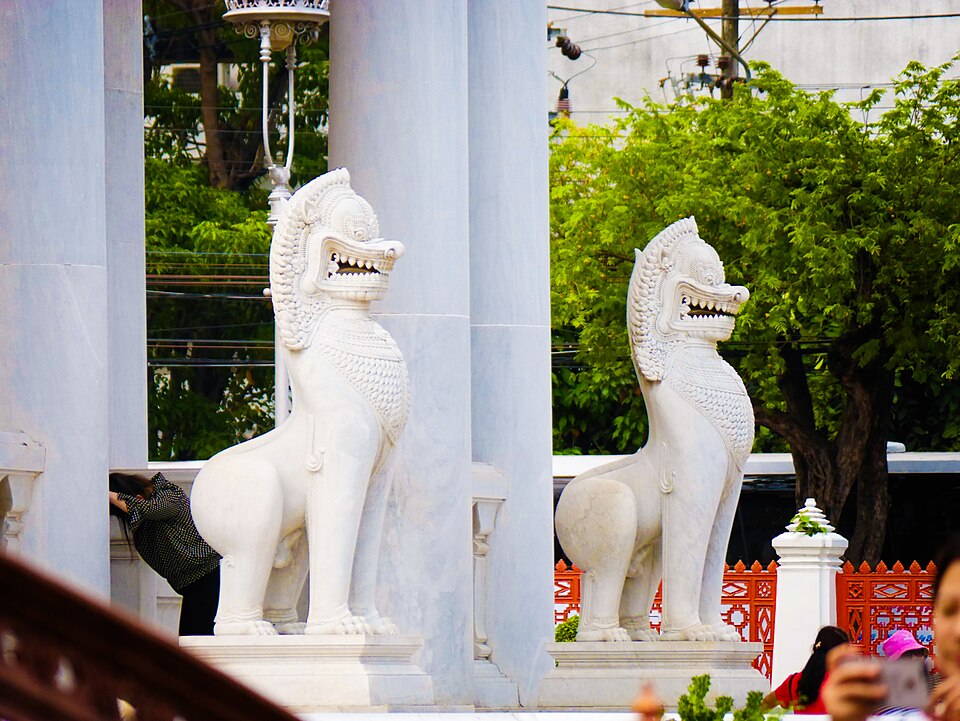
The ubosot is the object. White marble, symmetrical, cross-shaped, with the roof lines and gables of a Thai temple executed in a European material and finished to European tolerances — the joints are tight, the surfaces are flat, and the effect at midday is glare rather than gilding. Inside sits Phra Buddhajinaraja, a cast replica of the revered image at Phitsanulok, and the windows are stained glass rather than shutters, which gives the interior a colour no other Bangkok ordination hall has. The cloister behind holds the 52 images: bronze and stone, standing and seated, Sukhothai next to Lanna next to Gandharan-influenced work, arranged so that the differences in hand gesture and body line can be read one against the next. Beyond the cloister the compound opens onto a canal and a bridge with marble lions, and the monks' quarters lie in the shade beyond. The scale is modest compared to the river temples; the interest is in precision, not size.
Allow 40 minutes. That covers the ordination hall, a slow circuit of the cloister of Buddha images — which is where the time actually goes, if the images are read rather than passed — and the canal courtyard behind. The figure is judgement; the temple publishes no suggested visit length, as it publishes nothing else. Visitors who come at dawn for the alms round outside the gate should add half an hour before that, and it is time better spent than any half hour inside. Nobody needs more than an hour here unless they are photographing the cloister image by image.
Come at about 06:30, for the alms round. Unlike most Thai temples, where the monks walk a route through the surrounding streets, at Wat Benchamabophit the monks stand outside the temple gate and the laypeople come to them — which makes it the one place in Bangkok where a visitor can watch the daily transaction of alms without following anyone down a street. That hour is judgement and may fall before whatever opening hour the temple observes; the alms round happens on the public street, not inside the compound, so the gate is not the constraint. November to February is the season, and the reason is specific to this building: the marble courtyard is unshaded and reflects heat upward, so an April afternoon here is worse than an April afternoon in a wooden temple. Midday is also when the white stone glares hardest.
No admission figure is recorded for Wat Benchamabophit, because nothing the temple publishes could be found. The temple runs no website. The address carried as its website is its own Facebook page, and Facebook serves an automated fetch nothing but the page name; both the page and its about tab were tried. No independent domain for the temple was found. Reported foreigner fees range from 20 to 100 THB across aggregator listings, and at least one asserts entry is free — a spread wide enough to be worthless, and none of it traceable to the temple. Carry small notes and pay whatever is asked at the gate. Opening hours are in the same position: OpenStreetMap carries no hours tag, and the 08:00 to 17:00 and 08:00 to 17:30 figures in circulation come from aggregators that disagree with each other, so no hours are recorded here at all. Plan the visit around the dawn alms round, which needs no gate to be open.
Dusit is the part of central Bangkok the rail network does not reach: no BTS or MRT station is within walking distance, and the nearest line is roughly two kilometres away. A private car is still not required. City buses run along Sri Ayutthaya Road and stop close to the temple, and a metered taxi or a ride-hailing car from the Old Town takes ten to fifteen minutes outside the rush hour. Combining the visit with the Ananta Samakhom Throne Hall and the rest of the royal Dusit quarter makes the journey worth making once rather than twice, since everything in that district is a walk from everything else and a taxi ride from the rest of the city.
The temple dress code applies in full — shoulders and knees covered, shoes off in the ordination hall — and is the same one described at length in the Wat Suthat guide. Two things are specific to Wat Benchamabophit. The first is the alms round: it is a religious act, not a performance, and the correct behaviour is to stand back, stay quiet, keep the camera low and never step between a giver and a monk. Anyone wishing to give should buy the offering set from the vendors, receive the blessing standing with shoes off, and not expect thanks — the merit runs the other way. The second is heat and light: the marble courtyard has no shade, reflects hard, and burns bare feet by mid-morning, so socks matter here more than at a temple with wooden or tiled floors. Because neither hours nor admission is published, arriving without a plan B for a closed gate is unwise; the alms round outside the wall is not affected either way.
This is a temple that photographs badly at the hour most people arrive. White Carrara marble in vertical Bangkok sun blows out the highlights and flattens every carved line the building has, so midday exteriors come back as a white shape. Early morning is the answer twice over: the low light rakes across the gables and picks out the relief, and the alms round is happening at the same time. The cloister of 52 images is the other reward — it is covered, evenly lit and shadowed, and each image can be shot cleanly against the wall, which makes a comparative sequence of mudras a genuinely achievable set. Inside the ordination hall the stained glass throws colour that a camera's automatic white balance will fight; fix the balance manually or accept the cast. At the alms round, no flash, no stepping into the line, and no long lens pushed into a face at arm's length.
Checked 2026-08-25
Common questions
What is the entrance fee for Wat Benchamabophit?
No figure is recorded, because the temple publishes none. It has no website, its Facebook page returns no readable content to an automated fetch, and aggregator listings range from 20 THB to 100 THB with at least one saying entry is free. Carry small notes for whatever is asked at the gate.
What time does the Marble Temple open?
No opening hours are recorded. The temple publishes none, OpenStreetMap carries no hours tag, and the 08:00 to 17:00 and 08:00 to 17:30 figures in circulation come from aggregators that contradict each other. The dawn alms round at about 06:30 happens on the street outside and does not depend on the gate.
Why is Wat Benchamabophit called the Marble Temple?
Because its ordination hall is faced in Carrara marble imported from Italy. Rama V commissioned the temple in 1900 and Prince Naris designed it on a cruciform plan combining Thai and Khmer form with European materials and stained glass windows.
Can you watch the monks receive alms at Wat Benchamabophit?
Yes, at about 06:30 outside the temple gate. This is one of the few places in Bangkok where the monks stand and the laypeople come to them rather than the monks walking a street route. Stand back, keep quiet, and never step between a giver and a monk.
How do I get to Wat Benchamabophit by public transport?
There is no BTS or MRT station within walking distance; the nearest rail is about two kilometres away. City buses run along Sri Ayutthaya Road, and a metered taxi from the Old Town takes ten to fifteen minutes outside the rush hour. A private car is not required.
What are the 52 Buddha images in the cloister?
A comparative survey assembled by Prince Damrong Rajanubhab, gathering images in different mudras and regional styles so they can be read against one another. It is the reason the visit takes longer than the small ordination hall suggests.
Nothing non-essential is set before you choose, in regions where consent is required. If you decline, ads still appear but they are non-personalised, and analytics is switched off entirely.

_%E0%B8%A7%E0%B8%B1%E0%B8%94%E0%B9%80%E0%B8%9A%E0%B8%8D%E0%B8%88%E0%B8%A1%E0%B8%9A%E0%B8%9E%E0%B8%B4%E0%B8%95%E0%B8%A3%E0%B8%94%E0%B8%B8%E0%B8%AA%E0%B8%B4%E0%B8%95%E0%B8%A7%E0%B8%99%E0%B8%B2%E0%B8%A3%E0%B8%B2%E0%B8%A1%E0%B8%A3%E0%B8%B2%E0%B8%8A%E0%B8%A7%E0%B8%A3%E0%B8%A7%E0%B8%B4%E0%B8%AB%E0%B8%B2%E0%B8%A3_%E0%B9%80%E0%B8%82%E0%B8%95%E0%B8%94%E0%B8%B8%E0%B8%AA%E0%B8%B4%E0%B8%95_%E0%B8%81%E0%B8%A3%E0%B8%B8%E0%B8%87%E0%B9%80%E0%B8%97%E0%B8%9E%E0%B8%A1%E0%B8%AB%E0%B8%B2%E0%B8%99%E0%B8%84%E0%B8%A3_(2).jpg)
_%E0%B8%A7%E0%B8%B1%E0%B8%94%E0%B9%80%E0%B8%9A%E0%B8%8D%E0%B8%88%E0%B8%A1%E0%B8%9A%E0%B8%9E%E0%B8%B4%E0%B8%95%E0%B8%A3%E0%B8%94%E0%B8%B8%E0%B8%AA%E0%B8%B4%E0%B8%95%E0%B8%A7%E0%B8%99%E0%B8%B2%E0%B8%A3%E0%B8%B2%E0%B8%A1%E0%B8%A3%E0%B8%B2%E0%B8%8A%E0%B8%A7%E0%B8%A3%E0%B8%A7%E0%B8%B4%E0%B8%AB%E0%B8%B2%E0%B8%A3_%E0%B9%80%E0%B8%82%E0%B8%95%E0%B8%94%E0%B8%B8%E0%B8%AA%E0%B8%B4%E0%B8%95_%E0%B8%81%E0%B8%A3%E0%B8%B8%E0%B8%87%E0%B9%80%E0%B8%97%E0%B8%9E%E0%B8%A1%E0%B8%AB%E0%B8%B2%E0%B8%99%E0%B8%84%E0%B8%A3_(3).jpg)
_%E0%B8%A7%E0%B8%B1%E0%B8%94%E0%B9%80%E0%B8%9A%E0%B8%8D%E0%B8%88%E0%B8%A1%E0%B8%9A%E0%B8%9E%E0%B8%B4%E0%B8%95%E0%B8%A3%E0%B8%94%E0%B8%B8%E0%B8%AA%E0%B8%B4%E0%B8%95%E0%B8%A7%E0%B8%99%E0%B8%B2%E0%B8%A3%E0%B8%B2%E0%B8%A1%E0%B8%A3%E0%B8%B2%E0%B8%8A%E0%B8%A7%E0%B8%A3%E0%B8%A7%E0%B8%B4%E0%B8%AB%E0%B8%B2%E0%B8%A3_%E0%B9%80%E0%B8%82%E0%B8%95%E0%B8%94%E0%B8%B8%E0%B8%AA%E0%B8%B4%E0%B8%95_%E0%B8%81%E0%B8%A3%E0%B8%B8%E0%B8%87%E0%B9%80%E0%B8%97%E0%B8%9E%E0%B8%A1%E0%B8%AB%E0%B8%B2%E0%B8%99%E0%B8%84%E0%B8%A3_(4).jpg)
_%E0%B8%A7%E0%B8%B1%E0%B8%94%E0%B9%80%E0%B8%9A%E0%B8%8D%E0%B8%88%E0%B8%A1%E0%B8%9A%E0%B8%9E%E0%B8%B4%E0%B8%95%E0%B8%A3%E0%B8%94%E0%B8%B8%E0%B8%AA%E0%B8%B4%E0%B8%95%E0%B8%A7%E0%B8%99%E0%B8%B2%E0%B8%A3%E0%B8%B2%E0%B8%A1%E0%B8%A3%E0%B8%B2%E0%B8%8A%E0%B8%A7%E0%B8%A3%E0%B8%A7%E0%B8%B4%E0%B8%AB%E0%B8%B2%E0%B8%A3_%E0%B9%80%E0%B8%82%E0%B8%95%E0%B8%94%E0%B8%B8%E0%B8%AA%E0%B8%B4%E0%B8%95_%E0%B8%81%E0%B8%A3%E0%B8%B8%E0%B8%87%E0%B9%80%E0%B8%97%E0%B8%9E%E0%B8%A1%E0%B8%AB%E0%B8%B2%E0%B8%99%E0%B8%84%E0%B8%A3.jpg)
_%E0%B8%A7%E0%B8%B1%E0%B8%94%E0%B9%80%E0%B8%9A%E0%B8%8D%E0%B8%88%E0%B8%A1%E0%B8%9A%E0%B8%9E%E0%B8%B4%E0%B8%95%E0%B8%A3%E0%B8%94%E0%B8%B8%E0%B8%AA%E0%B8%B4%E0%B8%95%E0%B8%A7%E0%B8%99%E0%B8%B2%E0%B8%A3%E0%B8%B2%E0%B8%A1%E0%B8%A3%E0%B8%B2%E0%B8%8A%E0%B8%A7%E0%B8%A3%E0%B8%A7%E0%B8%B4%E0%B8%AB%E0%B8%B2%E0%B8%A3_%E0%B9%80%E0%B8%82%E0%B8%95%E0%B8%94%E0%B8%B8%E0%B8%AA%E0%B8%B4%E0%B8%95_%E0%B8%81%E0%B8%A3%E0%B8%B8%E0%B8%87%E0%B9%80%E0%B8%97%E0%B8%9E%E0%B8%A1%E0%B8%AB%E0%B8%B2%E0%B8%99%E0%B8%84%E0%B8%A3_Wat_Benjamabopit_(1).jpg)