
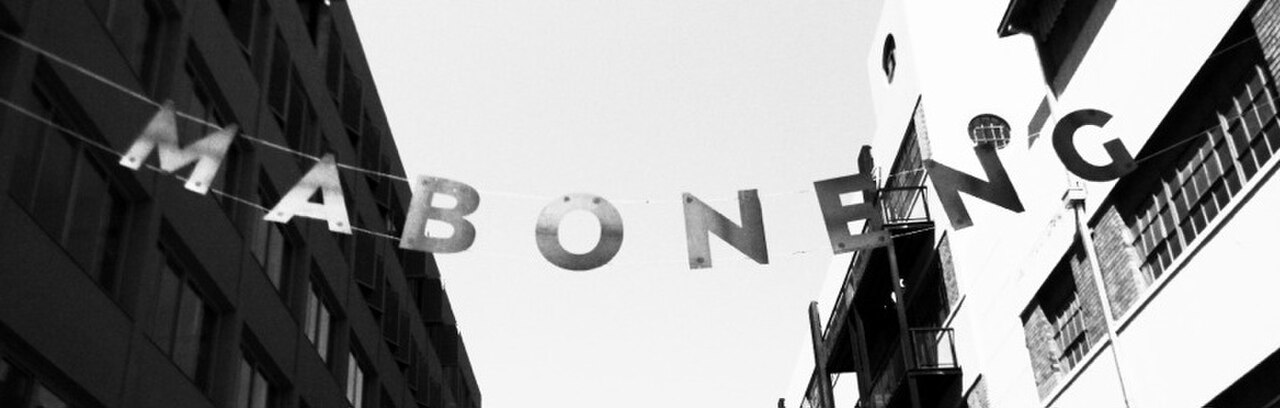
5 min walk
Maboneng Precinct
- Must see
- Activity
Language · 11 published
Market · Johannesburg
Kwa Mai Mai Traditional Market
Reviewed by Elena Voss · SSMTour Travel Editor

Read from the OpenStreetMap access tags; anything not listed has no tag recorded.
Set the group type to family in the planner and the day window contracts to about three quarters of a solo day.
This place is a Marketplace.
Kwa Mai Mai Traditional Market is an inner-city trading hub in Johannesburg specialising in traditional medicine, food, and township commerce. It represents a living cultural space where traditional healers, herbalists, and vendors conduct daily business rooted in indigenous practices. The market offers visitors direct engagement with enduring South African cultural traditions that persist within the urban environment. Its commercial activity reflects the continued relevance of customary practices in contemporary Johannesburg life, making it a distinctive destination for those seeking authentic cultural encounters beyond conventional tourism offerings.
Checked 2026-08-26
The market contains stalls and trading spaces dedicated to muthi, the traditional medicine practice utilising herbs, roots, animal parts, and other natural substances prescribed by sangomas and traditional healers. Food vendors prepare township cuisine, offering regional specialities that reflect local culinary heritage. Commerce extends to traditional goods and materials associated with spiritual and physical wellbeing practices. The environment comprises dense, active trading areas with vendors displaying their wares and consulting with customers. The sensory experience combines aromatic herbal preparations with the bustle of concentrated commercial activity characteristic of established informal markets.
Checked 2026-08-26
Visitor duration depends entirely on individual purpose and comfort level within bustling market environments. Casual observers may require thirty minutes to absorb the atmosphere and observe trading practices. Those engaging with vendors, seeking to understand muthi preparations, or purchasing items could extend their visit to one or two hours. The unstructured nature of the market means no guided pathways or designated routes exist. Visitors should allocate sufficient time to navigate deliberately, observe respectfully, and engage at their own pace without rushing through this culturally significant commercial space.
Checked 2026-08-26
The market functions as a working commercial space rather than a formal tourist attraction, suggesting activity likely aligns with standard trading patterns typical of Johannesburg markets. Visitors should anticipate peak activity during conventional business hours and weekday mornings when traditional healers commonly conduct consultations. Weather conditions may influence comfort, as much trading occurs in open or semi-covered structures. Prospective visitors must independently verify current operating status and any seasonal variations in trading patterns before planning their attendance at this active commercial location. Check the operator's own site for the travel date before relying on a schedule or fare.
Checked 2026-08-26
As a functional market serving local communities and traditional practitioners, Kwa Mai Mai likely imposes no formal admission charge for entry. Costs would arise solely from individual purchases of goods, medicines, or food items from vendors. No evidence suggests ticketed access or structured payment systems operate within this informal trading environment. Visitors should carry cash for any intended transactions, as informal markets typically lack card payment infrastructure. Expenditure depends entirely on personal purchasing decisions rather than predetermined visitor fees or mandatory charges. Check the operator's own site for the travel date before relying on a schedule or fare.
Checked 2026-08-26
Kwa Mai Mai occupies an inner-city location within Johannesburg's central business district vicinity, accessible via the city's public transport networks including minibus taxis, buses, and the Gautrain with connecting services. Private vehicle access presents parking challenges characteristic of dense urban market areas. The market's specific street location requires navigation through Johannesburg's central city environment, where pedestrian movement demands heightened situational awareness. Visitors unfamiliar with central Johannesburg should research precise directions thoroughly, consider reputable taxi or ride-hailing services for direct access, and exercise standard urban precautions when approaching and departing this concentrated commercial zone.
Checked 2026-08-26
Visitors must exercise heightened awareness in this working market environment. Photography of individuals, particularly traditional healers and their medicinal preparations, requires explicit prior consent as spiritual and commercial practices may carry cultural restrictions. Crowded conditions necessitate vigilance against petty theft. Some muthi ingredients may disturb visitors unfamiliar with traditional practices involving animal products. The market serves genuine community needs rather than tourist entertainment; respectful conduct is essential. Visitors should avoid disruptive behaviour, refrain from touching displayed items without permission, and recognise that vendors prioritise serving local customers over accommodating external curiosity without appropriate engagement.
Checked 2026-08-26
Photography at Kwa Mai Mai demands extreme sensitivity and explicit permission from all individuals before capturing any images. Traditional healers and their medicinal preparations hold spiritual significance; unauthorised photography constitutes serious cultural disrespect and potential commercial interference. Many vendors may decline photographic documentation entirely. Visitors should never assume consent based on presence in public trading spaces. Camera use may attract unwanted attention or hostility if conducted presumptively. Those permitted to photograph should acknowledge this as a privilege requiring reciprocity through potential purchases or other appropriate exchange. When in doubt, abstain from photographing rather than risk causing offence.
Checked 2026-08-26
The market operates as a genuine working commercial space in inner-city Johannesburg. Visitors should exercise standard urban precautions appropriate to busy market environments anywhere, including awareness of personal belongings and respectful conduct. Visiting during daylight hours and remaining alert to surroundings represents prudent practice.
The market specialises in muthi and traditional medicinal preparations sold by trained practitioners. However, visitors should exercise extreme caution regarding any medicinal purchases, as product composition, regulatory status, and interaction with conventional medicines remain unverified. Consultation with qualified healthcare providers before using any traditional preparations is strongly advised.
Language capabilities among vendors likely vary considerably. Johannesburg's linguistic diversity encompasses isiZulu, isiXhosa, Sesotho, Afrikaans, and English among others. Communication may require patience, gesture, or assistance from bilingual individuals present. Visitors should not assume English proficiency will facilitate all interactions.
No evidence indicates formal guided tour operations exist within this working market. The space functions primarily for community commerce rather than structured tourism. Visitors seeking guided experiences should research whether any external tour operators include Kwa Mai Mai in their programming, though such arrangements remain unverified.
Practical, modest attire appropriate for navigating crowded urban market environments is recommended. Comfortable walking shoes are essential given potentially uneven surfaces. Visitors should avoid displaying expensive jewellery or accessories that might attract unwanted attention in any busy commercial setting.
Food vendors operate within the market offering township cuisine. As with any informal food trading environment, visitors must make individual judgements regarding food safety, preparation standards, and personal dietary tolerances. Those with sensitive digestive systems or specific dietary requirements should exercise corresponding caution.
Loading the interactive map…
The interactive map could not be loaded.

Last updated:
Source: OpenStreetMap contributors, Wikidata ·