
17 min walk
Fourth Beach
- Must see
- Nature site
Language · 11 published
Activity · Cape Town

Read from the OpenStreetMap access tags; anything not listed has no tag recorded.
Set the group type to family in the planner and the day window contracts to about three quarters of a solo day.
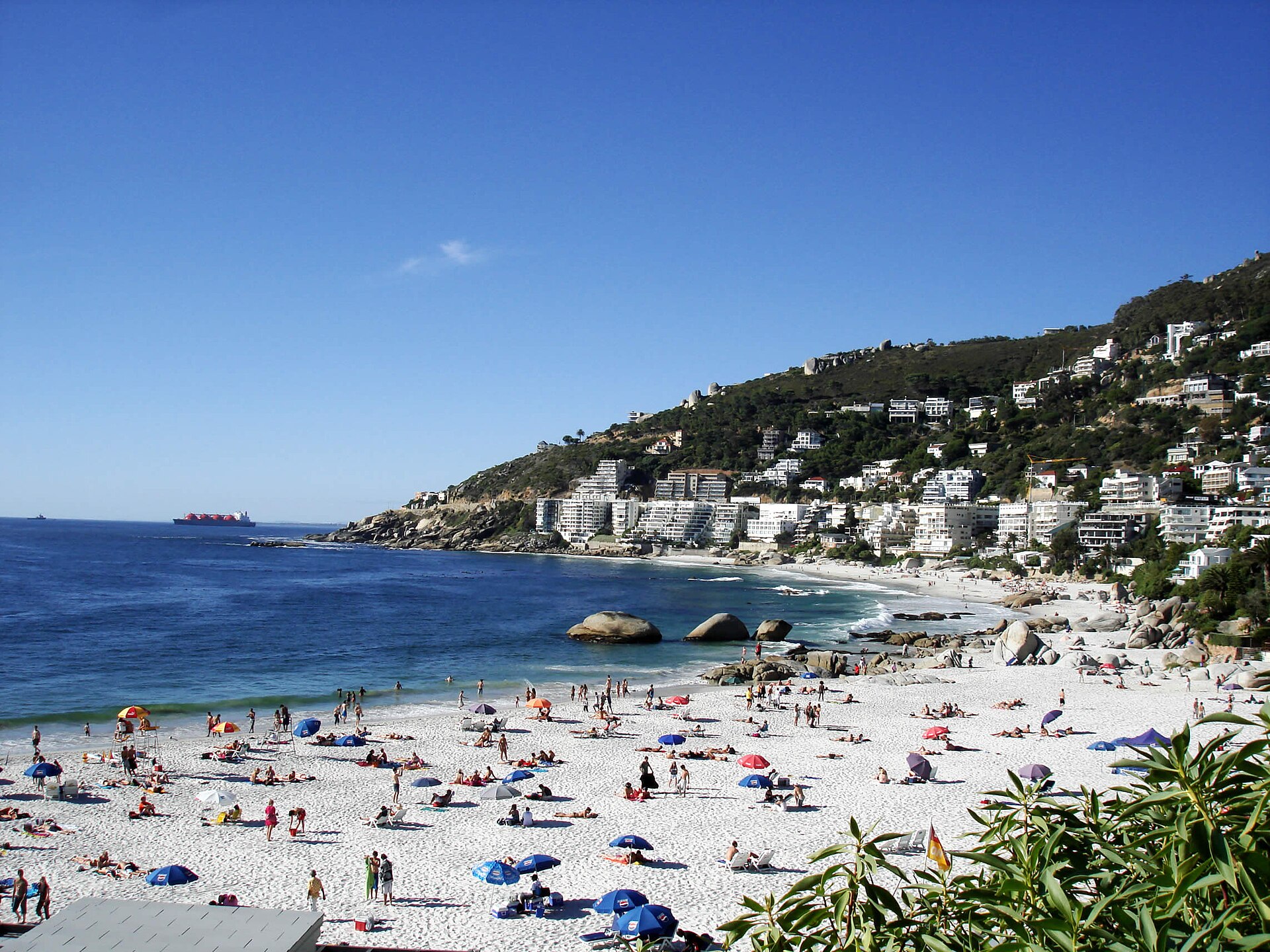
Camps Bay is an Atlantic seaboard suburb of Cape Town, South Africa, distinguished by its wide crescent beach and dramatic mountain scenery. The beach lies at the foot of the Twelve Apostles, a series of peaks that form part of the Table Mountain range. The area functions as both a residential district and a leisure destination, with the beachfront promenade serving as the central public space. Open-access public beach, daily; the City publishes no routine opening or closing time. No scheduled weekly closure day. Lifeguard and toilet services have separate seasonal hours; temporary safety closures are announced by the City.
Checked 2026-08-31 · Source
The principal feature is the broad sandy beach, backed by a paved promenade lined with restaurants, cafes, and bars. The beach is divided by rocky outcrops into sections. Behind the commercial strip, residential properties climb the lower slopes of the mountain. The area does not contain significant cultural institutions or historical monuments. The appeal derives primarily from natural scenery and outdoor leisure. Visitors will find public seating along the promenade, though specific amenities should be verified on arrival. No scheduled weekly closure day. Lifeguard and toilet services have separate seasonal hours; temporary safety closures are announced by the City.
Checked 2026-08-31 · Source
A visit to Camps Bay can range from a brief stop to a full day, depending on intent. Beachgoers typically allow several hours for swimming, sunbathing, and walking the promenade. Those dining at waterfront establishments may extend their stay into the evening. The promenade walk itself requires approximately thirty to forty minutes at a leisurely pace. Combining Camps Bay with other Atlantic seaboard locations, such as Clifton beaches to the south, would constitute a longer excursion. Free general admission to Camps Bay Beach and its tidal pool; no entrance ticket is required.
Checked 2026-08-31 · Source
Camps Bay is accessible throughout the year, though conditions vary seasonally. Summer months from December to February bring warmer temperatures and stronger winds, with the south-easterly wind known locally as the Cape Doctor. Winter months from June to August are cooler and may experience rainfall. Sunset viewing is popular during all seasons. Open-access public beach, daily; the City publishes no routine opening or closing time. The City describes Camps Bay Beach as having partial disability access. The City lists disability access and toilets among the beach facilities.
Checked 2026-08-31 · Source
Access to Camps Bay beach and promenade is unrestricted and requires no admission fee. Costs arise only from optional expenditures such as parking, food and beverage purchases, or equipment rental. Prices for commercial services along the waterfront vary by establishment and season. Visitors should be prepared to pay for parking in designated areas during peak periods. Free general admission to Camps Bay Beach and its tidal pool; no entrance ticket is required. The City describes Camps Bay Beach as having partial disability access. The City lists disability access and toilets among the beach facilities.
Checked 2026-08-31 · Source
Camps Bay is located approximately six kilometres south-west of Cape Town city centre. The suburb is accessible by private vehicle, with parking available along the beachfront and surrounding streets, though spaces fill quickly during peak times. MyCiTi bus services operate routes connecting the city centre to Camps Bay. Use the named MyCiTi Camps Bay stop on Victoria Road. Its current timetable serves routes 106, 107, 108 and 109, including connections toward Civic Centre, Adderley and Hout Bay. The beach address is Victoria Road, Camps Bay; drivers should expect limited parking.
Checked 2026-08-31 · Source
The Atlantic Ocean at Camps Bay is cold year-round, with temperatures that can cause rapid chill. Strong currents and waves may present hazards for inexperienced swimmers. Sun exposure is intense, particularly during summer midday hours, necessitating protective measures. The south-easterly wind can arrive suddenly and with considerable force. Personal belongings on the beach require vigilance. Mountain weather changes independently of coastal conditions. The City describes Camps Bay Beach as having partial disability access. The tidal pool is at the southern end of the beach, but the published accessibility information does not identify a step-free route into the pool.
Checked 2026-08-31 · Source
Camps Bay offers prominent photographic subjects including the beach curve, the Twelve Apostles mountain backdrop, and sunset views over the Atlantic Ocean. The most characteristic images are captured from the southern end of the beach or from elevated positions on the road above, encompassing both beach and mountain in a single frame. Sunset provides warm directional light on the mountain face. Midday photography suffers from harsh shadows and wind-blown sand. The promenade restaurants and their lighting contribute to evening atmosphere. Parking is available but officially described as limited. Yes. General access to the beach and tidal pool is free.
Checked 2026-08-31 · Source
Yes. General access to the beach and tidal pool is free.
It is at the southern end of Camps Bay Beach on Victoria Road.
Yes. The City lists toilets at the beach. The Camps Bay Tidal Pool public toilets operate 06:00–22:00 from 6 December to 30 January and 08:00–18:00 from 31 January to 5 December.
The City states that lifeguards are on duty during the summer months; lifeguard coverage is not year-round.
Dogs are prohibited from 09:00 to 18:00 between November and March. They may run free at other times, but are never allowed in the tidal-pool or Blue Flag areas.
The City advises avoiding swimming for 12–24 hours after moderate or heavy rainfall because coastal water quality can decline temporarily.
Loading the interactive map…
The interactive map could not be loaded.

Last updated:
Source: OpenStreetMap contributors, Wikidata ·