

2 min walk
Bo-Kaap museum
- Must see
- Museum
Language · 11 published
Historic monument · Cape Town
| Monday | 00:00 – 23:59 |
|---|---|
| Tuesday | 00:00 – 23:59 |
| Wednesday | 00:00 – 23:59 |
| Thursday | 00:00 – 23:59 |
| Friday | 00:00 – 23:59 |
| Saturday | 00:00 – 23:59 |
| Sunday | 00:00 – 23:59 |
Checked 2026-08-31 · Source
Read from the OpenStreetMap access tags; anything not listed has no tag recorded.
Set the group type to family in the planner and the day window contracts to about three quarters of a solo day.
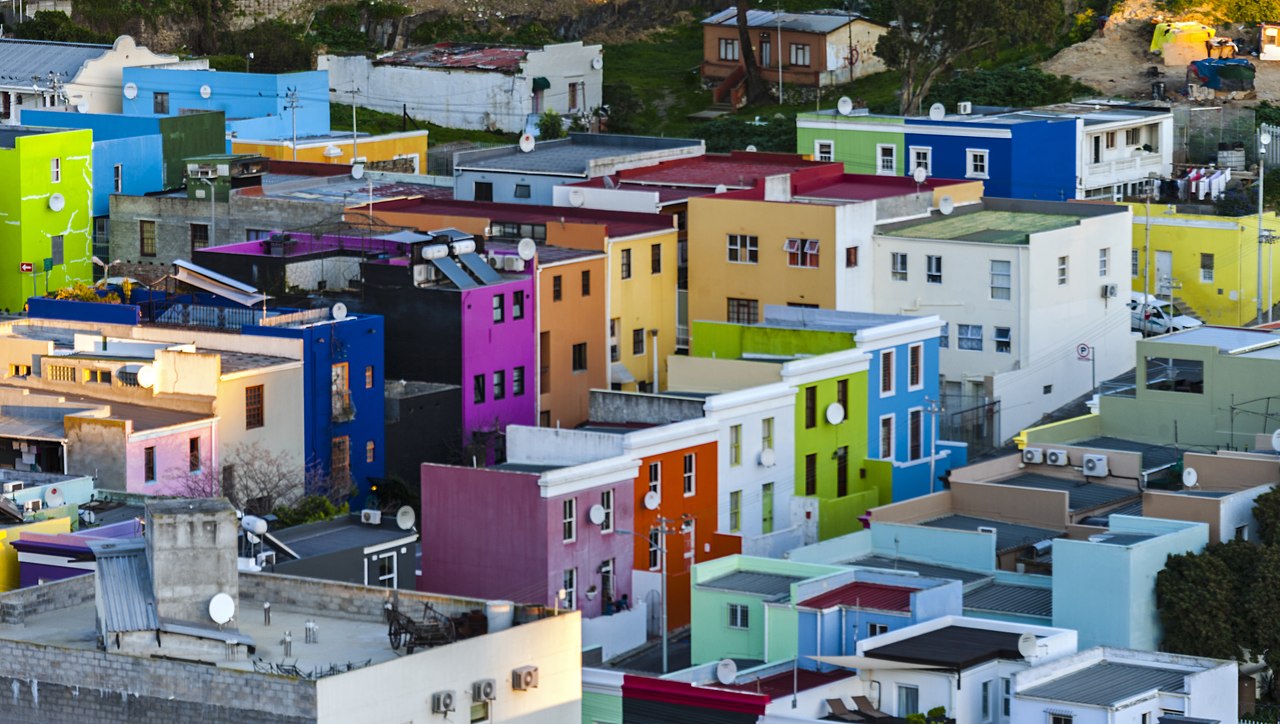
Bo-Kaap is a historic residential neighbourhood on the slopes of Signal Hill above central Cape Town. It is widely recognised as the traditional centre of Cape Malay culture, a community descended from enslaved people and political exiles brought to the Cape by Dutch colonial authorities from Southeast Asia, Africa, and elsewhere from the seventeenth century onward. The City of Cape Town lists Bo-Kaap among its significant heritage sites and buildings. Public streets: open daily, 24 hours. Bo-Kaap is a residential neighbourhood rather than a gated attraction, so its public streets have no routine closure day. Museums, mosques, shops, tours and events set their own hours.
Checked 2026-08-31 · Source
The neighbourhood contains the Auwal Mosque, established in 1794, which is understood to be the oldest mosque in South Africa. The Bo-Kaap Museum, housed in a building dating to the 1760s, explores the history of the area and its residents. Numerous residential properties display the characteristic colourful facades for which the quarter is known. Local restaurants and food vendors offer Cape Malay cuisine, a distinctive culinary tradition blending influences from the community's diverse origins. Bo-Kaap is a residential neighbourhood rather than a gated attraction, so its public streets have no routine closure day. Museums, mosques, shops, tours and events set their own hours.
Checked 2026-08-31 · Source
A walking exploration of Bo-Kaap's core streets typically requires between one and two hours, depending on whether visitors enter the museum, pause at the mosque exterior, or sample food offerings. Those combining Bo-Kaap with nearby city centre attractions may allocate half a day. The compact nature of the neighbourhood allows for flexible timing. Visitors should be aware that this is primarily a residential area; there are no formal visitor facilities, designated tour circuits, or visitor centres with structured programmes. Free general access to Bo-Kaap’s public streets; separately operated museums, tours and other venues may charge admission.
Checked 2026-08-31 · Source
Bo-Kaap can be visited throughout the year as an outdoor urban neighbourhood. Cape Town's summer months from approximately December to February generally offer warmer and drier conditions, though weather patterns are variable. The area hosts cultural and religious events, particularly around Eid celebrations at the conclusion of Ramadan, when the community's character is especially pronounced. Public streets: open daily, 24 hours. Bo-Kaap rises steeply on the slopes of Signal Hill. Cobbled surfaces, steep gradients and pedestrian stairways prevent a continuously step-free route through the neighbourhood. The City of Cape Town reports limited non-motorised-transport infrastructure, particularly on the upper slopes.
Checked 2026-08-31 · Source
There is no general admission charge for entering the Bo-Kaap neighbourhood itself, as it remains a residential area with public streets. Some commercial walking tours of the area operate from the city centre and charge independently set fees. Food purchases from local establishments are priced at commercial rates. Free general access to Bo-Kaap’s public streets; separately operated museums, tours and other venues may charge admission. Bo-Kaap rises steeply on the slopes of Signal Hill. Cobbled surfaces, steep gradients and pedestrian stairways prevent a continuously step-free route through the neighbourhood. The City of Cape Town reports limited non-motorised-transport infrastructure, particularly on the upper slopes.
Checked 2026-08-31 · Source
Bo-Kaap sits immediately northeast of Cape Town's central business district, within walking distance of the city centre for those able to manage the incline. The neighbourhood is bounded by Buitengracht Street, Strand Street, and the lower slopes of Signal Hill. Parking is limited and streets are narrow. No public transport runs through Bo-Kaap’s interior. Golden Arrow Bus Services operate around its edges on Strand Street and Buitengracht Street and along Wale Street toward the CBD; MyCiTi feeder routes use broadly the same edge corridors and continue north from Strand Street toward High Level Road. For the historic core, arrive near Wale Street and Buitengracht Street and continue uphill on foot.
Checked 2026-08-31 · Source
Bo-Kaap is an active residential community, not a tourist precinct. Visitors should respect residents' privacy, avoid intrusive photography of people without consent, and keep noise to reasonable levels. The cobbled streets are steep and may be challenging for those with mobility difficulties. Some visitors report feeling uncertain about appropriate conduct given the area's gentrification pressures and history of forced removals under apartheid. Bo-Kaap rises steeply on the slopes of Signal Hill. The City of Cape Town reports limited non-motorised-transport infrastructure, particularly on the upper slopes. Bo-Kaap is Cape Town’s oldest surviving residential neighbourhood and a living cultural landscape on the slopes of Signal Hill.
Checked 2026-08-31 · Source
The brightly painted houses of Bo-Kaap are among Cape Town's most photographed subjects. However, these are private residences, and inhabitants have expressed varying degrees of comfort with tourist photography. Visitors should refrain from photographing residents, children, or through windows and doorways without explicit permission. Tripods and organised photo shoots may attract attention and should be conducted with sensitivity. The best general views are obtained from public street spaces during daylight hours. Bo-Kaap is Cape Town’s oldest surviving residential neighbourhood and a living cultural landscape on the slopes of Signal Hill.
Checked 2026-08-31 · Source
Bo-Kaap is Cape Town’s oldest surviving residential neighbourhood and a living cultural landscape on the slopes of Signal Hill.
The National Heritage Site declaration dates from 30 April 2019.
The neighbourhood contains the country’s largest concentration of pre-1850 architecture, including Cape Dutch, Georgian, Victorian and Edwardian styles.
Cape Town Tourism identifies Auwal Mosque on Dorp Street and the Bo-Kaap Museum at 71 Wale Street as key landmarks.
The South African Heritage Resources Agency records ten mosques in the area.
The City identifies gateway approaches at Wale–Pentz Roads, Leeuwen Road, Bloem Road, Rose Street, Strand Street and Longmarket Street.
Loading the interactive map…
The interactive map could not be loaded.
Last updated:
Source: OpenStreetMap contributors, Wikidata ·