Manak House is a timber-framed merchant house in Savamala, Belgrade, that now holds an ethnographic collection inside the walls it was actually lived in.
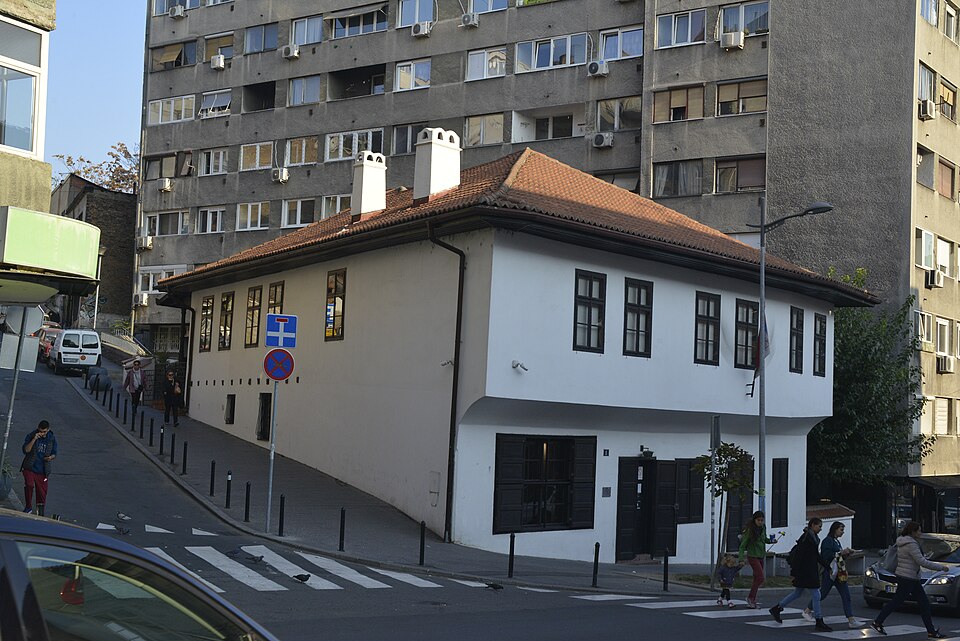
The house stands on the corner of Kraljevića Marka and Gavrila Principa Streets, in what was one of only two Belgrade suburbs settled mainly by Serbs in the early 19th century. Local tradition holds it once served as a stop for Prince Miloš Obrenović's tatars, the mounted postmen who carried official letters before Serbia had a regulated postal service, and that it was originally built for a Turkish aga and his household. Its present name comes from the Greek merchant Manojlo Manak, who bought it in the late 19th century, ran a bakery and tavern on the ground floor, and named the house after his cousin Manak Mihailović. Manak House was one of the properties Prince Miloš specifically ordered preserved as Belgrade's town engineers cut new streets through Savamala, which is why it still stands on its original corner while much of the district around it was redrawn. The Cultural Heritage Preservation Institute of Belgrade declared it a cultural monument on 9 May 1963.
The house now serves as a satellite of the Ethnographic Museum, holding the folk-art collection of Hristifor Crnilović (1886–1963), a painter who spent his life gathering objects of Serbian rural craft and dress.
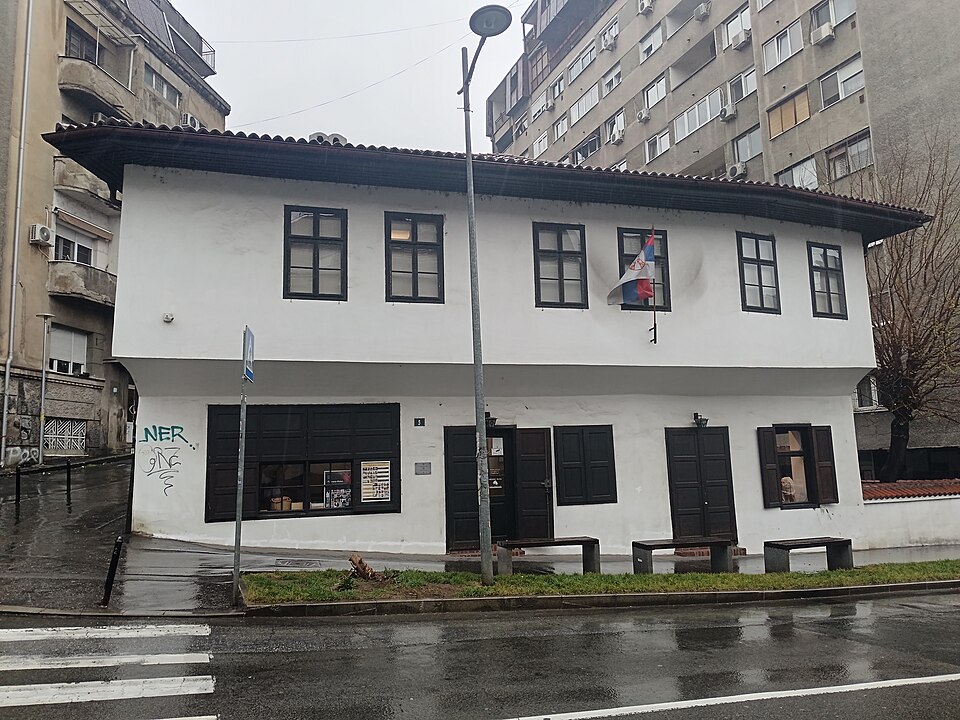
The building itself has a basement, ground floor, mezzanine and first floor, with rooms laid out unevenly to follow the sloped terrain of Savamala rather than a regular plan — a layout that survived the 1964–1968 restoration unchanged. It is built in bondruk, a timber frame filled with mud brick, the everyday construction method of early 19th-century Belgrade, most of which has since been demolished elsewhere in the city. A surviving photograph at the Belgrade City Museum shows the house in an earlier period, with an inscription bearing the name Arsa Petrović and street tables set out front — evidence of the tavern trade Manak's ownership brought to the corner. Its layout was also recorded on paper by the architect Štaudinger and the graphic artist Luka Mladenović, among the few detailed drawings of a bondruk house from this period to survive.
Not recorded: the Ethnographic Museum publishes no suggested visit length for this satellite site. What the sources establish is scale — a basement, ground floor, mezzanine and first floor inside one modest merchant house — which is compact enough that a visitor who has already toured the main Ethnographic Museum in Studentski Trg should expect a short stop here rather than a second full museum visit.
Not recorded: neither source gives a season, an hour of day, or a crowd pattern for Manak House specifically. Savamala around it is a low-rise, walkable district best seen in daylight, and the house's exterior — the reconstructed porch and the exposed timber framing at the corner — can be read from the street regardless of whether the collection inside is open.
Not recorded. No admission price or fee structure for Manak House is stated on OpenStreetMap or on its Wikipedia article, and the site is not tagged with a fee on the OSM record checked for this guide — unlike the main Ethnographic Museum building on Studentski Trg, whose ticketing is a separate, unrelated fact this guide does not carry over onto a different address.
The house sits at the corner of Kraljevića Marka and Gavrila Principa Streets in Savamala, the riverside district between Belgrade's former main railway station and the Sava embankment, roughly a 15-minute walk south-west of Republic Square through the Karadđorđeva Street underpasses.
By the mid-1950s the house was dilapidated and scheduled for demolition; only a 1964–1968 restoration under architect Zoran Jakovljević, which reinforced the foundations and replaced the decayed bondruk timberwork, saved it — so what stands today is a carefully rebuilt structure rather than an untouched original, including a porch that was reconstructed from scratch and rooms whose old layout was deliberately kept unchanged by the restoration team. Savamala's streets are cobbled and uneven in places, worth minding underfoot on the approach.
The corner elevation is the shot: the reconstructed porch and the timber frame filled with brick are visible at street level from either Kraljevića Marka or Gavrila Principa Street, with no fence or courtyard wall in the way. No photography restriction for the site is recorded on either source used for this guide.
After Manojlo Manak, the Greek merchant who bought the house in the late 19th century, ran a bakery and tavern on its ground floor, and named it for his cousin Manak Mihailović.
What is inside now?
The ethnographic collection of painter and folk-heritage collector Hristifor Crnilović (1886–1963), run as part of Belgrade's Ethnographic Museum.
How old is the building?
Its exact construction date is unrecorded, but it dates to the early 19th century, around the time Savamala itself was laid out and Princess Ljubica's Residence was built nearby.
Is it free to enter?
Not recorded — no admission price for Manak House is stated on either source used for this guide.
What construction style is it?
Bondruk: a timber frame filled with mud brick, the standard building method of early 19th-century Belgrade, of which few examples still stand.
Is the current building original?
No. It was dilapidated and near demolition by the mid-1950s, and was rebuilt between 1964 and 1968, with the porch reconstructed from scratch and the foundations reinforced.
Nothing non-essential is set before you choose, in regions where consent is required. If you decline, ads still appear but they are non-personalised, and analytics is switched off entirely.




.jpg)


