


5 min walk · Savski Venac
House of King Peter I of Serbia
- Must see · Heritage site
- Museum
Language · 1 published
Museum · Градска општина Савски венац, Belgrade
Музеј афричке уметности

| Monday | 10:00 – 18:00 |
|---|---|
| Tuesday | 10:00 – 18:00 |
| Wednesday | 10:00 – 18:00 |
| Thursday | 10:00 – 18:00 |
| Friday | 10:00 – 18:00 |
| Saturday | 10:00 – 18:00 |
| Sunday | 10:00 – 18:00 |
Parsed from OpenStreetMap opening hours on 2026-08-25.
A single-donor museum in a quiet villa street, the Museum of African Art holds nothing acquired by an institution — the entire founding collection came from Zdravko Pečar and Veda Zagorac, a Yugoslav diplomat and his wife who spent years posted across West and Central Africa and gave what they had gathered to the city of Belgrade.
It opened in 1977 in the Senjak district, purpose-built rather than adapted, and remains the only museum in the region dedicated to sub-Saharan African art and material culture. The museum sits inside Belgrade's Senjak district, a leafy residential quarter of interwar villas rather than the old town, and the setting — a garden plot rather than a palace or a fortress — matches the intimate scale of the collection inside it.
Checked 2026-08-24 · Source
Masks, wooden sculpture, textiles, musical instruments and everyday objects from more than twenty countries, arranged less by nation than by the ritual or daily purpose they served — initiation masks, ancestor figures, chief's regalia.
The Pečar–Zagorac founding gift set the core, and later donations and acquisitions extended it without displacing the original collection's character. The building itself is low and modern, built specifically to hold the objects rather than converted from an existing house, which is unusual among Belgrade's smaller museums and gives the galleries an even, purpose-lit feel rare elsewhere in the city. A sculpture garden outside extends the display into the open air, and temporary exhibitions in a side gallery rotate work by contemporary African and diaspora artists alongside the historic core.
Checked 2026-08-24 · Source
Forty-five minutes to an hour.
The collection is compact rather than exhaustive — a handful of rooms rather than a wing — and rewards a slow read of the labels over a fast circuit, since the objects are grouped by function and the explanation of that function is where the value sits. It is comfortably combined with the nearby Beli dvor and Royal Palace grounds in Dedinje as one Senjak-and-Dedinje half-day. Families with children are well served by the compact scale, since the collection does not demand the stamina a larger museum does.
Checked 2026-08-24

Any time the museum is open, since the collection is entirely indoors and unaffected by season or weather.
It sees far lighter footfall than the fortress or the church on Vračar, which makes an unhurried midweek visit realistic even without an early start; this is one of Belgrade's quieter major collections rather than one that needs a strategy to beat a crowd.
Checked 2026-08-24
The museum charges a modest admission fee; current rates are not published on the sources this page uses and are not reproduced here.
Guided tours in Serbian and, on request, other languages are offered in addition to self-guided viewing, and a group visit is best arranged in advance rather than assumed on arrival. Combining a visit with the nearby Beli dvor and Royal Palace is a reasonable way to plan a single Senjak-and-Dedinje day.
Checked 2026-08-24 · Source
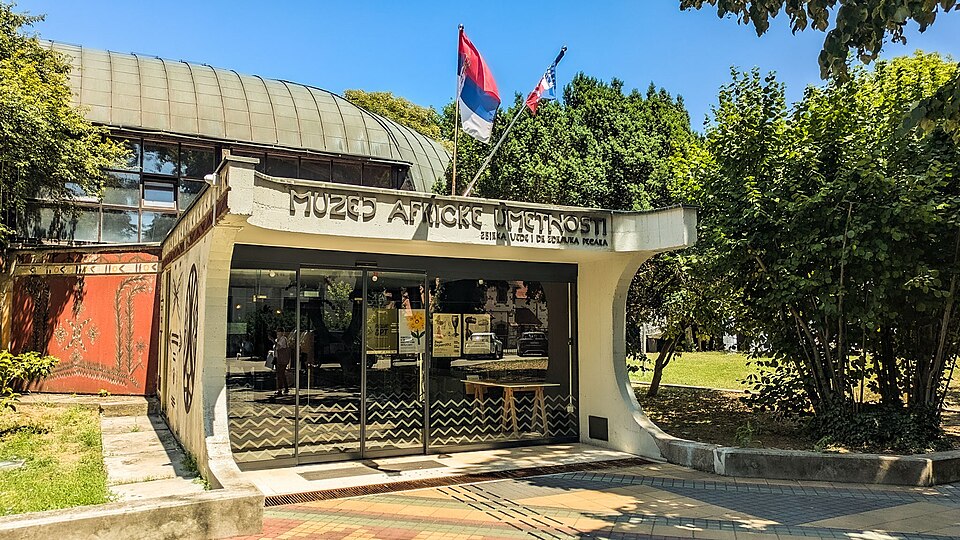
Andre Nikolića street in Senjak, a residential district south-west of the centre, not directly on a tram or main bus corridor.
A taxi from Republic Square takes about ten minutes; walking from the centre is possible but covers a couple of kilometres of ordinary streets rather than sights along the way. There is no metro in Belgrade.
Checked 2026-08-24 · Source
As a single-storey villa converted to gallery use, the building is more accessible than many of Belgrade's historic-house museums, though a wheelchair user should still confirm step-free access in advance.
Object labels mix Serbian and English but not always both for every item in the smaller side rooms. Because the collection is entirely donor-sourced, provenance is generally well recorded, but a researcher after a specific piece's exact acquisition history should contact the museum directly rather than expect it on the label. The garden paths outside can be uneven after rain, and the museum's opening days are fewer than a major city museum's, so checking the weekly closed day before travelling out to Senjak is worth doing.
Checked 2026-08-24
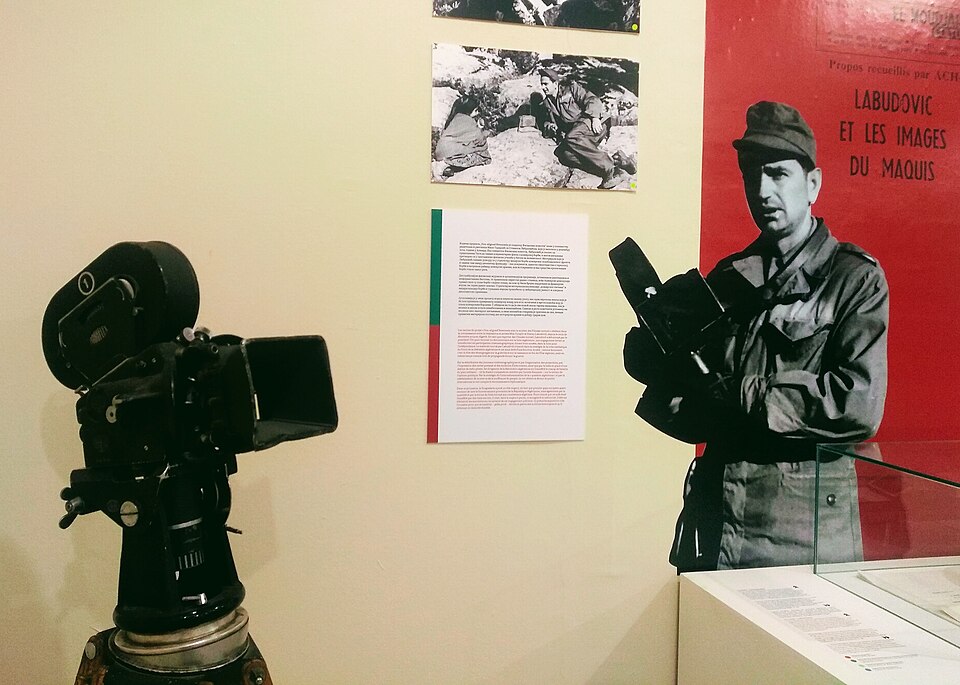
Photography without flash is generally permitted in the galleries, though the exact policy for tripods and video is not detailed on the sources this page uses and is worth confirming at the desk.
The masks and figures photograph best against the museum's own even, diffused lighting rather than with an added flash, which flattens the carved surfaces the objects depend on for effect.
Checked 2026-08-24
Diplomat Zdravko Pečar and his wife Veda Zagorac donated their own collection, gathered during postings across Africa, to found the museum in 1977.
Masks, sculpture, textiles and everyday objects from more than twenty sub-Saharan African countries, grouped by ritual and daily function rather than by country.
Forty-five minutes to an hour, since the museum is a compact villa collection rather than a large complex.
In the Senjak district, a residential quarter south-west of central Belgrade, about ten minutes from Republic Square by taxi.
No — it sees far lighter footfall than Belgrade's major landmarks, so an unhurried midweek visit is realistic without an early start.
Yes — Beli dvor, the Royal Palace and the Museum of Yugoslav History all sit within a short taxi ride on the same side of the city.
Loading the interactive map…
The interactive map could not be loaded.
Last updated:
Source: OpenStreetMap contributors, Wikidata ·