City guide
Seoul Itinerary: One Day to One Week
Editorial responsibility: Elena Voss · SSMTour Travel Editor


Build a Seoul itinerary from one day to a week, grouping the palace quarter, Jongno, Yongsan and Namsan while protecting time for collections and rest.
This guide is part of our Seoul destination coverage. Seoul
One day in Seoul: follow the civic axis to Jogyesa
Begin a one-day visit on Line 3 at Gyeongbokgung Station. Enter Gyeongbokgung Palace through the Gwanghwamun side and reserve the morning for one interior sequence. The straight ceremonial axis through Geunjeongjeon and Sajeongjeon explains the planned capital; the northern branch toward Gangnyeongjeon, Gyotaejeon and Hyangwonjeong shifts to court life and landscape. Select either the deeper residential branch or a slower reading of the state halls. Crossing both at speed leaves little attention for the city outside the walls. Korea Heritage Service lists Tuesday as the regular closure and can move a closure after a public holiday, so place this morning only after consulting its calendar.
Exit through Gwanghwamun Gate and continue south along Gwanghwamun Square. Seoul’s plaza authority gives two useful rail approaches—Gyeongbokgung Station Exit 6 and Gwanghwamun Station Exit 7—and identifies the square’s Sejong-daero address. Travellers already emerging from the palace can simply keep the gate behind them. Read the King Sejong and Admiral Yi Sun-sin monuments as civic waypoints, then use the Haechi Lounge passage or Gwanghwamun Station if weather ends the outdoor portion. Temporary events may change pedestrian circulation, so follow barriers instead of assuming a permanent crossing line.
Break for lunch around Jonggak or Insadong, choosing from menus displayed by the business that day. No district label proves ingredients, price, allergy handling or service hours. After eating, finish at Jogyesa Temple, approached from Jonggak, Anguk or Gwanghwamun. Jogyesa is the chief temple of the Jogye Order and remains a place of Buddhist practice. Keep conversation low, yield to ceremonies and treat any hall as worship space rather than an exhibition room. The temple’s trees, lantern courts and Daeungjeon area create a quiet ending without another ticketed collection.
Allow a full sightseeing day, but protect only the palace interior. If the flight or train arrives late, keep the civic axis and Jogyesa, leaving the palace for another date. If Gyeongbokgung is closed, do not substitute another royal compound blindly; use the square, temple and central streets as a coherent shorter route. Save the signage pairs Gyeongbokgung 경복궁, Gwanghwamun 광화문 and Jonggak 종각 offline, together with their Line 3, Line 5 and Line 1 numbers. This makes either lunch or the final stop a workable exit. The ordering—dynastic court, national plaza, working temple—creates three different forms of public life within one central corridor.
Checked 2026-09-08 · Official site · royal.khs.go.kr
Checked 2026-09-08 · Official site · royal.khs.go.kr
Checked 2026-09-08 · Official site · english.visitseoul.net
Checked 2026-09-08 · Official site · gwanghwamun.seoul.go.kr
Checked 2026-09-08 · Official site · www.jogyesa.kr
Two days in Seoul: connect independence history to Namdaemun
.jpg)
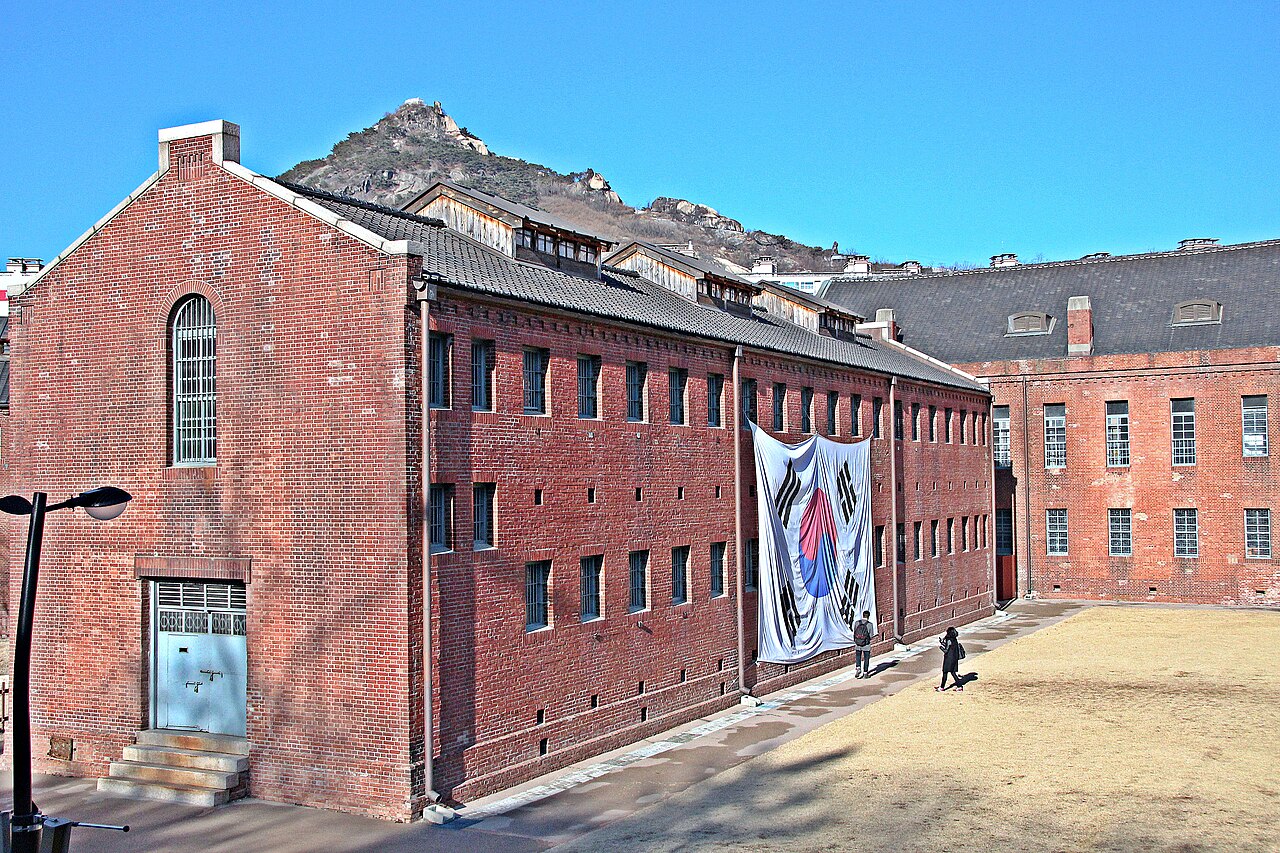
Use the second day for a west-to-south historical line. Take Line 3 to Dongnimmun Station and begin at Seodaemun Prison History Hall. The preserved compound addresses imprisonment under Japanese colonial rule and later governments through the administration building, cell blocks, labour building, execution building and women’s prison. This is the morning’s only museum. Follow the site’s own numbered circulation and leave time between the documentary rooms and carceral spaces; the subject does not suit a race toward the next photograph. The operator’s current notice and closure calendar should decide the date, while travellers needing step-free access should read the building-by-building limitations before arrival.
After the prison, eat around Dongnimmun or move toward City Hall before lunch. Use a live journey planner for that transfer rather than fixing a universal connection in prose. At Deoksugung Palace, choose between the open palace sequence and the guided Seokjojeon Daehan Empire History Museum. Deoksugung served the Korean Empire after 1897 and places Junghwajeon, Jeonggwanheon and Western-style Seokjojeon within one compact precinct. Seokjojeon is not a casual add-on: Korea Heritage Service operates a limited reservation process and publishes separate interpretation arrangements. Keep the grounds if no place is available. Monday is the regular palace closure, subject to the operator’s holiday rule.
Continue south through Jeongdong and the Sungnyemun side of the old wall alignment, then finish at Namdaemun Market. Hoehyeon Station on Line 4 is the cleanest named exit point if the street leg is dropped. Walk one market loop before selecting a shop or meal lane; thousands of independent traders do not share a single timetable, menu or price. Confirm the chosen merchant’s offer directly. Keep bags controlled in narrow passages and use the wider street-level lanes if dense crowds make smaller aisles uncomfortable.
This is a long full day, but only Seodaemun is protected. If its exhibitions require more concentration, skip the Seokjojeon interior and shorten Deoksugung to the grounds. If rain interrupts Jeongdong, travel directly to Hoehyeon. If the market no longer appeals after the prison and palace, end at City Hall rather than filling the evening mechanically. Store Dongnimmun 독립문 for the prison, City Hall 시청 on Lines 1 and 2 for Daehanmun, and Hoehyeon 회현 on Line 4 for the bazaar lanes. The narrative advances from colonial incarceration to imperial Seoul and then to living commerce; none of those stops duplicates the royal-capital argument from day one.
Checked 2026-09-08 · Official site · sphh.sscmc.or.kr
Checked 2026-09-08 · Official site · www.sdm.go.kr
Checked 2026-09-08 · Official site · royal.khs.go.kr
Checked 2026-09-08 · Official site · royal.khs.go.kr
Checked 2026-09-08 · Official site · royal.khs.go.kr
Checked 2026-09-08 · Official site · english.visitseoul.net
Three days in Seoul: connect Yongsan collections with Namsan


Day three uses Line 4 as its spine. Travel to Ichon Station, take Exit 2 or the signed underground Museum Nadeulgil, and begin at the National Museum of Korea. Keep the museum as the day’s only collection building. Its permanent displays occupy three floors and six broad themes, so select one interior course before entering: either follow Korean history from prehistory into the medieval and early modern galleries, or concentrate on calligraphy, painting, sculpture and crafts. The Path of History connects the floors and permits crossings between northern and southern rooms without restarting. Use that circulation to reach a selected object group, not to sweep every bridge. Donated and world-art rooms remain optional. The museum publishes floor information and recommended routes, while live notices can close individual galleries even when the building is open.
Consult the museum’s facilities page when deciding whether to eat on campus or return toward Ichon. This avoids an unnecessary lunch crossing. Special exhibitions are separate from the permanent collection; verify the programme and admission with the operator rather than assuming that a headline show fits the selected course. If the galleries take the full day, stop after the Mirror Pond or stone-filled Pagoda Garden. The outdoor displays provide a gentle transition without opening a second museum.
For a clear-weather extension, return to Line 4 at Ichon and travel to Chungmuro. Seoul’s published directions send visitors from Chungmuro Station to Bus 01 and onward to the Namsan Seoul Tower stop. Use that connection for N Seoul Tower only when an ascent still appeals and visibility is likely to add orientation. Decide between the Namsan setting and the observatory interior after checking operator access; the paid deck is not required for the evening to work. Descend toward Chungmuro or Myeongdong for dinner instead of planning another transfer.
This is an indoor-first day with an optional mountain evening. Rain, haze or museum fatigue removes Namsan. Clear weather plus limited interest in collections suggests one short gallery course, food near Ichon and the southbound move before late afternoon. Remember Ichon 이촌 Exit 2, the 박물관나들길 museum passage, Chungmuro 충무로, Bus 01 and the 남산서울타워 stop; every later choice is expendable. Keep any central-market visit on another date: inserting it here breaks the direct rail logic and duplicates commerce already covered elsewhere. The third day succeeds when a focused material history and a city-scale view remain separate decisions.
Checked 2026-09-08 · Official site · www.museum.go.kr
Checked 2026-09-08 · Official site · www.museum.go.kr
Checked 2026-09-08 · Official site · www.museum.go.kr
Checked 2026-09-08 · Official site · www.museum.go.kr
Checked 2026-09-08 · Official site · english.visitseoul.net
Four days in Seoul: cross Gangnam from Bongeunsa to Jamsil


Day four moves south of the Han and stays there. Begin at Bongeunsa Temple, reached from Bongeunsa Station on Line 9. The temple’s own history traces its foundation to 794 and identifies Panjeon, which holds woodblocks of the Avatamsaka Sutra, within a functioning Buddhist complex. Walk the courtyards before entering any hall, keep voices low and give ceremonies priority. Bongeunsa is not a museum exhibit placed beside modern Gangnam; worship, study and temple programmes continue around visitors. Check posted photography and access instructions on arrival rather than generalising one hall’s rules to the entire compound.
Eat in the Samseong or COEX area after leaving the temple. Select a restaurant from its displayed menu and current dietary information; the neighbourhood does not guarantee an ingredient, price or opening hour. The midday stop also separates temple conduct from the commercial afternoon. From Samseong or Bongeunsa, use the live rail planner to reach Jamsil instead of assuming a single transfer will suit every starting entrance. Jamsil Station is served by Lines 2 and 8 and connects to the Lotte complex.
At Lotte World Tower, decide whether the goal is the surrounding Jamsil skyline or the Seoul Sky observatory. The tower and observation product are not interchangeable. Seoul’s municipal 2026 feature locates Seoul Sky on floors 117–123 and directs arrivals through Jamsil exits linked to the complex; admission, operating notices and visibility remain operator checks. Buy an observatory visit only if the view justifies another interior after the museum day. The mall, lake-side district and tower exterior can form the afternoon without claiming a paid panorama.
This is a three-quarter-to-full day with one active religious site and one contemporary vertical district. If a ceremony limits temple access, remain in the public courtyard and move on respectfully. If haze or low cloud removes the reason for Seoul Sky, do not replace it with N Seoul Tower on the same day; keep Jamsil at ground level or end early. Record the independent arrival labels Bongeunsa 봉은사 on Line 9, Samseong 삼성 on Line 2 and Jamsil 잠실 on Lines 2 and 8. They describe a cross-district rail move, not a walk between neighbouring gates. If the group wants nightlife, eat again in Jamsil rather than returning to Jongno between activities. The route’s value is the direct contrast between Bongeunsa’s long religious continuity and Songpa’s modern skyline, not the number of Gangnam landmarks collected.
Checked 2026-09-08 · Official site · temple.bongeunsa.org
Checked 2026-09-08 · Official site · english.visitkorea.or.kr
Checked 2026-09-08 · Official site · love.seoul.go.kr
Checked 2026-09-08 · Official site · seoulsky.lotteworld.com
Five days in Seoul: make Olympic Park one complete landscape


Give day five to Olympic Park in Songpa rather than adding another central building. The grounds combine the 1988 Olympic legacy, Mongchon Fortress, large sports venues, lakes, sculpture and open lawns. Because the site is extensive, select the entrance by subject. Olympic Park Station 올림픽공원 on Lines 5 and 9 suits the eastern facilities; Mongchontoseong 몽촌토성 on Line 8 suits the Peace Gate side; Hanseong Baekje 한성백제 on Line 9 serves another western approach. The operator’s map shows these entries against the park zones, so save it before departure instead of navigating from the name alone.
For a history-and-landscape circuit, begin at the World Peace Gate, cross toward Mongchon Fortress, then continue to 88 Lake and the sculpture areas. For a sports-legacy circuit, start nearer Olympic Park Station and identify the arena precinct before moving toward the open lawns. Choose one circuit. A concert, match or installation can alter access around an individual venue while the larger park remains usable; check the KSPO event and facility notices if a specific building matters. The public landscape is the anchor, not admission to a stadium or museum.
Carry water and take the first meal near the selected gate or at a currently operating park facility. Do not rely on a restaurant listed on an old map: verify the business and menu that day. The operator marks separate cultural, sporting, ecological and convenience zones, and its walking paths include lake, fortress, memory, lovers’ and youth routes. Those names are orientation choices, not instructions to complete all five. A visitor interested in Baekje history should protect the fortress side; someone recovering from dense museums may prefer the lakes and sculpture park.
Use a half to three-quarter day and keep the evening in Songpa. Jamsil can absorb dinner if day four ended early, but do not repeat the Lotte World Tower observatory simply because it is nearby. In heat, reduce exposed lawns; in rain, shorten rather than assuming every cultural building is open. When a major event produces congestion, enter through the station closest to the chosen landscape and leave arena approaches clear. This day works by reading one large civic park as layers of ancient earthwork, Olympic memory and contemporary recreation—not by collecting facilities from the directory.
Checked 2026-09-08 · Official site · www.ksponco.or.kr
Checked 2026-09-08 · Official site · www.ksponco.or.kr
Checked 2026-09-08 · Official site · www.ksponco.or.kr
Checked 2026-09-08 · Official site · www.ksponco.or.kr
One week in Seoul: extend by district, not by checklist


Extend the five-day structure with one ridge walk and one unassigned recovery day. Day six follows a bounded section of Seoul City Wall, giving the week a topographic reading absent from the indoor routes. The wall authority divides Hanyangdoseong into named trails around Baegak, Naksan, Namsan and Inwangsan; these are separate outings with different terrain, not one casual loop. After several museum days, use the Naksan section from Hyehwamun 혜화문 toward Heunginjimun 흥인지문. Reach its entrances from Hansung University 한성대입구 or Hyehwa 혜화 on Line 4, follow the marked masonry over Naksan 낙산, and finish near Dongdaemun 동대문 rather than retracing the climb.
The Naksan operator describes gentler terrain than the mountain sections and publishes a 3.2-kilometre route. Weather, surface condition and personal mobility still control the outing. Stone blocks change character along the alignment, while reconstructed Hyehwamun, Naksan Park and Heunginjimun provide three distinct readings: gate, ridge and eastern terminus. Keep voices low beside Bukjeong and other residential areas. Carry water, use the signed course and turn back when footing or visibility deteriorates. A published estimate cannot predict an individual walker’s pace.
Eat after descending around Dongdaemun or return by Line 4; do not plan a mid-hike restaurant. Day six can fill a half day, leaving the evening for rest or a nearby district. Rain replaces the wall with the unused National Museum gallery course. Anyone preferring Baegak, Inwangsan or Namsan must consult that section’s live access notice before switching; Naksan’s transport, difficulty and residential guidance do not transfer to another ridge.
Keep day seven open for one unresolved constraint. Retry Namsan via Chungmuro and Bus 01 if haze spoiled day three; revisit Seodaemun after an unexpected closure; or use a confirmed Seokjojeon reservation that did not fit day two. When every priority succeeded, select one modern district from Seoul’s official 2026 guidebook and remain there for food and street life instead of commuting through the centre again. A departure day should stay near the accommodation or the outbound rail connection, with no timed interior across town.
Assign weekdays only after mapping operator calendars. Gyeongbokgung normally closes Tuesday and Deoksugung normally closes Monday; holidays can move the next non-holiday closure. Seodaemun publishes its own closure notices, while the National Museum separates building, gallery and special-exhibition updates. Put reserved interiors on confirmed dates, Namsan on the clearest suitable evening, Olympic Park on a comfortable outdoor day and Naksan on the safest forecast. Seven legible routes are more useful than collecting every remaining pin.
- Gyeongbokgung Palace
- Gwanghwamun Square
- Jogyesa Temple
- Seodaemun Prison History Hall
- Deoksugung Palace
- Namdaemun Market
- National Museum of Korea
- N Seoul Tower
- Bongeunsa Temple
- Lotte World Tower
- Olympic Park
- Seoul City Wall
Checked 2026-09-08 · Official site · seoulcitywall.seoul.go.kr
Checked 2026-09-08 · Official site · seoulcitywall.seoul.go.kr
Checked 2026-09-08 · Official site · english.seoul.go.kr
Checked 2026-09-08 · Official site · royal.khs.go.kr
Checked 2026-09-08 · Official site · royal.khs.go.kr
Checked 2026-09-08 · Official site · english.visitseoul.net
Turn this list into a plan
Set your days, your pace and the hours you actually want to be out. The planner works around closing days and travel time, and leaves room to eat.