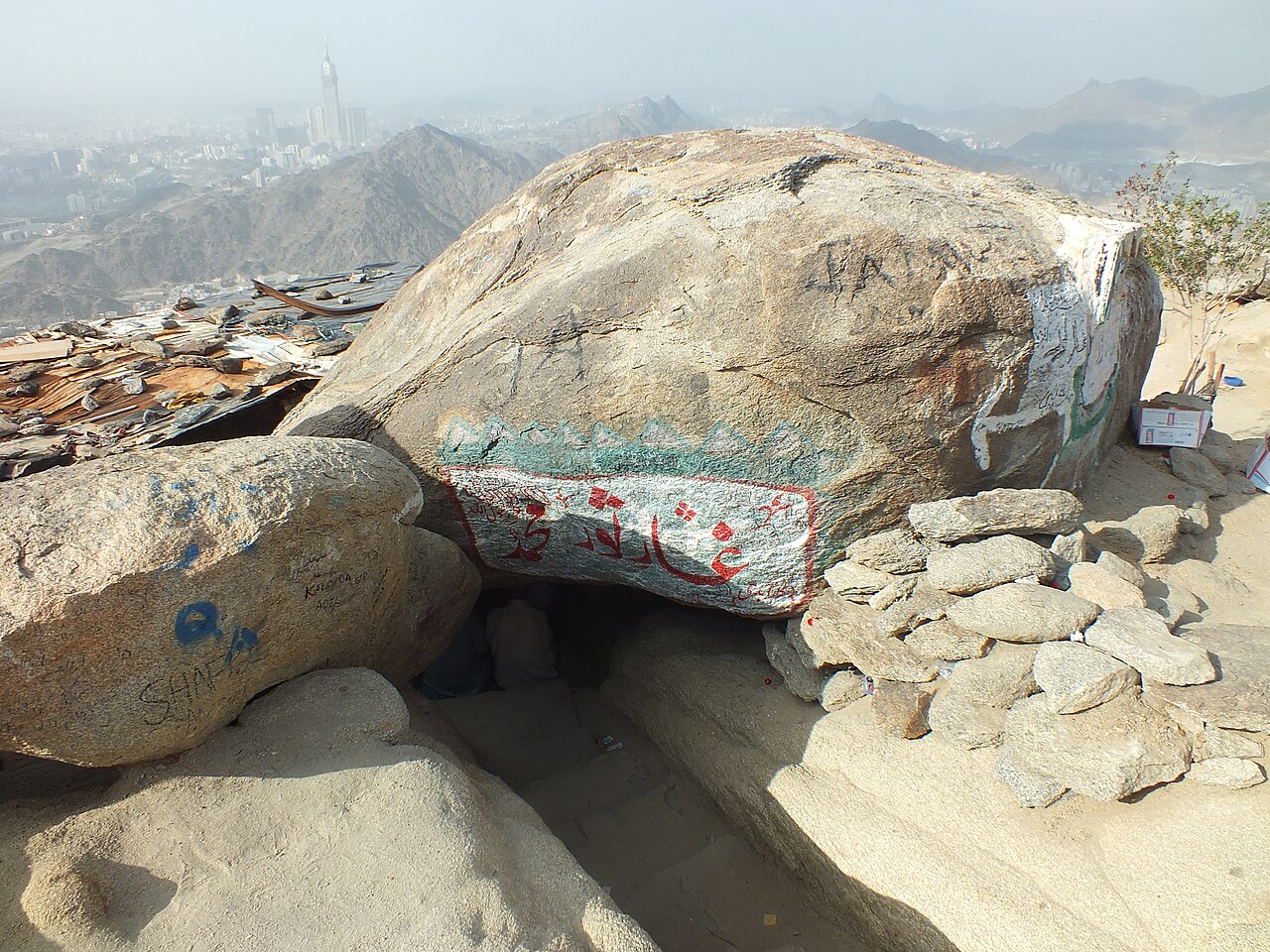
68 min walk
Cave of Thor
- Must see
- Nature site
Language · 11 published
Place of worship · Mecca
مسجد علي بن أبي طالب
Masjid Ali bin Abi Talib is a mosque in Mecca, Saudi Arabia, named after Ali ibn Abi Talib, the cousin and son-in-law of the Prophet Muhammad and a central figure in Islamic history. It serves as a place of worship within Mecca’s wider religious landscape. For Muslim travelers, the mosque is best understood as a neighborhood worship space rather than a sightseeing attraction, offering a setting for prayer and quiet reflection during time in the holy city. The mosque serves as a place of worship for residents and visitors to the holy city. Its location within Mecca places it among numerous religious sites that pilgrims and faithful may encounter during their time in Islam's most sacred city. The structure represents part of the broader religious infrastructure supporting worship in Mecca. No. Non-Muslims are prohibited from entering Mecca entirely under Saudi Arabian law, which applies to all sites within the city including this mosque.
Checked 2026-08-26 · Source
The mosque’s documented identity is its role as a functioning place of Islamic worship and its association with Ali ibn Abi Talib. Travelers should expect a prayer space oriented toward the qibla, with the atmosphere shaped by congregational worship rather than exhibitions or visitor interpretation. The available place record does not establish distinctive decoration, capacity, architectural materials, a named library, or other special interior features. Enter quietly and give worshippers priority throughout the visit. As a mosque, it would typically contain a prayer hall oriented toward the qibla, with space for congregational prayers. Mosques in Mecca vary considerably in size and architectural character, from grand structures to neighborhood places of worship. Visitors should expect standard mosque functionality appropriate to its scale and community role.
Checked 2026-08-26 · Source
Plan the visit around your purpose. A traveler attending one prayer can stay for the prayer and personal supplication, while someone making a brief stop may need only enough time to enter respectfully, worship, and leave without disturbing the congregation. Friday worship and busy pilgrimage periods can make the mosque slower to enter or leave. Keep the timing flexible when combining this mosque with duties at the Grand Mosque or other religious sites. The duration of a visit to Masjid Ali bin Abi Talib depends on individual purpose. For prayer, Muslims typically allocate time for ablution, the obligatory prayer itself, and any additional supplications.
Checked 2026-08-26 · Source
The most meaningful time to visit is a daily prayer period if you intend to worship. Friday midday prayer has a special congregational character and can change the rhythm of the surrounding area. Ramadan and Hajj bring heavier movement across Mecca, so allow more time for roads, pedestrians, and entry. Early morning and evening are more comfortable for outdoor walking than the hottest part of the day. Prayer times change with the solar calendar.
Checked 2026-08-26 · Source
This is a mosque used for worship, not a ticketed museum or monument. Travelers should not plan around a ticket counter or timed sightseeing admission. The practical costs connected with a visit are outside the mosque itself, such as getting there, suitable clothing, or refreshments. Keep the visit focused on prayer and respect the religious setting. Any charitable giving should be voluntary and handled through an appropriate local channel.
Checked 2026-08-26 · Source
Masjid Ali bin Abi Talib is within Mecca’s dense urban area. Travelers arriving through Jeddah reach Mecca by road, and local movement can be made by taxi, ride-hailing service, or walking when the accommodation is nearby. Use the Arabic mosque name together with the OSM location when showing the destination to a driver or navigating. Congestion can be severe during pilgrimage periods, so leave extra time for the final approach.
Checked 2026-08-26 · Source
Only Muslims may enter Mecca under Saudi regulations. At the mosque, dress modestly, remove footwear before entering prayer areas, keep voices low, and follow the separation and movement patterns used by worshippers. Heat can make walking difficult, especially in summer, while Hajj, Umrah, Ramadan, and Friday prayer can increase crowding. Protect your belongings and avoid blocking entrances, corridors, or places where people are preparing for worship.
Checked 2026-08-26 · Source
Treat photography as secondary to worship. Do not photograph people without permission, and never interrupt prayer to create an image. Keep the phone silent and put it away if attendants or worshippers indicate that cameras are unwelcome. Exterior photography should also be discreet around entrances and nearby residents. Flash can disturb the prayer atmosphere. A quiet visit without photography is the safest way to respect this neighborhood mosque.
Checked 2026-08-26 · Source
Mecca is reserved for Muslims under Saudi regulations, so this mosque is a place for Muslim worshippers and Muslim visitors.
Ali ibn Abi Talib was the cousin and son-in-law of the Prophet Muhammad and a central figure in Islamic history; the mosque bears his name.
Wear modest clothing, remove footwear before entering prayer areas, and follow the clothing and conduct customs observed by worshippers.
Crowding can increase during Friday midday prayer, Ramadan, Hajj, and busy Umrah periods across Mecca.
Use a taxi, ride-hailing service, or walk from nearby accommodation, showing the Arabic name and the OSM location to help identify the destination.
Do not photograph worshippers or interrupt prayer. Keep your phone silent and follow any direction given by attendants or local worshippers.
Loading the interactive map…
The interactive map could not be loaded.

Last updated:
Source: OpenStreetMap contributors ·