19 min walk
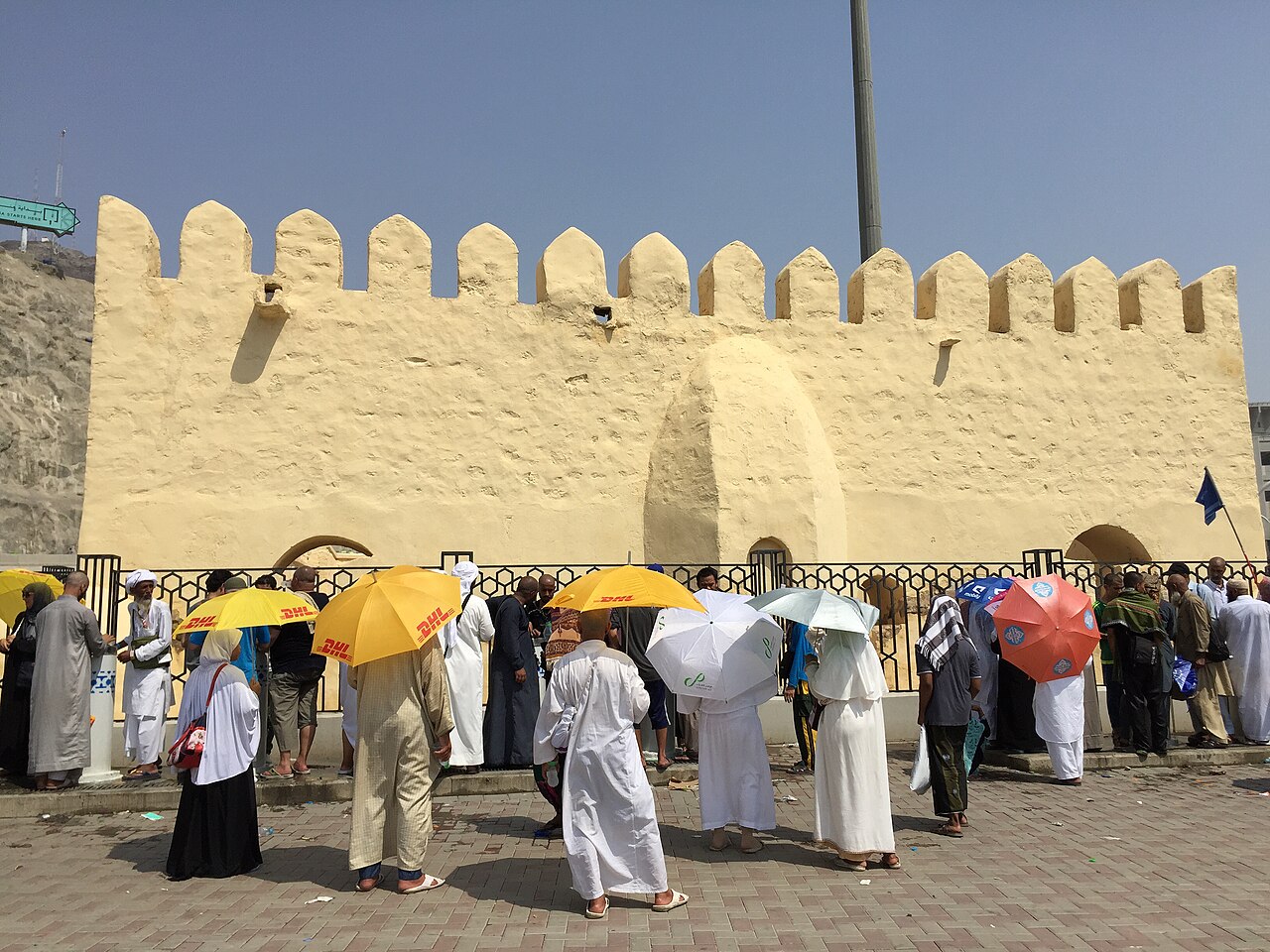
الخيف
- Must see
- Place of worship
Language · 11 published
Place of worship · Mecca

Mina is a tent city in the Makkah Region of Saudi Arabia, located approximately 5 kilometres east of the Masjid al-Haram in Mecca. It serves as the first ritual site of the Hajj pilgrimage and the setting for the Days of Tashreeq, which follow Eid al-Adha. The site occupies the narrow valley known as Wadi Muhassar between Mecca and Muzdalifah. Its entire function is subordinate to the annual Hajj season, during which it accommodates the largest temporary human settlement in the world. Outside Hajj periods, access is restricted and the area largely dormant.
Checked 2026-08-26
The defining feature of Mina is its vast grid of fire-resistant white tents, organised in numbered zones and streets to manage pilgrim flow. The Jamarat Bridge complex stands at its heart, where pilgrims perform the symbolic stoning of the devil. Multiple levels and expanded infrastructure have been added to this structure over successive years. Basic services including medical facilities, food distribution points, and sanitation infrastructure operate during Hajj. The site contains no permanent commercial or residential buildings in the conventional sense; all structures serve the temporary population.
Checked 2026-08-26
The duration of a visit to Mina is determined entirely by Hajj ritual requirements rather than visitor choice. Pilgrims typically arrive on the eighth day of Dhu al-Hijjah, known as Yawm al-Tarwiyah, and remain through the Days of Tashreeq until the twelfth or thirteenth day. This constitutes a stay of three to five nights under normal ritual progression. The stoning at Jamarat occurs across multiple days within this period. Non-pilgrims do not have meaningful access to time within the site. Mina also earns time in a mecca itinerary because The first Hajj ritual site and setting for the Days of Tashreeq; its primary religious function and controlled access are concentrated in the Hajj season. Its value becomes clearer when the stop is compared with the surrounding streets and the other ranked places nearby.
Checked 2026-08-26

Mina is functionally inaccessible outside the Hajj season, which occurs in the twelfth month of the Islamic lunar calendar. The specific dates shift approximately eleven days earlier each Gregorian year. The site is sealed and dormant for the remainder of the year. Operator-confirmed hours or prices are Not recorded pending review. Prospective pilgrims must consult authorised Hajj operators and Saudi official channels for current season dates, quota allocations, and any pandemic-era or policy-driven modifications to traditional scheduling. Independent visitation is not practicable.
Checked 2026-08-26
Access to Mina is not available through conventional ticketing. Entry is contingent upon valid Hajj authorisation obtained through approved channels in the pilgrim's country of residence, coordinated with Saudi Ministry of Hajj and Umrah systems. Costs are bundled within comprehensive Hajj packages whose components vary by origin country, service tier, and regulatory framework. Operator-confirmed hours or prices are Not recorded pending review. No standalone admission mechanism exists. Prospective visitors must engage licensed Hajj operators; unofficial access attempts carry legal and safety consequences.
Checked 2026-08-26

During Hajj, pilgrims reach Mina through organised transport from Mecca, Muzdalifah, and Arafat as prescribed by ritual sequence. The Saudi government operates dedicated bus networks, pedestrian routes, and metro extensions for this movement. Personal vehicles are prohibited to pilgrims during peak periods. Outside Hajj, the site lies near Highway 40 and secondary roads from central Mecca, though access barriers prevent casual approach. The nearest significant permanent infrastructure is the Mina train station on the Mashair Metro line, operational seasonally for authorised pilgrim transport only.
Checked 2026-08-26
Extreme crowding presents the principal hazard, with stampedes historically occurring at bottlenecks particularly around the Jamarat Bridge. Pilgrims should follow official guidance on stoning schedules to avoid peak congestion. Summer Hajj dates bring severe heat exposure risk; hydration and shade-seeking are essential. The temporary infrastructure, though improved, remains basic; medical preparedness is advisable. Security and access controls are stringent; unauthorised presence risks detention. Fire safety in tent areas has been enhanced but vigilance with electrical devices and open flames remains warranted. Follow all official instructions without deviation.
Checked 2026-08-26

Photography at Mina is technically possible but subject to significant constraints. The devotional atmosphere and crowding make deliberate photography impractical and potentially disrespectful. Saudi authorities maintain surveillance and may restrict image capture near security-sensitive infrastructure. Pilgrims should prioritise ritual observance over documentation. Drone use is prohibited. Sharing images of other pilgrims without consent raises ethical concerns given the sacred context. Visitors should exercise conservative judgement, seeking no photographs during the stoning rite or in densely packed movement corridors where it impedes flow or distracts from safety awareness.
Checked 2026-08-26
No. Mina lies within the broader Haram boundary around Mecca, from which non-Muslims are prohibited by Saudi law. This restriction applies regardless of Hajj season status.
These are the three days following Eid al-Adha during Hajj, spent primarily at Mina, when pilgrims perform the stoning ritual and other concluding rites before departure.
Accommodation consists of basic tent facilities with minimal amenities. Comfort levels vary by Hajj package tier, but all remain rudimentary compared to conventional lodging.
The grid system of numbered streets and colour-coded zones assists orientation, though first-time pilgrims often rely on group leaders and mobile applications during Hajj.
The tent infrastructure is dismantled or secured annually, with maintenance and upgrades performed during the intervening months before the next pilgrimage season.
Multiple expansions and architectural redesigns have occurred, including additional levels and wider access points, though crowding management remains an ongoing operational challenge.
Loading the interactive map…
The interactive map could not be loaded.
Last updated:
Source: OpenStreetMap contributors ·