3 min walk
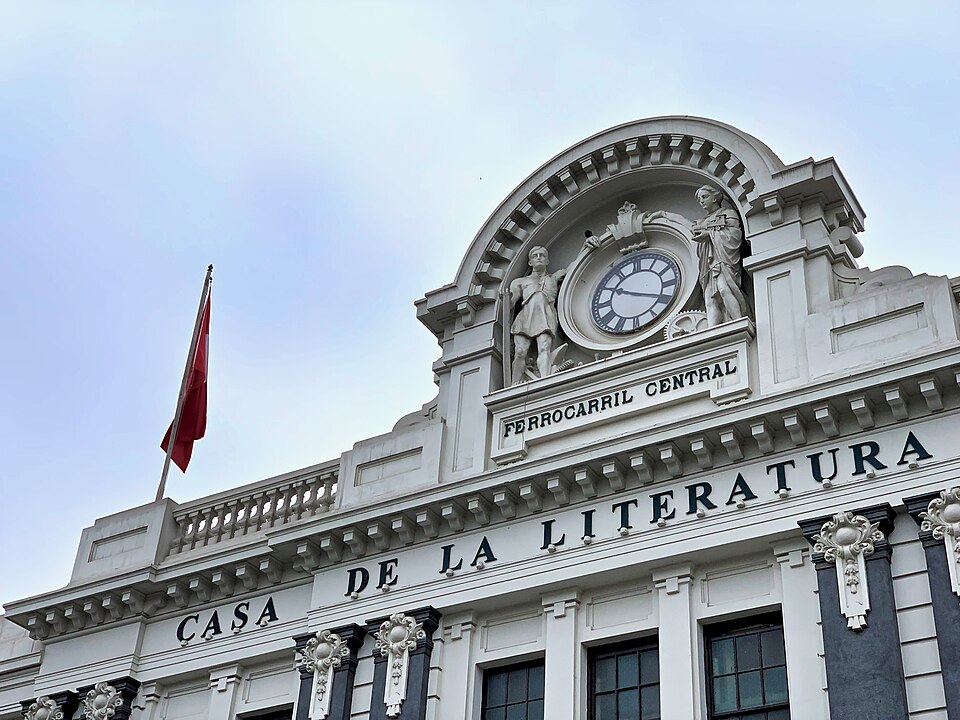
Casa de la Literatura Peruana
- Must see
- Museum
Language · 11 published
Activity · Lima
Casa de Aliaga
Casa de Aliaga stands as one of Lima's oldest continuously inhabited colonial houses, located near the historic Plaza Mayor in Peru's capital. The Aliaga family has maintained residence here since the early colonial period, making it a rare living heritage site rather than a frozen museum. The structure reflects centuries of architectural evolution, with layers of domestic modification accumulated over generations. Its proximity to Lima's governmental and religious center underscores its historical significance within the Spanish colonial urban plan. The house represents an exceptional case of private continuity amid public historical transformation.
Checked 2026-08-26
The interiors preserve layered domestic spaces accumulated across multiple centuries, reflecting successive generations of occupation and adaptation. Visitors encounter rooms furnished with period pieces, family portraits, and decorative objects that illustrate evolving tastes and social practices. Architectural elements include colonial-era construction alongside later modifications. The house contains courtyards typical of elite Lima residences, providing light and ventilation to interior chambers. Religious imagery and devotional objects appear throughout, consistent with Catholic household practice. The accumulation of belongings over centuries creates a dense palimpsest of material culture unavailable in conventional museum settings.
Checked 2026-08-26
A thorough visit to Casa de Aliaga typically requires approximately forty-five minutes to one hour, depending on visitor interest in detailed examination of furnishings and architectural features. The compact scale of the house relative to major institutional museums permits efficient circulation. Those with particular interest in colonial domestic life, Peruvian history, or decorative arts may wish to extend their stay. Guided tours, when available, structure the temporal experience and may run longer than independent exploration. Visitors should allocate additional time for reaching this central location and for possible waiting periods during peak tourist seasons.
Checked 2026-08-26
Operator-confirmed hours are Not recorded pending review. Visitors should verify current opening schedules directly with Casa de Aliaga or through authoritative tourism offices before planning their visit. The central location near Plaza Mayor means the surrounding district remains active throughout daylight hours, with adjacent attractions operable on varying schedules. Morning visits may offer quieter conditions for appreciation of interior details. Seasonal variations in Lima's coastal climate, with persistent overcast conditions during winter months and clearer skies in summer, may influence photographic conditions and outdoor comfort in courtyard spaces.
Checked 2026-08-26
Operator-confirmed prices are Not recorded pending review. Admission policies and costs should be verified directly with Casa de Aliaga or through official tourism channels prior to visiting. Payment methods accepted, discount eligibility, and requirements for advance reservation remain unconfirmed in available sources. Some heritage houses in Lima operate with variable pricing structures depending on tour inclusion or special access arrangements. Visitors carrying limited cash in appropriate denominations may mitigate transaction uncertainties, though this represents cautious general advice rather than confirmed operational practice.
Checked 2026-08-26
Casa de Aliaga occupies a central position near Plaza Mayor in Lima's historic center, accessible by multiple transportation modes. The surrounding district contains numerous additional colonial monuments, permitting integrated walking itineraries. Metropolitan bus services and combi routes serve the broader city center area, though specific line information should be verified locally. Taxi and ride-hailing services provide direct access, with drivers familiar with Plaza Mayor as a reference point. Pedestrian navigation from nearby accommodations in central Lima is feasible. Visitors should exercise standard urban awareness regarding personal security in crowded historic districts.
Checked 2026-08-26
As a continuously inhabited private residence, Casa de Aliaga imposes behavioral expectations distinct from conventional museums. Visitors should respect spatial boundaries, remain with designated tour routes, and avoid touching furnishings or decorative objects. Photography restrictions may apply in certain interior spaces; compliance with posted or verbal instructions is essential. The historic structure contains uneven surfaces, steps, and thresholds that present mobility challenges. Limited accessibility accommodations should be anticipated. Crowding in narrow passages may occur during concurrent tours. Visitors sensitive to enclosed spaces with accumulated organic materials should note potential air quality considerations in older construction.
Checked 2026-08-26
Photographic opportunities at Casa de Aliaga encompass colonial architecture, period interiors, courtyard spaces, and accumulated decorative detail. Natural light entering through courtyard openings creates variable illumination conditions that reward patient observation. Flash photography may be restricted to protect sensitive materials; visitors should confirm current policies before using artificial lighting. The density of objects and layered surfaces rewards close attention to compositional framing. Exterior photography of the facade presents contextual documentation possibilities against the surrounding historic streetscape. Respect for ongoing family privacy and tour group circulation should guide image-making decisions throughout the visit.
Checked 2026-08-26
Yes, the Aliaga family continues to inhabit portions of the house, making it one of the oldest continuously occupied private residences in the Americas.
The house dates to the early colonial period following Spanish foundation of Lima, with origins in the sixteenth century and successive modifications thereafter.
Access arrangements are Not recorded pending review; visitors should verify current policies directly with the site or official tourism offices.
Historic construction with steps, thresholds, and narrow passages suggests limited accessibility; specific accommodations are Not recorded pending review.
Children are generally accommodated at heritage sites, though the domestic setting with fragile objects may require close supervision; specific policies are Not recorded pending review.
Unlike conventional museums, it remains a living residence with accumulated family heritage rather than curated institutional collections, offering authentic domestic continuity across centuries.
Loading the interactive map…
The interactive map could not be loaded.

Last updated:
Source: OpenStreetMap contributors, Wikidata ·