
_Arzobispado_de_Lima_-_Plaza_de_Armas.jpg)
_-_El_Palacio_Arzobispal.png)
_-_Palacio_Arzobispal_de_Lima.png)
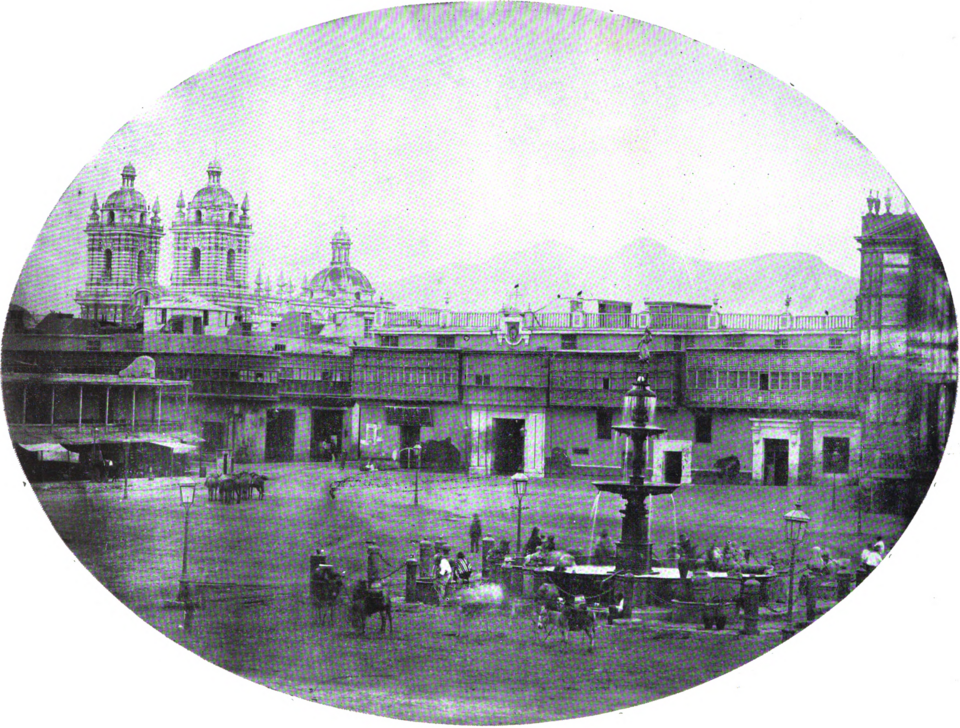
_-_La_Plaza_de_Armas_de_Lima_Hace_126_A%C3%B1os.png)
_-_Otra_Vista_Parcial_de_la_Plaza_de_Armas_en_el_A%C3%B1o_1860.png)
3 min walk
Casa de la Literatura Peruana
- Must see
- Museum
Language · 1 published
Museum · Lima
Museo del Palacio Arzobispal de Lima

| Monday | 08:30 – 17:00 |
|---|---|
| Tuesday | 08:30 – 17:00 |
| Wednesday | 08:30 – 17:00 |
| Thursday | 08:30 – 17:00 |
| Friday | 08:30 – 17:00 |
| Saturday | 08:30 – 17:00 |
| Sunday | Closed |
Parsed from OpenStreetMap opening hours on 2026-08-26.
The Archbishop's Palace of Lima stands on the eastern side of Plaza Mayor, the historic heart of Peru's capital. Its ornate façade and carved balconies form one of Plaza Mayor's defining architectural edges. The palace serves as the official residence and administrative headquarters of the Archbishop of Lima. The structure exemplifies colonial-era ecclesiastical architecture, with its distinctive wooden balconies representing a characteristic feature of Lima's historic centre, which UNESCO recognises as a World Heritage site.
Checked 2026-08-26
The interior contains the archbishop's private chapel, administrative offices, and formal reception rooms. Visitors may observe religious art and furnishings appropriate to the residence of a senior Catholic prelate. The palace maintains working functions alongside any visitor access. Specific room inventories, art collections, and interior decorative schemes are not recorded in the supplied sources. Visitors should expect an operational religious administrative building rather than a conventional museum environment. Photography policies and access restrictions to interior spaces would require direct confirmation from palace staff.
Checked 2026-08-26

A complete visit duration depends on which areas are accessible and whether guided services are available. The palace's operational nature suggests visits may be brief unless special arrangements exist. Visitors typically combine stops at Plaza Mayor's surrounding monuments, including the Government Palace, Cathedral of Lima, and Municipal Palace. A circuit of the plaza's exterior architectural features requires less time than any interior tour. Visitors should allocate flexible timing and confirm access possibilities in advance through direct enquiry.
Checked 2026-08-26

Operator-confirmed hours are Not recorded pending review. The palace functions as an active administrative and residential building, which may restrict visitor access to specific times or require advance appointment. Plaza Mayor itself remains publicly accessible, allowing exterior viewing at any time. Weather considerations for Lima include its coastal desert climate with minimal rainfall, though garúa mist affects winter months. Morning visits typically offer clearer conditions for exterior photography and architectural observation than afternoon hours. A flexible visit lets travellers connect Archbishop's Palace of Lima with the rest of the day without treating one room, viewpoint or photograph as the whole experience. The useful pace depends on personal interest and conditions on arrival.
Checked 2026-08-26
Operator-confirmed prices are Not recorded pending review. As a functioning religious administrative residence rather than a standard tourist attraction, the palace may not operate regular ticketed admission. Some ecclesiastical buildings in historic Lima offer free entry or request voluntary donations. Visitors seeking interior access should enquire directly at the palace or through the Archdiocese of Lima. Any fees would likely be modest compared to commercial attractions, but this remains speculative without verified information. Archbishop's Palace of Lima also earns time in a lima itinerary because Its ornate façade and carved balconies form one of Plaza Mayor's defining architectural edges. Its value becomes clearer when the stop is compared with the surrounding streets and the other ranked places nearby.
Checked 2026-08-26

The palace occupies the eastern side of Plaza Mayor in Lima's historic centre. The plaza serves as a focal point for multiple transport options. Walking remains practical within the compact historic district. Metropolitan bus services and conventional buses serve surrounding streets. Taxis and ride services operate throughout central Lima. Visitors should exercise standard urban precautions regarding personal belongings in crowded areas. The historic centre's grid layout facilitates navigation, with the palace identifiable by its distinctive balconied façade facing the plaza's central fountain.
Checked 2026-08-26

Visitors must respect the building's active religious and administrative functions. Appropriate dress and decorum are essential. The surrounding Plaza Mayor area attracts significant pedestrian traffic and requires vigilance against petty theft. Street vendors and unofficial guides may approach tourists. Historic Lima's infrastructure includes uneven paving and accessibility challenges. The coastal mist can reduce visibility and create slippery surfaces. Visitors should verify access permissions before attempting entry, as security concerns may restrict unannounced visits to an active archiepiscopal residence.
Checked 2026-08-26
The ornate façade and carved balconies offer substantial exterior photographic interest, particularly when capturing Plaza Mayor's architectural ensemble. Morning light generally illuminates the eastern-facing frontage favourably. Interior photography permissions are not recorded and would require explicit staff approval. Tripod use in public spaces may attract security attention. The wooden balcony details reward telephoto examination. Visitors should avoid photographing individuals without consent, particularly any clergy or officials. Drone operation would require compliance with Peruvian aviation regulations and is impractical in this central urban location.
Checked 2026-08-26
Not recorded. The palace functions as an active residence and administrative headquarters. Visitors should confirm current access policies directly with palace staff or the Archdiocese of Lima before attempting entry.
Yes. The palace stands within Lima's historic centre, inscribed as UNESCO World Heritage site 500. Its façade contributes to Plaza Mayor's defining architectural character.
Its ornate façade and carved wooden balconies represent characteristic features of colonial Lima's ecclesiastical architecture, forming a key component of Plaza Mayor's visual identity.
Not recorded. The palace's operational nature as an active administrative residence makes standard tour provision uncertain. Direct enquiry to the Archdiocese would be necessary.
The palace serves as the archbishop's residence and administrative centre, while the adjacent cathedral functions as the primary liturgical church. They occupy separate buildings despite their proximity and shared ecclesiastical authority.
Respectful attire appropriate for an active religious administrative building is advisable. Specific dress codes are not recorded, but conservative clothing would reflect prudent visitor judgement.
Loading the interactive map…
The interactive map could not be loaded.
Last updated:
Source: OpenStreetMap contributors, Wikidata ·