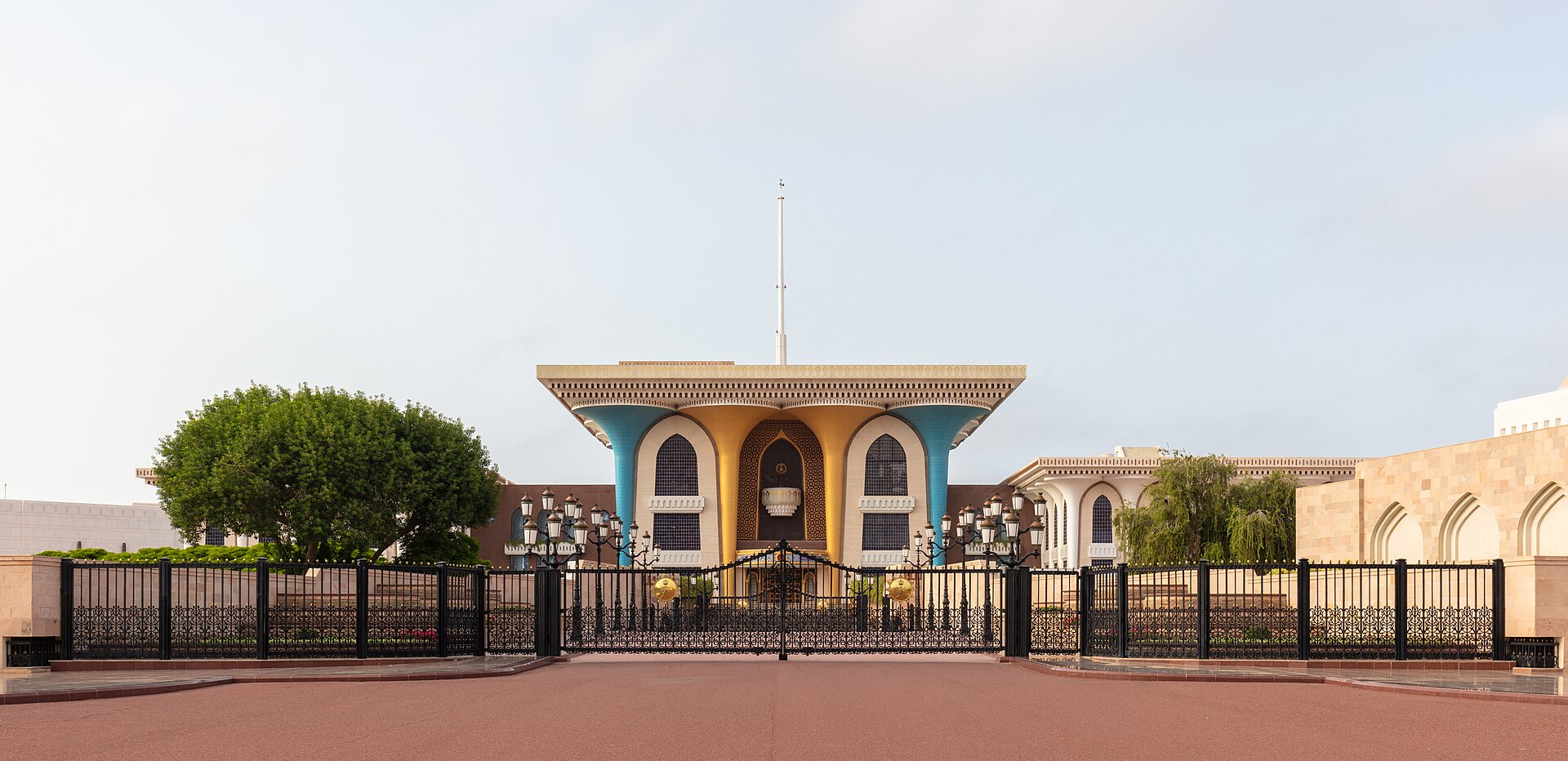
4 min walk
Al Alam Palace
- Must see
- Historic monument
Language · 11 published
Historic monument · Muscat
قلعة الجلالي

Read from the OpenStreetMap access tags; anything not listed has no tag recorded.
Set the group type to family in the planner and the day window contracts to about three quarters of a solo day.
Al Jalali Fort, known locally as Qalʿat al-Jalālī, is a historic coastal fortification in Muscat, Oman. It stands on a rocky outcrop overlooking the harbour entrance near the Old Town. Built during the Portuguese period and later restored, it served as a defensive structure and prison. The fort is one of two iconic harbour forts alongside Al Mirani Fort. Its prominent position makes it a significant landmark in Muscat's historic waterfront, though visitor access remains restricted to exterior viewing only at present. Closed to visitors daily.
Checked 2026-08-31 · Source
The interior of Al Jalali Fort is not accessible to the public. No verified information exists about current interior features, exhibitions, or displays. The Oman News Agency reported an operating contract was signed on 2026-03-01, indicating potential future development. Experience Oman states that visits are not permitted. The Ministry of Heritage and Tourism signed a management and development contract on 1 March 2026, but its announcement describes visitor operation as a future outcome and does not announce a reopening. Free exterior viewing; there is no paid public interior admission while visits are prohibited. Experience Oman explicitly lists no fee for Al Jalali Fort.
Checked 2026-08-31 · Source
A visit to Al Jalali Fort is currently limited to exterior appreciation only. Visitors typically allocate thirty minutes to one hour for viewing the fort from surrounding vantage points, photographing the structure, and exploring the nearby harbour area. This duration allows time to appreciate the fort's strategic position and architectural presence without interior access. Free exterior viewing; there is no paid public interior admission while visits are prohibited. Experience Oman explicitly lists no fee for Al Jalali Fort.
Checked 2026-08-31 · Source
The Ministry of Tourism directory continues to list Al Jalali Fort as temporarily closed to visitors as of 2026-08-28. No official public-opening notice or visitor hours have been published. Winter months from November to March offer milder conditions for harbour area walking and photography. Closed to visitors daily. Take Mwasalat city bus Route 4 from Ruwi Bus Station to its named Al Alam Palace terminus. Al Jalali Fort stands beside the palace in Old Muscat and can be viewed externally from the surrounding public area; the fort itself cannot be entered.
Checked 2026-08-31 · Source
No admission fees for exterior viewing have been documented. Should the fort open to visitors following the reported 2026 operating contract, ticket pricing would require verification through official Omani tourism channels. Visitors should consult the Ministry of Heritage and Tourism or Experience Oman platforms for any future announcements. Free exterior viewing; there is no paid public interior admission while visits are prohibited. Experience Oman explicitly lists no fee for Al Jalali Fort. No public visitor route into the fort is available while it remains closed. The historic approach from the harbour involves a steep flight of stone steps.
Checked 2026-08-31 · Source
Al Jalali Fort occupies a rocky promontory at the entrance to Muscat's harbour, adjacent to the Sultan's Palace and Old Town area. The fort is visible from multiple points along the Muttrah Corniche and harbour front. Walking from the Old Town or Muttrah Souk areas provides approaching views. Take Mwasalat city bus Route 4 from Ruwi Bus Station to its named Al Alam Palace terminus. Al Jalali Fort stands beside the palace in Old Muscat and can be viewed externally from the surrounding public area; the fort itself cannot be entered.
Checked 2026-08-31 · Source
Visitors should respect the restricted access status and not attempt unauthorised entry to the fort or its surrounding outcrop. The rocky terrain around the harbour perimeter can be uneven; appropriate footwear is advisable. Strong sunlight and heat require sun protection and hydration, particularly during summer months. Maritime traffic in the harbour entrance may create occasional noise. No public visitor route into the fort is available while it remains closed. The exterior can be viewed from accessible public areas around Old Muscat without entering the fort. No. The responsible tourism body states that visits are not permitted and the fort may currently be viewed only from outside.
Checked 2026-08-31 · Source
Exterior photography of Al Jalali Fort is possible from multiple harbour vantage points. The most effective views are obtained from the water, the opposite harbour entrance, or elevated positions along the Corniche. Morning light illuminates the fort's landward face; afternoon and evening light enhances its seaward aspect. A telephoto lens assists in capturing detail from restricted distances. Drone operation requires Omani regulatory compliance and should not be assumed permissible near government installations. No. The responsible tourism body states that visits are not permitted and the fort may currently be viewed only from outside.
Checked 2026-08-31 · Source
No. The responsible tourism body states that visits are not permitted and the fort may currently be viewed only from outside.
Mwasalat Route 4 runs between Ruwi Bus Station and Al Alam Palace, the named terminus beside the fort in Old Muscat.
Yes. It is also known as Ash Sharqiya Fort.
The Portuguese built it in the 1580s; Oman’s Al Ya’arubah rulers rebuilt it during their 1624–1742 rule.
Two imposing towers are joined by a wall pierced with cannon openings.
On 1 March 2026, Oman’s Ministry of Heritage and Tourism signed a contract with Jibal Al Hajar Company to manage, operate and develop the fort; the announcement described public tourism use as a future result of that work.
Loading the interactive map…
The interactive map could not be loaded.

Last updated:
Source: OpenStreetMap contributors ·