
.jpg)
.jpg)
.jpg)
.jpg)
.jpg)
.jpeg)

3 min walk
Fort Al-Mirani
- Must see · Heritage site
- Historic monument
Language · 11 published
Historic monument · Muscat
قصر العلم
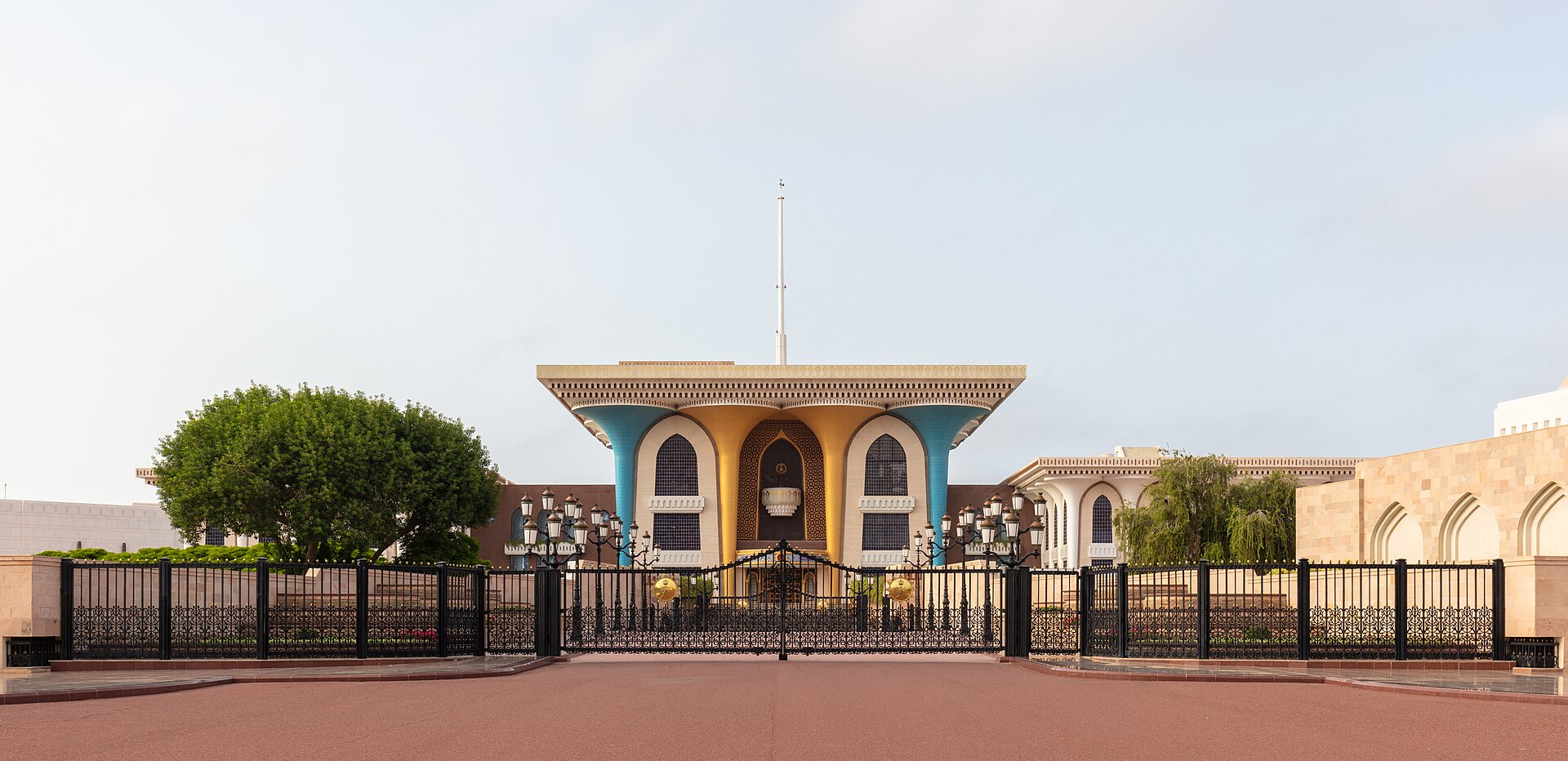
Al Alam Palace, locally known as Qaṣr al-ʿAlam, is the ceremonial palace of the Sultan of Oman. Completed in 1972, it stands as a landmark of contemporary Omani architecture in Old Muscat's government quarter. The palace is not a royal residence but serves official state functions. Its distinctive blue-and-gold facade, featuring columns and a flat roof, has become an iconic visual symbol of Muscat. The building represents one of the few modern palaces in the region designed with such striking aesthetic boldness, making it a focal point for visitors exploring the historic core of Oman's capital city.
Checked 2026-08-26
The interior of Al Alam Palace is not open to the public, as it remains an active ceremonial venue for state occasions. Visitors can only view the palace from the exterior, appreciating its architectural details from the surrounding plaza and roadways. The building contains formal reception halls and state rooms used for official ceremonies, though specific interior descriptions are not publicly documented. Adjacent to the palace, visitors may observe other government buildings and the historic fortifications of Old Muscat. The palace grounds themselves are restricted, with security presence maintaining appropriate boundaries around this functioning seat of state protocol.
Checked 2026-08-26

A visit to Al Alam Palace requires minimal time, typically fifteen to thirty minutes for exterior viewing and photography. Most travellers combine this stop with exploration of surrounding Old Muscat attractions, including the twin forts of Al Jalali and Al Mirani, the National Museum, and the waterfront corniche. A comprehensive circuit of the government quarter might extend to two or three hours. The palace itself does not offer tours, exhibitions, or interior access that would prolong a stay. Visitors should plan this as a brief photographic and observational stop within a broader itinerary of Old Muscat's compact historic district.
Checked 2026-08-26

Operator-confirmed hours are Not recorded pending review. The palace exterior is visible at all times from public thoroughfares, though optimal lighting for photography occurs during morning and late afternoon hours. The climate of Muscat features extremely hot summers, making the cooler months from October to April generally more comfortable for outdoor exploration. Visitors should note that state functions may occasionally restrict access to immediate surroundings without advance public notification. No seasonal closure patterns are documented. Travellers are advised to consult official Omani tourism channels or local authorities for any current access advisories before planning a specific visit to the government quarter.
Checked 2026-08-26

Operator-confirmed prices are Not recorded pending review. No admission fee is charged for viewing Al Alam Palace from public areas, as it remains an exterior-only attraction. The palace does not function as a ticketed tourist facility. Visitors should be cautious of any unofficial sources claiming to sell access or tours of the interior. Nearby attractions such as the National Museum may have separate admission policies. Travellers are advised to carry minimal valuables and be prepared for security screening in the government quarter. No guided tour services specifically for the palace are documented as officially sanctioned or commercially available.
Checked 2026-08-26

Al Alam Palace is situated in Old Muscat, at the end of a ceremonial boulevard flanked by government buildings. The site is accessible by road, with parking available in designated areas near the waterfront. Public bus services operate in Muscat, though specific route details to Old Muscat require verification with local transport authorities. Taxis and ride-hailing services serve the area, though drivers may be restricted from stopping directly adjacent to the palace for security reasons. Walking from nearby attractions in the compact Old Muscat district is feasible. The location is approximately eight kilometres from the modern commercial centre of Ruwi and the main Sultan Qaboos Highway.
Checked 2026-08-26

Security measures are prominent throughout the government quarter, and visitors should comply with all official instructions and barrier placements. Photography of adjacent ministry buildings or security installations may be restricted. The palace facade is set back from the main road, limiting close-up access. Summer temperatures frequently exceed forty degrees Celsius, necessitating sun protection and hydration. Appropriate dress is expected in this official district, with shoulders and knees covered. No facilities such as restrooms, cafes, or shade structures are documented at the immediate palace viewpoint. Visitors should remain on designated pedestrian areas and avoid approaching vehicle gates or guard posts. Political demonstrations or unauthorised gatherings are strictly prohibited.
Checked 2026-08-26
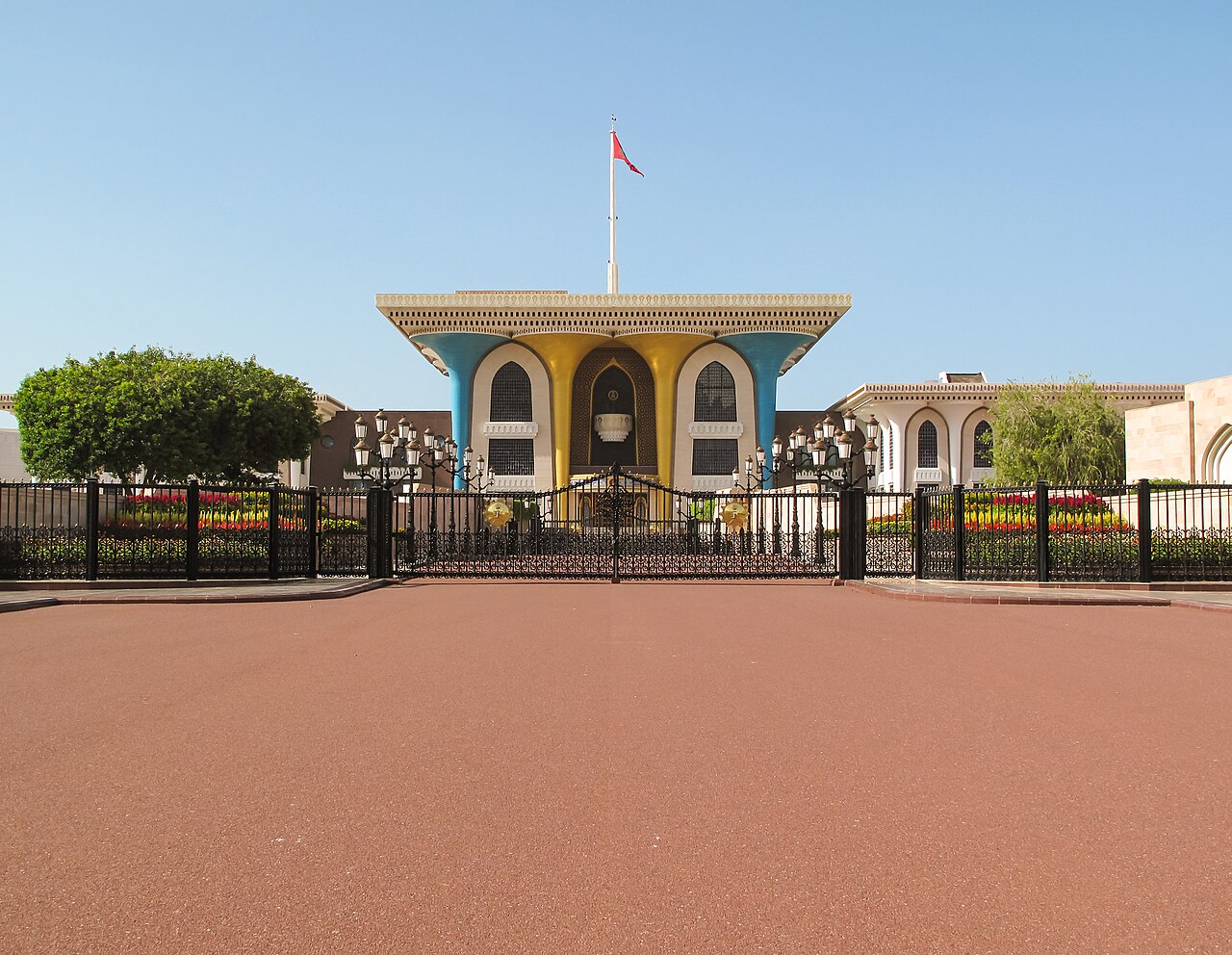
The blue-and-gold facade of Al Alam Palace is among the most photographed subjects in Oman. The optimal vantage point is from the ceremonial plaza directly before the palace, where the full width of the building is visible. Morning light illuminates the gold columns directly, while late afternoon creates dramatic shadows across the facade. Wide-angle lenses accommodate the palace breadth from the limited public viewing area. Tripods may attract security attention and should be used discreetly if at all. Drone operation is prohibited in this government zone. The surrounding mountain backdrop and adjacent forts offer compositional variety. Night illumination of the palace is not documented as a regular feature.
Checked 2026-08-26
No. The palace is a functioning ceremonial venue and its interior is not open to the public. Visitors may only view the exterior from surrounding public areas.
No admission fee is charged for exterior viewing from public spaces. The palace does not operate as a ticketed attraction.
Morning and late afternoon offer optimal natural lighting on the blue-and-gold facade. Midday sun creates harsh shadows and extreme heat during warmer months.
No officially sanctioned guided tours of the palace are documented. The site is an exterior viewing point only, without interpretive services or visitor facilities.
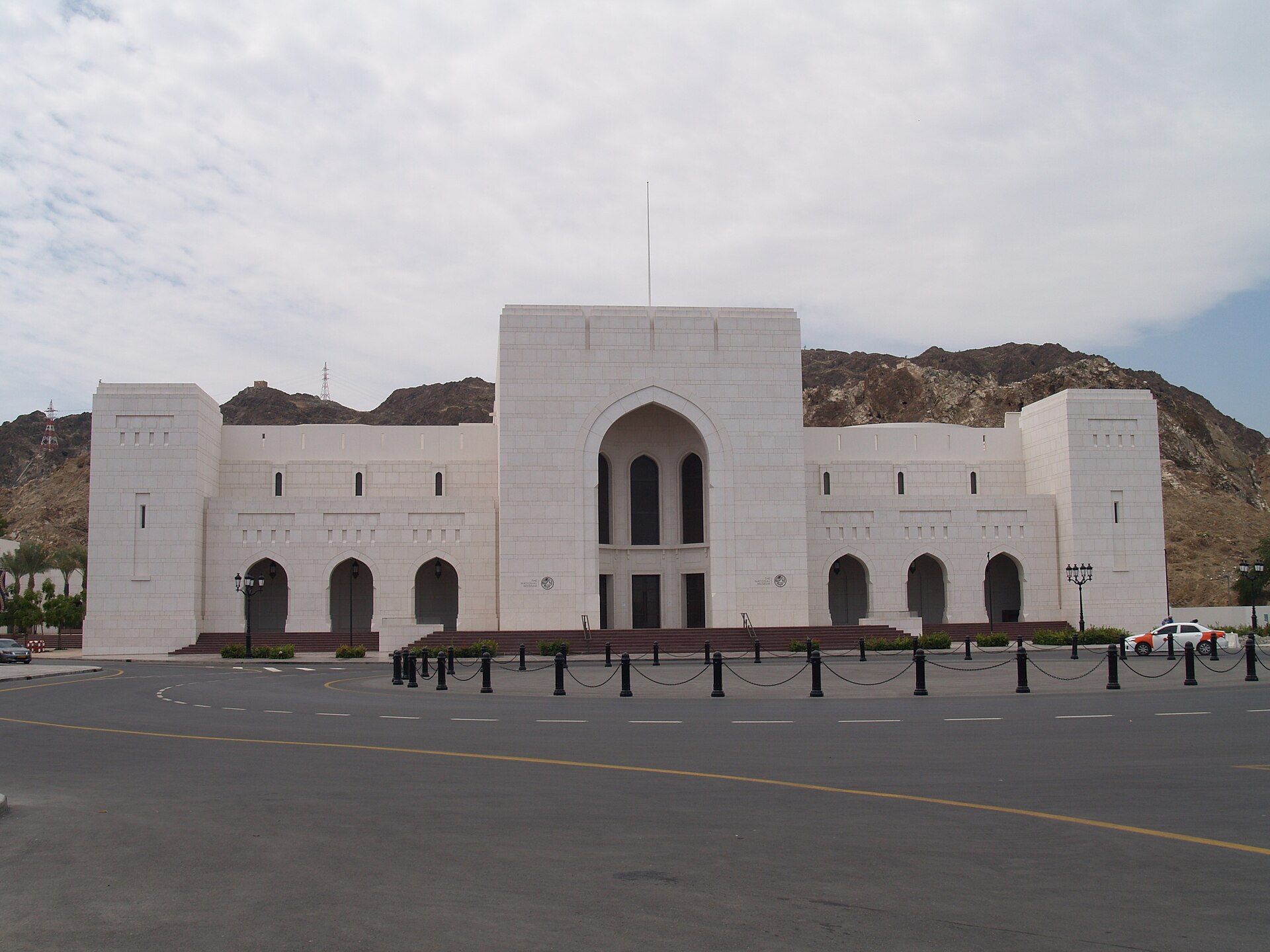
The palace forms the visual centre of Old Muscat's government quarter, near Al Jalali and Al Mirani forts and the National Museum. These sites are typically visited together in a walking circuit.
Yes. The government quarter has active security measures. Visitors must remain in designated areas, comply with official instructions, and avoid photographing adjacent ministry buildings or installations.
Loading the interactive map…
The interactive map could not be loaded.

Last updated:
Source: OpenStreetMap contributors, Wikidata ·