.jpg)
54 min walk
Piha Beach
- Must see
- Nature site
Language · 11 published
Nature site · Auckland
Reviewed by Elena Voss · SSMTour Travel Editor

| Monday | 00:00 – 23:59 |
|---|---|
| Tuesday | 00:00 – 23:59 |
| Wednesday | 00:00 – 23:59 |
| Thursday | 00:00 – 23:59 |
| Friday | 00:00 – 23:59 |
| Saturday | 00:00 – 23:59 |
| Sunday | 00:00 – 23:59 |
Checked 2026-08-31 · Source
Read from the OpenStreetMap access tags; anything not listed has no tag recorded.
Set the group type to family in the planner and the day window contracts to about three quarters of a solo day.
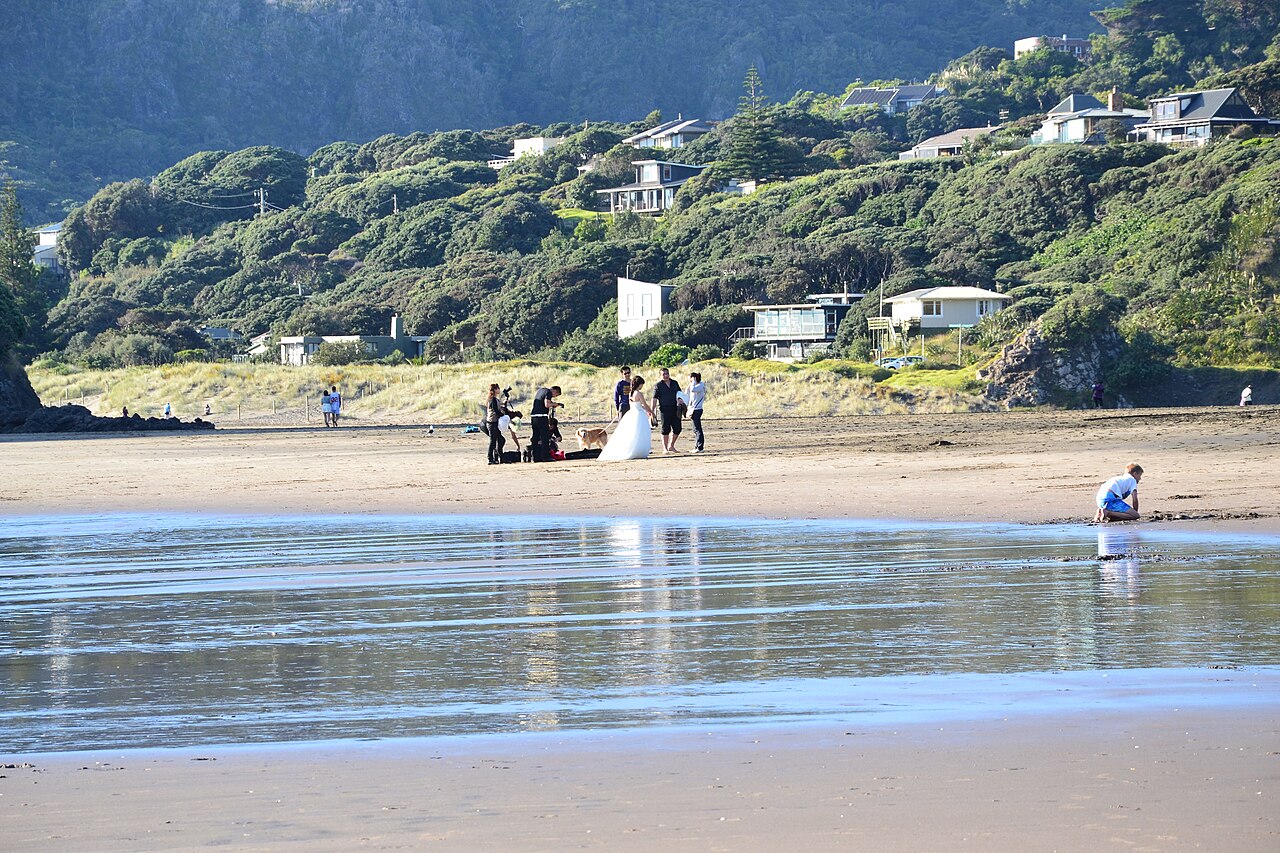
Karekare Beach is a wild black-sand beach on Auckland's west coast, located approximately 35 kilometres from the city centre. It sits within the Waitākere Ranges and forms part of the broader Te Henga coastal area. The beach gained international recognition through its appearance in the 1993 film The Piano. Karekare represents one of the more dramatic and less developed surf beaches accessible from Auckland, offering visitors a raw coastal experience distinct from the city's eastern harbour beaches. Pedestrian access: 24 hours daily. Pedestrian access: 24 hours daily. Vehicle gate: 08:00–19:00 during non-daylight-saving time; 08:00–21:00 during daylight-saving time.
Checked 2026-08-31 · Source
The beach itself features expansive black volcanic sand backed by steep bush-clad hills and the Karekare Stream, which flows across the northern end of the beach to the Tasman Sea. A small settlement of permanent and holiday homes sits behind the dunes. The surrounding Waitākere Ranges Regional Park contains native forest with walking tracks. Visitors will find basic facilities including a surf lifesaving club. No regular closure days are listed for pedestrian access. The vehicle gate closes nightly outside its seasonal hours. No regular closure days are listed for pedestrian access. The vehicle gate closes nightly outside its seasonal hours.
Checked 2026-08-31 · Source
Most visitors allocate between two hours and half a day for Karekare Beach, depending on their intentions. A brief visit allows for walking the beach, observing the surf, and experiencing the atmosphere. Those wishing to swim during patrolled periods, explore the stream area, or combine the visit with nearby attractions such as neighbouring Piha Beach or Waitākere Ranges walks may extend their stay. The approach road is narrow and winding, which naturally discourages very short stops. Free general access; Auckland Council guarantees free access to regional parks. Charges may apply only to separately bookable facilities or activities.
Checked 2026-08-31 · Source
The beach is an outdoor natural environment accessible at all times, though practical visiting depends on daylight, weather, and surf conditions. The west coast experiences prevailing south-westerly winds and receives higher rainfall than Auckland's eastern suburbs. Summer months generally offer more settled conditions for beach activities. Pedestrian access: 24 hours daily. Pedestrian access: 24 hours daily. Vehicle gate: 08:00–19:00 during non-daylight-saving time; 08:00–21:00 during daylight-saving time. Auckland Transport identifies Karekare as an area with no public-transport service. Road access is via sealed Karekare Road. Auckland Council provides 54 parking spaces, with overflow parking in Pōhutukawa Clearing.
Checked 2026-08-31 · Source
Karekare Beach is a public natural area with no entrance fee. The surf lifesaving club may operate donation-based or seasonal services. Visitors should carry sufficient supplies, as commercial facilities at Karekare itself are minimal. Nearby Piha offers additional services. Any organised tours or transport arrangements would involve separate commercial pricing not covered by this source. Free general access; Auckland Council guarantees free access to regional parks. Charges may apply only to separately bookable facilities or activities. Wheelchair-accessible toilets are available in the park's single toilet block.
Checked 2026-08-31 · Source
Karekare Beach is reached via Piha Road from the Arataki Visitor Centre area, turning onto Karekare Road for the final approach. The route is narrow, winding, and unsealed in sections, requiring careful driving and unsuitable for large vehicles or those unaccustomed to rural roads. Auckland Transport identifies Karekare as an area with no public-transport service. Road access is via sealed Karekare Road. Auckland Council provides 54 parking spaces, with overflow parking in Pōhutukawa Clearing. Pōhutukawa Glade Walk is a 500-metre, 15-minute easy-access route suitable for mountain buggies, but Auckland Council explicitly states that it has no wheelchair or pram access.
Checked 2026-08-31 · Source
The surf at Karekare is powerful and unpredictable, with rips and dumping waves presenting significant drowning risk. Swimming is safest only between flags during active lifesaving patrols. The black sand becomes extremely hot in direct sunlight. Stream crossings can be hazardous after rainfall. The isolated location means mobile phone coverage may be unreliable and emergency services response times extended. Wheelchair-accessible toilets are available in the park's single toilet block. It is a wild surf beach with large waves and strong rip currents. Swim only between the patrol flags; lifeguard patrols operate only at certain times of year.
Checked 2026-08-31 · Source
Karekare offers dramatic photographic subjects including the black sand against white surf, the stream meeting the sea, and the bush-backed coastline. Early morning and late afternoon provide optimal light and fewer visitors. The Piano film location recognition adds cultural interest for some photographers. The exposed western aspect delivers sunsets over the Tasman Sea. Equipment protection from sand and salt spray is advisable. Drone operation should follow Civil Aviation Authority regulations and respect privacy of nearby residences. Dogs must remain on-leash at all times on the main beach north of Karekare island headland. They are prohibited at all times south of the headland into Whatipū Scientific Reserve.
Checked 2026-08-31 · Source
It is a wild surf beach with large waves and strong rip currents. Swim only between the patrol flags; lifeguard patrols operate only at certain times of year.
Dogs must remain on-leash at all times on the main beach north of Karekare island headland. They are prohibited at all times south of the headland into Whatipū Scientific Reserve.
The council lists 54 parking spaces, plus overflow parking in Pōhutukawa Clearing.
There is one toilet block, including wheelchair-accessible toilets.
Outdoor fires are illegal in Auckland public areas, and Auckland Council regional parks are smoke-free.
A Waitākere Ranges horse-riding permit is required, and riding at Karekare is permitted only before 10:00 and after 16:00.
Loading the interactive map…
The interactive map could not be loaded.

Last updated:
Source: OpenStreetMap contributors ·