.jpg)


3 min walk
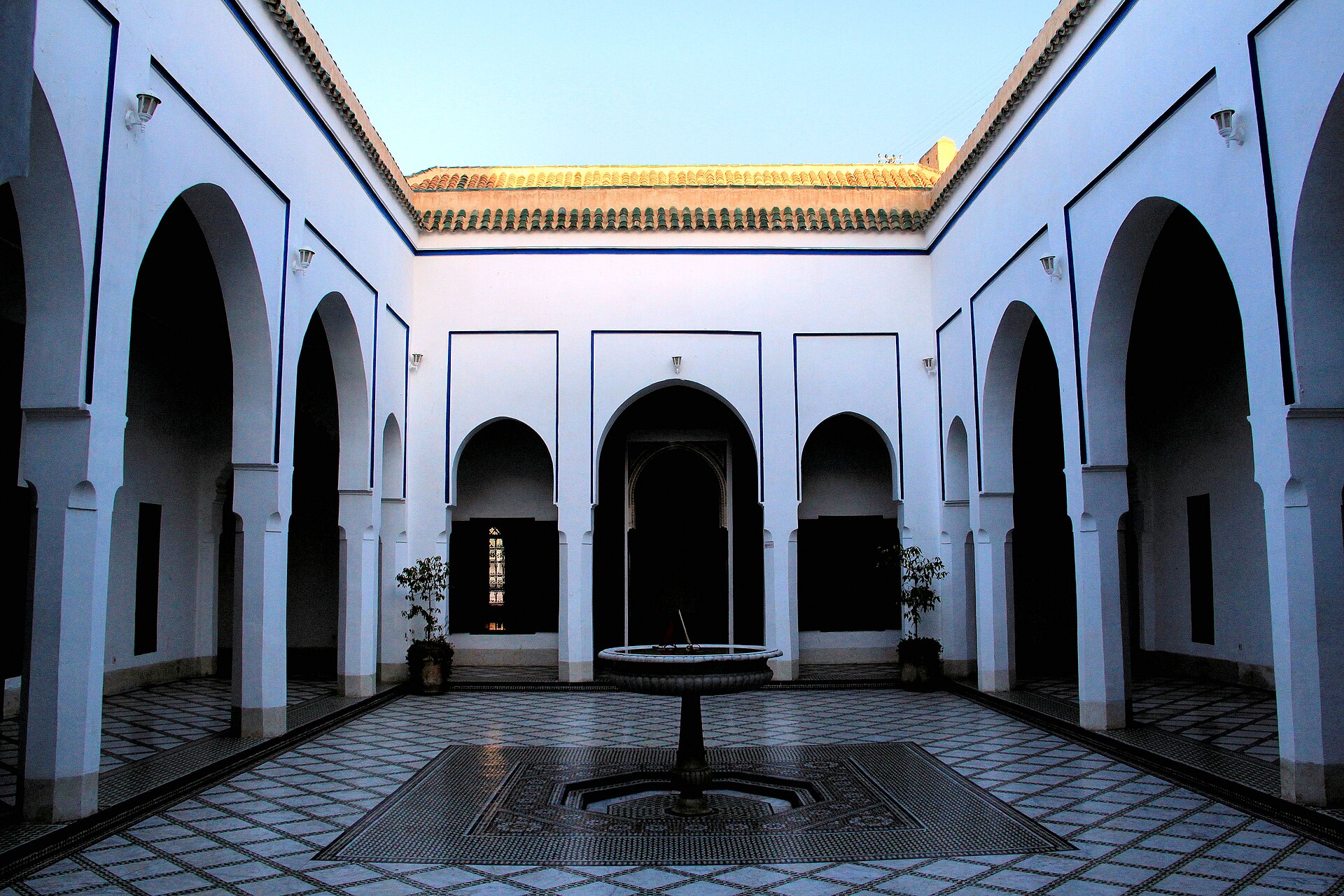
Bahia Palace
- Must see
- Historic monument
Language · 11 published
Museum · Marrakesh
Synagogue Laazama

Read from the OpenStreetMap access tags; anything not listed has no tag recorded.
Set the group type to family in the planner and the day window contracts to about three quarters of a solo day.
Lazama Synagogue, known locally as Synagogue Laazama, stands as a historic place of worship within the Mellah, the traditional Jewish quarter of Marrakesh. The Mellah itself forms part of the city's broader visitor core, situated near the medina's central districts. This synagogue represents one of the enduring landmarks of Morocco's Jewish heritage, reflecting centuries of coexistence and cultural exchange. The building serves as both a religious site and a point of historical interest for those exploring the layered identities of Marrakesh.
Checked 2026-08-31 · Source
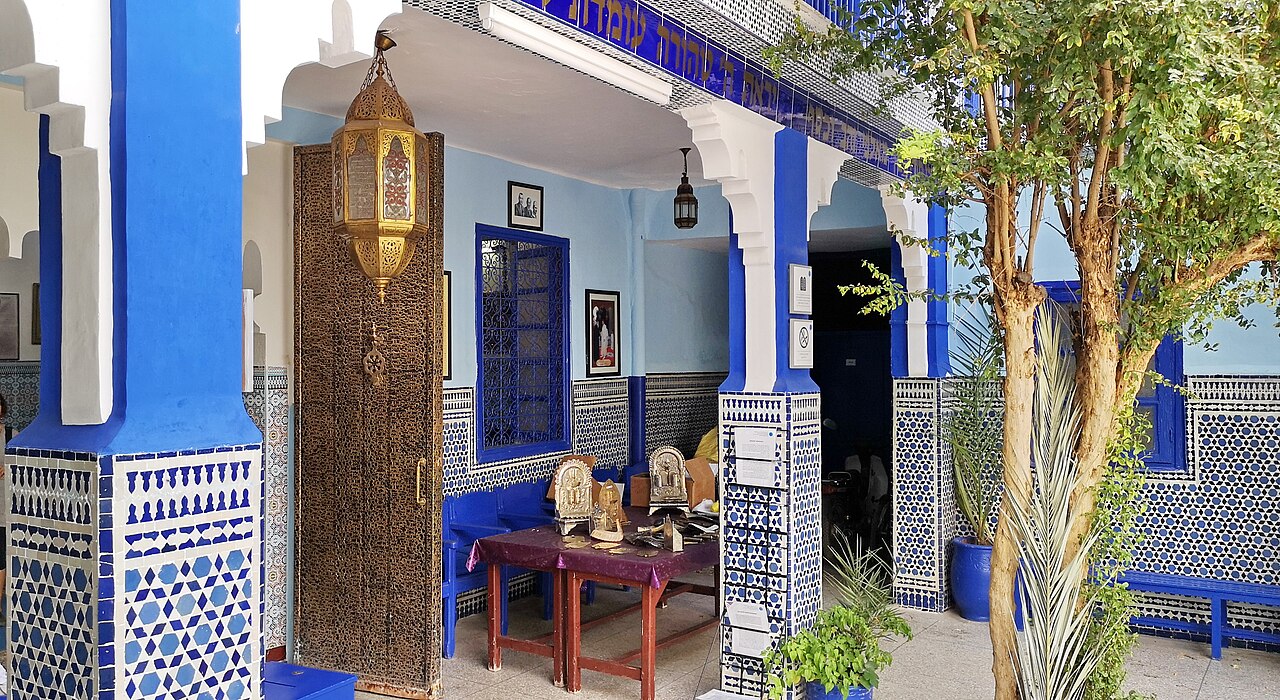
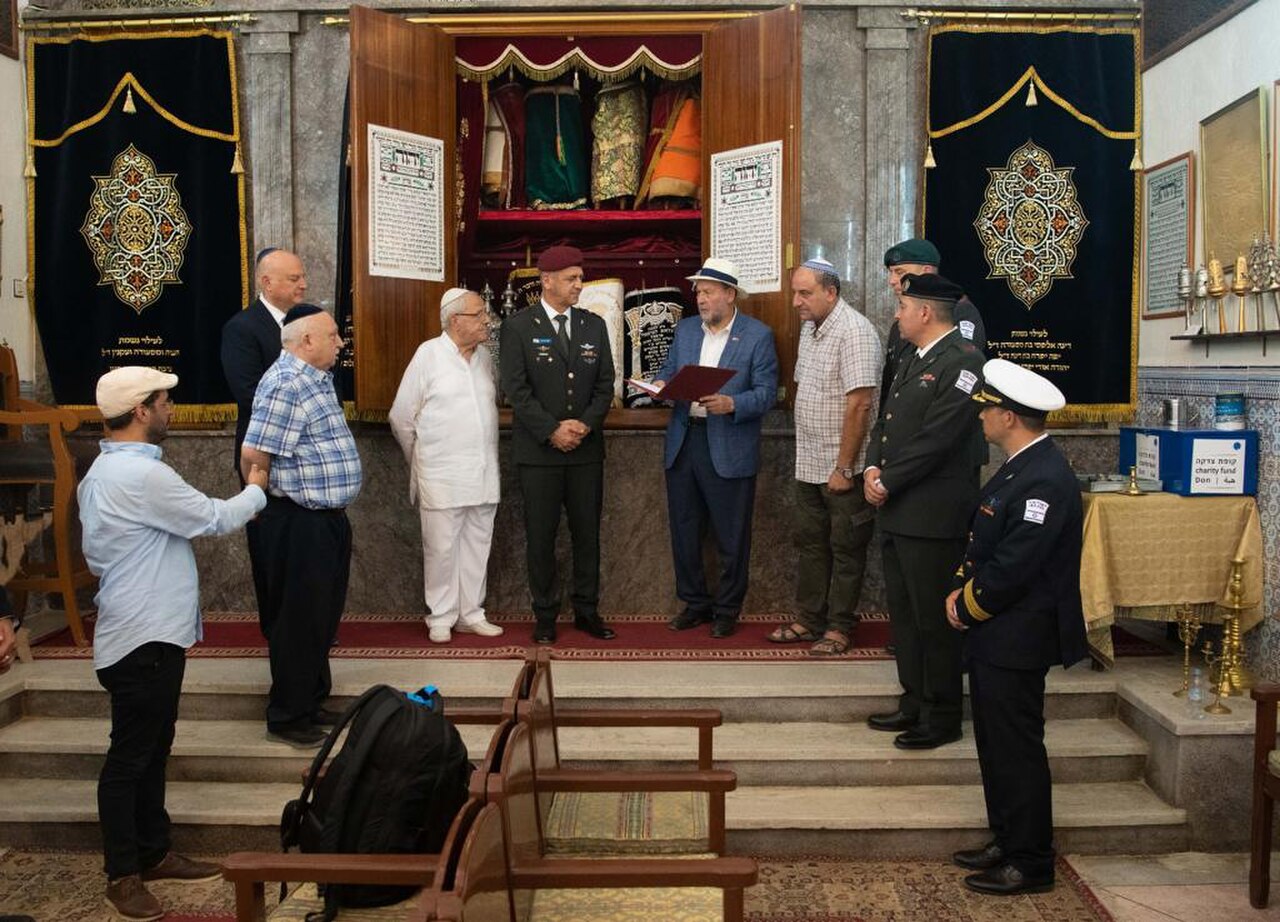
The interior of Lazama Synagogue follows the traditional layout of Moroccan Jewish places of worship, with an elevated tebah, or reading platform, typically positioned centrally rather than at the front. Decorative elements commonly found in such synagogues include carved wooden screens, wrought-iron grilles, and tiled surfaces. The walls may bear inscriptions and ornamental plasterwork characteristic of Moroccan craftsmanship. Visitors should anticipate a modest scale consistent with neighbourhood synagogues rather than grand monumental architecture. The synagogue remains active and also houses the Marrakech Jewish Community Museum. 10 MAD per person, collected as a maintenance donation. Entry during Saturday prayer hours is free.
Checked 2026-08-31 · Source
A visit to Lazama Synagogue typically requires a relatively brief stop, perhaps thirty minutes to one hour, depending on individual interest in architectural detail and historical context. The compact nature of neighbourhood synagogues suggests limited ground to cover. Visitors often combine this site with exploration of the surrounding Mellah quarter, including its narrow streets, historic dwellings, and adjacent cemetery. Those with specialised interest in Jewish Moroccan heritage or synagogue architecture may wish to allocate additional time for careful observation. 10 MAD per person, collected as a maintenance donation. Entry during Saturday prayer hours is free.
Checked 2026-08-31 · Source
Visitors should not rely on assumed schedules. The synagogue functions as an active religious site, which may affect accessibility during prayer times, Sabbath observance from Friday evening through Saturday, and Jewish holidays. The Marrakesh visitor core experiences peak tourism during spring and autumn months when temperatures prove most moderate. Sunday–Thursday 09:00–18:00; Friday 09:00–16:00; Saturday open only for the 09:00 prayer service. On Jewish holidays and festivals, closed to ordinary visits and open only during prayer services. The principal visitor spaces are arranged around a central courtyard. The separate women’s gallery is on an upper level, so the complete visitor route is not step-free.
Checked 2026-08-31 · Source
Many historic religious sites in Morocco operate with informal contribution systems or may request modest donations for maintenance rather than fixed ticketing. Some synagogues in the Mellah area have historically welcomed visitors without charge, though circumstances vary. Visitors should carry small denomination currency in case of requested contributions. 10 MAD per person, collected as a maintenance donation. Entry during Saturday prayer hours is free. The principal visitor spaces are arranged around a central courtyard. The separate women’s gallery is on an upper level, so the complete visitor route is not step-free.
Checked 2026-08-31 · Source

Lazama Synagogue occupies a position within the Mellah, accessible from the broader Marrakesh medina visitor core. The Mellah lies south of the Jemaa el-Fnaa square area, historically distinguished by its own street patterns and architectural character. The dense urban fabric limits vehicle access to peripheral points. The synagogue is in the Mellah, south of the Medina near Bahia Palace and El Badi Palace. Enter the Mellah through Place des Ferblantiers; from Jemaa el-Fna, follow Riad ez Zitoun Street, a route the Marrakech-Safi Regional Tourism Council describes as taking under ten minutes.
Checked 2026-08-31 · Source
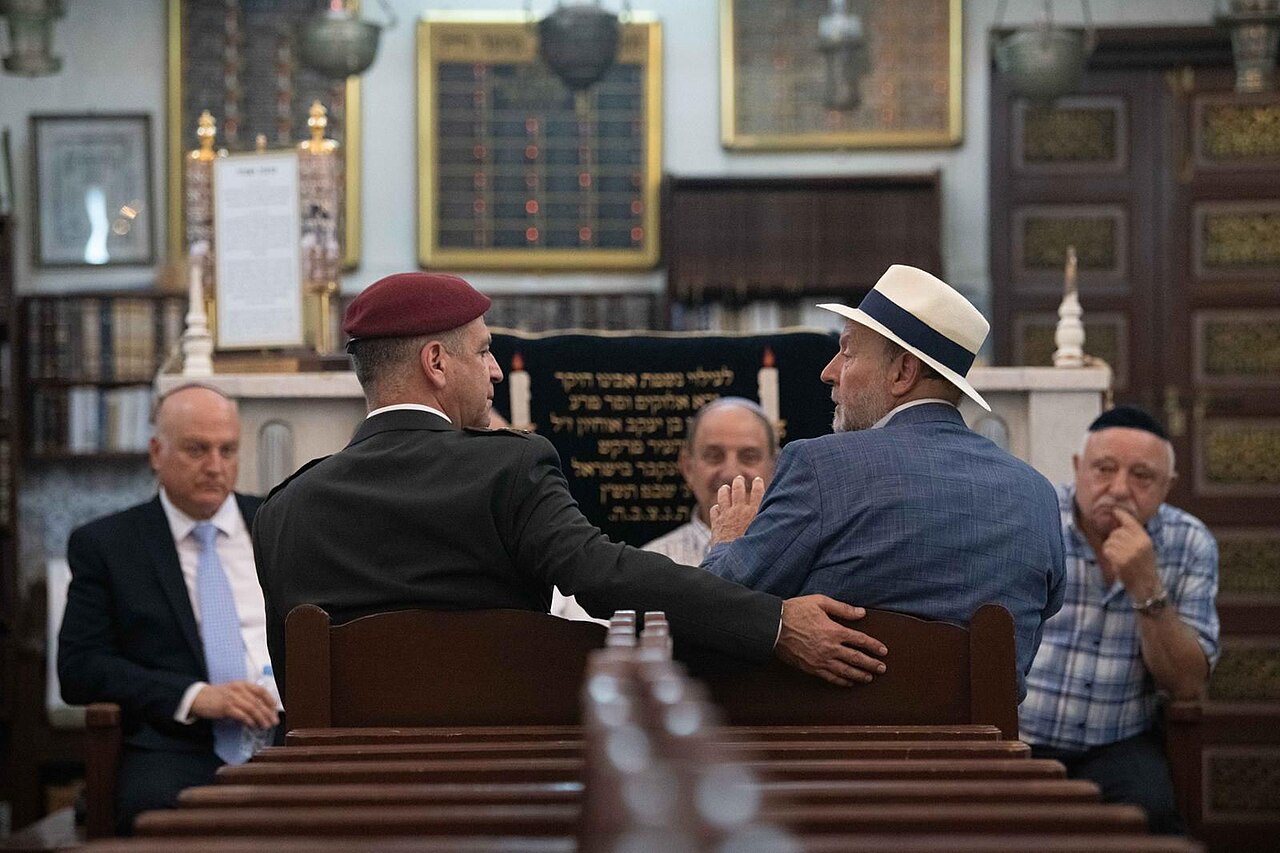
Visitors to Lazama Synagogue should observe protocols appropriate to active religious sites, including modest dress and respectful demeanour. Photography restrictions may apply, particularly during services or in presence of worshippers. The Mellah's narrow lanes can become crowded and disorienting; awareness of personal belongings is essential against opportunistic attention common in dense tourist zones. The synagogue's operational status may change without broad notification. The principal visitor spaces are arranged around a central courtyard. Yes. The Marrakech Jewish community describes it as an active synagogue with morning prayer every day.
Checked 2026-08-31 · Source

Flash photography is generally inappropriate in historic interiors and potentially damaging to sensitive materials. Religious sites worldwide commonly prohibit photography during prayer activities or when individuals are present in devotional contexts. The Mellah's narrow streets present their own photographic considerations, including requests for payment from individuals who may position themselves for tourist images. Respectful practice involves asking consent before photographing residents or worshippers. Equipment security remains pertinent in crowded medina environments where distraction creates vulnerability. Shacharit is at 07:30 from Sunday through Friday and at 09:00 on Saturday. The synagogue does not hold Mincha, Maariv or Friday-evening services.
Checked 2026-08-31 · Source
Yes. The Marrakech Jewish community describes it as an active synagogue with morning prayer every day.
Shacharit is at 07:30 from Sunday through Friday and at 09:00 on Saturday. The synagogue does not hold Mincha, Maariv or Friday-evening services.
Photography is allowed from Sunday through Friday. It is prohibited on Saturdays and Jewish holidays.
No. Smoking is prohibited throughout the synagogue premises every day.
The complex contains the Marrakech Jewish Community Museum. Its courtyard formerly served as a yeshiva, and the surrounding rooms accommodated more than 400 students each year.
Additional contributions for maintaining the building and preserving the history of Marrakech’s Jewish community must be placed only in the synagogue’s donation boxes.
Loading the interactive map…
The interactive map could not be loaded.

Last updated:
Source: OpenStreetMap contributors, Wikidata ·