


1 min walk
Marrakesh Medina
- Must see
- Historic monument
Language · 11 published
Historic monument · Marrakesh
ⵊⴰⵎⵄ ⵍⴼⵏⴰ جامع الفناء
Read from the OpenStreetMap access tags; anything not listed has no tag recorded.
Set the group type to family in the planner and the day window contracts to about three quarters of a solo day.
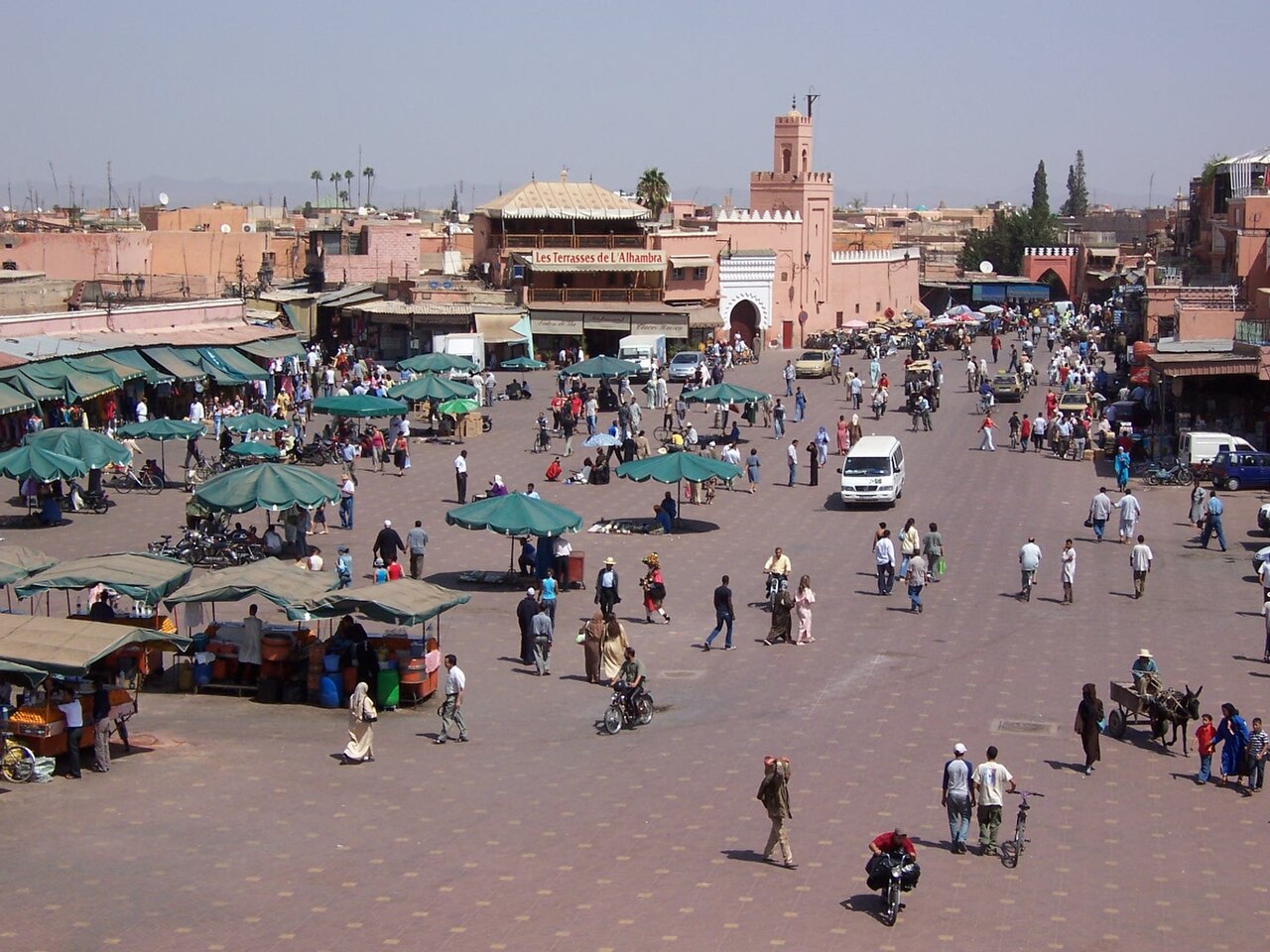
Jemaa el-Fnaa is Marrakesh's principal public square and the symbolic heart of the medina. A UNESCO-recognised cultural space, it functions as an open-air gathering place where market commerce, oral storytelling, musical performance, and food vending converge. The square transforms dramatically across the day: relatively quiet in morning hours, building activity through afternoon, and becoming densely populated with illuminated food stalls and performers after dark. Its intangible cultural heritage status acknowledges sustained traditional practices. Daily, from morning until late at night.
Checked 2026-08-31 · Source
The square contains no permanent built attractions in the conventional sense. Daytime brings orange juice stalls, water sellers in traditional dress, snake charmers, and henna artists. Evening sees the assembly of numerous temporary food stalls serving grilled meats, soups, and other Moroccan preparations. Storytellers and musicians occupy portions of the space. Surrounding the square are cafés with elevated terraces, the entrance to the souk network, and the minaret of the Koutoubia Mosque visible nearby. Specific vendors and performers vary daily.
Checked 2026-08-31 · Source

Duration depends entirely on visitor intent. A brief crossing requires mere minutes. Observing daytime activity or accessing surrounding souks extends to one or two hours. The evening atmosphere, when food stalls illuminate and crowds gather, rewards longer engagement. Many visitors return multiple times during a Marrakesh stay to experience different phases. No structured itinerary or guided route exists within the square itself. The surrounding medina warrants substantial additional time for those exploring beyond the immediate plaza boundaries. Free general access to the public square; food, goods, performances and other services are paid separately.
Checked 2026-08-31 · Source

The square operates continuously as public space, though its character shifts markedly by hour and season. Morning offers calmer conditions with fewer visitors. Midday brings intensifying heat and activity. Evening, particularly after sunset, presents the most concentrated atmosphere with full food stall operation. Seasonal variations in temperature and daylight hours affect comfort. Daily, from morning until late at night. The square is an open, pedestrian-only esplanade without a ticket gate or internal stairs. ALSA’s official Marrakech City Tour buses provide wheelchair spaces, low-floor rear boarding and boarding ramps, and include Jemaa el-Fnaa on their route.
Checked 2026-08-31 · Source
Jemaa el-Fnaa requires no admission fee as a public square. Individual transactions occur with vendors, performers, and food sellers directly. Prices for goods, services, and meals are negotiated or displayed at point of sale. Photography of performers or participating in activities typically involves payment. No unified ticketing system exists. Carry small denomination currency. Free general access to the public square; food, goods, performances and other services are paid separately. The square is an open, pedestrian-only esplanade without a ticket gate or internal stairs. ALSA’s official Marrakech City Tour buses provide wheelchair spaces, low-floor rear boarding and boarding ramps, and include Jemaa el-Fnaa on their route.
Checked 2026-08-31 · Source

The square sits at the medina's core, accessible on foot from most riads and hotels within the old city walls. From outside the medina, taxis discharge passengers at accessible perimeter points, as vehicle penetration into the immediate square area is restricted. Use the wheelchair-accessible Marrakech City Tour Historical Tour, which serves Jemaa el-Fnaa, or approach on foot through the pedestrian Medina. The official tourism walking route starts directly at the square and continues via Rue des Banques. The Tourist Brigade is on Place Jemaa el-Fnaa beside the post office.
Checked 2026-08-31 · Source

Crowd density increases pickpocketing risk; secure valuables and maintain awareness of surroundings. Aggressive solicitation from some vendors and performers occurs; polite but firm refusal generally suffices. Photography of individuals without explicit prior agreement can provoke demands for payment. Food hygiene standards at temporary stalls vary; visitor discretion advised. Scams involving directions, unsolicited guiding, or false claims of closed destinations target disoriented visitors. The square is an open, pedestrian-only esplanade without a ticket gate or internal stairs. The municipality’s 2025 requalification project treats circulation and accessibility around Jemaa el-Fnaa as an active improvement area.
Checked 2026-08-31 · Source

The square presents compelling subjects: food stall arrays after dark, performer tableaux, architectural context with Koutoubia minaret, and dense human activity. Elevated café terraces offer overview perspectives. Critical restraint applies: never photograph individuals without negotiated permission, particularly snake charmers, monkey handlers, and costumed water sellers who depend on image-capture income. Expect immediate payment demands if caught. Tripods attract attention and obstruction in crowds. Early morning yields sparser, more manageable conditions. Night photography challenges include mixed light sources and high contrast. The square becomes busiest from late afternoon into the evening, when performers gather and food stalls operate.
Checked 2026-08-31 · Source
The square becomes busiest from late afternoon into the evening, when performers gather and food stalls operate.
Yes. Its cultural space was inscribed on UNESCO’s Representative List of the Intangible Cultural Heritage of Humanity in 2008, following its original proclamation in 2001.
It stands at the entrance to the Medina and forms a central meeting point between the old city’s streets and souks.
Daily activity includes storytellers, poets, Amazigh musicians, Gnawa performers, food stalls, fruit sellers, water carriers and other traditional services.
The main square is pedestrian-only; motorized transport drops passengers around its approaches.
Yes. Marrakech’s official tourism authority lists the Tourist Brigade on Place Jemaa el-Fnaa near the post office, reachable at +212 5 24 38 46 01.
Loading the interactive map…
The interactive map could not be loaded.


Last updated:
Source: OpenStreetMap contributors, Wikidata ·