Angel of Independence
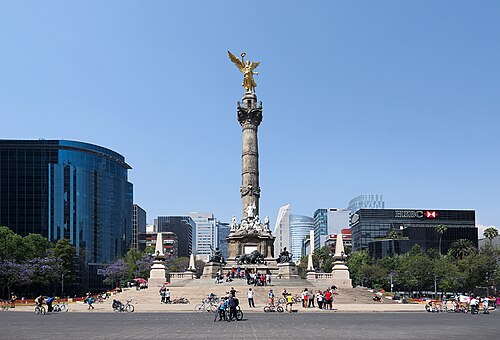
The Angel of Independence is a victory column monument on Paseo de la Reforma in Mexico City. It was built to commemorate Mexico's independence from Spain.
- Must see
- Historic monument
- Mexico City
Language · 11 published
Country guide
Mexico took 42.2 million international arrivals in 2022, sixth most of any country in the world, and a large share of them never left the Caribbean coast. That coast is a reasonable holiday and a very small fraction of 1,972,550 km2, thirteenth-largest on Earth, holding 32 states and more than 134 million people. Mexico City sits high in a valley in the middle of it, with colonial silver towns a few hours north and the Maya sites of the Yucatan two hours east by air. No country in the Americas has more World Heritage Sites.
Every city catalogued in this country so far, ranked by how much there is to see.
Photograph · Gobierno CDMX · CC0
Photograph · dronepicr · CC BY 2.0
Ranked by importance — sitelinks, pageviews and heritage status, not editor preference.
100 places match
Category
Typical visit duration
Interests
The Angel of Independence is a victory column monument on Paseo de la Reforma in Mexico City. It was built to commemorate Mexico's independence from Spain.
Estadio Azteca is a football stadium located in southern Mexico City. It is the home ground of Club América and the Mexico national football team.
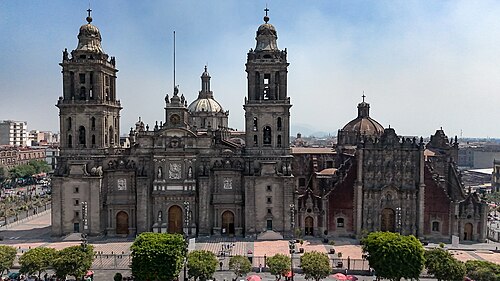
The Mexico City Metropolitan Cathedral, known locally as Catedral Metropolitana de la Ciudad de México, stands as the principal colonial religious monument in the historic centre of Mexico City.
The Monument to the Revolution stands in Mexico City as a landmark commemorating the Mexican Revolution. Its distinctive dome originated as the uncompleted Palacio Legislativo Federal, designed for the federal legislature during the Porfiriato.
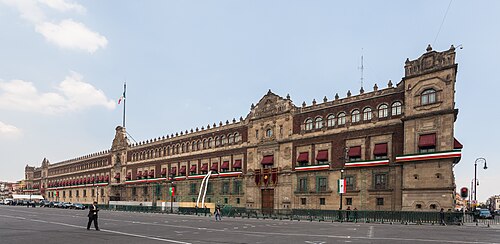
The National Palace stands on the eastern side of Mexico City's Zócalo, the capital's main public square. It serves as the federal seat of government and houses the offices of the President of Mexico.
Templo Mayor is the excavated sacred precinct of Tenochtitlan, the capital of the Aztec Empire. Located in the historic centre of Mexico City, it represents the essential Aztec archaeological site in the area.
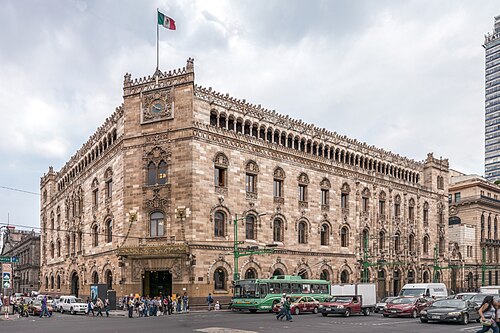
Palacio Postal, locally Palacio de Correos de México, is an ornate working central post office in Mexico City's historic centre. The building ranks among the most distinctive interiors in the area.
The Zócalo, officially Plaza de la Constitución, is the main public square in the historic centre of Mexico City. It ranks among the largest city squares in the world.
The Torre Latinoamericana is a historic skyscraper in the heart of Mexico City's Centro Histórico. Completed in 1956, it gained international recognition for its innovative seismic engineering, having withstood major earthquakes including the devastating 1985 tremor.
Polanco is an upscale residential and commercial district in Mexico City, located west of Chapultepec Park in the Miguel Hidalgo borough.
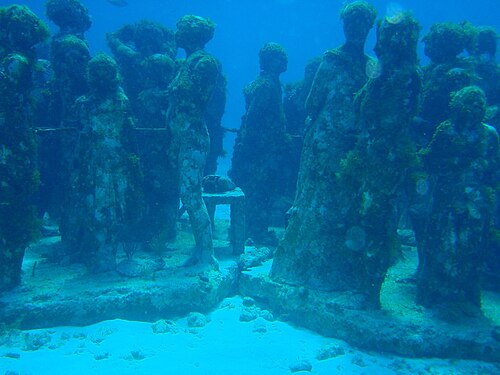
The Museo Subacuático de Arte is an underwater museum located in the waters near Cancún, Mexico. It features submerged sculptures designed to serve as artificial reef structures.
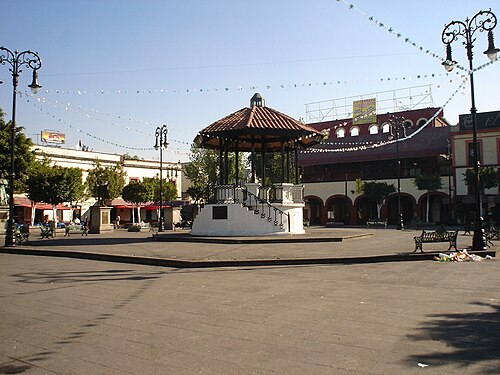
Plaza Garibaldi is a public square in the historic centre of Mexico City, internationally recognised as the capital of mariachi music. Since the 1920s, mariachi musicians have gathered here to perform, forming a distinctive cultural tradition.
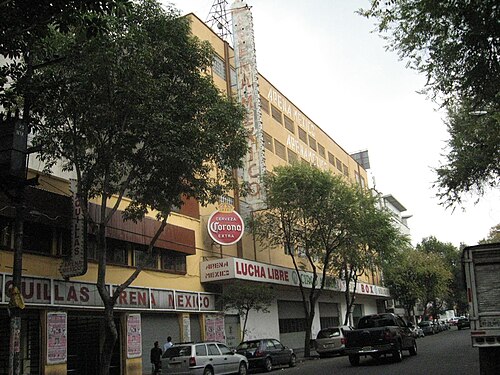
Arena México is the principal arena for lucha libre professional wrestling in Mexico City. Opened in the 1950s, it serves as the main venue for Consejo Mundial de Lucha Libre, the oldest professional wrestling promotion in the world.
The Monumento a la Raza is a prominent northern Mexico City landmark combining Art Deco architectural elements with indigenous-symbolic forms.
San Miguelito Archaeological Site is a Maya archaeological zone located in Cancun, Quintana Roo, Mexico. The site represents a pre-Hispanic settlement that existed in the region before modern tourism development transformed the area.
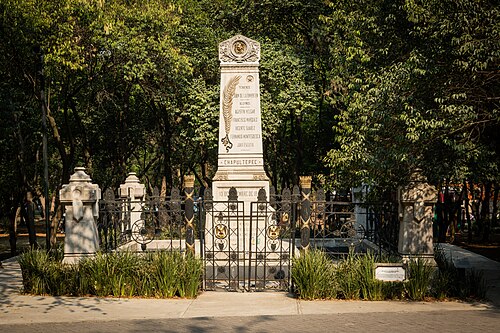
Cárcamo de Dolores is a hydraulic monument and art installation located in Chapultepec Park, Mexico City. The structure was designed by architect Ricardo Rivas as part of the city's water system infrastructure.
Source: OpenStreetMap contributors, Wikidata ·
Ten to fourteen days should focus on one Mexican region, such as the central highlands, Yucatán or a Pacific corridor. Domestic distances are too large for a first trip that treats Mexico City, Cancún and several coasts as nearby stops.
Mexico’s Instituto Nacional de Migración provides the official entry process and forms. Admission conditions depend on passport, purpose and route, so use its current service rather than an airline summary or an old exemption list.
Mexico City and Cancún are major international gateways, with domestic flights and intercity buses linking regional centres. Urban transport is city-specific, and road legs should be planned against current official route guidance.
November to April is a useful broad window for many central and coastal routes. Hurricane exposure, altitude and regional rainy seasons differ sharply, so the selected coast or highland region should control timing.
The Mexican peso (MXN) is the recorded currency. ATM fees, card acceptance and conversion terms are Not recorded in this guide; read the amount in pesos before approving a transaction.
Mexico uses 911 for emergencies and Type A or B plugs at 127 V. Tap-water guidance is Not recorded nationally in the cited source and should be checked at the destination.