
.jpg)
.jpg)
.jpg)
.jpg)
.jpg)

3 min walk
Kwai Chai Hong
- Must see
- Historic monument
Language · 11 published
Place of worship · Kuala Lumpur
Chan See Shu Yuen Temple

Chan She Shu Yuen Temple is a Chinese clan temple in Kuala Lumpur, associated with the Chan family and broader Chinese community heritage. The structure represents traditional southern Chinese architectural influence in Malaysia's capital. As a clan association building, it historically served social, welfare and ancestral functions for the Chan surname community. The temple stands among other heritage buildings in the old quarter of Kuala Lumpur, contributing to the city's multicultural architectural landscape. Its presence reflects patterns of Chinese migration and settlement during the colonial period.
Checked 2026-08-26
The temple interior contains ancestral halls, decorative timberwork and traditional Chinese architectural ornamentation typical of clan association buildings. Ancestral tablets and commemorative plaques occupy significant spaces within. Courtyard layouts follow conventional Chinese temple planning with open ventilation. Stone carvings, ceramic decorations and calligraphic inscriptions appear on structural elements. The main prayer halls accommodate ceremonial activities. Secondary rooms historically served administrative functions for the clan association. Decorative roof ridges with figurative sculptures crown the building. Interior furnishings reflect late nineteenth and early twentieth century Chinese craftsmanship traditions transplanted to Malaya.
Checked 2026-08-26
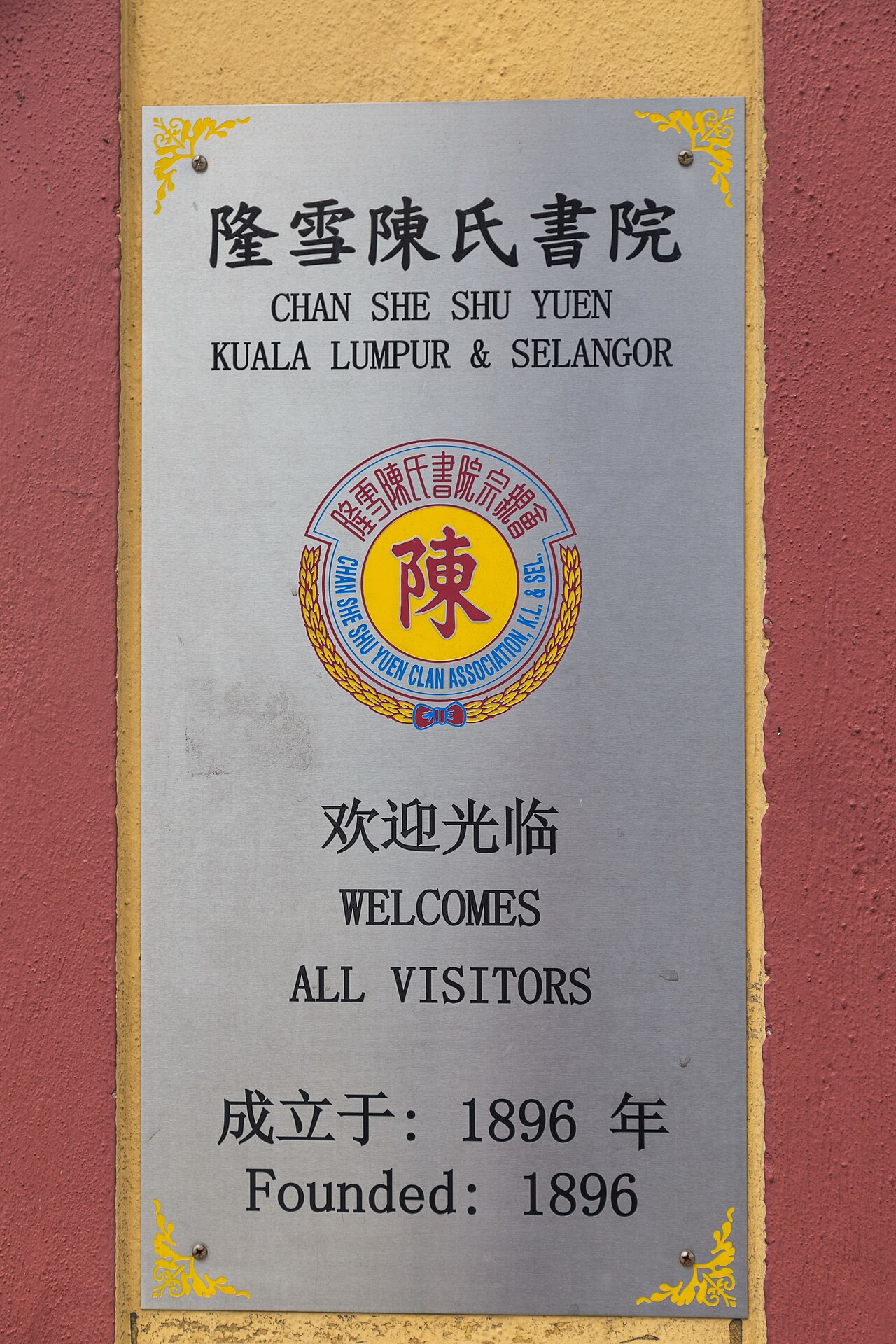
Visitors typically spend between thirty minutes and one hour at Chan She Shu Yuen Temple. Brief visits of fifteen minutes suffice for exterior photography and cursory interior observation. Those interested in architectural details, reading inscriptions or observing prayer activities may extend to ninety minutes. The compact site dimensions limit prolonged exploration. Combine with adjacent heritage attractions in Kuala Lumpur's old town for a half-day itinerary. No guided tour infrastructure is evident. Self-directed pacing allows adjustment according to personal interest in Chinese temple architecture and clan history. Photography enthusiasts require additional time for interior lighting conditions.
Checked 2026-08-26
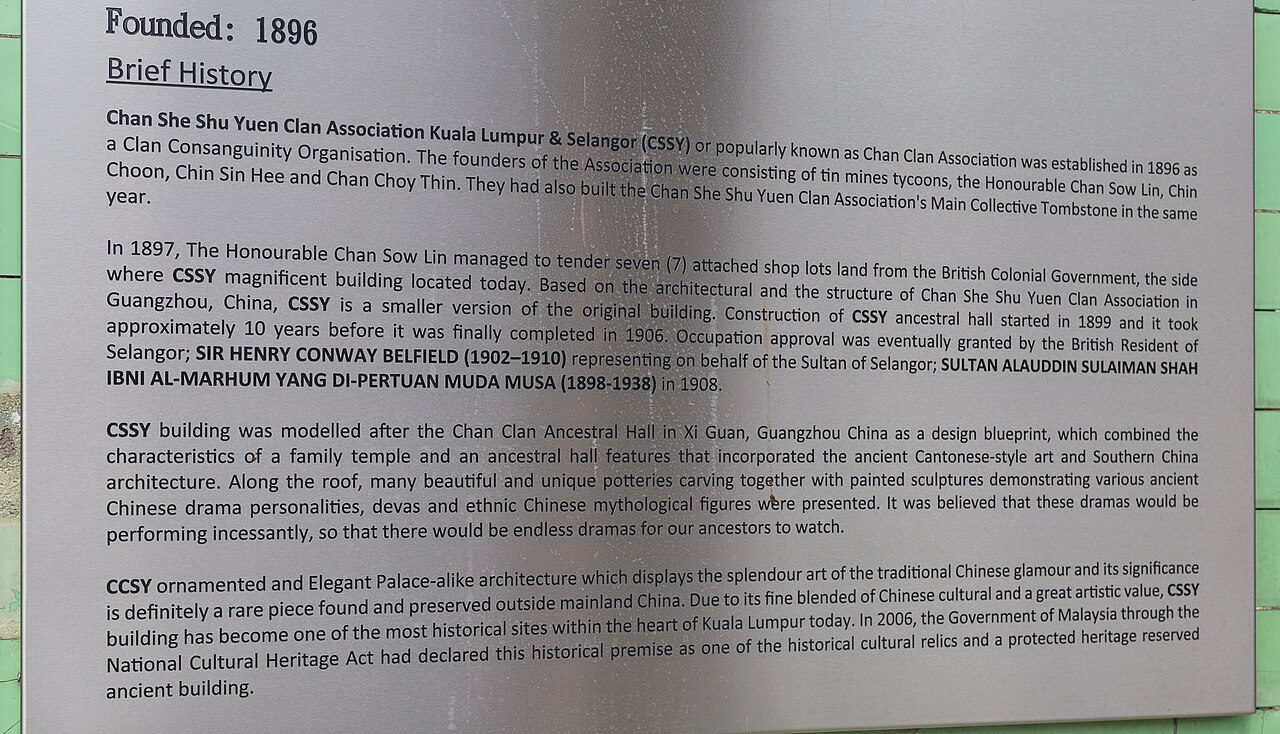
Visitors should verify current opening times before travel. Chinese temples typically open morning through afternoon with evening closures. Major Chinese festivals including Lunar New Year, Qingming and Mid-Autumn Festival may affect accessibility or create exceptional crowding. Festival periods offer vibrant ceremonial atmosphere but reduced visitor mobility. Regular weekdays provide quieter conditions for architectural observation. Rainy afternoon conditions common to Kuala Lumpur's tropical climate may affect comfort during open-courtyard exploration. Morning visits generally coincide with active prayer periods and better natural interior illumination. Check the operator's own site for the travel date before relying on a schedule or fare.
Checked 2026-08-26
Chinese clan temples in Malaysia typically operate without admission charges, relying instead on voluntary donations. Visitors may encounter donation boxes for temple maintenance. No advance booking mechanism is apparent for standard visits. Special ceremonies or events may involve separate arrangements not applicable to casual visitors. Budget-conscious travellers should carry small denomination cash for discretionary contributions. Commercial tour packages including this site may impose their own pricing structures unrelated to temple admission. Verify whether any recent changes to access policy have occurred before visiting. Check the operator's own site for the travel date before relying on a schedule or fare.
Checked 2026-08-26
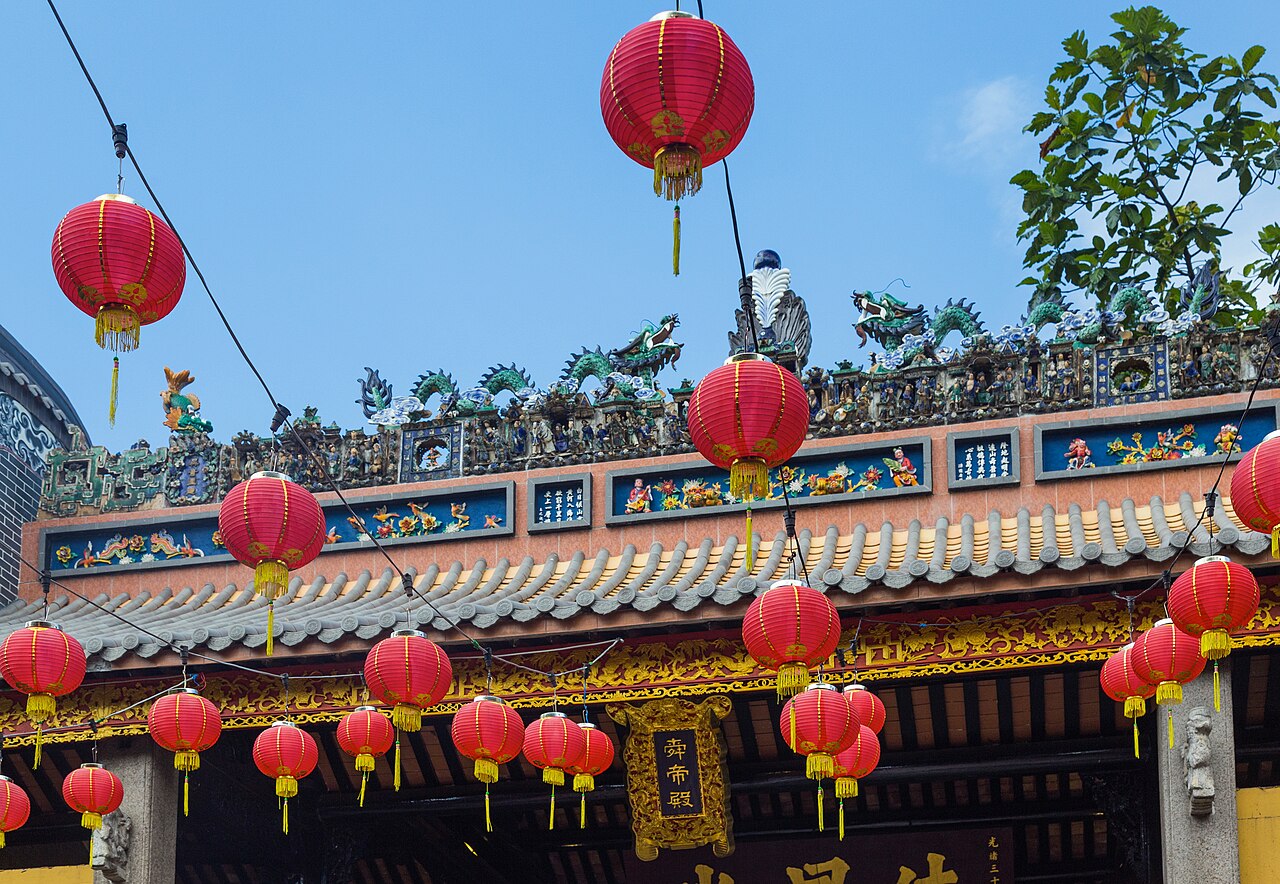
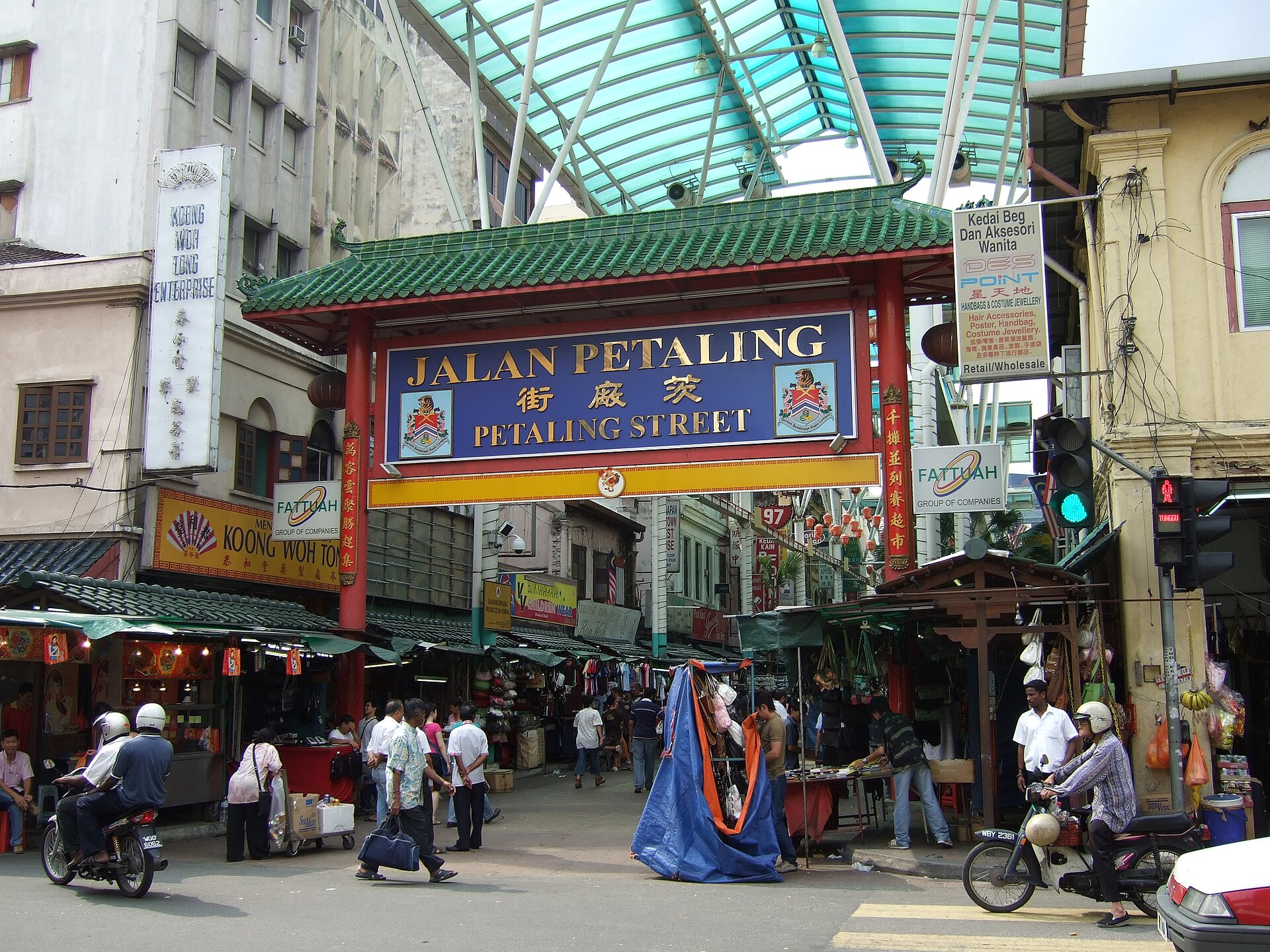
Chan She Shu Yuen Temple occupies a location in Kuala Lumpur's historic core accessible via established public transport networks. The nearest LRT and MRT stations require walking through the old town grid. Bus services operate along adjacent arterial roads. Taxis and ride-hailing services serve the district though narrow streets may complicate vehicle access. Walking from Petaling Street market area or Central Market provides contextual heritage corridor experience. Signage in the old town may be inconsistent; digital mapping recommended. Parking extremely limited in surrounding streets. Combine with pedestrian exploration of nearby Taoist and Buddhist temples in the concentrated heritage zone.
Checked 2026-08-26
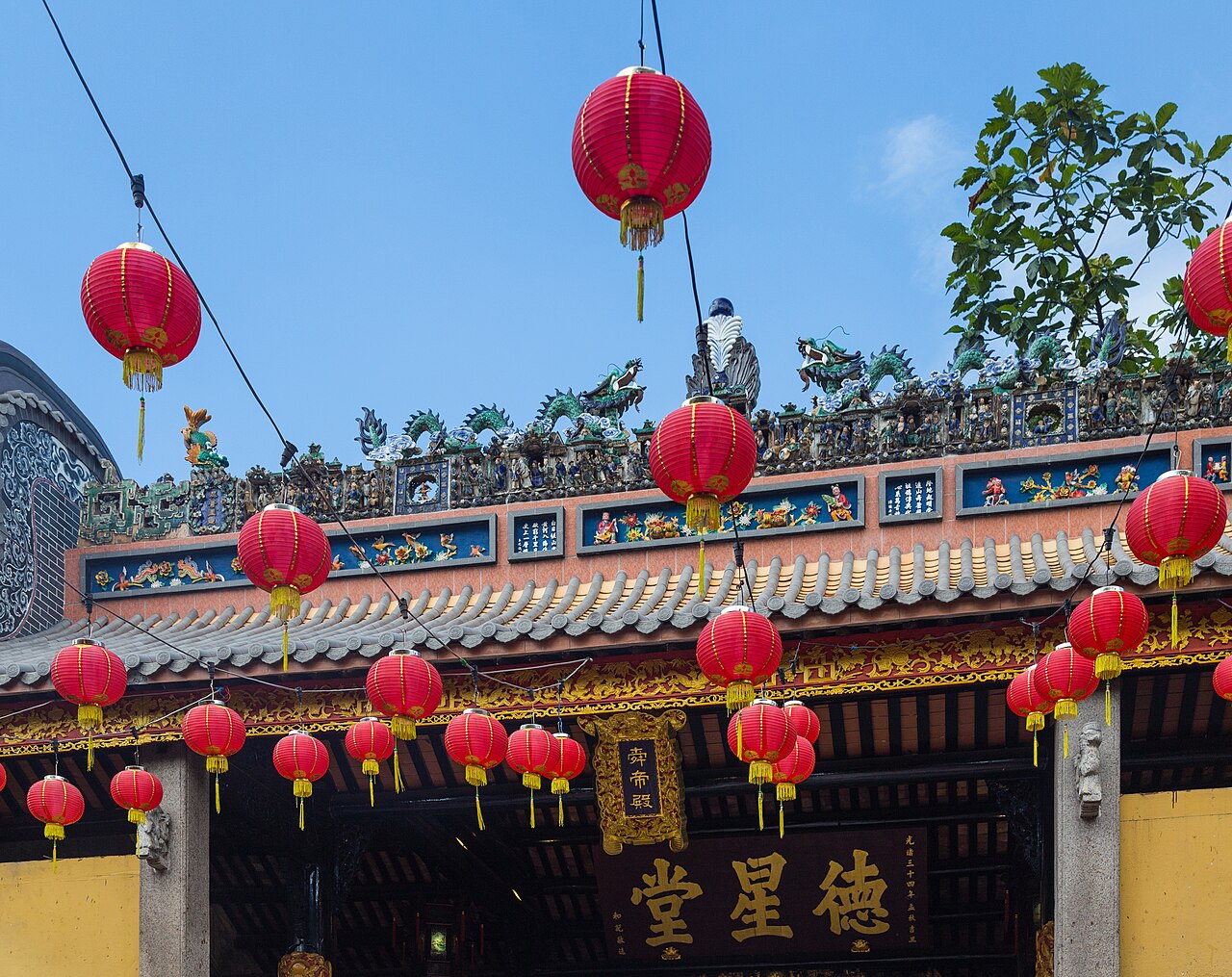
Active prayer spaces demand respectful behaviour regardless of personal beliefs. Photography restrictions may apply in certain interior zones; observe posted notices or request guidance. Footwear removal typically required entering main halls. Incense smoke concentration may affect respiratory sensitivity. Uneven floor surfaces and threshold steps present trip hazards. Limited accessibility provisions for mobility-impaired visitors. Crowding during festival periods complicates movement. Heat accumulation in enclosed courtyard spaces during midday. No evident security or luggage storage facilities. Personal belongings require attention. Nearby urban environment includes active traffic and construction activity affecting approach routes and ambient noise levels during exterior observation.
Checked 2026-08-26
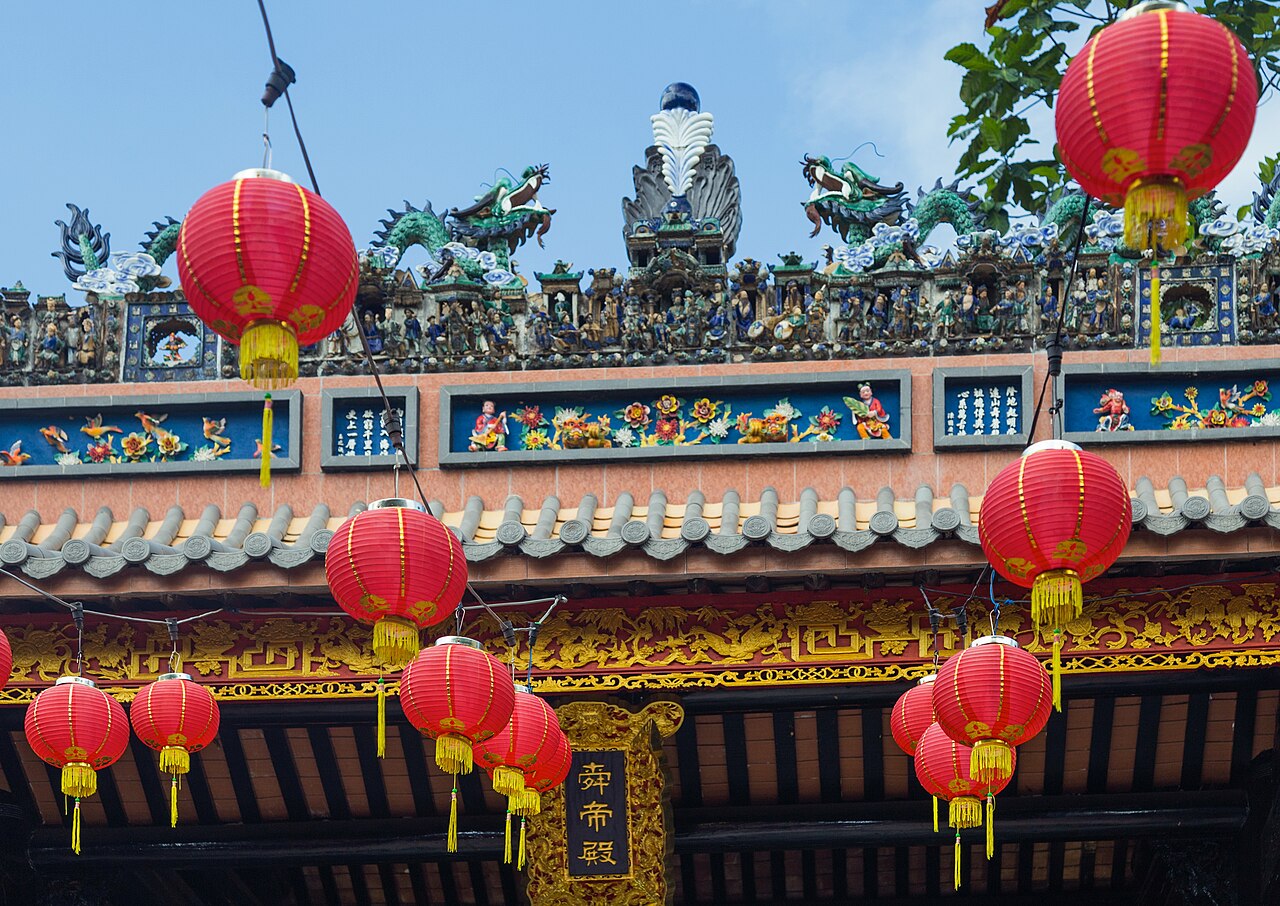
Exterior architectural photography viable from surrounding streets capturing roofline decoration and facade detail. Interior photography subject to prevailing light conditions with mixed natural and artificial sources. Tripod use likely restricted in confined spaces. Flash photography potentially disruptive to worshippers and potentially prohibited. Morning hours offer optimal natural illumination through courtyard openings. Decorative timber brackets, ceramic figurines and calligraphic panels provide detailed subjects. Wide-angle lenses accommodate spatial constraints. Respectful distance from active prayer essential. Roof sculpture details require telephoto capability from ground level. No evident commercial photography permit requirement for casual visitor use. Drone operation inappropriate in dense urban heritage zone.
Checked 2026-08-26
The temple functions as an active clan association site with ceremonial and ancestral activities continuing. Visitors may encounter prayer and ritual during their visit.
Not recorded. Chinese temples in Malaysia vary in interpretive provision. Visitors should not expect comprehensive English signage or explanatory materials.
Non-Chinese visitors generally permitted entry to Chinese clan temples in Malaysia, subject to respectful conduct and appropriate dress. Active ceremony periods may restrict certain areas.
Historic temple structures typically present accessibility challenges including stepped entrances and uneven surfaces. Specific accessibility provisions at this site are Not recorded.
Not recorded. Public facilities in surrounding old town area may be available. Visitors should plan accordingly.
Chan She Shu Yuen functions as a clan association temple serving a specific surname community, whereas Guan Di Temple is a broader community Taoist temple dedicated to a deity. Architectural and functional distinctions apply.
Loading the interactive map…
The interactive map could not be loaded.
Last updated:
Source: OpenStreetMap contributors, Wikidata ·