

3 min walk
Tokyo Station
- Must see
- Activity
Language · 11 published
Museum · Tokyo
| Monday | 11:00 – 18:00 |
|---|---|
| Tuesday | 11:00 – 18:00 |
| Wednesday | 11:00 – 18:00 |
| Thursday | 11:00 – 18:00 |
| Friday | 11:00 – 20:00 |
| Saturday | 11:00 – 20:00 |
| Sunday | 11:00 – 18:00 |
Also recorded: 11:00 – 18:00
Parsed from OpenStreetMap opening hours on 2026-08-26.
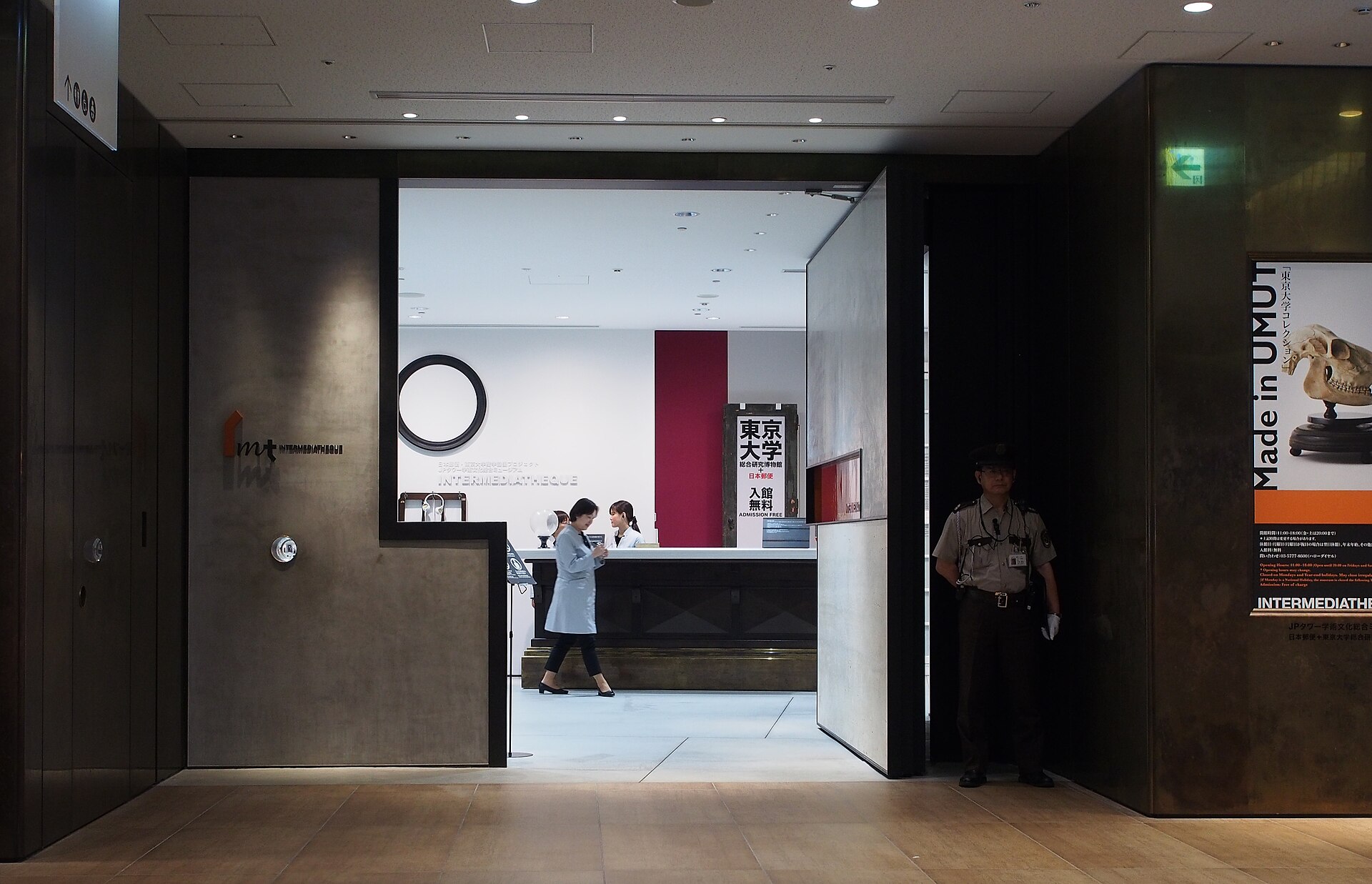
Intermediatheque, known locally as インターメディアテク, is a museum facility located in Tokyo. The institution occupies space within the historic Kitte building adjacent to Tokyo Station, a former postal facility redeveloped for contemporary use. The venue presents itself as an intermediary space bridging academic collections and public engagement. Its identity reflects a hybrid institutional character, combining elements of research archive, exhibition hall, and cultural forum. The production node exists without assigned city POI linkage in available databases, meaning standard geographic identifiers and coordinates remain unverified through municipal channels. Visitors should treat location specifics as requiring independent confirmation.
Checked 2026-08-26
The facility houses university collections and exhibition materials drawn from academic heritage. Displays typically encompass scientific specimens, anthropological artifacts, and technological instruments arranged without conventional categorical separation. The curatorial approach emphasizes juxtaposition across disciplines, creating dialogues between natural history objects and manufactured items. Exhibition design incorporates the building's original architectural features, including restored interior elements from the postal era. Specific collection contents rotate according to institutional programming decisions. The exact current roster of galleries, temporary exhibitions, and permanent holdings cannot be determined from supplied source material. Visitors should consult official channels for present display information before planning attendance.
Checked 2026-08-26
Duration of visit depends on individual engagement patterns with dense museum environments. The interdisciplinary presentation style rewards sustained attention rather than rapid circulation. Visitors inclined toward detailed examination of individual specimens and reading accompanying interpretive material should allocate extended periods. Those preferring overview-level appreciation may complete circuits more quickly. The building's architectural interest adds potential browsing time beyond core exhibition engagement. No recommended duration guidelines appear in supplied sources. Personal pacing varies substantially based on background knowledge, language accessibility of presented materials, and tolerance for museum fatigue. Planning flexible schedules accommodates unpredictable absorption rates.
Checked 2026-08-26
Operator-confirmed hours are Not recorded pending review. The supplied source material contains no verified opening schedules, seasonal variations, holiday closures, or last-admission protocols. Visitors must obtain current temporal information directly from institutional operators before travel planning. The Tokyo Station proximity suggests consideration of surrounding commercial district rhythms, though this provides no reliable proxy for museum operations. Weekend versus weekday dynamics remain uncharacterized. Special exhibition periods may alter standard accessibility. Advance verification through multiple contact methods reduces disappointment risk. Time-sensitive itineraries should build contingency periods around any unconfirmed operational assumptions derived from secondary sources or general expectations about comparable institutions.
Checked 2026-08-26
Operator-confirmed prices are Not recorded pending review. No admission costs, membership structures, group rates, or complimentary entry categories appear in supplied materials. Potential pricing models range from free public access to tiered admission depending on exhibition type, residency status, or age demographics. The academic affiliation may influence fee structures in ways not documented here. Visitors should budget provisionally while awaiting direct institutional confirmation. Payment method acceptance, advance purchase requirements, and reservation systems remain unspecified. Any cost information encountered through unofficial channels warrants skepticism pending authoritative validation. Financial planning for this destination requires active information gathering rather than reliance on static published references.
Checked 2026-08-26
The facility occupies space within the Kitte building complex near Tokyo Station, a major transportation nexus serving multiple rail lines and subway services. The station's scale and complexity demands careful exit selection and wayfinding. The postal heritage building's integration with contemporary commercial development creates layered interior navigation challenges. Signage density varies across access routes. Pedestrian circulation patterns around the station area intensify during peak commuting periods. Mobility-impaired visitors should investigate specific building accessibility features independently. The absence of assigned coordinates in city databases precludes precise mapping verification. Physical orientation upon arrival may require additional time beyond standard transit duration estimates.
Checked 2026-08-26
The interdisciplinary exhibition approach may disorient visitors expecting conventional thematic organization. Dense object concentration demands visual stamina and selective attention. Label information may present language accessibility limitations for non-Japanese readers. The historic building envelope imposes environmental conditions potentially including temperature variation, humidity fluctuations, and acoustic properties distinct from purpose-built museum structures. Crowding dynamics near Tokyo Station affect approach experiences regardless of interior occupancy levels. Photography policies, bag restrictions, and food prohibitions remain unverified in supplied sources. Visitors should observe posted regulations upon arrival and seek staff clarification when uncertainty persists regarding permitted conduct.
Checked 2026-08-26
Institutional photography policies remain unconfirmed in available source material. Many museums implement differentiated rules distinguishing flash prohibition, tripod restriction, specific gallery bans, and complete capture prohibition. The presence of sensitive specimens, loaned objects, or copyright-protected exhibition designs may generate variable permissions across spaces. Visitors should default to non-photographic observation unless explicit authorization becomes visible. Staff inquiry provides definitive guidance when signage proves ambiguous or absent. Social media sharing assumptions risk policy violation. The architectural setting's photographic interest compounds uncertainty, as building photography and collection photography may fall under separate regulatory frameworks. Respectful caution protects against inadvertent noncompliance.
Checked 2026-08-26
Not recorded. The facility is located within the Kitte building near Tokyo Station, but specific address details and coordinates are not verified through city POI assignment.
Not recorded. Language accessibility of labels and interpretive content cannot be determined from supplied sources. Visitors should inquire directly with the institution.
Not recorded. The Kitte building contains commercial establishments, but specific museum-adjacent food service provisions remain unverified.
Not recorded. Historic building conversion may present accessibility considerations requiring direct institutional confirmation.
Not recorded. Program offerings including educational services, audio guides, or scheduled tours are not documented in available source material.
Not recorded. Ticketing mechanisms, reservation requirements, and purchase channels remain unverified pending operator confirmation.
Loading the interactive map…
The interactive map could not be loaded.


Last updated:
Source: OpenStreetMap contributors ·