
6 min walk
National Stadium
- Notable
- Activity
Language · 11 published
Activity · Tokyo
明治神宮野球場
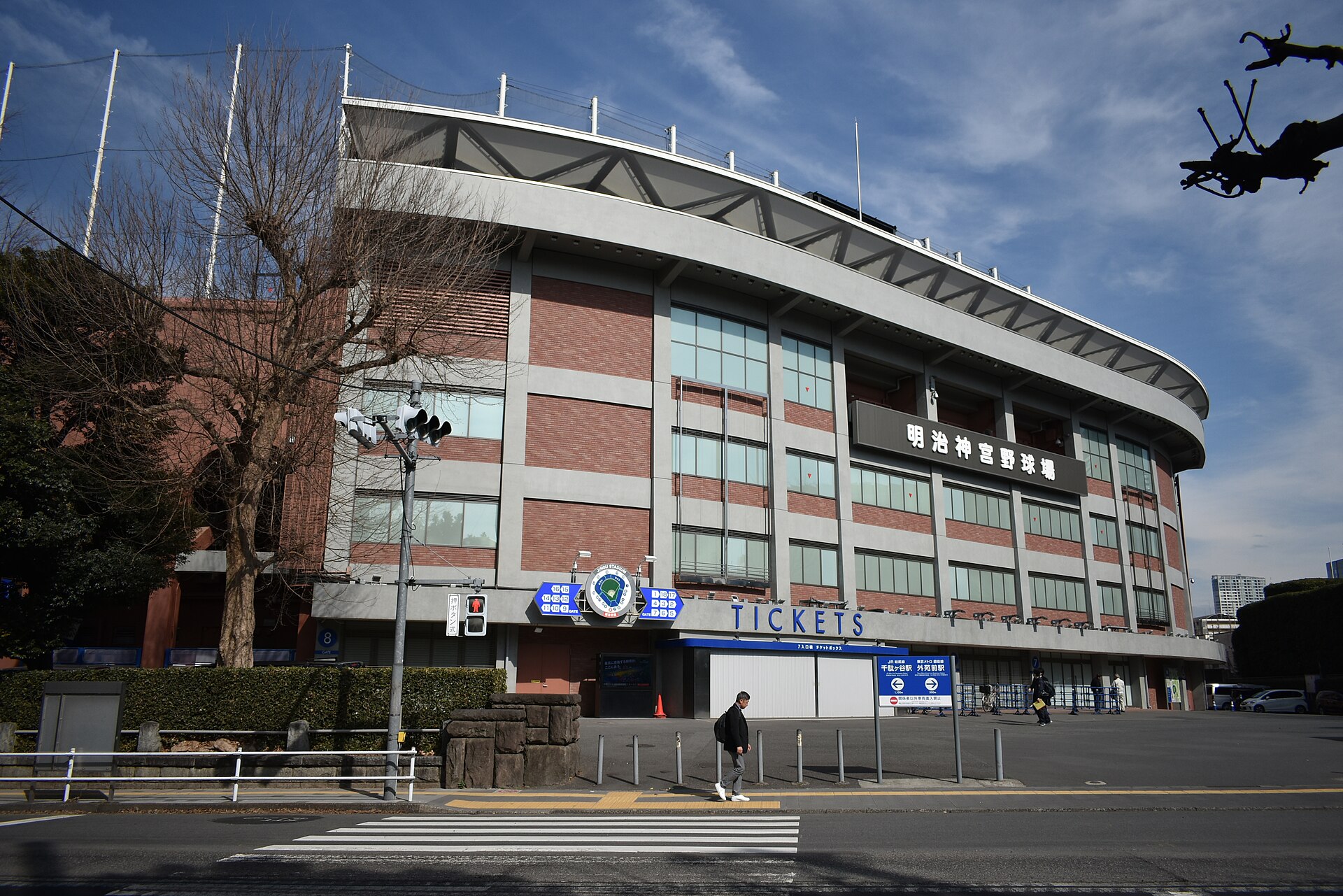
Meiji Jingu Stadium is a historic baseball venue in central Tokyo, beside the Meiji Jingu Outer Garden. Opened in 1926, it is one of Japan’s oldest professional baseball stadiums and is closely associated with the Tokyo Yakult Swallows of Nippon Professional Baseball. The stadium’s appeal comes from its long sporting history, compact traditional character, and green setting rather than from the large-scale spectacle of a new arena. For travelers, a game offers a distinctly Japanese baseball experience: organized cheering, close views of the field, local food, and the energy of a Tokyo neighborhood gathering. The nearby outer garden adds an easy walking dimension before or after the match.
Checked 2026-08-26 · Source
The stadium centers on a baseball diamond surrounded by spectator seating. Its scale feels more intimate than that of a modern multipurpose arena, bringing fans close to the field and making the crowd’s organized chants especially noticeable. Concession areas provide conventional ballpark food and drinks, while the surrounding outer garden supplies open space outside the venue. Visitors should expect a traditional, event-focused stadium rather than a large shopping or entertainment complex under one roof. The most important interior experience is the relationship between the field, the stands, and the cheering sections. The nearby greenery provides a useful contrast to the dense city streets beyond the stadium district.
Checked 2026-08-26 · Source
A regular baseball game usually occupies about three hours for nine innings, with extra innings extending the finish. Arrive early if you want time to find your seat, absorb batting practice, and explore the concession areas before the first pitch. A game plus a walk through the Meiji Jingu Outer Garden makes a comfortable half-day plan. The stadium is primarily an event venue, so a casual interior tour is not the same experience as attending a fixture. Plan additional time for larger crowds after the final out, particularly when leaving alongside a popular weekend or rivalry game.
Checked 2026-08-26 · Source
The NPB regular season generally runs from late March through October, with postseason baseball continuing later when the team qualifies. A visit must therefore be built around a scheduled game or another event at the venue. Day games provide a different atmosphere from evening fixtures, while summer night games offer an appealing way to experience baseball after the hottest part of the day. The stadium’s open setting makes weather important: rain can affect play, and summer heat can be tiring in the stands. Combine the match with an outer-garden walk when conditions are comfortable and allow more time around the event on busy dates.
Checked 2026-08-26 · Source
Entry is tied to the event and seat selected. Ticket categories can include reserved seating, unreserved areas, and premium sections, with demand influenced by the opponent, date, and seat location. Weekend games and rivalry fixtures can draw especially strong interest. Use the official Tokyo Yakult Swallows or authorized ticket channels for the clearest route to a legitimate seat. A ticket is important not only for entry but also for choosing the view and cheering atmosphere you want. Keep the event details accessible on your phone or in the format provided by the seller, and allow time for entry procedures before the first pitch.
Checked 2026-08-26 · Source
Gaienmae Station on the Tokyo Metro Ginza Line is a convenient rail approach. Shinanomachi Station on the JR Chuo-Sobu Line and Kokuritsu-Kyogijo Station on the Toei Oedo Line also serve the stadium area. From these stations, the walk generally takes roughly five to fifteen minutes through the outer-garden district. Public transport is the practical choice on match days because crowds and traffic increase around first pitch and after the final out. Walking from nearby attractions is straightforward, while taxis can be slowed by event traffic. Follow the crowd flow and venue signs as you approach, especially when several events share the surrounding district.
Checked 2026-08-26 · Source
Meiji Jingu Stadium has an open-air setting, so rain, strong sun, summer humidity, and changing temperatures can directly affect your comfort. Bring suitable weather protection and drink water during warm fixtures. Cheering sections may use coordinated chants, instruments, and repeated routines; watching nearby fans for cues helps visitors participate without disrupting others. Concession queues become busiest between innings, and restrooms can also develop lines. Follow entry security instructions and keep personal belongings close in crowded areas. The stadium’s older character is part of its appeal, but it also means the facilities feel less like a recently built arena. Leave extra time when moving through the venue at peak moments.
Checked 2026-08-26 · Source
Personal photographs with a phone or small camera can capture the field, stands, cheering sections, and the stadium’s older character. Avoid flash because it distracts players and spectators. Keep cameras and arms from blocking neighboring sightlines, particularly during active play. Large professional equipment, tripods, monopods, and extended video recording can be subject to venue or league rules, so use a compact setup for an uncomplicated visit. The outer garden provides additional subjects before and after the game, including the contrast between green space and central Tokyo. Photographs should preserve the experience of nearby fans rather than intruding on private moments or obstructing movement.
Checked 2026-08-26 · Source
No. They are separate venues in the same general district. Meiji Jingu Stadium is the older baseball-specific venue, while the National Stadium serves different sporting and cultural purposes.
A regular nine-inning game generally takes about three hours. Extra innings can extend the finish, and arriving early adds time for entry, seating, concessions, and pre-game activity.
The stadium is closely associated with the Tokyo Yakult Swallows of Nippon Professional Baseball, whose fixtures give the venue much of its regular sporting identity.
Gaienmae Station on the Tokyo Metro Ginza Line, Shinanomachi Station on the JR Chuo-Sobu Line, and Kokuritsu-Kyogijo Station on the Toei Oedo Line are nearby rail options.
Meiji Jingu Stadium stands beside the Meiji Jingu Outer Garden, giving the historic baseball venue a green setting within central Tokyo’s dense urban environment.
Because the stadium is open-air, weather protection, sun protection, and water are useful, especially during summer. A compact camera is also convenient for photographs without obstructing neighboring spectators.
Loading the interactive map…
The interactive map could not be loaded.
Last updated:
Source: OpenStreetMap contributors, Wikidata ·


