
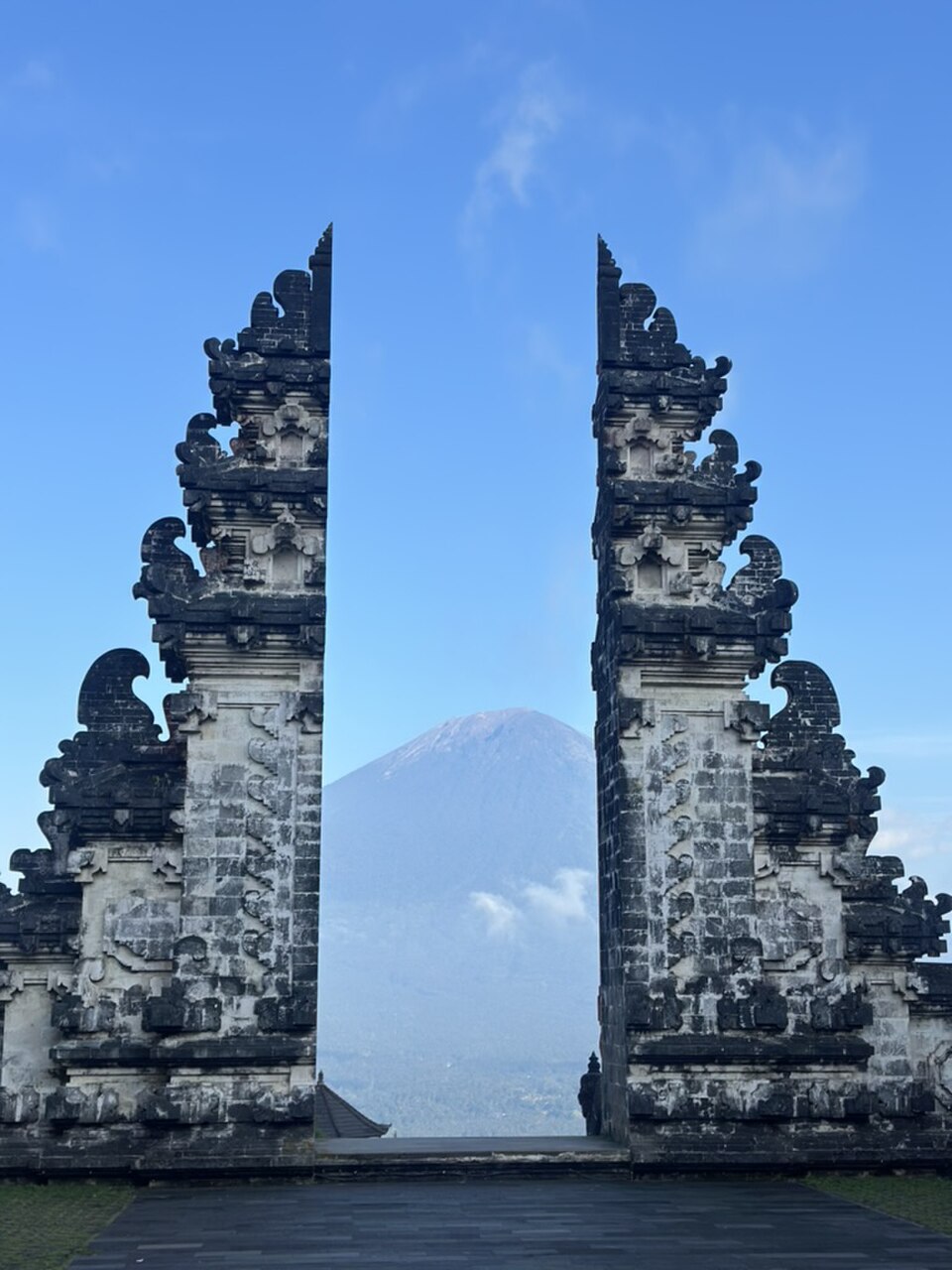
67 min walk
Pura Lempuyang Luhur
- Must see
- Place of worship
Language · 11 published
Nature site · Denpasar
Reviewed by Elena Voss · SSMTour Travel Editor

| Monday | 06:00 – 19:00 |
|---|---|
| Tuesday | 06:00 – 19:00 |
| Wednesday | 06:00 – 19:00 |
| Thursday | 06:00 – 19:00 |
| Friday | 06:00 – 19:00 |
| Saturday | 06:00 – 19:00 |
| Sunday | 06:00 – 19:00 |
Checked 2026-08-31 · Source
Read from the OpenStreetMap access tags; anything not listed has no tag recorded.
Set the group type to family in the planner and the day window contracts to about three quarters of a solo day.
Tirta Gangga Water Palace is a former royal palace in eastern Bali, Indonesia. The name means Water of the Ganges, referencing the sacred Indian river. Built by the last King of Karangasem, it served as a retreat for the royal family. The complex combines Balinese and Chinese architectural influences. It suffered damage during the 1963 Mount Agung eruption and was subsequently restored. Today it operates as a heritage site open to visitors. Daily 06:00–19:00 WITA. Open every day; no regular weekly closure day is listed. Adult admission is IDR 90,000 for international visitors and IDR 45,000 for Indonesian citizens.
Checked 2026-08-31 · Source
The palace grounds feature tiered fountains, stone sculptures, and formal gardens arranged around spring-fed pools. A notable central structure is an eleven-tiered fountain. Stone figures and guardian statues populate the landscape. The water features draw from a natural spring considered sacred in local tradition. Wading pools allow visitors to enter the water. Lotus ponds and tropical plantings surround the architectural elements. Stone pathways and bridges connect different areas. The design incorporates both ornamental and functional water management. Open every day; no regular weekly closure day is listed. Adult admission is IDR 90,000 for international visitors and IDR 45,000 for Indonesian citizens.
Checked 2026-08-31 · Source
Most visitors spend between one and two hours exploring the water palace grounds. The compact size permits thorough examination without extended walking. Those wishing to swim in the pools should allow additional time for changing and immersion. Photography enthusiasts may linger longer to capture the interplay of water, stone, and vegetation across different angles. The flat terrain requires minimal physical exertion. A complete circuit of all accessible areas proceeds quickly. Morning visits may proceed more leisurely due to cooler temperatures. Adult admission is IDR 90,000 for international visitors and IDR 45,000 for Indonesian citizens.
Checked 2026-08-31 · Source
Visitors should verify current opening times before travel as these may change without widespread notice. Early morning typically offers softer light for photography and reduced crowding. The dry season from approximately April to October generally brings more predictable conditions for outdoor exploration. Weekend and holiday periods draw increased domestic tourism. Daily 06:00–19:00 WITA. Public-body guidance for reaching eastern Karangasem names a DAMRI bus or shuttle to Amlapura, followed by a local ojek. Tirta Gangga is on Jalan Raya Tirta Gangga in Ababi, approximately 5–7 km north of Amlapura. The 1.2-hectare garden occupies three ground levels, so not every feature is reachable without a change of level.
Checked 2026-08-31 · Source
The site historically charged separate fees for entry and swimming, though current structures are unverified. Visitors should carry sufficient cash as electronic payment acceptance is uncertain. Any published rates require on-site confirmation. Additional charges may apply for parking or guide services if offered. Royal family stewardship suggests revenue supports maintenance rather than commercial profit. Adult admission is IDR 90,000 for international visitors and IDR 45,000 for Indonesian citizens. The 1.2-hectare garden occupies three ground levels, so not every feature is reachable without a change of level. The signature route across the koi pond uses individual stone stepping-stones and is not step-free.
Checked 2026-08-31 · Source
Tirta Gangga lies approximately two to three hours by road from Denpasar, depending on traffic and route. The journey traverses increasingly mountainous terrain toward Karangasem. Private vehicle or hired driver represents the most common access method for international visitors. Road conditions vary; the final approach is narrow. Public-body guidance for reaching eastern Karangasem names a DAMRI bus or shuttle to Amlapura, followed by a local ojek. Tirta Gangga is on Jalan Raya Tirta Gangga in Ababi, approximately 5–7 km north of Amlapura. The signature route across the koi pond uses individual stone stepping-stones and is not step-free.
Checked 2026-08-31 · Source
The stone surfaces surrounding pools become slippery when wet, presenting fall risk. Visitors entering water should exercise caution on submerged steps and uneven bottoms. Sacred spring areas demand respectful conduct; loud behavior and inappropriate dress cause offense. The 1963 eruption history indicates volcanic activity in the region, though current alerts require monitoring official sources. Limited emergency services operate in rural Karangasem. The 1.2-hectare garden occupies three ground levels, so not every feature is reachable without a change of level. The national tourism registry lists a toilet designated for disabled and older visitors.
Checked 2026-08-31 · Source
The tiered fountains and reflective pools offer classic symmetrical compositions. Morning light illuminates the central fountain favorably before harsh midday contrast develops. The stone figures provide foreground interest against water backdrops. Wider lenses accommodate the compact garden spaces. Polarizing filters reduce surface glare on pools, revealing submerged details. Tripods may obstruct narrow pathways during busy periods. The lotus ponds bloom seasonally, timing dependent. Reflections in still morning water create mirrored compositions. Respectful distance from worshippers at active spring sites maintains appropriate conduct. It is a royal Karangasem water garden composed principally of ponds, gardens, fountains and sculptures.
Checked 2026-08-31 · Source
It is a royal Karangasem water garden composed principally of ponds, gardens, fountains and sculptures.
King Anak Agung Anglurah Ketut Karangasem built the water garden in 1948.
The garden covers about 1.2 hectares and extends east to west across three levels.
Yes. The operator identifies designated swimming pools and advises swimmers to bring a change of clothes and towels.
Nawa Sanga is the eleven-tier fountain near the entrance and forms the middle level with two ornamental ponds.
The pools are supplied by the natural Rejasa spring; the upper-level spring and temple water are used for religious ceremonies.
Loading the interactive map…
The interactive map could not be loaded.
Last updated:
Source: OpenStreetMap contributors ·