


193 min walk
Taman Tirta Gangga
- Must see
- Nature site
Language · 11 published
Place of worship · Denpasar
Reviewed by Elena Voss · SSMTour Travel Editor
| Monday | 07:00 – 18:00 |
|---|---|
| Tuesday | 07:00 – 18:00 |
| Wednesday | 07:00 – 18:00 |
| Thursday | 07:00 – 18:00 |
| Friday | 07:00 – 18:00 |
| Saturday | 07:00 – 18:00 |
| Sunday | 07:00 – 18:00 |
Checked 2026-08-31 · Source
Read from the OpenStreetMap access tags; anything not listed has no tag recorded.
Set the group type to family in the planner and the day window contracts to about three quarters of a solo day.
Pura Agung Besakih, known in English as Besakih Great Temple, stands as the largest and holiest temple complex in Bali. Perched on the southwestern slopes of Mount Agung, it serves as the spiritual centre for Balinese Hinduism. The site comprises multiple temples and shrines across terraced levels. Local tradition holds this as the paramount sanctuary on the island, drawing pilgrims and visitors seeking to understand Balinese religious practice. Daily 07:00–18:00 WITA. No regular closure day is listed. Tourist access is limited to areas outside the worship zones.
Checked 2026-08-31 · Source
The temple complex contains numerous individual temples and meru towers arranged across ascending terraces. Pura Penataran Agung forms the central and largest sanctuary. Additional temples include Pura Kiduling Kreteg, Pura Batu Madeg, and others dedicated to various deities and ancestral figures. Stone gateways, courtyards, and tiered shrines characterise the architecture. The layout reflects the Balinese concept of cosmic orientation. Visitors may observe ongoing religious ceremonies and offerings. The elevated position provides views across surrounding landscapes. Sacred areas restrict access during active worship. No regular closure day is listed. Tourist access is limited to areas outside the worship zones.
Checked 2026-08-31 · Source
Visitors typically allocate several hours to explore the complex adequately. The expansive grounds and multiple temple areas require walking across uneven stone surfaces and ascending terraces. Those participating in guided tours or observing ceremonies may extend their stay. The spiritual significance of the site encourages unhurried appreciation rather than rushed visitation. Physical stamina matters given the terrain. Photographers and those interested in architectural detail often spend additional time. Weather conditions on the mountain slopes can influence comfort and pace during any visit.
Checked 2026-08-31 · Source

The temple remains active for religious purposes throughout the year, with major ceremonial periods attracting substantial pilgrim traffic. The dry season generally offers more predictable conditions for mountain visitation. Morning hours may provide clearer atmospheric conditions before cloud accumulation. Prospective visitors should seek current operational status from official sources before planning. Daily 07:00–18:00 WITA. From Klungkung, take a bemo public minibus toward Besakih; services are most frequent in the morning, and the Ministry of Tourism recommends changing at Rendang. Visitors arriving by car use the Manik Mas parking area, while buses and trucks use Kedungdung; electric shuttle vehicles connect the arrival facilities with the temple approach.
Checked 2026-08-31 · Source
The temple complex has historically implemented entrance fees for international visitors, with separate arrangements for domestic tourists and pilgrims. Additional contributions may be requested for guided services. Payment structures in Indonesia typically operate in Indonesian Rupiah. Visitors should carry appropriate cash denominations. The management of temple access has undergone various organisational arrangements over time. General admission is IDR 80,000 for domestic visitors and IDR 150,000 for international visitors. The ticket includes a local guide, sarong hire, and one electric-vehicle transfer. Electric vehicles carry visitors to the area below the temple.
Checked 2026-08-31 · Source
Besakih Temple lies approximately twenty-five kilometres northeast of Denpasar city centre. Road access ascends through mountain terrain from the main coastal routes. Private vehicle hire represents the most flexible option, with drivers familiar with temple protocols available throughout Bali. Organised tour packages commonly include transportation. From Klungkung, take a bemo public minibus toward Besakih; services are most frequent in the morning, and the Ministry of Tourism recommends changing at Rendang. Visitors arriving by car use the Manik Mas parking area, while buses and trucks use Kedungdung; electric shuttle vehicles connect the arrival facilities with the temple approach.
Checked 2026-08-31 · Source

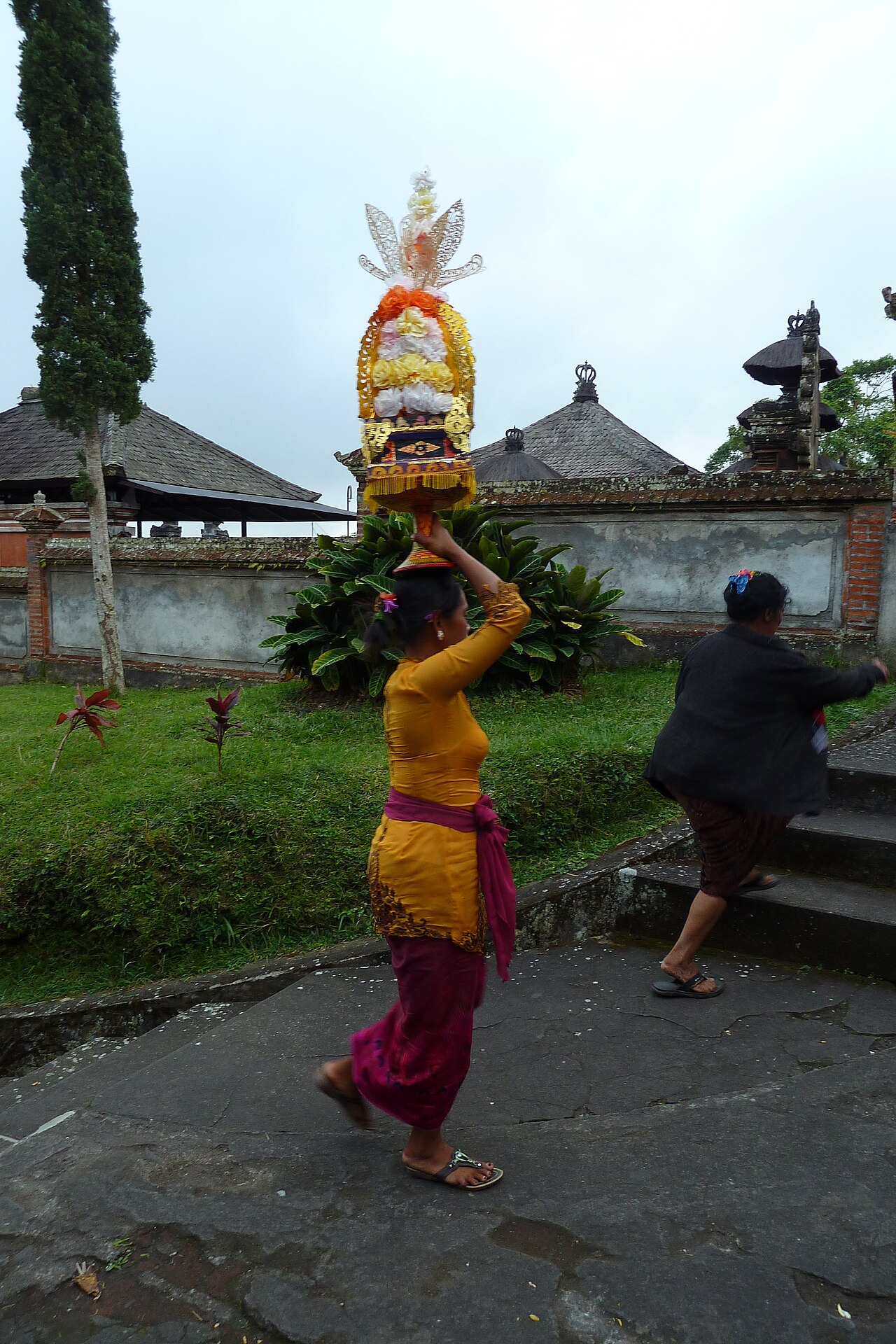
The temple maintains active religious function; visitors must respect worshippers and ceremonial activities. Dress codes require covered shoulders and knees; sarongs are typically available for loan at entrance points. Aggressive guiding offers have historically troubled visitors; official guides may be preferable. The mountain altitude brings cooler temperatures and rapid weather changes. Stone surfaces become slippery when wet. Electric vehicles carry visitors to the area below the temple. The official visitor route includes a walking section between Manik Mas and Bencingah; special buggy transport is provided for disabled visitors. Stairs and multi-level courtyards prevent a continuous step-free circuit through the extensive temple complex.
Checked 2026-08-31 · Source
Photography is generally permitted in outer temple areas, though restrictions apply during active ceremonies and within inner sanctuaries. Visitors should observe posted regulations and guidance from temple authorities. Flash photography may disturb worshippers and is typically discouraged. Drone operation requires specific permissions and is generally prohibited near religious sites in Indonesia. Respectful distance from prayer activities remains essential. Commercial photography or filming arrangements necessitate advance authorisation. Stairs and multi-level courtyards prevent a continuous step-free circuit through the extensive temple complex. It includes a local guide, sarong hire, and one electric-vehicle transfer.
Checked 2026-08-31 · Source
It includes a local guide, sarong hire, and one electric-vehicle transfer.
The complex contains 26 temples: Pura Penataran Agung Besakih at its centre and 25 supporting Pura Pakideh.
Tourists may enter the sacred complex only outside the designated worship areas.
Manik Mas parking has a lift, accessible toilets are provided at Kedungdung, Manik Mas, and Bencingah, and buggy transport is available for disabled visitors on the managed visitor route.
No. The official visitor rules prohibit entry to the inner temple area during menstruation.
Bemos run from Klungkung toward Besakih, with a change at Rendang recommended; services are most frequent in the morning.
Loading the interactive map…
The interactive map could not be loaded.

Last updated:
Source: OpenStreetMap contributors ·