


.jpg)


2 min walk
Temple of Olympian Zeus
- Must see · Heritage site
- Historic monument
Language · 1 published
Historic monument · Athens
Πύλη του Αδριανού
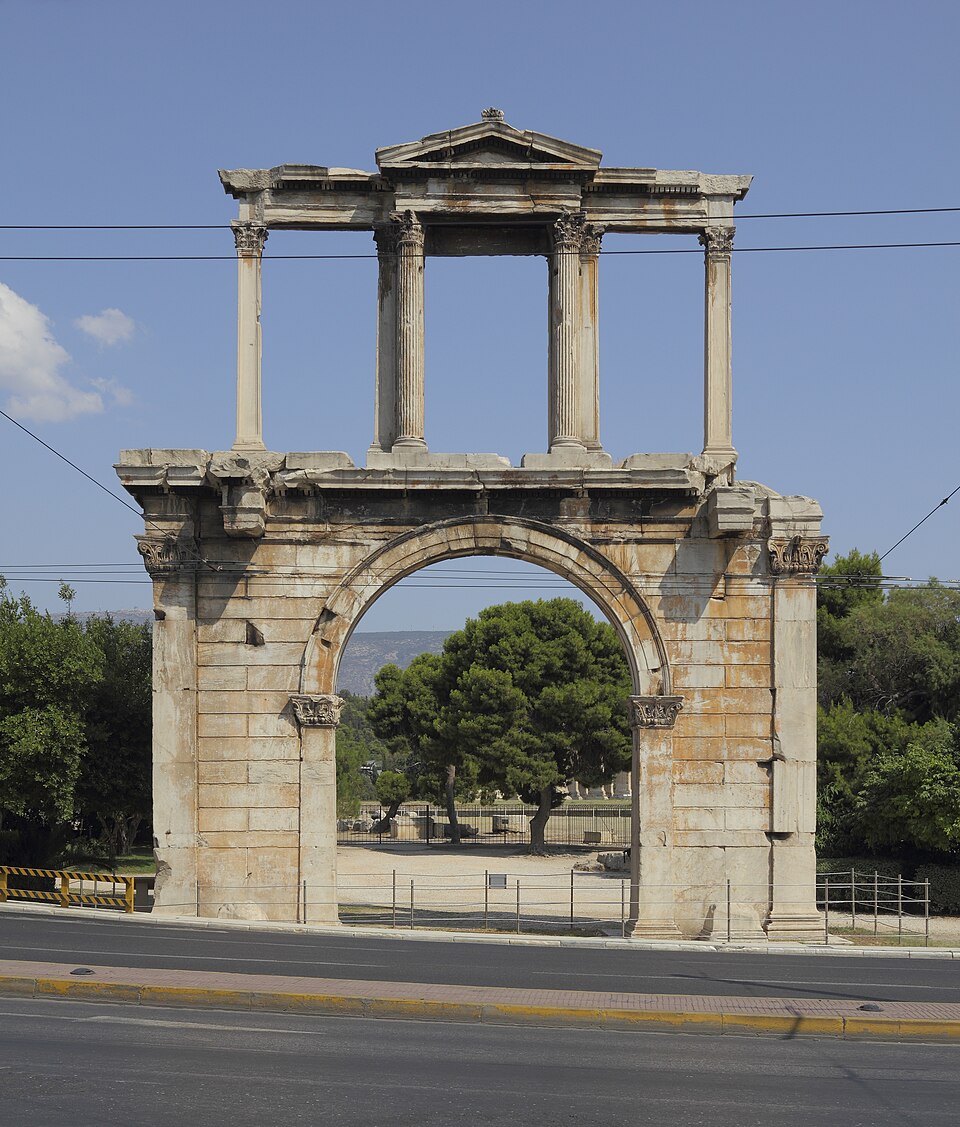
The Arch of Hadrian, known locally as Πύλη του Αδριανού, is a monumental gateway in Athens, Greece. Erected in the second century CE, it stands on the ancient road between the Athenian Agora and the Olympieion. The structure features a central arched passageway flanked by Corinthian columns and pilasters. Inscriptions on opposite faces suggest it marked a symbolic boundary between the old city of Theseus and the new city of Hadrian. The arch remains a significant surviving element of Roman imperial architecture in Greece.
Checked 2026-08-26
The Arch of Hadrian is an exterior monument without an interior space accessible to visitors. The structure consists of a single arched opening approximately six metres wide, surmounted by an entablature and shallow pediment. The lower portion is built of Pentelic marble, while the upper section employs a different marble type. Two inscriptions are carved on the architrave, one facing the Acropolis and one facing the Olympieion. There are no enclosed chambers, exhibitions, or interpretive displays within or beneath the structure. Visitors may walk around and through the arch freely.
Checked 2026-08-26

A visit to the Arch of Hadrian requires minimal time commitment. Most visitors spend between five and fifteen minutes at the monument, typically as part of a broader itinerary including the nearby Olympieion and Acropolis area. The arch is a pass-through landmark rather than a destination requiring extended engagement. Photography, reading the inscriptions, and appreciating the architectural proportions constitute the principal activities. Visitors often combine this stop with the surrounding archaeological zone. No queues or entry procedures affect duration. Plan accordingly as one element among several adjacent ancient sites.
Checked 2026-08-26
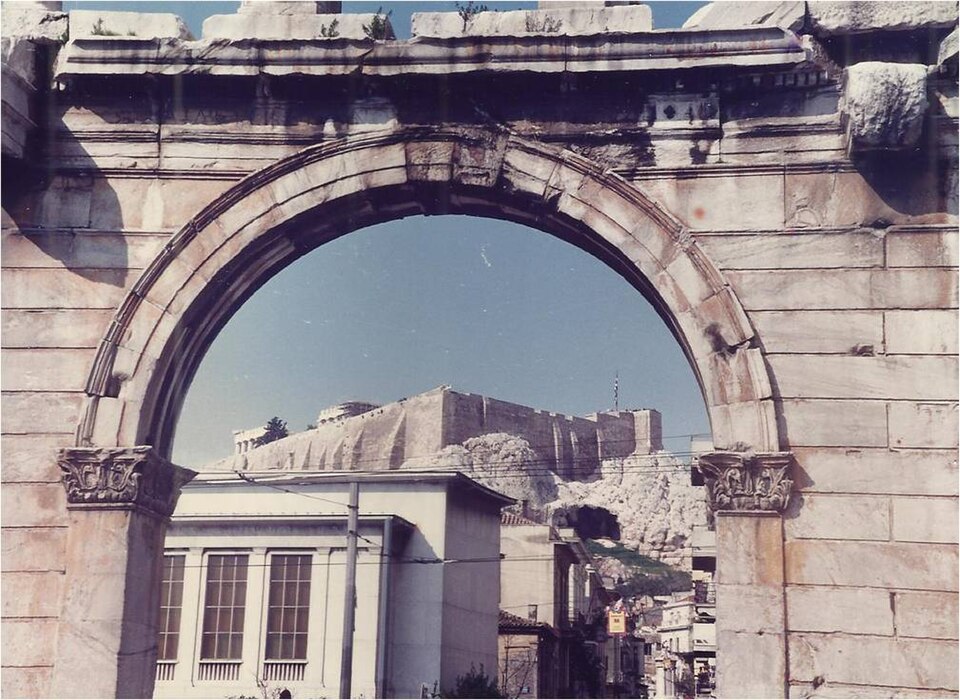
The Arch of Hadrian stands in an open public space accessible at all hours. As an unenclosed monument, it is visible from the street throughout the day and night. No gates or barriers restrict approach. Operator-confirmed hours are Not recorded pending review. The arch is illuminated after dark, offering a distinct nocturnal viewing experience. Early morning and late evening typically present fewer pedestrians and vehicles. Midday summer visits coincide with intense heat and strong sunlight, which affects comfort but not access. Seasonal considerations should account for Athenian climate patterns.
Checked 2026-08-26
No admission fee is required to view or approach the Arch of Hadrian. The monument stands in a public thoroughfare without controlled access points. Operator-confirmed prices are Not recorded pending review. The adjacent Olympieion archaeological site operates under separate ticketing arrangements, but the arch itself remains freely accessible. No guided tours originate specifically from this monument, though it features in broader walking tours of central Athens. Visitors should not purchase tickets from unofficial sources claiming arch access. Budget considerations for this stop are negligible beyond transportation and time allocation.
Checked 2026-08-26
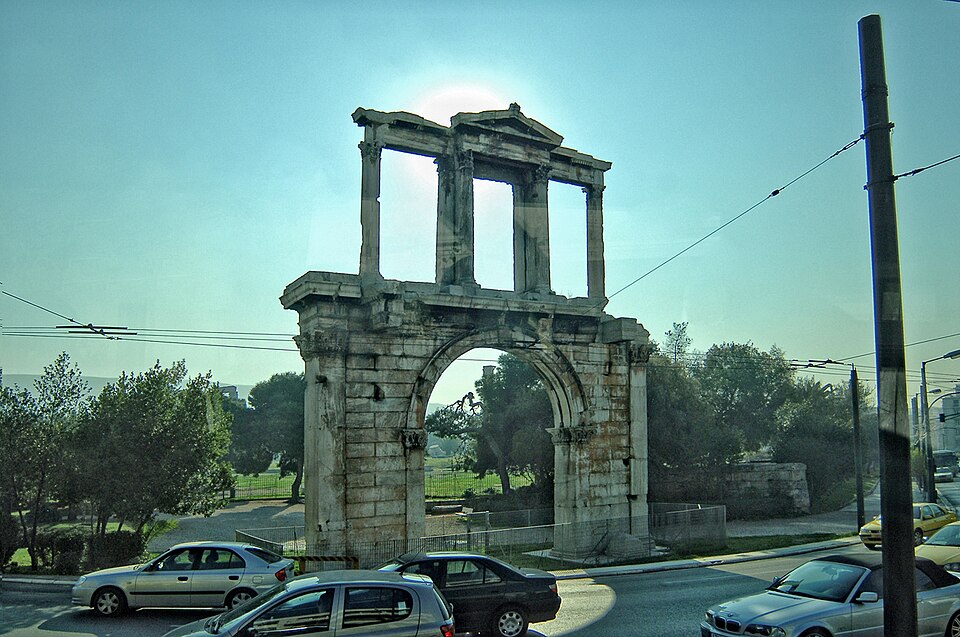
The Arch of Hadrian occupies a prominent position at the intersection of Leoforos Vasilissis Amalias and Leoforos Vasilissis Olgas, directly east of the Olympieion. The Athens Metro provides convenient access: Acropoli station on Line 2 lies approximately five hundred metres northwest, while Syntagma station offers additional connectivity. Multiple bus routes serve the surrounding avenues. The monument is readily identifiable and visible from considerable distance. Pedestrian approach from the Plaka district, the Acropolis, or Syntagma Square is straightforward. Cycling infrastructure in central Athens is limited; walking or public transport is advisable.
Checked 2026-08-26
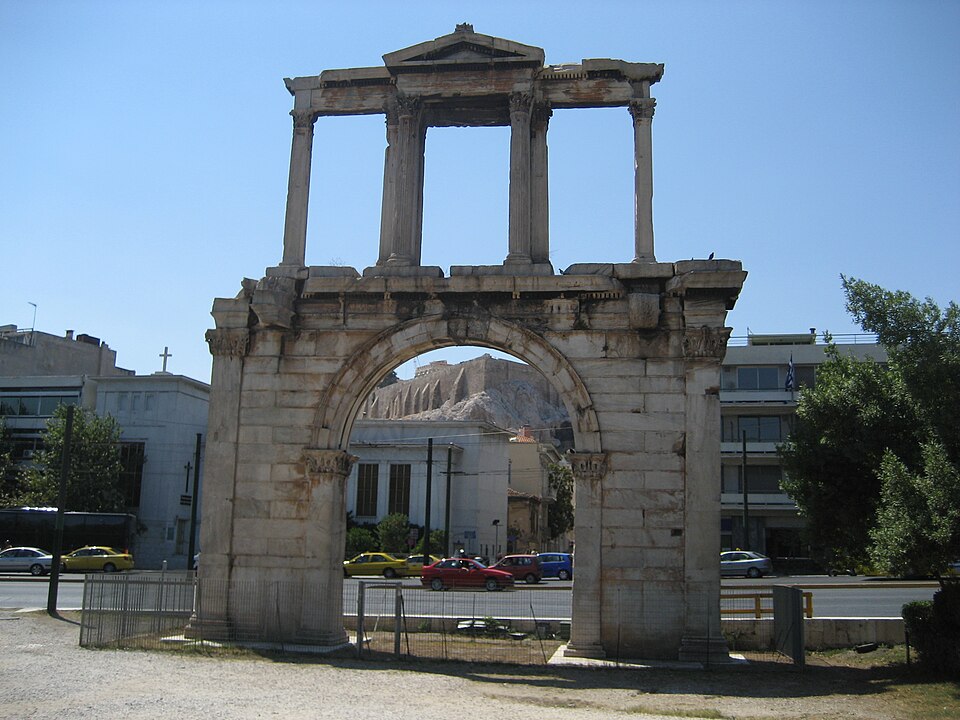
Traffic presents the primary hazard, as the arch stands amid busy roads with vehicles passing close on multiple sides. Pedestrians should exercise caution when crossing to reach the monument or when photographing from the roadway median. The marble surfaces become slippery in wet conditions. No protective barriers separate visitors from the structure itself; climbing is neither permitted nor safe given the height and weathered stone. Limited shade in the immediate vicinity intensifies sun exposure. Nighttime visibility is adequate but uneven. Maintain awareness of surroundings in this high-traffic tourist zone where distraction-related incidents may occur.
Checked 2026-08-26
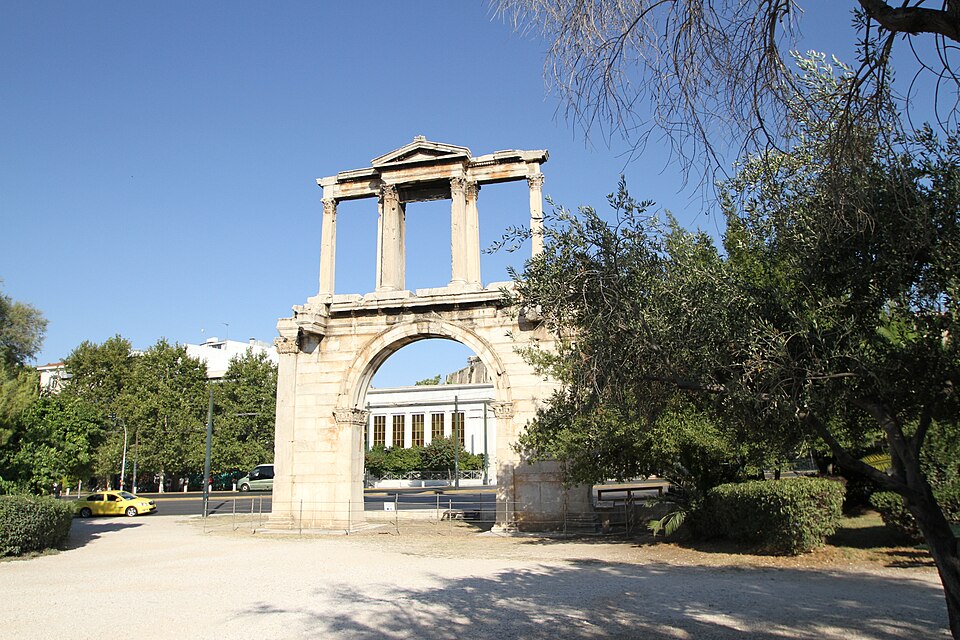
The Arch of Hadrian permits unrestricted photography from public vantage points. The arch frames the Acropolis effectively when photographed from the northwest, while the Olympieion provides backdrop from the southeast. Morning light illuminates the northwest face; afternoon light favours the southeast. Traffic and pedestrian flow complicate clean compositions at street level. Elevated perspectives from the Acropolis slope or surrounding buildings offer alternative angles, though access varies. Night photography benefits from artificial illumination, though exposure times may require support. No commercial photography permits are documented. Drone operation would require compliance with Greek aviation regulations and proximity to archaeological sites.
Checked 2026-08-26
This monument is specific to Athens. Other structures bearing similar names exist elsewhere in the former Roman Empire, but the Athens arch is distinct in location, form, and historical context.
Yes. The central opening remains passable and forms part of the pedestrian route along the ancient road alignment. No restrictions on walking through are in effect.
No. The arch stands outside the Olympieion archaeological site boundaries and requires no ticket, though the two monuments are immediately adjacent and commonly visited together.
The inscriptions reference Hadrian and Theseus, though exact translations and scholarly interpretations should be consulted from authoritative epigraphic sources rather than informal reproductions.
The structure has undergone conservation interventions over centuries. The extent and dates of specific restoration phases are not detailed in the available source material.
The surrounding central Athens area contains numerous commercial establishments, though no dedicated visitor facilities exist at the monument itself. Plan accordingly for restrooms, refreshments, and shelter.
Loading the interactive map…
The interactive map could not be loaded.
Last updated:
Source: OpenStreetMap contributors, Wikidata ·